
Can You Build a Tolerance to CBD Oil?
 Written by Ben Glinsky
Ask AI about this article and CBD Oil (Full-Spectrum)





CBD tolerance can happen in theory, but researchers have not shown that people routinely develop it the way they do with THC. CBD works differently at cannabinoid receptors, and limited evidence even raises the possibility of reverse tolerance. Here is what those terms mean, why an effect may seem to fade, and how to respond safely.
Key Takeaways
- Human evidence is limited: Researchers have not established a predictable pattern of CBD tolerance in people.
- CBD differs from THC: THC directly activates CB1 receptors, while CBD influences several systems without strongly activating CB1.
- Reverse tolerance is unproven: Some people report needing less CBD over time, but strong clinical evidence is missing.
- Fading effects have many causes: Product variation, storage, routines, expectations, and health changes can all matter.
- Do not automatically take more: Follow the label and speak with a clinician if an expected effect changes.
What Tolerance Actually Means
Tolerance means your response to a substance becomes weaker after repeated exposure. You may need a larger amount to produce the same measurable effect. This is common with substances that repeatedly activate the same receptor, which is a type of communication site on a cell.
One way tolerance develops is receptor desensitization. The receptor remains present but becomes less responsive. Another is receptor downregulation, meaning cells reduce the number of available receptors. Your body can also change how quickly it processes a substance. This is called metabolic tolerance.
Tolerance is not the same as dependence or addiction. Dependence means the body has adapted enough that stopping a substance may cause withdrawal symptoms. Addiction involves impaired control and continued use despite harm. Feeling less aware of an effect does not, by itself, establish any of these outcomes.
There is also a difference between a true biological effect and how noticeable that effect feels. A new routine can seem more obvious at first because you are watching for changes. Weeks later, the same experience may feel normal. That shift in attention is sometimes mistaken for tolerance.
For CBD, the central question is whether repeated use causes a reliable biological adaptation that reduces its effects. Human research has not answered that clearly. Claims that CBD definitely causes tolerance, or definitely never causes it, go beyond the available evidence.

True tolerance involves biological adaptation, which is different from simply becoming less aware of a familiar effect.
Why THC and CBD Differ Here
THC and CBD both come from cannabis, but they do not work in the same way. THC strongly engages CB1 receptors, which are abundant in the brain. More precisely, it acts as a partial agonist, meaning it switches those receptors on, although not to their maximum possible level.
With repeated THC exposure, CB1 receptors can become less sensitive and decrease in availability. This desensitization and downregulation are well documented. They help explain why frequent THC users may need more THC to experience the same intoxicating effect.
CBD has little attraction for the main binding site on CB1 receptors and does not activate them like THC. It may change how CB1 responds to other compounds through a separate receptor site. CBD also interacts with several other signaling systems, including channels and receptors involved in how cells communicate. Its pharmacology is broad, and researchers are still sorting out which mechanisms matter at typical supplement amounts.
Because CBD does not repeatedly activate CB1 in the same way, you cannot simply apply the THC tolerance model to CBD. That does not prove CBD tolerance is impossible. It means the strongest known mechanism behind THC tolerance does not map neatly onto CBD.
Pure CBD is not intoxicating, but full-spectrum CBD oils contain trace THC. The amount may be small, yet it can matter for highly sensitive users, workplace drug testing, and local rules. If a full-spectrum product feels different over time, CBD is not necessarily the only compound involved.
THC directly activates CB1 receptors, while CBD influences cannabinoid signaling through different and more indirect mechanisms.
The Reverse Tolerance Idea
Reverse tolerance, sometimes called sensitization, means a person appears to need less of a substance over time rather than more. Some CBD users report that a smaller amount eventually feels as noticeable as the amount they started with. A few research observations are consistent with changing sensitivity, but reverse tolerance to CBD has not been confirmed through strong, long-term human trials.
Several explanations are possible. A person's expectations may change. Their routine may become more consistent. They may learn to recognize subtler changes that they missed at first. Differences in food, sleep, stress, or product absorption may also make a serving feel stronger on one day than another.
There are proposed biological explanations too. Because CBD influences cannabinoid signaling indirectly rather than repeatedly switching on CB1 receptors, researchers have questioned whether sensitivity could be maintained or increase with ongoing exposure. That remains a hypothesis, not a reason to promise that everyone will need less CBD eventually.
Reverse tolerance should not be used as a dosing rule. If your usual labeled serving continues to fit your routine, there is no need to change it just to test the idea. If a product begins to feel unexpectedly strong, stop and discuss the change with a healthcare professional, especially if you take medication.
The honest conclusion is narrow. Reverse tolerance may help explain some personal reports, but it is not established enough to predict what will happen to you. Individual stories can suggest a research question. They cannot provide a dependable answer for every user.
Reverse tolerance is an interesting possibility, but current human evidence cannot predict who might experience it.
Other Reasons an Effect Seems to Fade
A less noticeable experience does not automatically mean your receptors have adapted. Start by checking the variables around the product and your routine.
CBD oils can differ between brands, strengths, and production lots. Independent testing has repeatedly found that some commercial products contain more or less CBD than their labels state. A certificate of analysis, commonly called a COA, shows laboratory results for a specific batch. Look for the CBD and THC amounts, the batch number, and screening for contaminants. The COA should match the bottle you have.
Storage matters too. Heat, direct light, air, and long storage periods may affect product quality. Check the expiration date and follow the manufacturer's storage directions. Also confirm that you are measuring the serving consistently. Dropper markings and CBD concentration can differ between bottles.
Food, timing, and digestion can change how much CBD reaches your bloodstream. So can new medications or supplements. CBD affects CYP450 enzymes, which are proteins the liver uses to process many medicines. This creates the potential for significant interactions, not a reason to change your serving on your own.
Track the product, batch, labeled serving, timing, meals, and the specific outcome you expected for one or two weeks. Avoid judging it only by whether you feel a distinct sensation. If the expected effect has changed, speak with a clinician instead of increasing the amount. This is especially important with prescription medicines, pregnancy or breastfeeding, liver or kidney conditions, or other existing medical conditions.

Checking the label, batch-specific COA, storage, and daily routine can reveal reasons a CBD oil feels different.
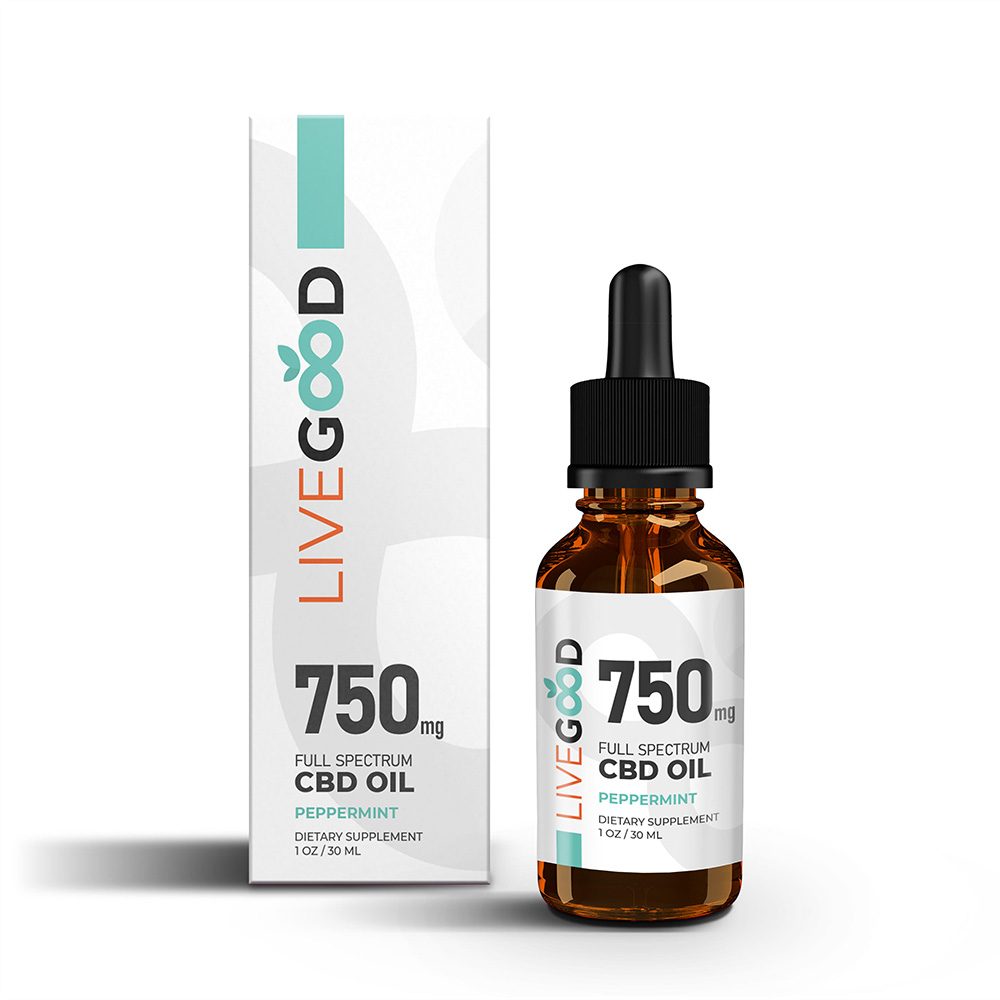
If you choose a full-spectrum option, LiveGood CBD Oil (Full-Spectrum) is derived from the top 1% of hemp farms in the country and uses MCT oil as its carrier for faster absorption and maximum benefit. The 750 mg strength is $14.95 for members or $29.95 retail. The 1500 mg strength is $19.95 member or $39.95 retail, in Natural or Peppermint, plus limited-time Cinnamon. Follow the label, and check the COA before adding it to your routine.
What the Research Does Not Answer
Researchers still lack long-term, controlled human studies designed specifically to measure CBD tolerance. Many studies are short, include small groups, use prescription-level amounts, or examine a particular medical population. Those results cannot tell us exactly what happens when generally healthy adults use retail CBD oil for months or years.
Epidiolex is the only FDA-approved prescription medicine containing purified CBD. Its approval does not mean over-the-counter CBD supplements have been approved as medicines. Prescription studies also involve standardized manufacturing, medical supervision, and amounts that may differ greatly from those in wellness products. Findings about Epidiolex should not be casually transferred to every CBD oil or gummy.
Research also does not establish that a certain number of milligrams is right for everyone. A figure such as 100 mg may be high relative to one label and low relative to a prescription study, but that comparison does not make it appropriate for you. Concentration, formulation, other ingredients, medications, liver function, and individual sensitivity all affect the picture.
Daily CBD use has not been studied equally across products or populations. Researchers need better data on receptor changes, metabolic adaptation, withdrawal, different delivery methods, and the role of trace THC in full-spectrum products. They also need products whose labels consistently match their contents.
Until those gaps are filled, consistency and careful observation are more useful than chasing a stronger sensation. Follow label directions, choose a batch-specific COA, and ask a clinician about continued use or changing effects. Honest, evidence-grounded education includes saying when science has not reached a firm conclusion. Supplements can support a routine, but they are not quick fixes.
Long-term human studies are still needed to determine whether regular CBD use produces meaningful tolerance.
Frequently Asked Questions
Can you build a tolerance to CBD oil?
CBD tolerance is possible in theory, but it has not been clearly demonstrated as a common pattern in humans. Unlike THC, CBD does not strongly activate CB1 receptors, so the established pathway behind THC tolerance is less applicable. If CBD seems less noticeable, check the product, routine, storage, and other health changes before assuming tolerance.
Do you need to increase your CBD dose over time?
No, you should not assume that your CBD amount needs to increase over time. Human evidence does not support routine dose escalation, and taking more may increase side effects or medication interaction risks. Continue to follow the product label. If an expected effect fades, discuss it with a healthcare professional rather than changing the amount yourself.
What is reverse tolerance?
Reverse tolerance is the idea that someone may become more sensitive to a substance and need less to notice the same effect. Some CBD users describe this experience, and limited observations have raised the possibility. However, controlled human research has not established reverse tolerance as a predictable CBD response, so it should not be treated as a dosing strategy.
Should you take breaks from CBD?
Routine CBD breaks are not proven necessary for preventing tolerance. There is not enough research to recommend a standard break schedule, and stopping may be inappropriate if a clinician is overseeing your use. Follow the label and ask your doctor before changing your routine, particularly if you use prescription medication or have an existing medical condition.
Why might CBD seem less noticeable over time?
CBD may seem less noticeable because your expectations, attention, routine, meals, storage conditions, or product consistency have changed. Retail CBD products can also differ in actual cannabinoid content. Review the label and batch-specific COA, track your routine, and speak with a clinician if the change concerns you. Do not automatically respond by taking more.