
CBD and Anxiety: What the Research Actually Shows
 Written by Nauder Khazan
Ask AI about this article and CBD Oil (Full-Spectrum)





CBD has shown some encouraging signals in small, short-term anxiety experiments, but that does not prove a typical CBD supplement works for an anxiety disorder. Most cited studies used one large dose before an artificial stress test, often at amounts far above an ordinary serving. Here is what those studies actually found, what they cannot tell you, and which safety issues deserve attention.
Key Takeaways
- The evidence is preliminary: Small human studies suggest CBD may influence short-term anxiety ratings, but they do not establish CBD as a treatment.
- Study doses were unusually high: Frequently cited public speaking experiments used approximately 300 to 600 mg at one time.
- Everyday use remains uncertain: There is little reliable evidence about lower servings taken regularly for months or years.
- Safety and quality vary: CBD can cause side effects, interact with medications, and contain a different amount than its label claims.
- Established care comes first: Cognitive behavioral therapy and prescribed treatments have much stronger evidence for anxiety disorders.
What People Are Actually Citing
When people say research proves CBD works for anxiety, they are usually combining several very different kinds of evidence. These include animal studies, laboratory experiments in healthy adults, short public speaking tests, observational surveys, and a small number of clinical studies involving people with diagnosed anxiety disorders.
Those categories are not interchangeable. Animal findings can help researchers explore how a compound might affect the brain, but they cannot show whether a supplement helps people in daily life. Observational studies can find associations, yet they cannot separate CBD's effects from expectations, other cannabis compounds, therapy, medication, sleep, or changes in routine.
The strongest human evidence is still limited. Many experiments enrolled only a few dozen participants and measured anxiety for several hours after one dose. Some reported differences in self-rated anxiety or physical signs of stress. Others found no meaningful difference, or found an effect at one dose but not at lower or higher doses.
CBD also gets confused with Epidiolex, the one FDA-approved prescription medicine containing purified cannabidiol. Epidiolex is approved for seizures associated with specific rare conditions, not anxiety. Its approval does not mean over-the-counter CBD oils, gummies, or capsules are approved medicines.

Most human CBD research has examined short-term responses in small, controlled experiments rather than everyday anxiety over time.
The useful conclusion is modest: early research provides a reason for further study. It does not establish that a shelf product, at its labeled serving, will produce the same result in someone living with ongoing anxiety.
The Public Speaking Studies and Their Doses
The public speaking model is behind many confident CBD headlines. In these experiments, researchers ask participants to prepare and deliver a speech in front of an audience or camera. Heart rate, blood pressure, discomfort, alertness, and self-reported anxiety may be recorded before, during, and after the task.
One often-cited study involved 24 people with social anxiety disorder. Half received 600 mg of CBD before a simulated public speaking test, while half received a placebo, an inactive look-alike. The CBD group recorded lower anxiety-related scores during parts of the test. That was an interesting acute finding, but it came from 12 people receiving CBD during one induced event.
Another experiment compared single doses of 100, 300, and 900 mg in healthy participants. The 300 mg group showed a difference on some measures during the speaking task, while the 100 and 900 mg groups did not. Researchers sometimes describe this as an inverted U-shaped response, meaning the middle amount appeared more active than either extreme.
These studies generally gave CBD about one to two hours before the stressful task. That does not create a dependable timeline for everyday anxiety, gummies, or regular supplement use. Different products are absorbed differently, and a laboratory speech is not the same as generalized anxiety, panic disorder, trauma-related symptoms, or social anxiety encountered over months.
The headline is therefore narrower than it sounds. Certain high, single doses changed selected measurements in small controlled experiments. They did not show that CBD consistently works across doses, forms, people, or diagnosed anxiety disorders.
Why Study Doses Are Far Above
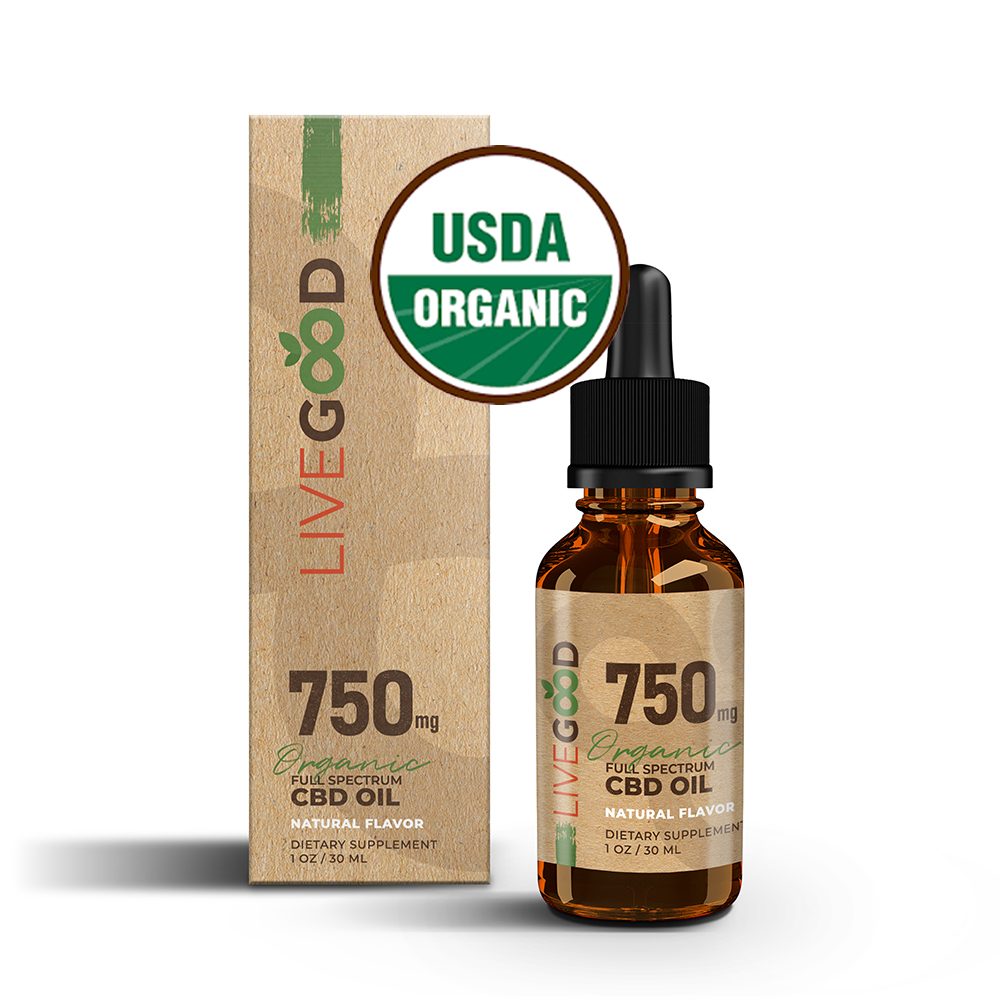
A dose of 300 to 600 mg is much larger than the serving found in many consumer CBD products. It is also easy to confuse the amount in an entire bottle with the amount in one serving. A bottle labeled 750 mg contains that amount across the whole bottle, not necessarily in each dropper.
Researchers use large, carefully measured amounts to test a specific question under controlled conditions. The CBD may also be purified or prepared in a pharmaceutical-style formula. A retail full-spectrum oil is different. Full-spectrum means it contains CBD along with other naturally occurring hemp compounds, potentially including legally permitted trace amounts of THC.
You cannot assume that increasing a supplement serving to match a study will recreate the experiment. Absorption varies with the formulation, food, digestion, body size, liver function, and other medications. Higher intake may also increase the chance of sleepiness, diarrhea, appetite changes, or abnormal liver test results.
No oil, capsule, gummy, edible, or inhaled form has been established as the best form for anxiety. Inhaled products act differently and carry lung-related concerns. Edibles pass through digestion, which makes their timing and absorption more variable. Oils allow the serving to be measured, but that does not prove effectiveness.
Independent testing has repeatedly found that some commercial CBD products contain more or less CBD than their labels state. Some also contain unexpected THC or contaminants. Follow the product label rather than trying to copy a research dose, and ask your doctor or pharmacist to review CBD alongside your medications.
Research doses and retail serving sizes can differ greatly, so study amounts should not be copied at home.
If you choose CBD for a general wellness routine, follow the label and check with your doctor about medications. LiveGood CBD Oil (Full-Spectrum) is derived from the top 1% of hemp farms in the country, with MCT oil as the carrier for faster absorption and maximum benefit. The 750mg strength is $14.95 for members or $29.95 retail. The 1500mg strength is $19.95 member or $39.95 retail, in Natural or Peppermint, plus limited-time Cinnamon.
What Long-Term Evidence Is Missing
The central evidence gap is not whether CBD can change a score during a stressful afternoon. It is whether a consistent, accurately labeled amount produces meaningful benefits during ordinary life, over enough time to matter, without creating unacceptable risks.
We do not yet have large, independent trials following diverse groups with diagnosed anxiety disorders for many months or years. Researchers still need to compare multiple doses, verify the contents of each product, track daily functioning, and measure what happens after use stops. Trials should also report whether participants continue therapy or medication, since those treatments can strongly influence results.
A few longer studies are sometimes cited. Some were open-label, meaning participants knew they were receiving CBD. Others allowed CBD alongside usual clinical care or used amounts reaching several hundred milligrams per day. Without a well-matched placebo group, those designs cannot show how much change came from CBD rather than expectations, professional support, time, or other treatments.
Long-term safety also needs better definition. CBD is processed by the liver and can affect CYP450 enzymes, a group of enzymes that helps the body break down many medicines. This can change medication levels. Several psychiatric medications, seizure medicines, blood thinners, and other drugs may be affected. Sedating combinations may also increase drowsiness.
Talk to your doctor before using CBD if you take a prescription medication or have a liver, kidney, or other existing medical condition. Medical guidance is also necessary during pregnancy or breastfeeding. The extensive monitoring used with prescription Epidiolex should not be mistaken for proof that every CBD supplement is risk-free during long-term use.
The Placebo Problem in Anxiety Research
Placebo effects matter in nearly every clinical trial, but they are especially relevant when the outcome depends partly on how a person feels. If you expect a calming product to help, that expectation can influence tension, attention, sleep, and the way you rate symptoms. This does not mean the experience is imaginary. It means researchers need strong controls to identify what the ingredient itself contributed.
A good randomized controlled trial assigns people to groups by chance. One group receives the studied ingredient, while another receives an inactive product that looks and tastes similar. Ideally, neither the participants nor the researchers interacting with them know who received which option until the study ends. This is called blinding.
CBD trials can be difficult to blind well. Oils may have a recognizable taste. Full-spectrum products may produce sensations that reveal which group someone entered. People who already believe strongly in CBD may also interpret normal changes as evidence that it is working.
Anxiety naturally rises and falls. Symptoms can change with sleep, caffeine, work stress, menstrual cycles, relationships, physical health, and the simple passage of time. A person may try CBD during a difficult week and then improve as the situation settles. Without a comparison group, the timing can look like proof even when the cause remains uncertain.
That is why testimonials and before-and-after surveys cannot settle the question. Trustworthy evidence requires enough participants, an appropriate placebo, verified product contents, meaningful follow-up, and results that other research teams can reproduce.
Treatments That Do Have Strong Evidence
If anxiety is persistent, intense, or interfering with work, school, sleep, relationships, or daily tasks, speak with a qualified mental health professional or your doctor. Anxiety disorders are diagnosable health conditions. You deserve an individual assessment rather than pressure to solve the problem with a supplement.
Cognitive behavioral therapy, commonly called CBT, has strong evidence across several anxiety disorders. CBT helps you recognize patterns between thoughts, feelings, and actions, then practice more useful responses. Exposure therapy is a specialized CBT approach that gradually and safely helps a person face feared situations instead of reinforcing avoidance.
Prescription options also have substantial clinical evidence. Selective serotonin reuptake inhibitors and serotonin-norepinephrine reuptake inhibitors, usually shortened to SSRIs and SNRIs, are common choices. They influence chemical signaling in the brain and generally require regular use and professional monitoring. Other medications may be appropriate depending on the diagnosis, symptoms, medical history, and side effect risks.
CBD should not replace therapy or prescribed treatment. Never stop or change a psychiatric medication because you want to try CBD. Abrupt changes can cause withdrawal effects or a return of symptoms. Ask the prescriber or a pharmacist to check for CYP450 interactions before adding any CBD product.
Sleep routines, regular movement, reduced excess caffeine, and supportive relationships can complement professional care. These habits are not quick fixes or substitutes for treatment, but consistency can support overall well-being.
Professional assessment, evidence-based therapy, and prescribed care remain the strongest starting points for persistent anxiety.
The practical order is simple. Start with an accurate diagnosis, discuss proven options, and review supplements for safety. If symptoms feel overwhelming or you may harm yourself or someone else, seek emergency help immediately through local emergency services or a crisis service in your area.
Frequently Asked Questions
Does CBD work for anxiety?
CBD has not been proven to work as a treatment for anxiety disorders. Small studies have found changes in short-term anxiety ratings after large, single doses, especially during public speaking tests. Results are mixed, participant groups are small, and research on ordinary supplement servings used over the long term is largely missing.
How much CBD was used in anxiety studies?
Many widely cited anxiety experiments used single CBD doses of approximately 300 to 600 mg. Some tested 100 or 900 mg and did not find the same pattern. These research amounts are often far above a normal supplement serving, so you should not copy them. Follow the label and discuss use with your doctor.
Is CBD approved for anxiety?
No, CBD is not FDA-approved for anxiety. Epidiolex is the only FDA-approved prescription medicine containing purified cannabidiol, and it is approved for seizures linked to certain rare conditions. That approval does not apply to CBD supplements, full-spectrum oils, gummies, or other retail products.
Can CBD replace anxiety medication?
No, CBD should not replace prescribed anxiety medication or psychotherapy. Stopping a psychiatric medicine suddenly can cause withdrawal effects or worsening symptoms. If you are considering CBD, speak with your prescriber first because it can affect CYP450 enzymes and interact with several psychiatric medications.
What treatments have the strongest evidence for anxiety?
Cognitive behavioral therapy, including exposure-based approaches when appropriate, has strong evidence for many anxiety disorders. Prescribed treatments such as SSRIs and SNRIs are also well studied. The right choice depends on your diagnosis, health history, symptoms, and preferences, so discuss persistent or disruptive anxiety with a qualified professional.