
CBD Formats and Joint Comfort: What to Know
 Written by Ben Glinsky
Ask AI about this article and CBD Pain Relief Cream





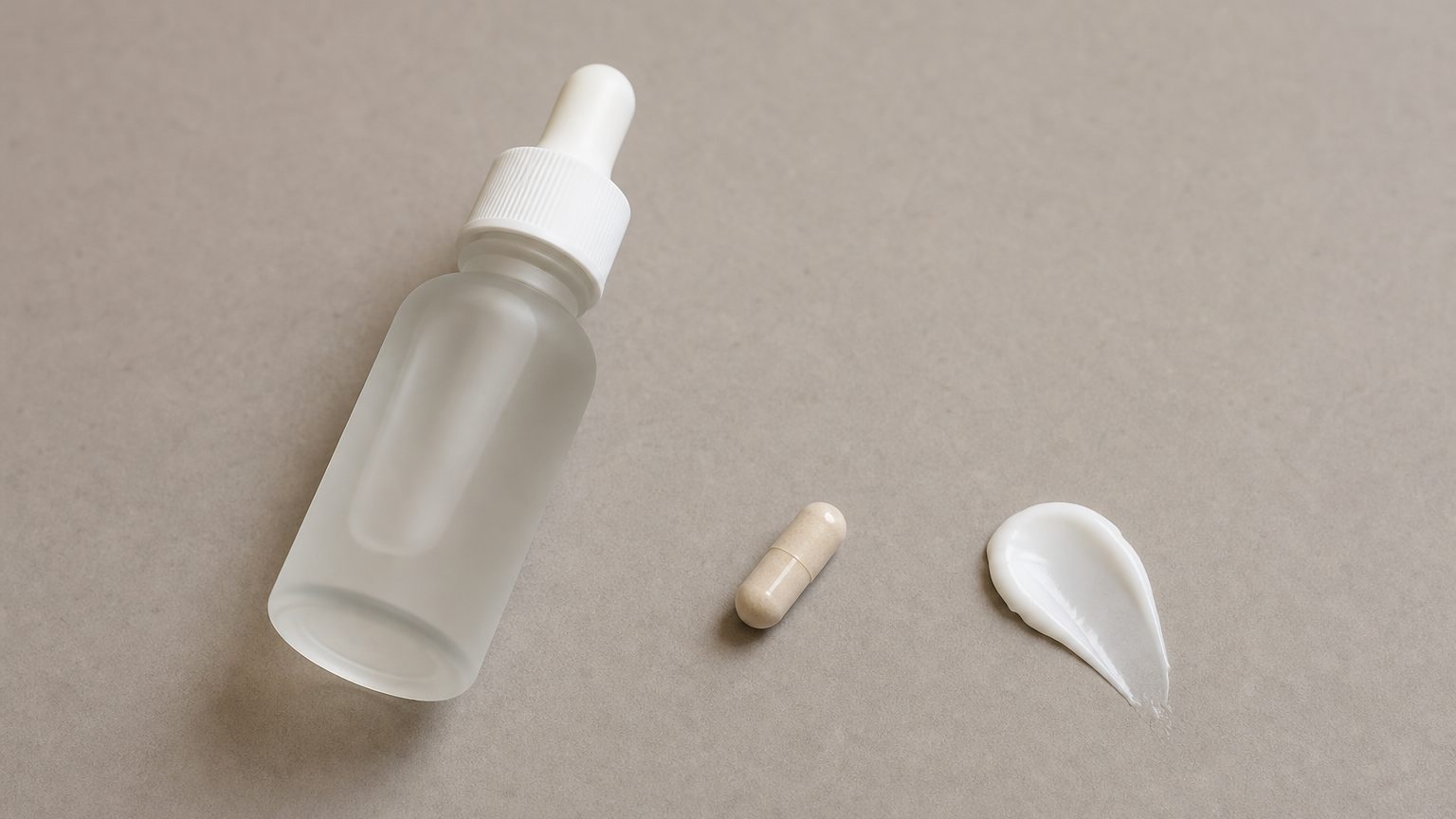
CBD products for joints come in three main formats: oils, capsules or edibles, and topicals. Oils and capsules circulate through the body, while creams are intended for a specific area. No format has strong human evidence showing that over-the-counter CBD supplements treat arthritis or joint pain, so the practical choice comes down to route, timing, safety, and product quality.
Key Takeaways
- Choose by route first: Oils and capsules have systemic exposure, while most creams remain concentrated around the application area.
- Expect different timing: Sublingual oil generally enters circulation sooner than a swallowed capsule, while topical timing depends heavily on the formula and skin.
- Separate format from spectrum: Isolate, broad-spectrum, and full-spectrum describe which hemp compounds are present, not whether the product is an oil or cream.
- Keep the evidence in perspective: Human research does not establish CBD supplements as an effective treatment for arthritis or joint pain.
- Check the actual batch: A current, third-party certificate of analysis can reveal CBD and THC levels as well as contaminant results.
Formats Differ More Than Strengths
The main CBD formats differ in how they enter your body. That difference can matter more than a large number printed on the front label. Milligrams tell you how much CBD is present, but they do not guarantee absorption, a particular effect, or better joint comfort.
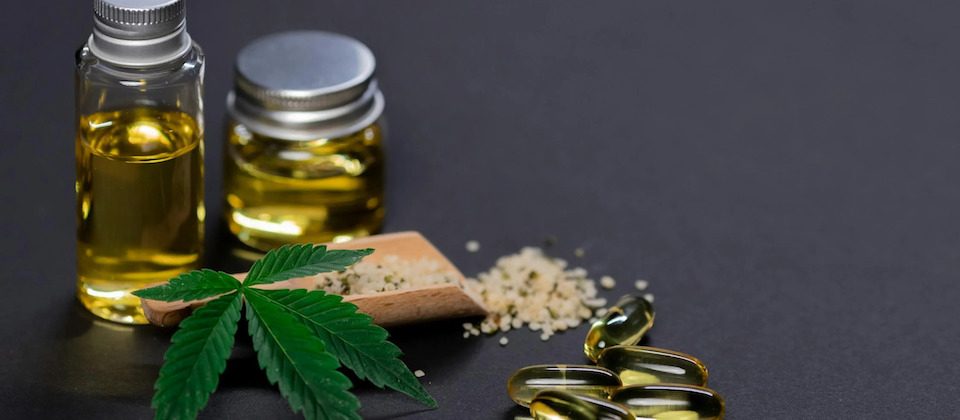
CBD oils, capsules, and topicals follow different routes into or across the body.
Oil held under the tongue can be absorbed partly through tissues in the mouth. The remainder is swallowed. Capsules, gummies, and oil mixed into food must pass through digestion and the liver before reaching circulation. This usually makes their onset slower and less predictable. Both routes are systemic, meaning CBD can circulate beyond one joint.
| Format | Typical onset pattern | Typical duration pattern | Primary reach |
|---|---|---|---|
| Sublingual oil | Often faster than swallowed forms, sometimes within 15 to 45 minutes | Commonly several hours | Systemic |
| Capsule or edible | Often 1 to 2 hours because digestion comes first | May last longer than oil | Systemic |
| Cream or balm | Varies by formula, skin, and added ingredients | Usually limited to the application period | Mostly local |
These are rough route-based estimates, not proven timelines for joint benefits. Meals, body composition, liver function, and the formulation can all change oral absorption.
The delivery format and cannabinoid spectrum are separate product characteristics.
You will also see isolate, broad-spectrum, and full-spectrum CBD. Isolate contains CBD without the other naturally occurring hemp compounds. Broad-spectrum includes additional compounds but is generally processed to remove THC. Full-spectrum retains multiple hemp compounds and may contain trace THC. Claims that one spectrum is clearly superior for joints are not supported by strong clinical evidence. Full-spectrum products also deserve extra caution if you undergo drug testing.
Topicals Act Locally
Creams, balms, gels, and salves are applied directly to the skin around a joint. Most conventional topicals are designed to remain within the skin and nearby tissues rather than produce meaningful CBD levels throughout the body. That makes them different from oils, capsules, and true transdermal patches, which are specially engineered to move ingredients through the skin and into circulation.

Standard CBD topicals are applied to the skin around a specific area.
A topical can be a practical format when you want to focus your routine on one area and avoid swallowing another product. However, local application does not prove that CBD reaches deep joint structures. Human skin is an effective barrier, and CBD does not pass through it easily without the right formulation. Terms such as nano, liposomal, or enhanced absorption describe formulation approaches, but they are not proof of a clinical outcome.
Pay attention to the full ingredient list. Menthol, camphor, peppermint, and wintergreen can create cooling or warming sensations that may be more noticeable than CBD itself. Aloe vera and plant extracts may affect texture and the way the cream feels on your skin. This makes it difficult to credit any perceived effect to CBD alone.

A topical's full ingredient list helps explain its scent, texture, and skin sensation.
Follow the label directions, wash your hands after application, and avoid broken skin, eyes, and other sensitive areas. Stop using a topical if you develop a rash, burning, or persistent irritation. Do not apply heating pads or tight bandages unless the label specifically says they are safe, since heat and covering can change ingredient absorption.
LiveGood CBD Pain Relief Cream is a topical pain relief cream scientifically formulated for synergy between organic aloe vera, menthol, camphor, peppermint, wintergreen, arnica, calendula, and nano CBD/CBG. It is designed to support localized comfort as part of your routine. Follow the label directions when applying it. Each container provides a full 4 ounces and can last for months. The member price is $17.95, compared with $24.95 retail, helping make everyday wellness more accessible.
What the Human Evidence Shows
Human evidence for CBD in arthritis and other joint conditions remains limited. Laboratory and animal research has explored how cannabinoids interact with signaling pathways involved in discomfort and a healthy inflammatory response. Those findings can help researchers design trials, but they do not show that a retail CBD cream, oil, or capsule produces the same outcome in people.

Human CBD studies vary widely in formulation, size, duration, and quality.
The available human studies tend to be small, short, or focused on different kinds of discomfort. They also use different CBD doses, formulations, and outcome measures. A small topical study may not tell you what an oral oil does, and research involving a pharmaceutical-grade preparation cannot automatically be applied to an over-the-counter supplement.
A widely cited review in The Journal of Pain examined randomized trials of CBD for pain. Its authors concluded that CBD products were largely ineffective, expensive, and associated with potential harms. Most included trials did not find CBD better than placebo. That conclusion is much less promotional than many online product lists, but it reflects the current lack of convincing clinical evidence.
Current research does not identify a CBD format that reliably treats joint conditions.
Placebo effects and natural symptom changes matter too. Joint discomfort may vary with activity, sleep, weather, stress, and the underlying diagnosis. If someone starts a cream on a better day, it is easy to credit the product without knowing what caused the change.
This does not mean every future CBD study will be negative. It means current research cannot identify a CBD format, spectrum, or strength that reliably treats arthritis or joint pain. Honest product education should distinguish an interesting research question from an established health benefit.
Why a Diagnosis Comes First
Joint symptoms can have many causes. Osteoarthritis involves changes in cartilage and other joint structures. Rheumatoid arthritis is an autoimmune disease, which means the immune system mistakenly attacks healthy tissue. Gout involves uric acid crystals. Injuries, infections, medication effects, and other conditions can also cause stiffness, swelling, or discomfort. CBD cannot tell you which one is present.

A medical evaluation can distinguish arthritis from injuries and other causes of joint symptoms.
Talk to your doctor if symptoms are new, severe, worsening, or interfering with everyday movement. Prompt medical attention is especially important for a hot or very swollen joint, fever, a major injury, sudden inability to bear weight, or unexplained redness. These signs need assessment rather than supplement experimentation.
CBD should not replace prescribed arthritis medication. Delaying appropriate treatment can allow some joint diseases to progress. Epidiolex is the only FDA-approved prescription medicine containing purified CBD, and it is approved for certain seizure disorders, not arthritis or general joint pain. Retail CBD products are not equivalent to that medicine.
Oral CBD can affect CYP450 enzymes. These liver enzymes help process many medicines, so changing their activity can raise or lower medication levels in the blood. Possible interactions are relevant to blood thinners, seizure medicines, some antidepressants, sedatives, and numerous other prescriptions. CBD may also cause sleepiness, digestive changes, appetite changes, or liver concerns.
Talk to your doctor before using CBD if you take prescription medication, have a liver or kidney condition, have an existing medical condition, or are pregnant or breastfeeding. Your doctor or pharmacist can review the specific product, route, and medication list. That conversation is more useful than relying on a generic online interaction checker.
Reading a Certificate of Analysis
A certificate of analysis, often shortened to COA, is a laboratory report for a specific product batch. Independent testing repeatedly finds that some CBD products contain more or less CBD than their labels claim. Others contain unexpected THC or contaminants. A polished package cannot resolve that uncertainty, but a detailed COA can reduce it.
A batch-specific certificate of analysis shows cannabinoid measurements and contaminant test results.
Start by matching the batch or lot number on the report to the number on your container. The testing date should be reasonably current, and the report should identify the laboratory. Ideally, the lab is independent from the manufacturer and accredited to ISO/IEC 17025, a standard for testing competence.
Review these parts of the report:
- Cannabinoid potency. Confirm the measured amount of CBD and whether it reasonably matches the label. Check whether amounts are listed per gram, milliliter, serving, or full container.
- THC results. Full-spectrum hemp products may legally contain trace THC, but even small amounts can matter for sensitivity, impairment concerns, or workplace drug testing. Broad-spectrum and isolate products should also be checked rather than assumed THC-free.
- Contaminant testing. Look for results covering heavy metals, pesticides, residual solvents, and microbes such as bacteria, yeast, and mold.
- Detection limits. ND usually means not detected above the laboratory's reporting limit. It does not always mean absolute zero.
- Pass or fail criteria. A result marked pass is meaningful only if the report shows the limit used for comparison.
A QR code is convenient, but it should open the report for your actual batch rather than a generic marketing page. If the company will not provide a complete COA, choose another product. Transparent testing cannot prove that CBD supports joint comfort, but it can help confirm that the contents match the label. That honest distinction reflects LiveGood's commitment to evidence-grounded education and its mission to "Provide the highest quality supplements in the world, at the lowest prices possible."
Frequently Asked Questions
Which type of CBD is used for joints?
Oils, capsules, gummies, creams, and balms are all marketed for joint-focused routines, but research has not established one as the best type. Oral products circulate systemically, while standard topicals are intended for a specific application area. Isolate, broad-spectrum, and full-spectrum describe cannabinoid content rather than the delivery format. Full-spectrum CBD may contain trace THC.
Is topical or oral CBD better for joints?
Neither topical nor oral CBD has been proven better for joint conditions. A topical is applied to one area and generally has less whole-body exposure. Oral CBD circulates throughout the body, takes longer to process, and creates more concern about medication interactions. Your doctor can help you compare these routes based on your diagnosis, medicines, and health history.
Does the research support CBD for arthritis?
Current human research does not provide convincing evidence that CBD treats arthritis or its symptoms. Studies are generally small, use varied products, or report results that do not outperform placebo. Laboratory and animal findings remain preliminary. A major Journal of Pain review concluded that CBD products for pain were largely ineffective and expensive, while also carrying potential risks.
Can CBD replace arthritis medication?
No, CBD should not replace medication prescribed for arthritis. Some forms of arthritis can damage joints or affect other organs when they are not properly treated. Stopping a prescription without medical guidance may also cause symptoms to worsen. Discuss CBD with your doctor before using it, especially because oral CBD can alter how the liver processes many medications.
How do you check CBD product quality?
Check a batch-specific certificate of analysis from an independent laboratory. Confirm that CBD and THC measurements align with the label, then look for passing results for heavy metals, pesticides, solvents, and microbes. Match the report's lot number to your container and review the testing date. If the seller offers only an old or generic report, consider a different product.