
Creatine for Runners: Worth It or Not?
 Written by Ben Glinsky
Ask AI about this article and Creatine + HMB






Creatine can be worthwhile for runners who do sprints, hills, intervals, or strength training, but it does not directly improve aerobic endurance. The main tradeoff is an early increase in water weight, which may matter more to racers than to runners focused on training quality. Here is how to decide based on your event and training phase.
Key Takeaways
- Expect power, not more endurance: Creatine supports brief, high-intensity efforts rather than steady aerobic running.
- Consider the scale change: Creatine draws water into muscle, so early weight gain is possible and is not body fat.
- Match it to your event: Sprinters, middle-distance runners, trail runners, and tactical racers may have more to gain than steady marathoners.
- Use it to support training: Its strongest value may come from better-quality strength sessions, hill repeats, and intervals.
- Choose the evidenced form: Creatine monohydrate is the honest baseline because it has the most research behind it.
Creatine Does Not Improve Aerobic Endurance
Creatine is not an aerobic endurance supplement. Aerobic endurance is your ability to sustain activity using oxygen, as you do during an easy run, long tempo, half marathon, or marathon. Research has not consistently shown that creatine improves oxygen use, maximum aerobic capacity, or steady-distance race times.
That makes sense when you look at how creatine works. Your muscles store creatine mainly as phosphocreatine, a compound that helps rebuild adenosine triphosphate, or ATP. ATP is the immediate energy used for muscle contractions. The phosphocreatine system is most important during short, hard efforts lasting seconds, not during a long stretch of even-paced running.
For a marathoner hoping to hold the same pace with less effort, creatine is unlikely to create a direct aerobic advantage. Carbohydrate availability, running economy, training volume, sleep, and pacing remain much more relevant. It also should not replace event-specific nutrition or consistent mileage.
There can still be an indirect benefit. If creatine helps you complete stronger gym sessions or maintain power across repeated intervals, that training may support your overall running program. But the distinction matters. Creatine can improve the quality of certain workouts without making your aerobic system more efficient on its own.
A widely cited peer-reviewed position stand on creatine describes the clearest performance benefits in repeated high-intensity exercise. That is a different claim from saying creatine improves long-distance endurance.

Creatine supports rapid energy recycling during hard efforts, not the aerobic system that powers steady distance running.
The Water Weight Question for Racers
Creatine draws water into muscle cells. As muscle creatine stores increase, scale weight can rise during the first days or weeks. The amount varies, but a gain of one to several pounds is possible, especially when research protocols use a higher initial loading phase.
This is water held within muscle, not fat gain. That difference matters for health and body composition, but the extra mass is still real when you run. Moving more weight can slightly affect running economy, which is the amount of energy you need to hold a given pace. Even a small change may matter to a competitive runner chasing seconds.
The tradeoff depends on your event. A sprinter or 800-meter runner may accept a little more mass in exchange for greater support during explosive efforts. A tactical 5K runner may value help with surges and a finishing kick. A marathoner who races at an even pace may see less upside, particularly close to race day. Trail and mountain runners need to weigh possible power support on steep climbs against the cost of carrying additional mass for hours.
Do not judge the change from a single weigh-in. Track morning body weight under similar conditions for a week or two. Also note how your key workouts feel. If your scale weight rises sharply, such as close to 10 pounds, creatine may not be the only cause. Changes in carbohydrate intake, sodium, digestion, menstrual cycle, or overall calories can also shift body weight and water balance.

Early scale weight from creatine reflects water drawn into muscle, which racers should evaluate during training.
Where It Genuinely Helps Runners
Creatine is most useful when running stops being purely steady. Think sprint finishes, short hill repeats, track intervals, repeated accelerations, and hard efforts with partial recovery. These sessions rely more heavily on the rapid ATP system that creatine supports.
The gym may be where runners get the clearest value. Creatine can support strength and power training, helping you maintain workout quality across repeated sets. Stronger calves, hips, hamstrings, and quadriceps can contribute to force production and movement control. That may help you build a more resilient training routine, but creatine has not been shown to prevent or treat running injuries.
Here is a practical event-by-event view:
- Sprinters and middle-distance runners may benefit most because their events depend heavily on speed and power.
- Tactical 5K and 10K runners may value support during surges, hills, and the finishing kick.
- Trail and cross-country runners may find it useful for steep climbs and repeated pace changes.
- Half marathon and marathon runners may benefit mainly through strength work and intervals, not through improved aerobic endurance.
- Ultramarathon runners should be especially thoughtful about added weight because the direct endurance benefit is weak.
Your diet can also affect the response. Creatine occurs naturally in meat and fish, so vegetarians and vegans often begin with lower muscle creatine stores and may experience a larger increase from supplementation. Individual results still vary. Women and men can both use creatine, but body size, diet, training, and starting creatine levels may influence the scale change and perceived benefit.
Creatine monohydrate is the form to compare first. Other forms are often marketed as faster or more advanced, but they have not displaced monohydrate as the most studied option.

Hill repeats, intervals, sprint finishes, and strength sessions are the running demands most likely to benefit from creatine.
Timing It Around a Training Block
Creatine works through consistent use that raises muscle creatine stores. It is not a quick pre-run boost like caffeine, and taking it immediately before one workout is unlikely to transform that session. The best time of day is usually the time you can follow the label directions consistently.
Your training calendar matters more than the clock:
- During a base phase, creatine may support the strength work that helps prepare you for harder running later.
- During a build phase, it may be useful when hill repeats, intervals, and gym sessions become more demanding.
- During a race-specific phase, monitor body weight and workout feel rather than assuming the tradeoff is positive.
- During a taper, starting for the first time may be unwise if you do not know how your digestion or body weight will respond.
- After a goal race, the lower-pressure period can be a practical time to test it before the next training cycle.
Some studies use a loading phase, commonly around 20 grams daily divided into smaller amounts for several days, followed by a lower daily amount. Other research uses roughly 3 to 5 grams per day without loading. Loading fills muscle stores faster, but it may also make water gain or digestive discomfort more noticeable. These are research protocols, not personalized dosing instructions. Follow the product label rather than copying a study.
Give yourself enough time to evaluate several comparable workouts. Record interval splits, gym performance, morning weight, and digestive comfort. Consistency gives you better information than one unusually good or bad run.

Testing creatine during a base or build phase gives you time to track workout quality, digestion, and body weight.
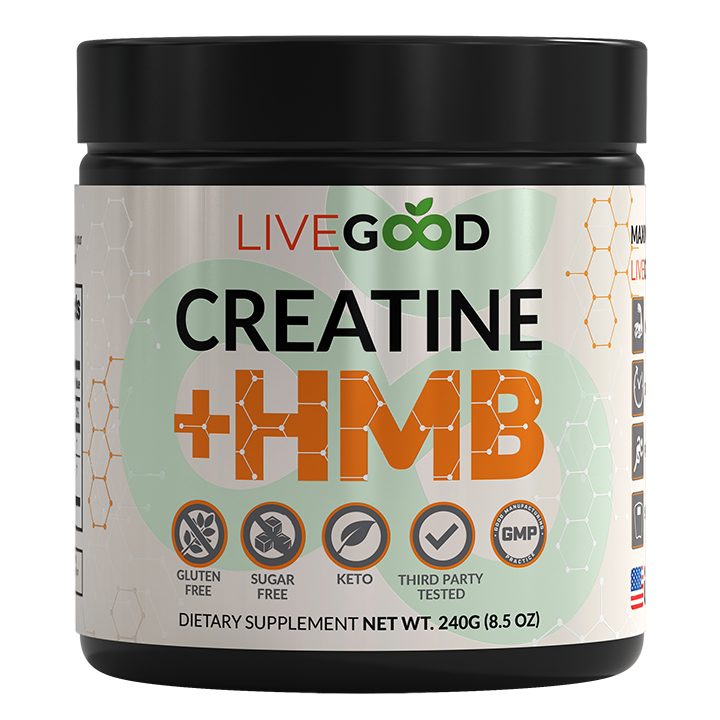
If a daily creatine routine fits your current training block, LiveGood Creatine + HMB provides a full 5 grams of creatine monohydrate plus 3 grams of HMB per serving. It contains nothing else, with no junk fillers, flavors, or additives. The formula supports the energy needs of muscles, brain, and heart while helping maintain muscle and cognitive function as you age. It is $19.95 for members versus $34.95 retail, reflecting "Highest Quality. Lowest Prices. Every Day."
Hydration and Cramping Myths
The claim that creatine causes dehydration or muscle cramps is a persistent myth. Research does not support the idea that creatine makes healthy athletes more prone to either problem. Because creatine draws water into muscle cells, people sometimes assume it removes water from the rest of the body in a dangerous way. That is not what the available evidence shows.
You still need an appropriate hydration plan. Runners lose fluid and sodium through sweat, especially during long runs, hot weather, and humid conditions. Your needs depend on your sweat rate, body size, pace, climate, and access to fluids. Creatine does not cancel those normal requirements, but it also does not mean you need to force excessive amounts of water.
Cramps have many possible contributors. Fatigue, unfamiliar intensity, heat, pacing, and individual susceptibility can all play a role. If cramps appear after you begin creatine, look at the entire training picture before assuming the supplement caused them. A sudden increase in mileage or hard sessions is often relevant.
Digestive discomfort is possible, particularly with large servings or loading protocols. Following label directions and avoiding improvised high amounts is the more practical approach. If symptoms continue, stop using the supplement and talk with a healthcare professional.
Healthy adults generally tolerate creatine monohydrate well in research, but personal medical context matters. Talk to your doctor before using it if you are pregnant or breastfeeding, take prescription medication, have a kidney or liver condition, or have another existing medical condition. Supplements should support a sound running routine, not replace hydration, food, recovery, or medical care.
Creatine does not replace the hydration, electrolytes, fueling, and pacing appropriate for your run and conditions.
Frequently Asked Questions
Should runners take creatine?
Some runners may benefit from creatine, particularly those doing sprints, hills, intervals, or regular strength training. It is less compelling for a runner focused only on steady aerobic mileage. Consider your event, current training phase, and willingness to accept possible water weight. Creatine monohydrate is the most researched form, and any supplement should complement rather than replace training, sleep, and nutrition.
Does creatine make you heavier?
Yes, creatine can increase scale weight because it draws water into your muscles. That early change is water in muscle rather than body fat, although you still carry the added mass while running. The amount differs from person to person. Racers should monitor their weight and running economy during training instead of trying creatine for the first time immediately before an important event.
Does creatine help endurance?
Creatine does not reliably improve steady aerobic endurance, maximum oxygen use, or long-distance race performance. Its better-supported role is in brief, repeated, high-intensity efforts. A distance runner may still benefit indirectly if creatine supports stronger interval, hill, or resistance-training sessions. That training benefit should not be confused with a direct increase in aerobic capacity.
Will creatine cause cramps?
Creatine is not shown to increase cramping or dehydration in healthy athletes. Muscle cramps can be related to fatigue, heat, pacing, unfamiliar workload, and individual susceptibility. Keep following a sensible hydration and fueling plan for your conditions. If cramps become frequent, severe, or occur with other symptoms, stop guessing about the cause and discuss them with a healthcare professional.
When should a runner take creatine?
Take creatine at a consistent time that helps you follow the product label, since muscle stores build through regular use rather than one pre-run serving. Morning, post-workout, or with a meal can all be practical. Your training phase matters more than exact timing. Testing it during base or build training gives you time to assess body weight, digestion, and workout quality before race day.