
Creatine HMB and Testosterone: What to Know
 Written by Ben Glinsky
Ask AI about this article and Creatine + HMB





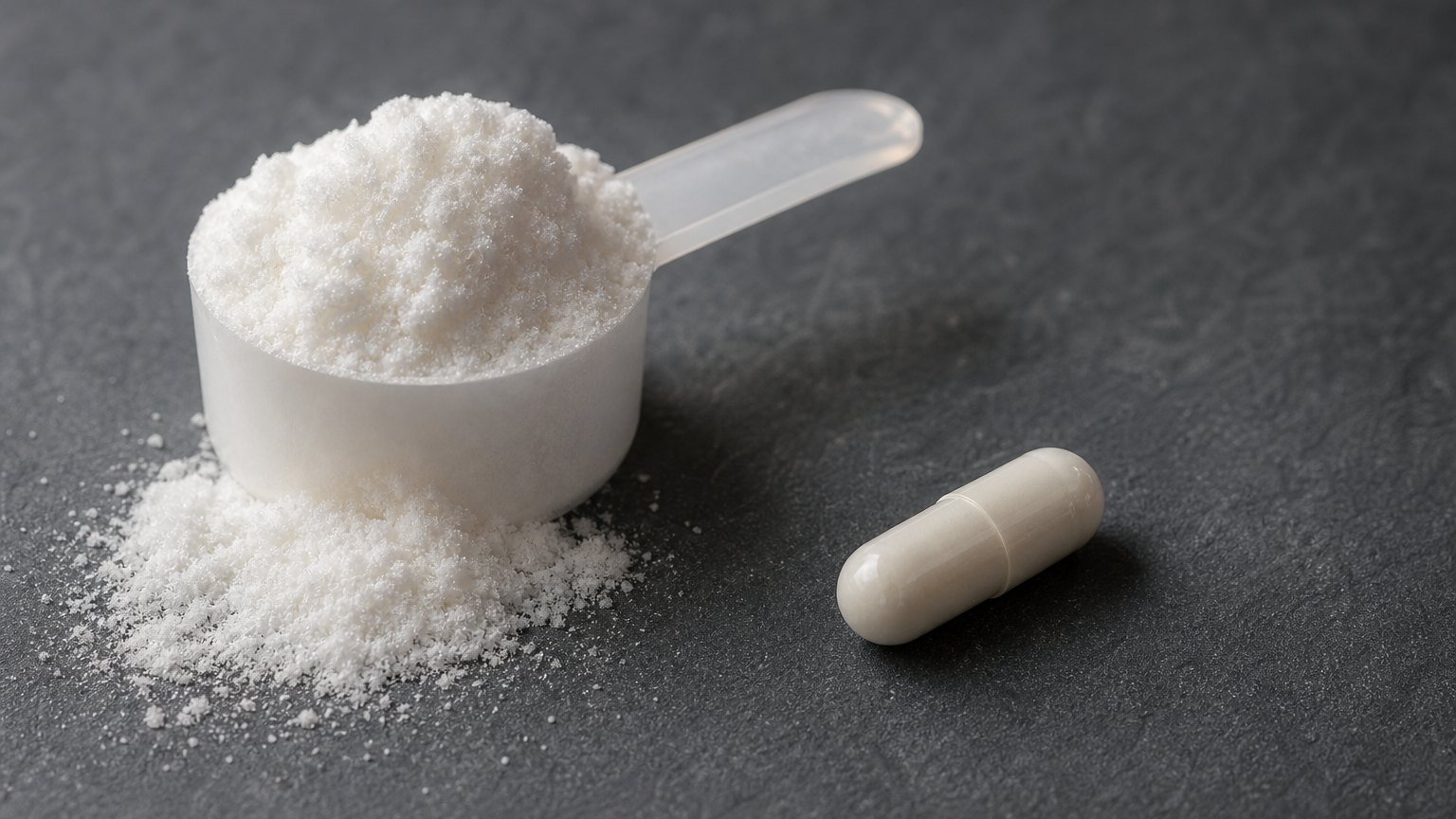
Creatine and HMB have not been shown to reliably raise testosterone. They are combined because they support different parts of muscle metabolism, not because the pairing acts like a hormone booster. Here is what each ingredient actually does and where testosterone fits into the picture.
Key Takeaways
- No proven testosterone boost: Neither creatine nor HMB is established as a reliable way to raise testosterone.
- Creatine supports quick energy: It helps your muscles regenerate energy during short, demanding efforts such as lifting and sprinting.
- HMB supports muscle maintenance: It is involved in muscle protein turnover, the ongoing balance between building and breaking down muscle tissue.
- The combination has a practical logic: Creatine targets energy availability, while HMB targets muscle maintenance and recovery.
- Low testosterone requires testing: Symptoms alone cannot diagnose it. A clinician needs to evaluate blood test results and possible causes.
Neither Raises Testosterone
Neither creatine nor HMB should be treated as a testosterone supplement. Creatine has been studied extensively for strength, power, and lean mass, but research has not established a reliable increase in testosterone. One small study raised interest in dihydrotestosterone, or DHT, which is a hormone made from testosterone. Later research has not consistently repeated that result, and DHT is not the same measurement as total or free testosterone.
You can read the fuller evidence review in Does Creatine Increase Testosterone?. The short version is that creatine can help you train more effectively without changing testosterone. Better workouts and increased muscle do not automatically mean a supplement raised your hormone levels.
The HMB evidence also needs context. A recent peer-reviewed meta-analysis reported a pooled increase in testosterone across controlled trials. However, the included studies varied in design, population, duration, and evidence quality. That signal does not yet establish HMB as a dependable or clinically meaningful testosterone booster. More consistent research is needed before making that claim.
This distinction matters. A change in one group of studies is not the same as a predictable effect for you. Based on the overall evidence, neither ingredient should be purchased or used with the expectation that it will raise testosterone.
What Creatine Actually Does
Creatine helps your cells rapidly recycle adenosine triphosphate, usually shortened to ATP. ATP is the immediate energy your cells use to perform work. During a heavy set of squats or a short sprint, your muscles use ATP faster than they can make it through slower energy systems.
Your muscles store some creatine as phosphocreatine. This stored form donates a phosphate group, a small chemical component, to help rebuild ATP. Increasing muscle creatine stores can therefore support repeated bursts of high-intensity effort. You may complete another repetition, maintain power across sets, or handle slightly more training volume.
Over time, those small improvements can support gains in strength and lean mass when paired with resistance training. The training still creates the reason for your muscles to adapt. Creatine supports that process, but it does not replace exercise, adequate calories, protein, or sleep.
Some early scale weight is common because creatine draws more water into muscle cells. That is not the same as gaining body fat. Visible muscle changes take longer and depend on your training routine.
Creatine is also present in the brain, heart, and other tissues with high energy needs. Research continues to explore those roles, although its strongest and most consistent evidence remains in exercise performance. If you have a kidney or liver condition, take prescription medication, are pregnant, or are breastfeeding, talk to your doctor before using creatine and follow the product label.
What HMB Actually Does
HMB stands for beta-hydroxy-beta-methylbutyrate. Your body makes a small amount of it while breaking down leucine, an essential amino acid found in dietary protein. Essential means your body cannot make enough of that amino acid by itself, so you need to get it from food.
HMB is involved in muscle protein turnover. This is the constant process of building new muscle proteins and breaking down older or damaged ones. Research on HMB suggests it may help maintain muscle tissue and support recovery, especially when the body is adapting to unfamiliar training or facing a period of reduced activity.
Results are mixed, however. Benefits tend to be more noticeable in people who are new to resistance training, older adults, or people experiencing unusually demanding physical stress. Well-trained athletes who already eat enough protein may see smaller or no measurable benefit. HMB is not a substitute for protein because it does not provide all the amino acids needed to build muscle tissue.
HMB also is not a hormone. It does not work by acting like testosterone or an anabolic steroid. Although some pooled research has found a possible change in testosterone, other hormonal findings have been inconsistent. That makes muscle maintenance, rather than hormone enhancement, the more evidence-grounded reason to consider it.
You may not feel HMB working after a single serving. Evaluate it as part of a consistent routine that includes progressive resistance training, enough dietary protein, adequate food intake, and recovery.
Why the Combination Is Sold Together
Creatine and HMB are combined because they act on different parts of muscle metabolism. Creatine helps replenish rapid cellular energy. HMB is involved in the balance between muscle protein building and breakdown. Those are complementary roles, even though neither role requires a rise in testosterone.
Think of creatine as helping you supply repeated muscular effort. HMB is more focused on helping maintain the tissue doing that work. In theory, supporting both areas may be useful when you begin resistance training, increase your workload, return after time away, or want to maintain muscle as you get older.
That does not guarantee the combination will outperform either ingredient alone for every person. Studies directly comparing creatine, HMB, and the combination have produced varied results. Your training experience, protein intake, age, serving amounts, and consistency can all affect what you notice.
The practical advantage is convenience. A combined product lets you follow one label rather than manage two separate containers. There is no special testosterone-producing reaction when the powders are mixed, and taking them together does not turn the combination into a steroid.
Daily consistency matters more than finding a perfect minute to take them. Follow label directions and choose a time you can maintain. For a closer look at hormone-focused combinations, see Stacking Creatine With a Testosterone Booster. That discussion explains why combining products does not prove that the stack raises testosterone.
If a combined powder fits your routine, Creatine + HMB provides a full 5 grams of creatine monohydrate plus 3 grams of HMB per serving, with no junk fillers, flavors, or additives. It supports muscle energy and maintenance, healthy brain and heart function, and muscle and cognitive function with age. Members pay $19.95 versus $34.95 retail. Follow the label and pair it with regular training and adequate protein. Highest Quality. Lowest Prices. Every Day.
What Actually Affects Testosterone
Testosterone is affected by much more than one workout ingredient. Age, genetics, sex, time of day, sleep, food intake, body composition, illness, medications, alcohol use, and training load can all influence a blood test or your usual level. A hard workout may cause a temporary hormonal change, but a brief rise is not the same as increasing your normal baseline.
The most practical steps support normal hormone production rather than promise a boost:
- Get enough sleep on a regular schedule.
- Eat enough total calories, protein, and dietary fat for your needs.
- Use resistance training without pushing every session to exhaustion.
- Allow recovery between demanding workouts.
- Avoid heavy alcohol use.
- Review medications and health concerns with your doctor.
Correcting a true nutrient deficiency may help restore normal function, but taking more of a nutrient when you are already getting enough does not necessarily raise testosterone. Supplement labels that use words such as anabolic, performance, or muscle support also do not prove a hormonal effect.
Low testosterone cannot be diagnosed from fatigue, reduced gym performance, mood changes, or low sexual interest alone. Those concerns can have many causes. Diagnosis requires a blood test interpreted by a qualified clinician, often with repeat morning testing because testosterone naturally changes throughout the day.
Talk to your doctor if you have ongoing symptoms or are concerned about your levels. A clinician can review medications, health history, and laboratory results before discussing appropriate care. Do not use creatine, HMB, or an over-the-counter testosterone booster as a replacement for that evaluation. Supplements can support a fitness routine, but they cannot diagnose or correct clinically low testosterone.
Frequently Asked Questions
Does creatine HMB increase testosterone?
No, a creatine and HMB combination has not been shown to raise testosterone reliably. Creatine supports rapid muscle energy, while HMB is involved in muscle protein turnover. A recent pooled analysis found a possible testosterone effect from HMB, but the evidence is too inconsistent to treat the ingredient or combination as a dependable hormone booster.
Does HMB affect hormones?
HMB has not been shown to produce a dependable, clinically meaningful hormone change. Some research has reported increased testosterone, while findings for testosterone and other hormones vary across studies and populations. HMB is a metabolite of the amino acid leucine, not a hormone, and its better-supported role involves muscle maintenance rather than hormone enhancement.
Why are creatine and HMB combined?
Creatine and HMB are paired because they support different parts of muscle metabolism. Creatine helps replenish quick cellular energy during demanding exercise. HMB is involved in maintaining muscle protein balance. Combining them offers convenience and a complementary approach, but it does not guarantee better results or create a testosterone-raising effect.
Is creatine a steroid?
No, creatine is not a steroid or hormone. It is a compound your body naturally makes from amino acids, and it is also present in foods such as meat and fish. Supplemental creatine increases the amount available for rapid energy recycling in cells. Its effects on strength and training capacity do not require steroid-like hormonal activity.
What actually raises testosterone?
Testosterone levels may improve when you correct factors suppressing normal production, such as inadequate sleep, severe calorie restriction, poor recovery, or a diagnosed health issue. Results vary, and lifestyle changes do not guarantee an increase. Clinically low testosterone requires blood testing and medical evaluation, so talk to your doctor rather than relying on a supplement or symptoms alone.