
Creatine HCl vs HMB: What's the Difference?
 Written by Ben Glinsky
Ask AI about this article and Creatine + HMB





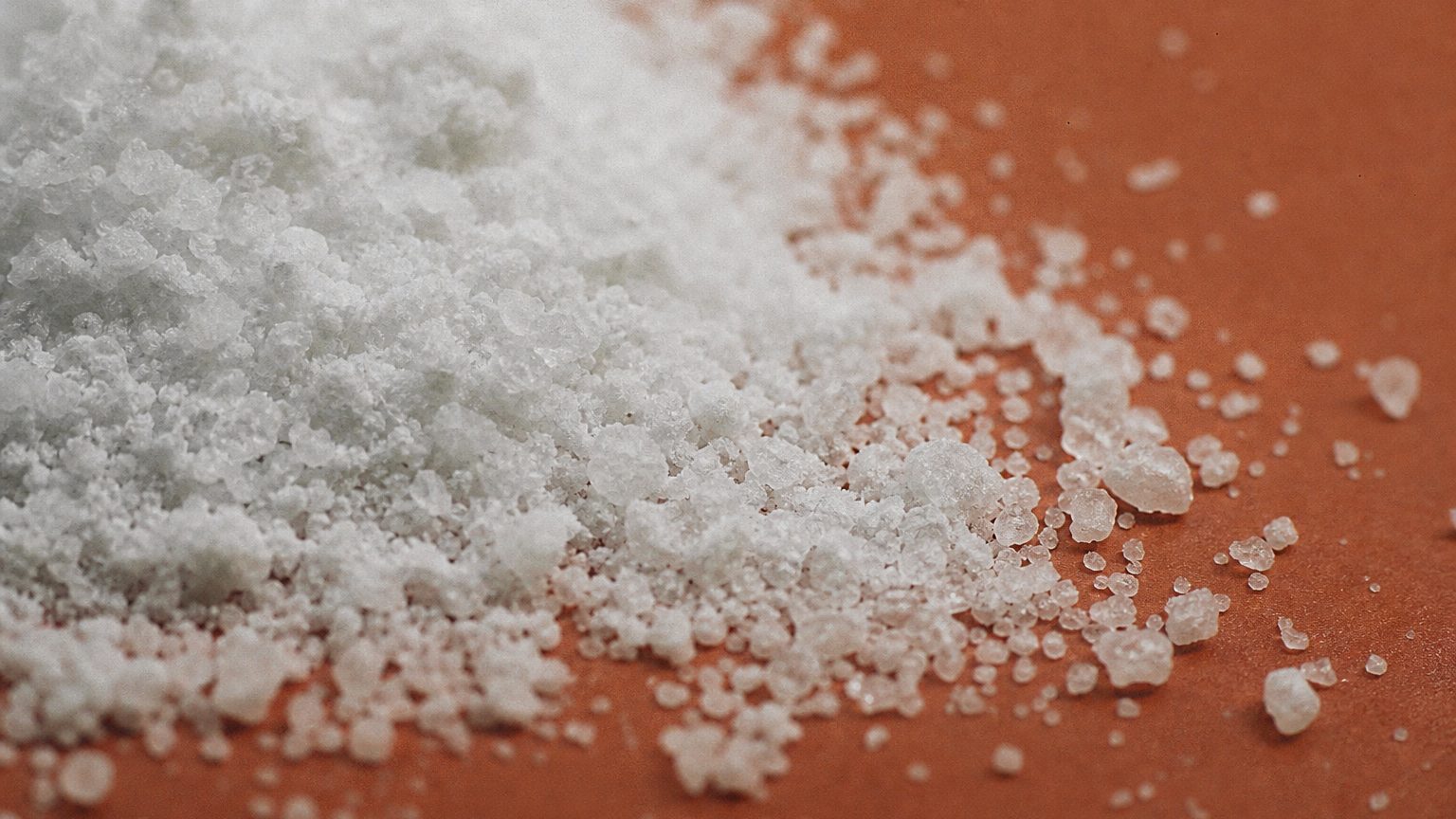
Creatine HCl and HMB are not two forms of creatine. Creatine HCl is creatine bound to hydrochloride, while HMB is a metabolite of the amino acid leucine. They serve different purposes, so the practical choice is often not one or the other, but whether either ingredient fits your routine.
Key Takeaways
- They are different compounds: Creatine HCl is a form of creatine, while HMB comes from the amino acid leucine.
- Creatine supports rapid energy: It helps replenish the energy muscles use during lifting, sprinting, and other short, intense efforts.
- HMB supports muscle maintenance: Research focuses mainly on muscle protein breakdown, recovery, and preserving lean mass.
- Monohydrate leads the evidence: Creatine HCl dissolves well, but it has not been shown to deliver better results than monohydrate.
- Combining them can make sense: Creatine and HMB have different roles, although research does not guarantee extra benefits from pairing them.
They Are Not Two Kinds of Creatine
The phrase "creatine HCl vs HMB" suggests that both are creatine varieties. Only one is. Creatine HCl, short for creatine hydrochloride, is creatine chemically joined to hydrochloride to form a salt. HMB, short for beta-hydroxy beta-methylbutyrate, is a compound your body makes when it processes leucine.
Leucine is an essential amino acid, meaning you must get it from food because your body cannot make it. Amino acids are the building blocks used to make proteins. Only a small portion of leucine becomes HMB.
Here is the basic distinction:
| Feature | Creatine HCl | HMB |
|---|---|---|
| Category | A creatine salt | A leucine metabolite |
| Main research focus | Strength, power, and high-intensity exercise | Muscle maintenance and recovery |
| How it works | Helps replenish rapid cellular energy | Influences muscle protein turnover |
| Alternative form | Creatine monohydrate | Calcium HMB or free-acid HMB |
This also clears up the phrase "creatine HMB." It usually describes a product that contains creatine plus HMB. It is not a newly created type of creatine.
That distinction matters when you read labels. A formula can contain creatine monohydrate and HMB, creatine HCl and HMB, or either ingredient alone. Check the exact ingredient names and amounts instead of relying on the product title.
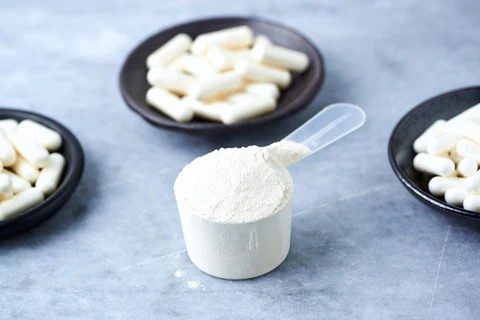
Creatine HCl is a creatine salt, while HMB is a separate compound produced from leucine.
What Creatine HCl Is
Creatine HCl is the hydrochloride salt of creatine. In simple terms, creatine is attached to hydrochloride to change how the powder behaves in water. This does not mean you are taking stomach acid. Salt formation is a common chemistry method used to improve properties such as solubility.
Creatine itself is a substance your body makes from amino acids. Most of it is stored in skeletal muscle, where it helps recycle adenosine triphosphate, or ATP. ATP is the immediate energy your cells use. During a hard set of lifting or a short sprint, ATP is consumed quickly. Stored phosphocreatine helps rebuild it so your muscles can continue producing force.
Supplemental creatine can increase the creatine available in muscle. Research on creatine, particularly monohydrate, shows support for strength, power, training capacity, and lean mass gains when combined with resistance exercise. Creatine is not a stimulant, so you should not expect a caffeine-like burst.
The main practical claim for HCl is that it dissolves more readily than monohydrate. Better solubility can make a drink less gritty. Some people also report that they prefer its feel in the stomach, but personal tolerance is not proof of superior absorption or better training results.
Creatine HCl has much less outcome research than monohydrate. Claims that tiny servings work equally well are not backed by the same depth of long-term evidence. Follow the product label rather than assuming every creatine form uses an interchangeable serving.

Creatine HCl dissolves readily in water, but easier mixing does not prove better training results.
What HMB Is
HMB is beta-hydroxy beta-methylbutyrate, a metabolite produced when your body breaks down leucine. A metabolite is simply a substance created as the body processes another substance. HMB is not creatine, a protein, or a complete amino acid.
Its main research area is muscle protein turnover. Your muscles are constantly building and breaking down proteins. Training, dietary protein, sleep, age, calorie intake, and activity level all affect that balance. HMB appears to influence pathways involved in limiting muscle protein breakdown and supporting muscle protein synthesis, the process of building new muscle proteins.
That mechanism sounds promising, but results are not equally strong in every group. Research on HMB suggests it may be more useful during demanding training, calorie restriction, periods of low activity, or in older adults working to maintain lean mass. Studies in well-trained athletes have produced mixed findings. Some report improvements in recovery or body composition, while others find little added value when training and protein intake are already well managed.
Many HMB studies have used about 3 grams daily, often as calcium HMB or free-acid HMB. That is research context, not a reason to ignore a product's directions or take more than its label recommends.
HMB is generally well tolerated in research, but its long-term evidence base is smaller than creatine monohydrate's. Supplements also cannot replace resistance training, enough dietary protein, adequate calories, and sleep. Those basics will usually have a larger effect on muscle than adding HMB to an inconsistent routine.

HMB is studied for supporting muscle protein balance, recovery, and lean mass maintenance.
How Creatine HCl Compares With Monohydrate
Creatine monohydrate is creatine joined with one molecule of water. It remains the standard against which other forms are compared because decades of studies have examined its performance, body composition, and safety outcomes. It is also widely available and usually less expensive than specialized creatine salts.
Creatine HCl's clearest advantage is solubility. It mixes into less water and may leave less sediment in a glass. That can matter if you dislike the texture of monohydrate or find large, poorly mixed servings uncomfortable.
What has not been established is more important. There is not strong evidence that HCl builds more muscle, produces greater strength gains, absorbs meaningfully better in real-world use, or delivers equal results at a much smaller amount. Dissolving faster in a glass is not the same as creating a better training outcome.
| Question | Creatine Monohydrate | Creatine HCl |
|---|---|---|
| Research depth | Extensive | Limited by comparison |
| Water solubility | Lower | Higher |
| Performance evidence | Strong and consistent overall | Not proven superior |
| Typical cost | Usually lower | Usually higher |
| Practical reason to choose | Evidence, value, and availability | Easier mixing or personal preference |
For most people, monohydrate is the evidence-based starting point. HCl may still be worth considering if mixing or digestive comfort keeps you from using monohydrate consistently. First, try dissolving monohydrate thoroughly, taking it with a meal, and following the label instead of using an unnecessary loading phase.
Creatine HCl has not been shown to be easier on the kidneys. Healthy adults generally tolerate studied creatine use well, but form does not remove the need for caution. Talk to your doctor before using creatine if you have kidney or liver conditions, take prescription medication, have an existing medical condition, or are pregnant or breastfeeding.
Why Products Pair Creatine With HMB
Products combine creatine and HMB because the ingredients address different parts of muscle support. Creatine primarily supports rapid energy recycling during intense activity. HMB is studied for its role in muscle protein turnover and lean mass maintenance. Pairing them is more like combining two separate tools than creating a special form of creatine.
This approach may appeal to someone doing resistance training, returning to activity, eating fewer calories, or focusing on maintaining muscle with age. Creatine can support training quality, while HMB may support recovery and muscle maintenance. The combination is still a supplement to the routine, not a substitute for progressive training and adequate nutrition.
A combined formula is also convenient. You have one label, one serving, and fewer containers to manage. That can make consistency easier, which matters more than finding a complicated supplement schedule.
Still, complementary mechanisms do not automatically mean a larger result. Research examining creatine and HMB together is less extensive than research on creatine monohydrate alone. Some studies suggest potential benefits, but results depend on the participants, training plan, diet, and outcome measured. It is honest to view the combination as reasonable rather than guaranteed to outperform creatine by itself.
Read the Supplement Facts panel before buying. Confirm the creatine form, the amount of creatine and HMB per serving, and whether the product adds ingredients you do not want. If you already take either ingredient separately, check totals so you do not unintentionally duplicate it. Follow the label, and talk to your doctor about pregnancy, breastfeeding, prescription medications, kidney or liver conditions, or other existing medical concerns.
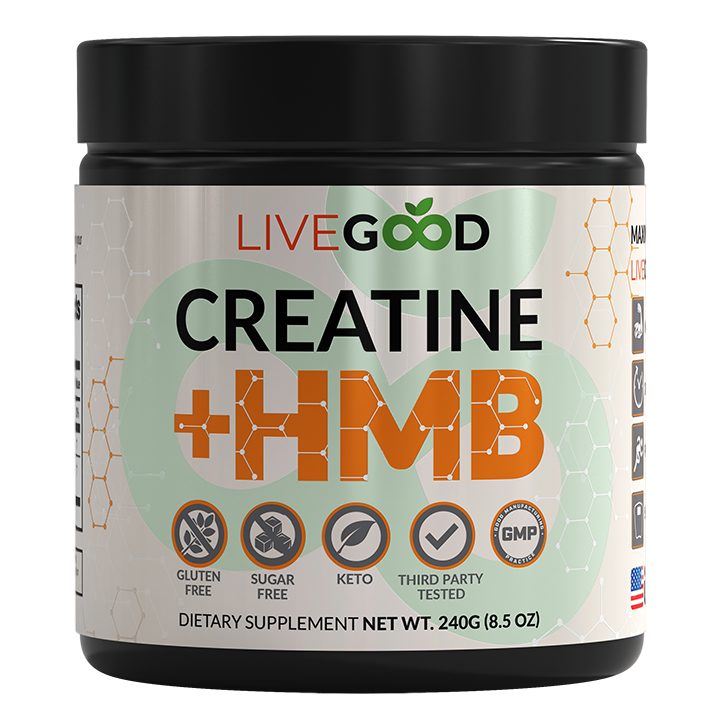
Creatine and HMB can share one formula because they support different parts of an active routine.
If you want both ingredients without juggling separate containers, LiveGood Creatine + HMB provides 5 grams of creatine monohydrate plus 3 grams of HMB per serving. It contains nothing else, with no junk fillers, flavors, or additives. The formula supports energy needs in muscles, brain, and heart while helping maintain lean muscle and cognitive function with age. It is $19.95 for members versus $34.95 retail. Use it consistently as directed. Highest Quality. Lowest Prices. Every Day.
Frequently Asked Questions
What is creatine HCl?
Creatine HCl is creatine bound to hydrochloride to create a highly water-soluble creatine salt. Like other creatine forms, it is used to support rapid energy recycling during high-intensity activity. Its main practical distinction is easier mixing. It has not been shown to produce better strength or muscle results than creatine monohydrate, which remains the most extensively studied form.
What is HMB?
HMB is a metabolite your body produces from the essential amino acid leucine. It is studied for its effects on muscle protein turnover, including supporting muscle maintenance and recovery. HMB is neither a form of creatine nor a complete protein. Evidence is mixed in trained athletes, with potentially greater relevance during demanding training, reduced activity, calorie restriction, or healthy aging.
Is creatine HCl better than creatine monohydrate?
No, creatine HCl has not been proven better than creatine monohydrate for strength, performance, or muscle gain. HCl dissolves more easily and may be more comfortable for some people, but monohydrate has far more research and usually costs less. Choose HCl for practical preference, not because claims of superior absorption or smaller effective servings have been firmly established.
Is HMB worth taking?
HMB may be worth taking when muscle maintenance is a priority, but it is not essential for everyone. Research is more encouraging in older adults, newer trainees, and people facing demanding training, reduced activity, or calorie restriction. Findings in experienced athletes are inconsistent. Address resistance training, protein, calories, and sleep first, then decide whether HMB's possible added support justifies the cost.
Can you take creatine and HMB together?
Yes, creatine and HMB can be taken together because they are different compounds with different roles. Combination products commonly pair creatine's support for rapid energy with HMB's role in muscle maintenance. Follow the product label and avoid accidentally duplicating ingredients across supplements. Talk to your doctor first if you use prescription medication, have an existing condition, or are pregnant or breastfeeding.