






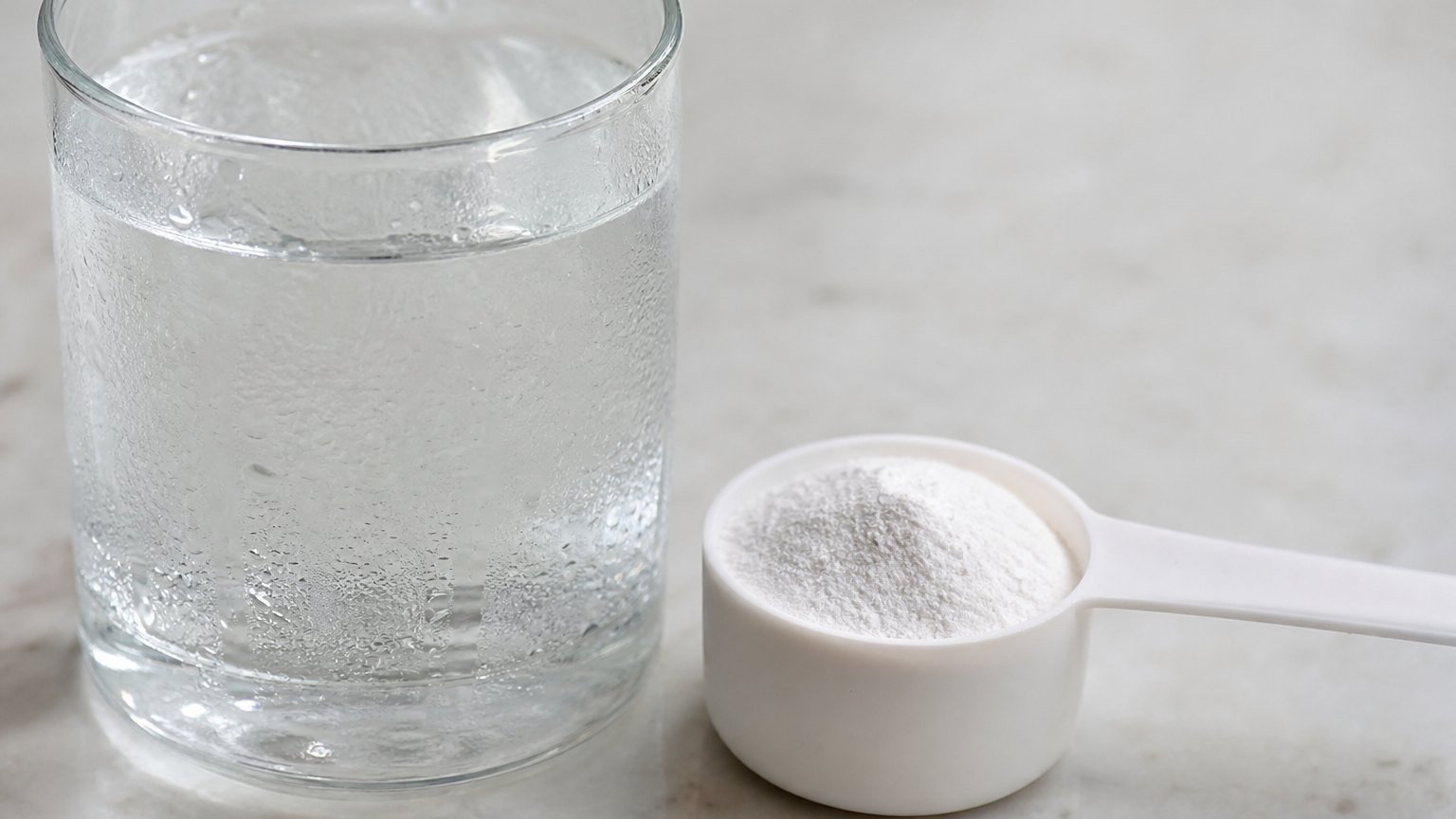
Creatine does not appear to dehydrate healthy people when used as directed. It draws some water into muscle cells, but research has not shown that this increases dehydration or cramping risk. Here is where the warning came from, what the evidence says, and how to stay properly hydrated while taking creatine.
Key Takeaways
- Creatine is not dehydrating: Studies have not found a higher dehydration risk in healthy people taking creatine.
- Water moves into muscle cells: This shift may increase body weight slightly, especially when you first start.
- Heat concerns are not supported: Reviews have not found that creatine increases cramping or heat-related problems.
- Creatine is not an electrolyte: You still need sodium, potassium, and other minerals lost through sweat.
- Normal hydration habits apply: Drink according to thirst, activity, weather, and sweat loss rather than following a creatine-specific water rule.
Where the Dehydration Warning Came From
The creatine dehydration warning began with a reasonable-sounding theory. Creatine increases the amount of water held inside muscle cells. Some people assumed that this water must be pulled away from the blood or other tissues, leaving less available for sweating and temperature control.
That theory spread through locker rooms, product warnings, and early sports advice. Reports of cramps among athletes also helped it stick. But an observation is not the same as proof. Athletes who use creatine may also train harder, exercise in hot conditions, wear heavy equipment, and lose large amounts of fluid and salt through sweat. Any of those factors can contribute to thirst, cramps, or dehydration.
Another source of confusion is early weight gain. Creatine can increase body water, particularly during the first several days of use. The scale may rise even though body fat has not changed. Some people interpret that water retention as bloating or poor fluid balance, but extra water inside muscle cells is not the same as dehydration.

The creatine dehydration warning grew from a theory about water movement rather than evidence of worse hydration outcomes.
The key question is not whether creatine changes where some water is stored. It does. The better question is whether people taking it experience more dehydration, cramping, or heat illness. Controlled studies and later reviews have generally not found that feared outcome. The original warning was based more on a proposed mechanism than on what happened to people in research.
What Creatine Actually Does With Water
Creatine is a compound your body makes from amino acids, the building blocks of protein. Most creatine is stored in skeletal muscle. There it helps replenish adenosine triphosphate, or ATP, which is the immediate energy source your cells use for short, demanding efforts.
When muscle creatine levels rise, water follows through a natural process called osmosis. Osmosis simply means water moves toward an area with a higher concentration of dissolved particles. This can increase intracellular water, meaning water held inside cells. That is why muscles may look or feel slightly fuller after you begin taking creatine.
This shift does not automatically reduce hydration elsewhere in the body. Your kidneys, hormones, thirst response, and fluid intake continually help regulate total body water. Research has generally found that creatine can increase total body water without creating an unhealthy fluid imbalance.

Creatine draws some water into muscle cells, which can increase muscle fullness and total body water.
Some people notice a small increase on the scale. The amount varies with diet, muscle mass, dose, and starting creatine levels. A rapid change is more common when research participants use a loading phase, which involves larger divided amounts for several days. A loading phase is optional, and you should follow the directions on your product rather than copying a research protocol.
Creatine-related water retention also should not be confused with swelling in the ankles, hands, or face. New or unexplained swelling, especially with shortness of breath or other symptoms, deserves medical attention rather than an assumption that creatine is responsible.
What the Reviews Found on Cramping and Heat
The strongest evidence does not show that creatine raises the risk of dehydration, muscle cramps, or poor temperature control in healthy users. A systematic review of hydration and heat research found no evidence that creatine supplementation impaired hydration status or thermoregulation, which is the body's process for controlling temperature.
Individual studies point in the same general direction. In one controlled study of exercise in the heat, creatine did not worsen hydration or temperature responses. A study in collegiate football players also did not find more cramping among creatine users. In that setting, several reported problems were less common among users, although an observational result like this cannot prove that creatine prevented them.

Research has not found that creatine increases cramping or impairs temperature control in healthy users.
Some research suggests that the increase in total body water could support heat tolerance in certain situations. That possibility is interesting, but it should not be turned into a promise that creatine prevents dehydration, cramps, or heat illness. Studies differ in design, participant fitness, environmental temperature, dose, and exercise type. The reassuring conclusion is narrower: the feared increase in risk has not been demonstrated.
You still need ordinary heat precautions. Drink fluids, replace substantial sweat losses, take breaks, and reduce intensity when conditions are extreme. Confusion, fainting, vomiting, loss of coordination, or hot skin can signal a heat emergency. Stop exercising and seek prompt medical help rather than trying to fix severe symptoms with more creatine, water, or electrolytes.
Is Creatine an Electrolyte?
Creatine is not an electrolyte. Electrolytes are minerals that carry an electrical charge when dissolved in body fluids. Sodium, potassium, chloride, magnesium, and calcium are common examples. They help regulate fluid balance, muscle contraction, nerve signals, and many other basic functions.
Creatine has a different job. It helps your cells rapidly recycle ATP, the energy molecule used for muscular work and other cellular activity. Although creatine affects water storage in muscle, that does not make it a hydration mineral or a replacement for electrolytes.
This distinction matters most when you sweat heavily. Sweat contains water and sodium, along with smaller amounts of other minerals. Plain water is often enough for a short or easy workout. Longer exercise, repeated training sessions, very hot weather, or unusually salty sweat may make electrolyte replacement more useful. Creatine cannot replace the sodium lost in those situations.
You also do not need an electrolyte drink every time you take creatine. Many people get adequate electrolytes through regular meals and snacks. Broth, dairy foods, fruits, vegetables, beans, and salted foods can all contribute, depending on your dietary needs.
Be careful with the idea that more electrolytes are always better. High-sodium or high-potassium products may not suit people with certain kidney, heart, or blood pressure conditions. If you have an existing medical condition or take prescription medication that affects fluid or mineral balance, talk to your doctor before adding an electrolyte supplement.
How Much Water You Actually Need
There is no evidence-based rule requiring a fixed number of extra ounces of water for every gram of creatine. Your fluid needs are shaped by body size, weather, altitude, diet, pregnancy, illness, activity level, and how much you sweat. A small person working at a desk will not need the same amount as a large athlete training outside in summer.
A practical approach is to drink regularly with meals and around exercise, then adjust for thirst and sweat loss. Pale yellow urine often suggests adequate hydration, although supplements, foods, and medications can change urine color. Dark urine, strong thirst, dry mouth, headache, and reduced urination can occur with dehydration, but these symptoms have other possible causes too.

Fluid needs depend more on heat, activity, and sweat loss than on the amount of creatine you take.
If you finish a workout much lighter than you started, you probably lost a meaningful amount of fluid. Replacing fluids gradually after exercise is usually more comfortable than drinking a large amount at once. Heavy sweaters may also need food or drinks containing sodium. Avoid forcing excessive plain water, since overhydration can dilute blood sodium and become dangerous.
Feeling thirstier after starting creatine does not prove that creatine dehydrated you. Check for other changes, such as hotter weather, harder workouts, more caffeine, salty meals, or gastrointestinal illness. Follow the supplement label rather than taking extra servings. Large amounts can cause stomach discomfort or diarrhea, which can contribute to fluid loss.
Consistency matters more than a complicated water formula. Take creatine as directed, maintain normal hydration habits, and increase fluids when heat and sweat genuinely increase your needs.
For a straightforward daily option, LiveGood Creatine + HMB provides 5 grams of creatine monohydrate and 3 grams of HMB per serving, with no junk fillers, flavors, or additives. The formula supports cellular energy needs in muscles, the brain, and the heart while helping maintain muscle as you age. Follow the label directions and keep up your usual hydration routine. It is $19.95 for members versus $34.95 retail, reflecting LiveGood's mission to "Provide the highest quality supplements in the world, at the lowest prices possible."
Who Should Still Be Careful
Creatine has a strong safety record in healthy adults, but it is not appropriate to assume that every supplement suits every person. People with kidney disease, reduced kidney function, or a history of kidney problems should talk to a doctor before taking creatine. The kidneys help clear creatinine, a breakdown product related to creatine metabolism.
Creatine supplementation can raise a blood test called serum creatinine without necessarily showing kidney damage. That can make test results harder to interpret. Tell your doctor that you use creatine before kidney testing so the result can be viewed in context. Do not stop prescribed care or dismiss an abnormal result on your own.
You should also talk to your doctor before taking creatine if you have a liver condition, another existing medical condition, or take prescription medication. The same caution applies during pregnancy or breastfeeding because safety information for these groups is limited. Teenagers should use supplements only with guidance from a parent or guardian and an appropriate health professional.
Stop taking the supplement and seek advice if you develop persistent vomiting, diarrhea, severe stomach pain, unexplained swelling, fainting, marked weakness, or changes in urination. Dizziness is not a specific sign of too much creatine. It can come from dehydration, low food intake, heat, illness, medication effects, or other causes, so ongoing or severe dizziness deserves evaluation.
Finally, supplements cannot make unsafe training conditions safe. Creatine does not cancel out inadequate fluid intake, extreme heat, illness, or excessive exercise. Use it as one part of a steady routine built around appropriate training, balanced meals, sleep, and hydration, not as a quick fix.
Frequently Asked Questions
Does creatine dehydrate you?
No, creatine has not been shown to dehydrate healthy people when taken as directed. It moves some water into muscle cells and may increase total body water, but research has not found a resulting increase in dehydration risk. You still need to drink normally and replace the additional fluid and sodium you lose through exercise, heat, or illness.
Do you need more water on creatine?
You do not automatically need a set amount of extra water just because you take creatine. Drink according to your thirst, activity, climate, and sweat rate. You may need more fluid if you train harder or exercise in hot weather, but those needs come from increased sweat loss rather than a proven dehydrating effect of creatine.
Is creatine an electrolyte?
No, creatine is not an electrolyte. It supports rapid energy production in cells, while electrolytes such as sodium and potassium carry electrical charges and help control fluid balance, nerves, and muscle contractions. Creatine therefore cannot replace the minerals lost in sweat, although many people can meet normal electrolyte needs through food.
Does creatine cause cramps?
Creatine has not been shown to increase muscle cramping in controlled research on healthy users. Cramps can still happen because of fatigue, intense training, heat, fluid loss, or other factors. If cramps become frequent or severe, review your training and hydration routine and talk to a healthcare professional instead of assuming creatine is the only cause.
Can you take creatine in hot weather?
Healthy adults can generally take creatine in hot weather when they follow the label and use normal heat precautions. Available studies have not shown worse hydration or temperature control, but creatine does not protect you from heat illness. Drink fluids, replace substantial sweat losses, take cooling breaks, and stop exercising if concerning symptoms develop.