
Does Pea Protein Build Muscle?
 Written by Nauder Khazan
Ask AI about this article and Organic Complete Plant-Based Protein





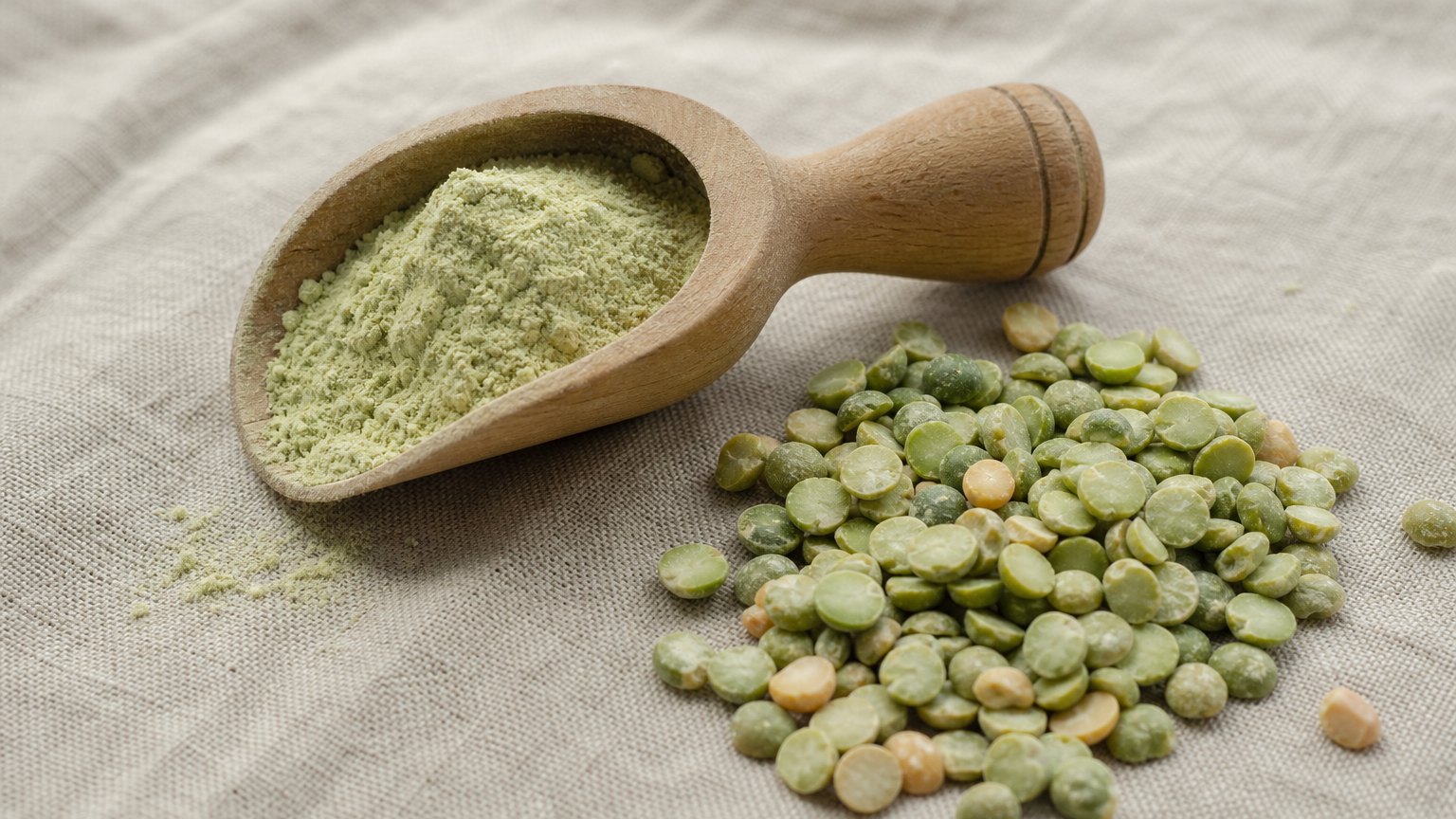
Yes, pea protein can help you build muscle when you pair it with resistance training and enough total daily protein. A well-known 12-week study found comparable muscle thickness gains with pea and whey, but one trial cannot prove they are identical in every situation. Here is what pea protein provides, where it falls short, and how to use it practically.
Key Takeaways
- Pea protein can support muscle growth: It supplies essential amino acids your body uses to repair and build muscle after resistance training.
- One trial compared it with whey: Participants taking pea or whey had comparable increases in biceps muscle thickness over 12 weeks.
- Methionine is its weak spot: Pea contains all nine essential amino acids, but it is relatively low in methionine.
- Total daily protein matters most: Your complete diet, training consistency, and total protein intake matter more than one isolated shake.
- Digestion varies by formula: Pea protein is dairy-free, but large servings, sweeteners, gums, or a pea allergy can still cause problems.
What Pea Protein Actually Contains
Pea protein powder usually starts with dried yellow split peas. Manufacturers mill the peas and separate much of their starch and fiber from the protein. A concentrate retains more of the original carbohydrate, while an isolate is more heavily filtered and generally provides more protein per scoop.
The muscle-building value comes from amino acids, the smaller compounds that make up protein. Nine are called essential amino acids because your body cannot make enough of them on its own. Pea protein contains all nine, including the branched-chain amino acids, or BCAAs, leucine, isoleucine, and valine. These three amino acids participate in muscle metabolism.
Leucine receives the most attention because it helps signal muscle protein synthesis. That is the process your body uses to create new muscle proteins. Pea provides a meaningful amount of leucine, although whey generally supplies more leucine in an equal amount of protein. Serving size and the product's actual protein content therefore matter.
Pea protein is also relatively high in lysine, an essential amino acid that tends to be lower in grains. Its main limitation is methionine, another essential amino acid. Pea contains methionine, but not in the same proportion as many animal proteins.
That does not make pea protein useless or automatically incomplete. It means its amino acid balance is not perfect when pea is your only protein source. For a closer look at protein quality across different plant foods, visit our guide to plant protein and muscle building.
The Pea vs Whey Training Study
The strongest pea-specific evidence comes from a 2015 randomized study published in the Journal of the International Society of Sports Nutrition. Researchers enrolled 161 men ages 18 to 35 in a 12-week upper-body resistance-training program. Participants received pea protein, whey protein, or a placebo. The protein groups took 25 grams twice per day.
Researchers used ultrasound to measure biceps muscle thickness. All groups improved with training, but the pea and whey groups had larger numerical gains than the placebo group. Most importantly for the pea versus whey question, the researchers found no statistically significant difference between the pea and whey groups. In a subgroup of participants who began with the lowest strength, pea produced a significantly greater muscle thickness increase than placebo.
That is encouraging, but it needs careful interpretation. Finding no significant difference does not prove two proteins are identical. The trial studied younger men performing a particular upper-body program for 12 weeks. It did not establish that pea will always match whey across women, older adults, experienced bodybuilders, different doses, or every type of training.
The study was also funded by a pea protein manufacturer, and several authors were affiliated with that company. Funding does not erase the results, but it is a reason to want independent replication.
The honest conclusion is that pea protein can supply enough amino acids to support measurable muscle growth during resistance training. This study does not guarantee a particular result, and it is research on pea protein as an ingredient, not evidence that every pea-based product will perform the same way.
The Methionine Gap and How Blends Fix It
Methionine is an essential amino acid involved in making proteins and other important compounds. Pea protein contains it, but methionine is considered its limiting amino acid. A limiting amino acid is the essential amino acid present in the lowest proportion relative to your body's needs.
This limitation is often oversimplified. You do not need every food to contain identical amounts of every amino acid. Your body draws amino acids from the range of foods you eat during the day. If your diet includes grains, seeds, nuts, soy, eggs, dairy, meat, or other protein sources, those foods can contribute additional methionine.
Protein blending offers another practical solution. Pea is rich in lysine but lower in methionine. Some seed and grain proteins provide a different amino acid balance, so combining them can create a more balanced overall profile. Hemp protein is one common partner because it complements pea while adding its own nutrients and flavor characteristics.
This does not mean a blend automatically contains more total protein or more leucine. Check the Nutrition Facts panel for grams of protein per serving, then review the complete ingredient list. A large scoop can include flavoring, fiber, sweeteners, vitamins, minerals, or other ingredients that do not count toward its protein total.
If pea powder is only one part of a varied diet, the methionine gap is unlikely to be a major practical concern. It deserves more attention when someone relies heavily on a narrow selection of plant foods. In that situation, rotating protein sources or choosing a thoughtfully formulated blend can make the diet easier to balance.
Digestibility and Bloating
Pea protein is often chosen by people who avoid whey because it does not contain milk protein or lactose. That can make it a useful option if dairy does not fit your diet. However, dairy-free does not mean that every person will digest every pea powder comfortably.
Whole peas contain fermentable carbohydrates that gut bacteria can break down, sometimes producing gas. Pea protein isolate usually contains far less starch and fiber than whole peas because much of it is removed during processing. Many people therefore tolerate an isolate better than a large serving of whole legumes. Concentrates may retain more carbohydrate and can feel different.
The rest of the formula matters too. Sugar alcohols, added fibers, thickeners, gums, and large amounts of sweetener can contribute to bloating or loose stools in some people. Drinking a thick shake quickly may also be uncomfortable. If a product bothers your stomach, try the serving method allowed by its label with more water, sip it more slowly, or compare a simpler formula.
Pea allergy is uncommon, but it is possible. Avoid pea protein if you know you are allergic to peas. People with peanut or other legume allergies should ask an allergist or doctor whether pea protein is appropriate, since allergic reactions can sometimes occur across related legumes.
Also check sodium if that is something your healthcare professional has asked you to monitor. Sodium levels vary substantially among powders.
If digestive symptoms are persistent, severe, or accompanied by hives, swelling, wheezing, or vomiting, stop using the product and seek medical guidance. Talk to your doctor before using protein supplements during pregnancy or breastfeeding, or if you have kidney disease, liver disease, another existing medical condition, or concerns about prescription medications.
How Much Pea Protein Per Day
There is no single pea protein dose that builds muscle for everyone. Your target depends on body size, activity, age, diet, and how much protein you already get from meals. Pea powder contributes to your daily total. It does not need to provide all of it.
The Recommended Dietary Allowance for generally healthy adults is 0.8 grams of protein per kilogram of body weight per day. That is a baseline for meeting basic needs, not a muscle-gain target. Sports nutrition research commonly examines higher daily intakes for people doing regular resistance training, often around 1.4 to 2.0 grams per kilogram. Gains appear to level off for many people around 1.6 grams per kilogram, although individual needs differ.
For context, a 70-kilogram person, about 154 pounds, would get 112 grams of protein at 1.6 grams per kilogram. That includes protein from beans, tofu, grains, nuts, eggs, dairy, meat, fish, and supplements combined. It does not mean taking 112 grams of pea powder.
The pea-versus-whey study used 25 grams of protein twice daily, but that is research context, not a personal prescription. Follow your product's label rather than copying a study protocol. A serving that supplies roughly 20 to 30 grams of protein can be a convenient way to fill a gap between your food intake and daily target.
Timing is flexible. Protein after training is convenient, but the total amount you consume across the day is generally more important than hitting a tiny post-workout window. Spreading protein across several meals may also be easier on your stomach and gives your muscles repeated access to amino acids.
Track your training, meals, and progress for several weeks. Muscle gain is gradual and depends on progressively challenging your muscles, eating enough overall food, and recovering well. Protein powder supports that routine, but it cannot replace it.
If you want a convenient blended option, Organic Complete Plant-Based Protein is a vanilla powder formulated with organic pea protein, providing all nine essential amino acids plus BCAAs, organic hemp protein, and 26 vitamins and minerals. It is a blend, not pea protein alone. Mix it with water or a smoothie any time of day, following the label directions. It is $39.95 for members versus $49.95 retail, helping make a consistent protein routine more accessible.
Frequently Asked Questions
Does pea protein build muscle?
Yes, pea protein can help build muscle when you combine it with progressive resistance training and enough daily protein. It contains all nine essential amino acids, including leucine and the other BCAAs used in muscle protein synthesis. Your results will still depend on training quality, total food intake, recovery, age, and consistency. A protein shake alone cannot guarantee muscle gain.
Is pea protein as good as whey?
Pea protein can perform comparably to whey in some training settings, but the evidence is not strong enough to call them identical. In one 12-week trial, the two produced similar biceps muscle thickness gains. Whey generally contains more leucine and has higher digestibility scores, while pea is dairy-free and suitable for vegan diets. Your total protein intake may matter more than the choice between them.
Is pea protein a complete protein?
Yes, pea protein contains all nine essential amino acids and is often described as complete. However, it is relatively low in methionine, so its amino acid profile is less balanced than whey or some other proteins. A varied diet or a blend with seed, grain, or other complementary proteins can supply additional methionine without requiring every meal to be perfectly matched.
Is pea protein good for bodybuilding?
Yes, pea protein can fit a bodybuilding diet if it helps you reach your protein needs and you tolerate it well. It provides BCAAs and other essential amino acids needed for muscle repair and growth. Bodybuilders should still pay attention to protein per serving, total calories, progressive training, and dietary variety. Experienced athletes may also benefit from individualized guidance from a sports dietitian.
How much pea protein do you need?
You need enough pea protein to fill the gap between your meals and your overall daily protein target. Research on resistance training often considers total intakes around 1.4 to 2.0 grams of protein per kilogram of body weight. Count food and supplements together, and follow the powder's label directions. Ask your doctor or a dietitian for personalized guidance if you have medical concerns.