






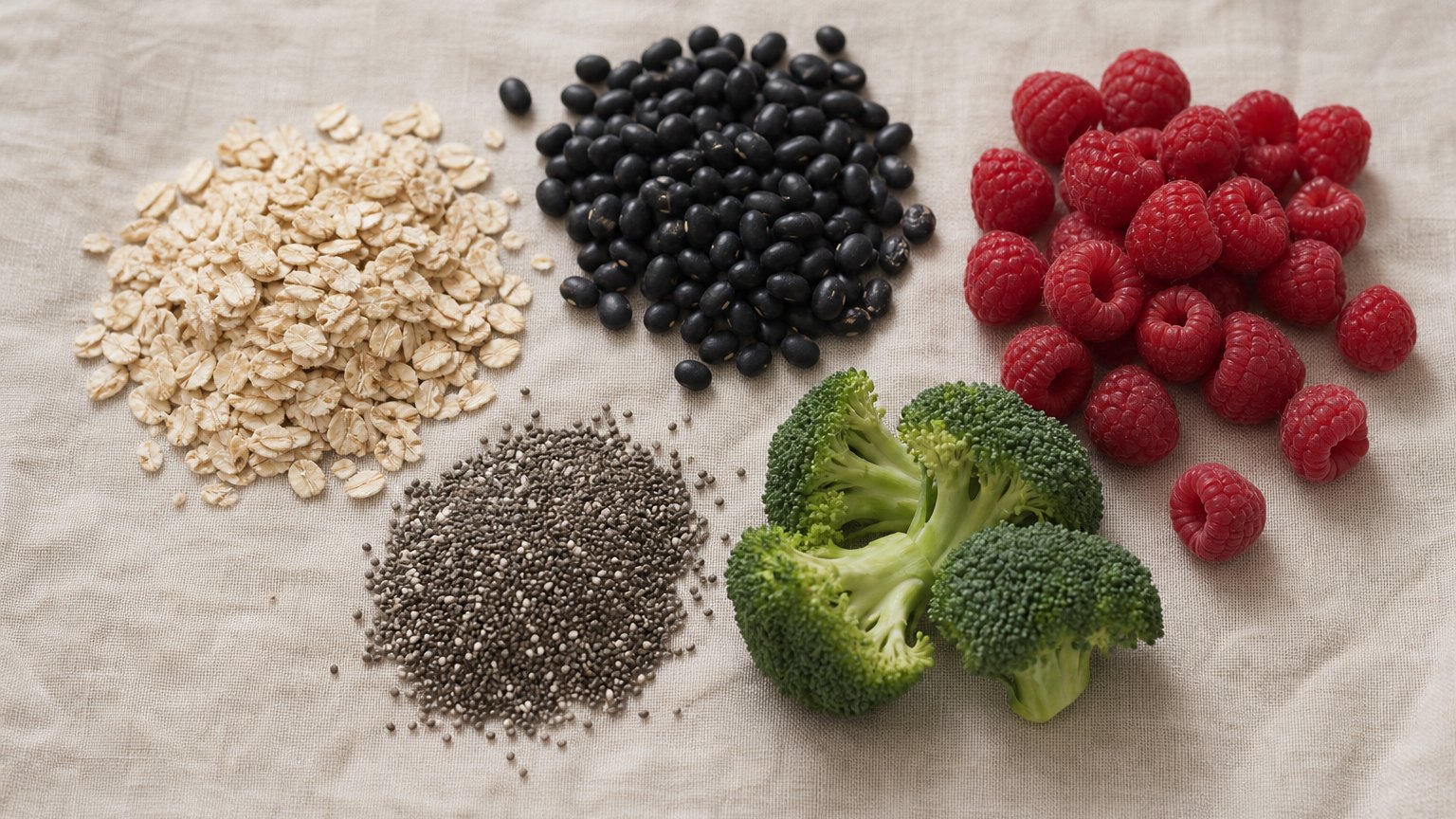
Fibre is the part of plant food your body does not fully digest, yet it plays a major role in regularity, fullness, and the health of your gut environment. Most adults need roughly 25 to 35 grams per day but get closer to 15, so this guide explains how to close the gap without unnecessary discomfort.
Key Takeaways
- Aim for a realistic range: Most adults need roughly 25 to 35 grams of fibre each day, depending on calorie needs, age, and sex.
- Eat both main types: Soluble fibre forms a gel, while insoluble fibre adds bulk and helps food waste move through your digestive tract.
- Feed your gut microbes: Some fibres are fermented by bacteria in the colon, producing useful compounds called short-chain fatty acids.
- Build intake gradually: Adding a large amount too quickly can cause gas, bloating, cramping, or constipation, especially without enough water.
- Choose food first: Beans, lentils, berries, vegetables, whole grains, nuts, and seeds provide fibre alongside other valuable nutrients.
Soluble vs Insoluble Fibre
Dietary fibre is not one single substance. It is a broad group of carbohydrates found in plants that resist digestion in the small intestine. The two familiar categories are soluble and insoluble fibre, although many foods contain a mixture of both.
Soluble fibre dissolves or swells in water. Some forms create a soft, gel-like material in your digestive tract. This can slow the movement of food through the stomach and small intestine, help you feel satisfied after eating, and support normal stool consistency. Oats, barley, beans, apples, citrus fruit, chia seeds, psyllium, and some root vegetables provide soluble fibre.
Insoluble fibre does not dissolve in water. It adds bulk to stool and helps waste move through the digestive tract. Wheat bran, whole grains, vegetable skins, nuts, seeds, and many leafy or crunchy vegetables are useful sources. It is often associated with regularity, but it still needs fluid to work comfortably.
The categories are useful, but they are not perfect. Fibre can also be described by whether it is viscous, meaning it thickens in water, or fermentable, meaning gut bacteria can break it down. Those traits often explain its effects more clearly than solubility alone.
You do not need to track each type separately. Eating a varied mix of plant foods is the easiest way to get different fibres with complementary roles. If you use a supplement, check which type it contains because different ingredients can behave differently in your gut.
How Much You Actually Need
A practical target for most adults is about 25 to 35 grams of fibre per day. Some recommendations extend to 38 grams, and another common guideline is 14 grams for every 1,000 calories eaten. Your target may therefore vary with your age, sex, calorie needs, and overall health.
Despite those targets, typical intake is often near 15 grams daily. That gap can look large, but you do not need to close it in one meal or overnight. Adding 3 to 5 grams at several points during the day is usually more manageable than relying on one very large serving.
Start by estimating your current intake. Check Nutrition Facts labels on packaged foods and look up the usual values for produce, beans, and grains. Fibre content varies by portion, preparation, and brand, so treat the numbers as useful estimates rather than perfect measurements.
A simple daily pattern might include oatmeal and berries at breakfast, beans or lentils at lunch, a piece of fruit as a snack, and two vegetables with dinner. That can bring you close to 25 or 30 grams without turning every meal into a calculation.
More is not automatically better. Eating 100 grams of fibre a day is unnecessary for most people and may cause substantial discomfort or interfere with getting enough calories and other nutrients. Aim for a sustainable range that works with your body. If you have a digestive condition or have been given a low-fibre diet, follow your doctor's advice rather than a general target.
Fermentation and Short-Chain Fatty Acids
Some fibre passes through the small intestine and reaches the colon, where trillions of bacteria live. Certain bacteria can break down, or ferment, that fibre. Fermentation simply means microbes use the fibre as fuel. This process produces gases and small compounds called short-chain fatty acids.
The main short-chain fatty acids are acetate, propionate, and butyrate. Butyrate is especially useful as an energy source for cells lining the colon. Together, these compounds help maintain the normal gut environment and take part in signalling between the gut and the rest of the body. Research is still working out how specific fibres, microbes, and short-chain fatty acids affect different people.
Fermentable fibres include inulin, resistant starch, beta-glucans, pectins, and certain fibres in beans and lentils. They are sometimes called prebiotic fibres when they are shown to be used selectively by beneficial microbes. Not every fibre is a prebiotic, and a product being labelled prebiotic does not guarantee that you will feel a noticeable difference.
Fermentation also explains why a sudden fibre increase can make you gassy. Gas is a normal byproduct when bacteria process fermentable carbohydrates. Your gut community may adapt as intake rises gradually, but tolerance varies. Someone who rarely eats beans may react to a full bowl, while a regular bean eater may have little trouble.
Variety matters here. Different microbes prefer different fibres, so oats, legumes, vegetables, fruit, seeds, and whole grains offer a broader mix than repeatedly eating one isolated fibre.
Food Sources That Add Up Fast
Food should be your first source of fibre. Whole plant foods provide vitamins, minerals, and other naturally occurring compounds alongside fibre. They also offer different textures and fibre types, which one isolated ingredient cannot fully reproduce.
Some especially useful options include:
- One cup of cooked lentils, about 15.5 grams
- One cup of cooked black beans, about 15 grams
- One ounce of chia seeds, about 10 grams
- One cup of raspberries, about 8 grams
- One cup of cooked green peas, about 9 grams
- One medium pear, about 5.5 grams
- One cup of cooked oatmeal, about 4 grams
- One medium apple with its skin, about 4.5 grams
- One ounce of almonds, about 3.5 grams
- Three cups of air-popped popcorn, about 3.5 grams
These are approximate amounts. The Mayo Clinic high-fibre food chart offers additional examples and serving sizes.
To approach 30 grams, you might combine oatmeal, half a cup of raspberries, and a tablespoon of chia at breakfast. Add half a cup of lentils and vegetables at lunch, then have an apple later in the day. No single food has to carry the whole target.
Small swaps also count. Choose whole-grain bread instead of white bread, add beans to soup, keep edible skins on potatoes and apples, or mix nuts and seeds into yogurt. Increase legumes gradually if they are new to you. Rinsing canned beans and beginning with a smaller portion may improve comfort. Consistency is more useful than forcing an extreme high-fibre day once a week.
Increase Slowly and Add Water
When you raise your fibre intake, give your digestive system time to adjust. A practical approach is to add one modest serving of a fibre-rich food, maintain it for several days, and then add another if you feel comfortable. This makes it easier to identify foods or serving sizes that trigger excessive gas or cramping.
Water matters because many fibres absorb it. With enough fluid, fibre can help form stool that is bulkier and easier to pass. Increasing fibre rapidly without water can instead worsen constipation and cause pressure, bloating, or abdominal discomfort. There is no single fluid target that suits everyone, so drink regularly and follow any medical fluid restrictions you have been given.
Try these steps:
- Estimate your usual fibre intake for two or three typical days.
- Add about 3 to 5 grams through one food or label-directed supplement serving.
- Keep that level steady for several days before increasing again.
- Drink a full glass of water with a fibre supplement and fluids throughout the day.
- Reduce the increase if bloating, loose stool, or cramping becomes disruptive.
Mild gas during an increase can be normal. Severe or persistent pain, vomiting, blood in the stool, or an inability to pass stool or gas needs medical attention. Anyone with inflammatory bowel disease, often shortened to IBD, or a history of bowel obstruction should ask a doctor before deliberately increasing fibre. If you have kidney, liver, heart, or another existing medical condition, ask your doctor whether changes to fibre or fluid intake are appropriate.
If food does not consistently close the gap, Organic Fiber combines ten effective plant-based fibre sources in one scoop, providing 8 grams of fibre per serving. Take it between meals or 30 to 60 minutes before eating with a full glass of water. It is $14.95 for members versus $29.95 retail, reflecting LiveGood's membership approach to making wellness more accessible. It supports regularity as part of a steady routine, but does not replace fibre-rich meals.
When a Supplement Makes Sense
A fibre supplement can be useful when food-first changes still leave a regular gap. Travel, limited cooking time, a small appetite, or difficulty eating enough legumes and whole grains can all make a measured serving convenient. Supplements can work, but their effects depend on the ingredient, serving size, water intake, and your individual tolerance.
Read the label before choosing one. Psyllium is a gel-forming fibre that can support regularity and normal stool consistency. Inulin is highly fermentable and may produce more gas in sensitive people. Wheat dextrin, methylcellulose, partially hydrolyzed guar gum, and mixed plant powders each behave somewhat differently. Start with the label directions rather than assuming all products are interchangeable.
Also check how many grams of fibre a serving actually provides. A large scoop does not necessarily mean a high fibre amount. Added sweeteners, flavours, and serving frequency may matter to you as well.
Fibre supplements can interfere with the absorption of some medications, so spacing matters. Follow the product label and ask a pharmacist or doctor how far apart to take your prescription medicine and fibre. Do not stop or adjust medication on your own. Talk to your doctor before supplementing if you are pregnant or breastfeeding, have kidney or liver concerns, live with an existing medical condition, have IBD, or have a history of bowel obstruction.
Think of a supplement as a gap-filler, not a quick fix. A varied diet still supplies the widest range of fibres and nutrients. The most useful plan is one you can follow consistently, with gradual changes and enough fluid.
Frequently Asked Questions
How much fibre do you need per day?
Most adults should aim for roughly 25 to 35 grams of fibre each day, although individual needs vary. Some guidance reaches 38 grams or uses a target of 14 grams per 1,000 calories. If you currently eat much less, raise your intake over several weeks rather than trying to reach the full amount immediately.
What is the difference between soluble and insoluble fibre?
Soluble fibre mixes with water and may form a gel, while insoluble fibre mainly adds bulk to stool. Soluble forms are common in oats, beans, fruit, chia, and psyllium. Insoluble forms are abundant in wheat bran, whole grains, nuts, seeds, and vegetable skins. Most plant foods contain some combination of the two.
Why does fibre cause bloating?
Fibre can cause bloating because gut bacteria ferment certain types and produce gas. A sudden increase gives your digestive system little time to adapt, making pressure and cramping more likely. Larger servings, especially of beans or inulin, may be harder to tolerate. Add fibre gradually, drink water, and reduce the serving if discomfort becomes disruptive.
Can you get enough fibre from food?
Yes, most people can meet their fibre needs through a varied plant-rich diet. Beans, lentils, berries, whole grains, vegetables, nuts, and seeds can quickly bring a day into the recommended range. Spread these foods across meals instead of relying on one large serving. A supplement is optional when practical barriers leave a consistent shortfall.
Do fibre supplements work?
Yes, fibre supplements can add measurable fibre and support regular bowel function when used as directed with enough water. Results vary by fibre type and personal tolerance, and supplements do not provide the full nutrient variety of whole foods. Because fibre can affect medication absorption, check the label and ask a pharmacist or doctor about appropriate spacing.