
High-Strength CBD Cream: What the mg Number Actually Means
 Written by Ben Glinsky
Ask AI about this article and CBD Pain Relief Cream





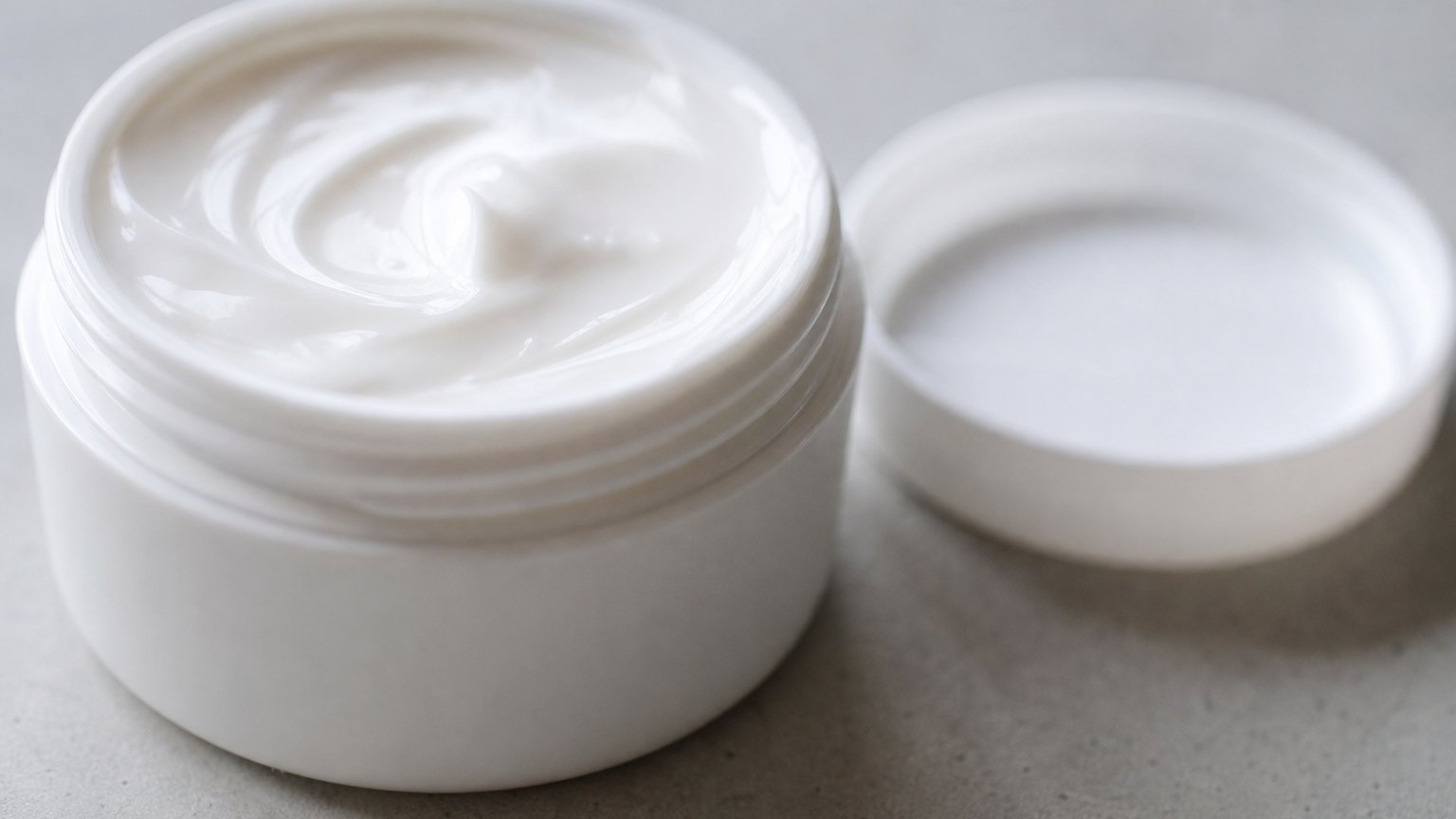
A 3000mg CBD cream usually contains 3,000 milligrams of CBD in the entire container, not in one application. To understand how strong it really is, you need the container size and a simple mg-per-mL calculation. Here is how to compare labels, estimate CBD per use, and check whether the lab report supports the claim.
Key Takeaways
- Read 3000mg as a total: The number normally describes all the CBD in the jar or bottle.
- Compare concentration, not headlines: A smaller 1000mg container can be more concentrated than a larger 3000mg container.
- Calculate mg per mL: Divide total CBD milligrams by the container's volume in milliliters.
- Expect limited evidence: A higher concentration does not guarantee a stronger or more useful effect.
- Check the batch report: A current Certificate of Analysis can help confirm potency, THC content, and contaminant screening.
What the Headline mg Number Refers To
The 3000mg printed on a CBD cream label generally refers to the total amount of CBD in the complete container. It does not mean that every pump, fingertip-sized amount, or application supplies 3,000mg.
Milligrams, shortened to mg, measure mass. On a CBD label, they tell you how much cannabidiol the manufacturer says was added to the formula. The number means little by itself because it does not account for the amount of cream holding that CBD.
For example, a 3000mg claim could appear on a 30mL bottle, a 60mL jar, or a much larger container. The 30mL product would be far more concentrated because the same total amount of CBD is distributed through less cream. This is similar to mixing the same spoonful of an ingredient into one glass of water versus an entire pitcher.
The headline number also does not tell you whether the product uses CBD isolate, broad-spectrum hemp extract, or full-spectrum hemp extract. Isolate is primarily CBD. Broad-spectrum products contain multiple hemp compounds but are generally formulated without detectable THC. Full-spectrum products may contain legally permitted trace amounts of THC. Definitions and detection limits can vary, so the label and laboratory report matter.
Is 3000mg high? It is a large total compared with many topical labels, but it is not a complete measure of strength. Container size determines the concentration you actually apply.
Total Container vs Per Application
The total CBD claim and the CBD in one application are two different numbers. Total CBD tells you what should be in the whole package. CBD per application depends on both the product's concentration and how much cream you use.
Consider these two hypothetical products:
| Product | Total CBD | Container size | Concentration |
|---|---|---|---|
| Cream A | 3000mg | 100mL | 30mg/mL |
| Cream B | 1000mg | 30mL | 33.3mg/mL |
Cream B has the smaller headline number, yet each milliliter contains slightly more CBD. If you applied 1mL of either product, Cream A would provide about 30mg and Cream B about 33.3mg. This is why shopping only by the largest number can be misleading.
The amount per use is often difficult to know precisely. Jars usually do not include a measuring tool, and a thin layer on a wrist uses less cream than an application over a larger area. Pumps can be easier to estimate, but only if the manufacturer states how many milliliters each pump dispenses.
Do not assume that a fingertip amount equals 1mL. Cream density, pump design, and personal application habits all change the amount. Follow the product's directions rather than increasing use to reach a self-selected CBD target. More cream may also mean greater exposure to menthol, camphor, fragrances, or botanical ingredients that can irritate sensitive skin.
For a fair comparison, start with mg per mL or mg per gram. Then consider the actual application directions, other active ingredients, price, and laboratory testing.
How to Work Out Concentration Per mL
To calculate concentration, divide the total CBD by the container volume:
Total CBD in mg / container volume in mL = CBD in mg per mL
For a 3000mg cream in a 60mL container:
3000mg / 60mL = 50mg per mL
If the label or pump information says one application uses 0.5mL, the estimated CBD amount would be:
50mg per mL x 0.5mL = 25mg CBD
This is an estimate, not a dosing recommendation. Follow the label directions. Without a measured pump or applicator, you cannot know the amount per use with much precision.
You may see container size listed in fluid ounces. One US fluid ounce is about 29.57mL, so a 2-fluid-ounce container holds approximately 59mL. A 3000mg product in 59mL would contain about 50.8mg/mL.
Be careful with ounces listed as net weight. A 4-ounce net-weight jar describes mass, not liquid volume, so converting it directly to milliliters may be inaccurate. If the product gives weight in grams, calculate mg per gram instead:
Total CBD in mg / net weight in grams = CBD in mg per gram
A 3000mg cream weighing 100g would contain 30mg of CBD per gram of cream. If one application weighed 0.75g, it would contain an estimated 22.5mg. Again, most people do not weigh each use, so this figure is mainly useful for comparing products.
When two labels use different units, convert both to mg/mL or both to mg/g before deciding which is more concentrated.
For a practical next step, the CBD Pain Relief Cream is scientifically formulated for ingredient synergy, combining organic aloe vera, menthol, camphor, peppermint, wintergreen, arnica, calendula, and nano CBD/CBG. Each container holds a full 4 ounces and may last for months when used according to its label. It is $17.95 for members versus $24.95 retail, making a consistent topical self-care routine more accessible. Wellness should not be a luxury.
Does Higher Strength Mean More Effect?
A higher CBD concentration does not automatically mean a cream will produce a greater effect. It tells you that more CBD is present per unit of cream, but it does not establish how much reaches the relevant layers of skin or what you will notice.
Human research on nonprescription topical CBD remains limited. Studies differ in formulation, concentration, application schedule, and the outcomes they measure. There is no widely accepted topical CBD concentration that has been shown to be ideal for every person or purpose. Claims such as "maximum strength" are usually marketing descriptions, not standardized scientific categories.
Formulation matters because skin is designed to keep outside substances out. The cream's base, CBD particle size, application area, and contact time can influence how ingredients move into the outer skin layers. However, terms such as "nano" or "enhanced absorption" should not be treated as proof of a clinical result unless reliable product-specific research supports that claim.
Other ingredients can also shape the experience. Menthol creates a cooling sensation, while camphor and wintergreen may produce distinct sensory effects. Those sensations do not tell you how much CBD was absorbed. They can also make two products with identical CBD concentrations feel very different.
Use only as directed, and stop if redness, burning, swelling, or another unwanted reaction develops. Avoid broken skin, eyes, and mucous membranes unless the label specifically says otherwise. Patch testing a small area first can help identify sensitivity. Persistent or worsening pain needs medical assessment rather than repeated experimentation with stronger creams.
How Topicals Differ From Oils
CBD creams and CBD oils use different routes of application. A standard topical is spread on the skin and is generally intended to act locally within or near the application area. An oral oil is swallowed or held in the mouth, allowing CBD to enter the digestive system or be absorbed through tissues in the mouth before reaching the bloodstream.
Ordinary topical CBD is thought to have minimal systemic absorption, meaning relatively little is expected to circulate throughout the body. That does not prove absorption is always zero. The formula, skin condition, amount used, application area, and use under a covering can all affect exposure.
A transdermal product is different from a conventional cream. "Transdermal" means it is specifically designed to move an ingredient through the skin and into systemic circulation. A topical label should not be assumed to be transdermal simply because it mentions deep penetration or advanced delivery. Treat those claims carefully and look for credible product-specific evidence.
CBD taken by mouth has clearer potential for whole-body exposure and medication interactions. CBD can affect CYP450 enzymes, a group of liver enzymes that process many medicines. If you use prescription medications, talk to your doctor before using CBD. You should also seek medical guidance during pregnancy or breastfeeding, or if you have liver disease, kidney disease, or another existing medical condition.
The only FDA-approved CBD medicine is prescription Epidiolex, used for specific seizure disorders. Its approval, purity, dosing, and medical oversight do not establish that over-the-counter CBD creams or oils work for any health condition.
Reading a Certificate of Analysis
A Certificate of Analysis, usually called a COA, is a laboratory report for a product sample. It can help you check whether the measured cannabinoid content is reasonably close to the label claim. Independent testing has repeatedly found mismatches between stated and measured CBD amounts across the marketplace, so this step is more useful than relying on package design or the largest number.
First, match the COA's batch or lot number to the number on your container. Check the test date and confirm that the product name and form match. A report for an oil, raw hemp extract, or different batch does not verify the cream in your hand.
Next, find the potency table. CBD may be reported as mg/g, mg/mL, or a percentage. If a 100g jar tests at 28mg/g, its calculated total is approximately 2,800mg:
28mg/g x 100g = 2800mg total CBD
That can then be compared with a 3000mg label claim. Small differences may reflect testing variation, but a large gap deserves an explanation from the manufacturer.
Look at THC results as well. "ND" means not detected above the laboratory's reporting limit. It does not necessarily mean that the amount is absolutely zero. The report should state its detection or quantification limits.
A fuller COA may include screening for heavy metals, pesticides, residual solvents, and microbes such as yeast, mold, or harmful bacteria. Potency testing alone does not establish purity. Also check the laboratory name and credentials, rather than accepting an undated image with no batch details.
Honest product education means separating what a report can confirm from what it cannot. A COA can support identity, potency, and contaminant transparency. It cannot prove that a cream will produce a particular health outcome for you.
Frequently Asked Questions
What does 3000mg mean on a CBD cream?
It usually means the full container is formulated to hold 3,000 milligrams of CBD. It is not the amount in one application. Divide 3,000 by the container's milliliters or grams to compare its concentration with other products. The amount per use then depends on how much cream you apply.
Is a higher mg CBD cream better?
No, a higher total mg number is not automatically better. Container size, concentration, formulation, application directions, skin tolerance, and laboratory accuracy all matter. Evidence for nonprescription topical CBD is still limited, and no single strength is established as ideal. Compare mg per mL or mg per gram rather than relying on front-label numbers.
How much CBD is in one application?
The amount equals the cream's concentration multiplied by the quantity applied. A 50mg/mL formula would provide an estimated 25mg in a measured 0.5mL application. Most jars do not measure each use, so the real amount may vary. Follow the label rather than trying to reach a self-selected CBD dose.
Do CBD creams enter the bloodstream?
Most ordinary CBD creams are expected to produce minimal systemic absorption, but zero absorption cannot be guaranteed. Conventional topicals are intended for local use, while transdermal products are designed to reach circulation. Ask your doctor before using CBD if you take prescription medicine, are pregnant or breastfeeding, or have kidney, liver, or other medical conditions.
How do you check a CBD cream's potency?
Check a current Certificate of Analysis that matches the lot number on the container. Find the measured CBD result, note whether it is reported in mg/g or mg/mL, and calculate the estimated container total. A useful report should also identify THC and show contaminant screening, laboratory information, test dates, and detection limits.