
HMB vs BCAA: Which Helps Muscle More?
 Written by Nauder Khazan
Ask AI about this article and Creatine + HMB





HMB may be more useful for preserving muscle during demanding periods, while BCAAs are unlikely to add much if you already eat enough complete protein. This is not a clean either-or comparison, because HMB is made from leucine, and leucine is one of the three BCAAs. Here is how their roles and evidence differ.
Key Takeaways
- Start with the relationship: HMB is a metabolite, or breakdown product, of leucine. Leucine is one of the three branched-chain amino acids known as BCAAs.
- Put protein first: Adequate daily protein and resistance training matter more for muscle growth than either HMB or BCAA supplements.
- View BCAAs realistically: They can activate muscle-building signals, but muscle still needs all nine essential amino acids. Evidence is weak when protein intake is already adequate.
- Consider HMB for preservation: HMB has been studied most often during reduced activity, calorie restriction, aging, and unusually demanding training.
- Match the supplement to the gap: Neither option directly burns fat or replaces food, sleep, progressive training, or recovery time.
HMB Comes From a BCAA
BCAAs are three essential amino acids: leucine, isoleucine, and valine. Essential means your body cannot make enough of them, so you must get them from food or supplements. HMB, short for beta-hydroxy-beta-methylbutyrate, is different. Your body produces it while processing leucine.
That relationship corrects a common misunderstanding in the HMB vs BCAA debate. You are not comparing unrelated compounds. You are comparing three parent amino acids with one substance made downstream from one of them.
Leucine helps signal muscle protein synthesis, the process your body uses to build new muscle proteins. Only a small portion of leucine is converted into HMB, however. Eating leucine-rich foods does not produce the same amount of HMB commonly supplied in an HMB supplement. Taking more BCAAs is therefore not a practical way to duplicate a measured HMB serving.
The reverse is also true. HMB does not provide all the functions or raw materials found in BCAAs. It does not turn into a complete protein, and it cannot supply the other essential amino acids needed to assemble muscle tissue.
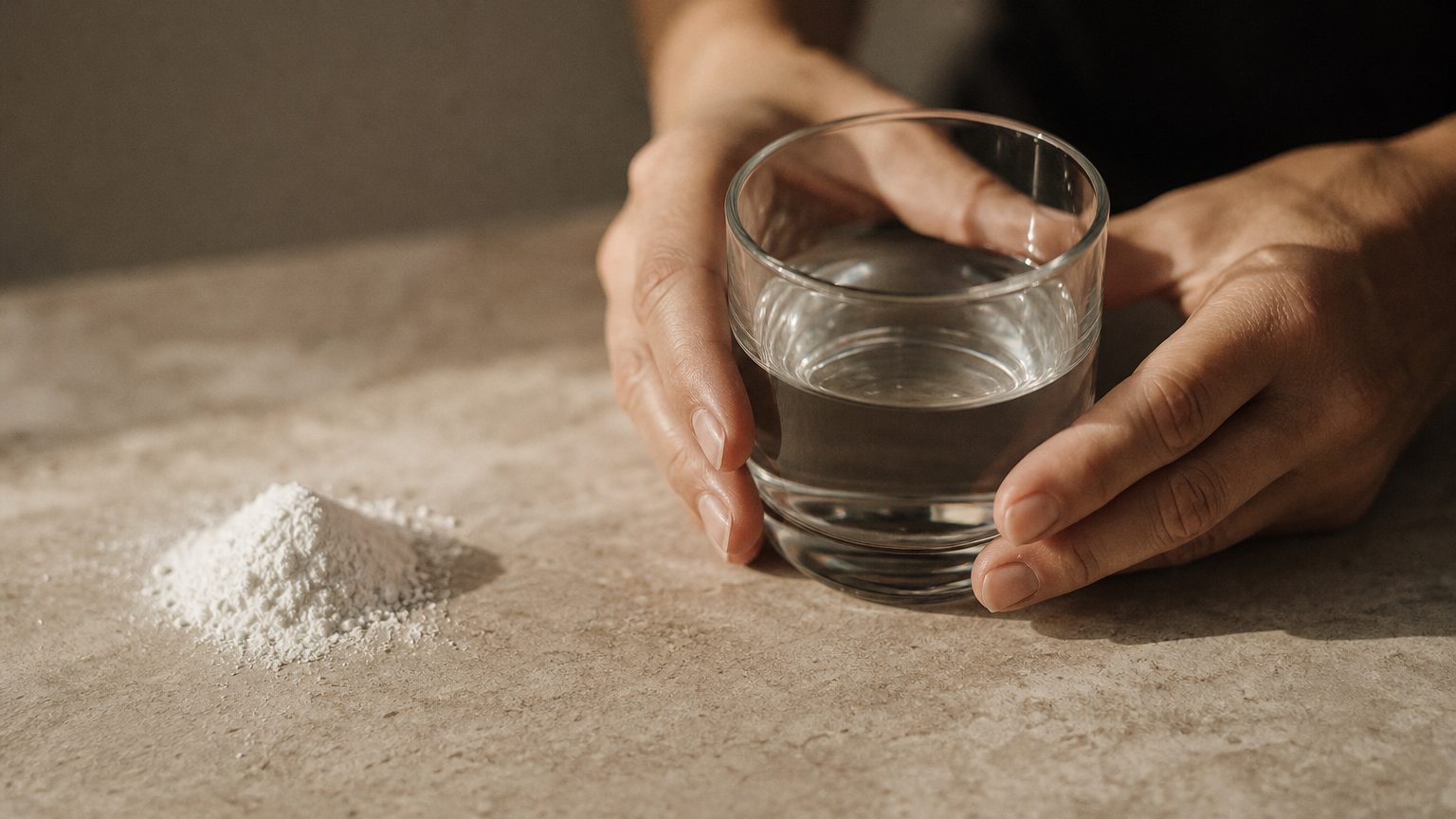
HMB is produced from leucine, one of the three branched-chain amino acids.
This distinction matters when choosing a product. BCAAs are usually marketed as amino acids for workouts and recovery. HMB is generally studied for supporting muscle maintenance and limiting muscle protein breakdown under certain forms of physical stress. Their biology overlaps, but their proposed uses are not identical.
What BCAAs Do
BCAAs get their name from their branched chemical shape. Leucine receives the most attention because it activates a pathway involved in muscle protein synthesis. You can think of that signal as telling your muscles that building work can begin.
A signal is not the same as a complete building supply. Muscle protein requires all nine essential amino acids, not just leucine, isoleucine, and valine. If the other six are missing, the process is limited. This is why a complete protein source, such as dairy, eggs, meat, fish, soy, or a well-formulated protein blend, is usually more useful than isolated BCAAs.
BCAAs can also be used as fuel during exercise, but they are not a major replacement for carbohydrates or total calories. Research has examined whether supplemental BCAAs reduce soreness, fatigue, or markers of muscle damage. Some studies report modest changes, while others find little practical difference. Results depend on the workout, dose, diet, and training status.

Complete protein provides BCAAs along with the other essential amino acids needed to build muscle tissue.
The muscle-growth case is especially weak for someone already eating enough high-quality protein. Your meals and protein shakes already contain BCAAs along with the other essential amino acids. Adding isolated BCAAs may increase the same nutrients without correcting an actual gap.
They may be convenient when food is temporarily unavailable, but they should not be treated as equivalent to a meal or complete protein. If you train fasted, eating a protein-containing meal afterward generally provides a fuller recovery option than relying on BCAAs alone.
What HMB Does
HMB is studied mainly for its potential role in muscle protein balance. That balance reflects the difference between building new muscle protein and breaking existing muscle protein down. HMB appears to influence both sides, but its proposed effect on limiting breakdown is a major reason researchers study it.
The evidence is mixed rather than universally positive. Some trials report improvements in lean mass, strength, or recovery measures. Benefits appear more likely in people who are new to resistance training, older adults, people eating fewer calories, or those going through reduced activity or unusually stressful training. Other studies, particularly in well-trained adults following effective programs, find small or no meaningful added benefit.
HMB should not be presented as a shortcut to larger muscles. It works, when it works, as support around training and nutrition. It does not provide complete protein, replace resistance exercise, or guarantee that you will gain strength. There is also no good evidence that HMB raises testosterone.

HMB is studied mainly for supporting muscle protein balance during physically demanding periods.
Most adult research has used about 3 grams of HMB per day, commonly as calcium HMB or a free-acid form. That is research context, not a reason to exceed a product's directions. More is not automatically better.
HMB is generally well tolerated in short-term studies of healthy adults, but long-term evidence is less extensive. Possible downsides include cost and mild digestive discomfort. Talk to your doctor before using it if you take prescription medication, are pregnant or breastfeeding, have a kidney or liver condition, or live with another medical condition.
Which One Fits Your Goal
Your goal, diet, and training history matter more than the label category. For straightforward muscle growth, start with progressive resistance training and enough total protein. Progressive training means gradually adding weight, repetitions, or difficulty as you get stronger.
Here is the practical comparison:
| Goal or situation | BCAA | HMB |
|---|---|---|
| Building muscle with adequate protein | Unlikely to add much | Evidence is mixed, especially in trained adults |
| Preserving muscle during reduced activity | Limited direct evidence | More closely aligned with the research |
| Training while eating fewer calories | Less complete than protein or essential amino acids | May support muscle maintenance, but results vary |
| Workout energy | Not a major fuel source | Not intended as workout fuel |
| Replacing protein | Cannot replace it | Cannot replace it |
| Direct fat loss | No established benefit | No established benefit |
If you already eat enough protein and follow a consistent strength program, neither supplement is essential. HMB may be the more targeted choice when preserving muscle is the main concern. BCAAs make more sense only when your protein intake is incomplete or inconvenient, and even then, complete protein or all nine essential amino acids would usually address the gap more fully.
You can take HMB and BCAAs together, but compatibility does not prove that the combination will produce better results. There is overlap because leucine is already part of BCAAs. Adding both may increase cost without solving a clear nutrition problem.
Creatine is another option to consider for strength and training performance. It has a broader and more consistent evidence base than either BCAAs or HMB for many healthy adults. No supplement, however, can compensate for an inconsistent program.
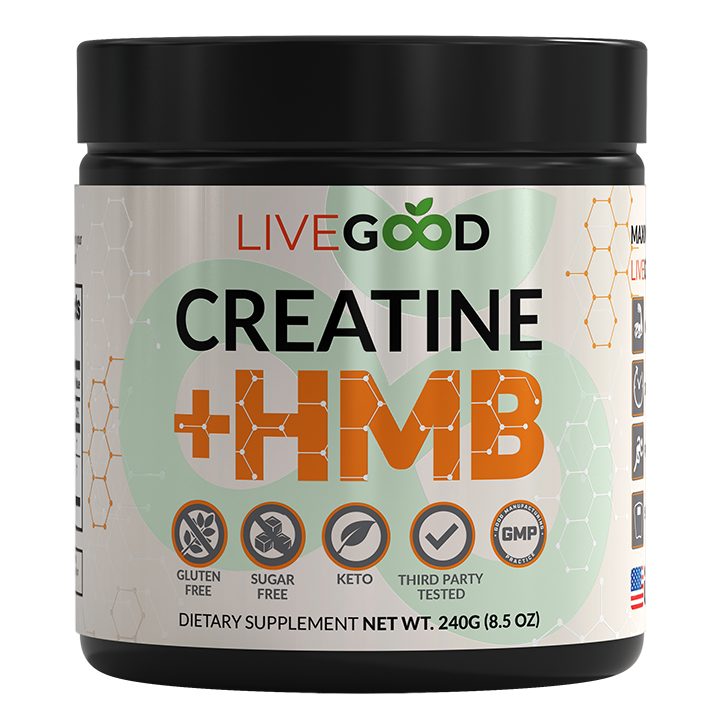
If HMB fits your goals, LiveGood Creatine + HMB provides 5 grams of creatine monohydrate and 3 grams of HMB per serving. It contains nothing else, with no junk fillers, flavors, or additives. The formula is designed to support muscle performance and maintenance, plus normal energy needs in the brain and heart. It is $19.95 for members compared with $34.95 retail, helping make a transparent daily formula more accessible.
Do You Need Either If You Eat Enough Protein?
For most people, protein intake is the first question to answer. Protein supplies the amino acids your body uses to repair tissue and build muscle after training. Both HMB and BCAA supplements play smaller, more specialized roles.
The general adult protein recommendation is about 0.8 grams per kilogram of body weight per day. That is a baseline intended to cover basic needs, not necessarily the ideal target for someone who trains hard. Active adults often aim for roughly 1.2 to 1.6 grams per kilogram per day. Individual needs vary with age, training, calorie intake, and health.
Spread protein across several meals instead of trying to get all of it at dinner. Each meal should contain a meaningful protein source. Examples include Greek yogurt, eggs, poultry, fish, lean meat, tofu, tempeh, beans, lentils, soy milk, and protein powder. Plant-based eaters can meet their needs, but variety and total intake deserve extra attention.
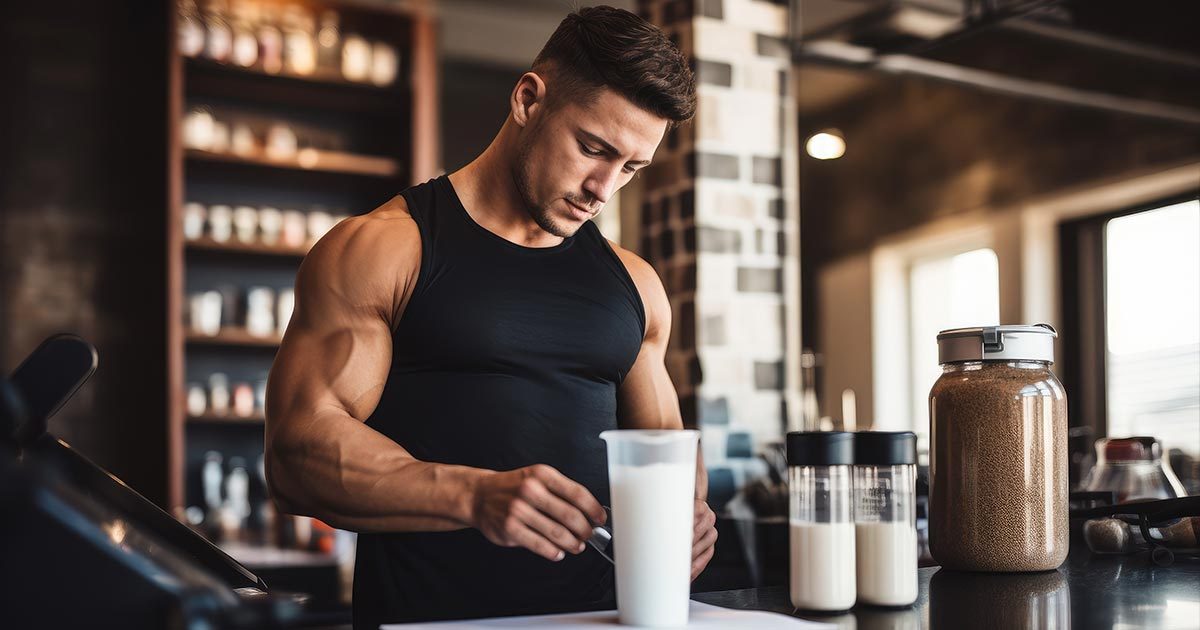
A consistent protein-rich diet and resistance training form the foundation of muscle maintenance and growth.
If you consistently reach an appropriate protein target, isolated BCAAs are unlikely to improve muscle growth in a noticeable way. HMB may still have a role during reduced activity, a calorie deficit, age-related changes in muscle maintenance, or other demanding periods, but it remains optional. The evidence does not support treating it as mandatory.
Track the basics before adding another supplement. Look at your weekly strength progress, meal consistency, sleep, recovery, and total calories. Make one change at a time, then give it enough time to evaluate. Consistency beats quick fixes.
If you have kidney or liver problems, another existing medical condition, take prescription medication, or are pregnant or breastfeeding, talk to your doctor before changing protein intake or starting HMB, BCAAs, or creatine.
Frequently Asked Questions
Is HMB a BCAA?
No, HMB is not one of the three BCAAs. It is a metabolite your body makes from leucine, which is a BCAA alongside isoleucine and valine. Because only a small fraction of leucine becomes HMB, a BCAA supplement should not be viewed as providing the same amount used in HMB research.
Does HMB actually work?
HMB may support muscle maintenance in some situations, but it does not work equally well for everyone. Research is most encouraging during reduced activity, calorie restriction, aging, new training, or high physical stress. Studies in well-trained people are less consistent. HMB supports a routine rather than replacing protein, resistance training, sleep, or sufficient calories.
Can you take HMB and BCAA together?
Yes, healthy adults can generally take HMB and BCAAs together when following label directions, but the combination is not automatically more effective. BCAAs already contain leucine, the amino acid from which HMB is made. If you eat enough complete protein, adding both may offer little value. Ask your doctor first if you have a medical condition or take medication.
Which is better for muscle growth, HMB or BCAA?
Neither is a clear winner for muscle growth when you already consume enough protein. BCAAs provide only three of the nine essential amino acids, while HMB is studied more for muscle maintenance than dramatic growth. HMB may be more useful during muscle-loss risk, but complete protein, progressive resistance training, and adequate calories should come first.
How much HMB should you take a day?
Most adult HMB studies use about 3 grams per day, but you should follow the serving directions on your product rather than increasing the amount to match a study. Research doses are context, not personal medical advice. Talk to your doctor before taking HMB if you are pregnant or breastfeeding, use prescription medication, or have kidney, liver, or other health conditions.