
How Much Fish Oil Should You Take?
 Written by Ben Glinsky
Ask AI about this article and Factor4 - Advanced Inflammation Management





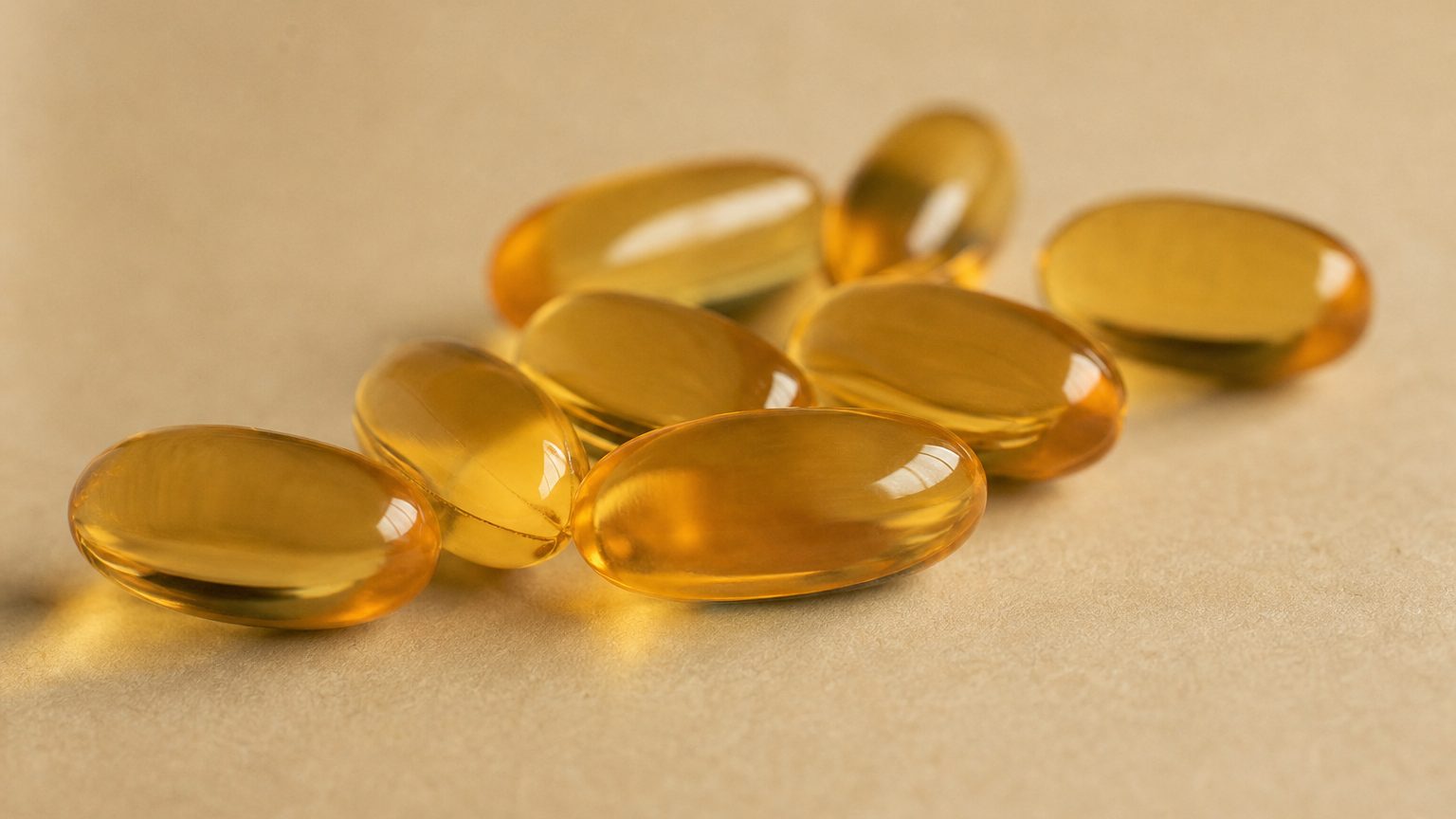
For most healthy adults who choose a fish oil supplement, 250-500 mg of combined EPA and DHA per day is a common general target. That is not the same as 250-500 mg of fish oil, since a typical 1,000 mg fish oil softgel may provide only about 300 mg of EPA and DHA combined. Here is how to read the label, calculate the serving and know when to ask your doctor.
Key Takeaways
- Count EPA plus DHA: These are the omega-3 amounts that matter, not the total fish oil weight printed on the front.
- Check the serving size: Supplement Facts may list nutrients per two softgels rather than per softgel.
- Use 250-500 mg as context: This is a common daily range for healthy adults with low oily-fish intake, not a universal prescription.
- Keep higher amounts clinician-guided: Research and prescription amounts should not be copied without medical supervision.
- Take it consistently: A meal, proper storage and the same daily routine can make fish oil easier to tolerate.
The Number on the Front Is Not the Dose
The large number on a fish oil bottle usually describes the total weight of oil. It does not tell you how much EPA and DHA you are getting.
EPA stands for eicosapentaenoic acid, and DHA stands for docosahexaenoic acid. They are long-chain omega-3 fats found in fish and algae. Your body uses them as parts of cell membranes, and they help support normal brain, eye and cellular function. They also play a role in maintaining a healthy inflammatory response.
A standard softgel might contain 1,000 mg of fish oil but only 180 mg of EPA and 120 mg of DHA. Add those together and the meaningful amount is 300 mg of combined EPA and DHA. The remaining oil includes other fatty acids and components naturally present in the source oil.
This is why two products labeled "1,000 mg fish oil" can deliver very different amounts. A concentrated product may fit 600 mg, 800 mg or more combined EPA and DHA into one softgel. Another may provide only 300 mg.
The word "omega-3" can also create confusion. Some labels list total omega-3s separately from EPA and DHA. Total omega-3s may include other fats, so add the disclosed EPA and DHA amounts when comparing products. ALA, the omega-3 found in foods such as flax and chia, is not interchangeable milligram for milligram with EPA and DHA. Your body can convert some ALA, but the conversion is limited and varies among people.
Working Out EPA and DHA Per Serving
Start with the Supplement Facts panel, not the marketing on the front. Find the serving size, then locate the separate lines for EPA and DHA. Add those two numbers.
Here is a typical example:
| Label detail | Amount |
|---|---|
| Serving size | 1 softgel |
| Fish oil | 1,000 mg |
| EPA | 180 mg |
| DHA | 120 mg |
| EPA plus DHA | 300 mg |
The calculation is simple:
180 mg EPA + 120 mg DHA = 300 mg combined EPA and DHA
If your chosen general target were 500 mg per day, divide that target by the amount in each softgel:
500 mg target / 300 mg per softgel = 1.67 softgels
You cannot take 1.67 softgels, so the practical comparison would be with the product's labeled serving. Two softgels would supply 600 mg combined EPA and DHA, but you should still follow the manufacturer's directions rather than changing the serving solely to hit an exact number.
Now consider a concentrated formula that lists 600 mg EPA and 400 mg DHA per softgel. That provides 1,000 mg combined EPA and DHA from one capsule, even if the total oil weight is similar to another product. More concentrated does not automatically mean better. It simply means you can obtain more EPA and DHA with fewer softgels.
Watch for labels that give amounts per serving when one serving equals two or three capsules. Divide the combined amount by the number of capsules if you want the per-capsule figure. For example, 900 mg combined EPA and DHA per three-softgel serving equals 300 mg per softgel.
Common Intake Ranges
There is no single official daily requirement for EPA and DHA that fits every healthy adult. Your diet, age, health, medications and reason for taking fish oil all matter. The ranges below are context, not personalized dosing instructions.
| Combined EPA and DHA | How to interpret it |
|---|---|
| 250-500 mg daily | A commonly used general range for healthy adults who eat little oily fish |
| Around 1,000 mg daily | An amount sometimes suggested for specific needs, ideally discussed with a clinician |
| 2,000-4,000 mg daily | A high range used in some research or prescription care, not a routine self-directed dose |
Food can supply EPA and DHA too. Two servings of oily fish per week is a widely used food-based goal for healthy adults. Salmon, sardines, herring, trout and mackerel are common sources, although the amount varies by species and portion. If you regularly eat these foods, you may not need a daily supplement.
Men and women generally do not need separate fish oil targets based on sex alone. Children should not receive a scaled-down adult dose without guidance from a pediatric clinician. If you are pregnant or breastfeeding, talk to your doctor about DHA needs, seafood choices and supplement quality. Cod liver oil also contains vitamins A and D, so it should not be treated as ordinary fish oil.
People who do not eat fish can consider algae oil. Check it the same way by adding EPA and DHA, since some algae supplements contain mostly DHA while others provide both.
Factor4 - Advanced Inflammation Management is LiveGood's number two seller and its first and only inflammation management supplement combining fish oil, turmeric, Coenzyme Q10 and garlic in one bottle. Formulated by one of the world's top immunologists, it is designed to support a healthy inflammatory response and everyday wellness. Check its Supplement Facts for EPA plus DHA, and follow the label with food. Members pay $19.95 versus $29.95 retail: "Highest Quality. Lowest Prices. Every Day."
When More Is Not Better
Taking more fish oil does not guarantee a greater wellness benefit. Evidence for fish oil supplements varies by outcome, population, dose and starting diet. Some people may benefit from filling a dietary gap, but high amounts should not be viewed as a shortcut or a replacement for medical care.
Common side effects include fishy aftertaste, bad breath, nausea, loose stools, indigestion and heartburn. These effects are usually mild, but they may become more likely as the amount increases. High intakes may also affect blood clotting. That matters especially if you take an anticoagulant or antiplatelet medication, sometimes called a blood thinner.
Talk to your doctor before taking fish oil if you use prescription medications, have a bleeding disorder or expect to have surgery. You should also get medical guidance during pregnancy or breastfeeding, or if you have kidney disease, liver disease, a heart rhythm condition or another existing medical condition. Do not combine several omega-3 products without adding their EPA and DHA totals.
Amounts used in prescription care are not equivalent to casually taking more over-the-counter softgels. Prescription omega-3 products have defined ingredients, concentrations and clinical purposes. If a clinician is managing high triglycerides or another diagnosed condition, follow that treatment plan rather than using a general wellness range.
Fish oil should not be used to self-treat chronic inflammation, arthritis or persistent joint pain. Those symptoms can have many causes and belong in a conversation with your doctor. A supplement may support a healthy inflammatory response, but it cannot diagnose the reason for ongoing pain or replace appropriate evaluation.
Timing, Storage and Fishy Burps
There is no universally best hour for taking fish oil. The best time is usually with a meal you eat consistently. A meal containing some fat may support absorption, and taking softgels with food can reduce nausea, heartburn and fishy burps.
Breakfast works well if it includes foods such as eggs, yogurt, nuts or avocado. Dinner may be easier if it is your largest meal. If the label calls for multiple softgels, it may allow you to divide them between meals, but follow the directions rather than assuming every product should be split.
Fishy burps do not necessarily mean the supplement is harmful. They often happen when the capsule opens in the stomach and the oil moves upward with reflux. Taking it during or immediately after a meal may help. Some people also tolerate smaller softgels or enteric-coated capsules better. An enteric coating is designed to delay the capsule's opening until it reaches the intestine.
Storage matters because omega-3 fats can oxidize, meaning they react with oxygen and become rancid. Keep the bottle tightly closed, away from heat, moisture and direct sunlight. Follow any refrigeration instructions on the package, particularly for liquid fish oil. Do not use a product that smells sharply sour, unusually paint-like or much stronger than expected.
Consistency matters more than morning versus evening. Choose a meal and routine you can maintain, then track both your intake and tolerance. Fish oil supports your diet over time. It is not a quick fix, and taking extra after a missed serving is not helpful unless the product label specifically directs you to do so.
Frequently Asked Questions
How much fish oil should you take a day?
A common starting reference for healthy adults is 250-500 mg of combined EPA and DHA per day when oily-fish intake is low. Read the Supplement Facts panel because the total fish oil amount is not the same as the active omega-3 amount. Follow the product directions, and ask your doctor for individualized guidance if you take medication or have a medical condition.
How much EPA and DHA do you actually need?
Many healthy adults use 250-500 mg of EPA and DHA combined as a general daily benchmark, although no single amount is right for everyone. Regular oily-fish intake may already provide meaningful amounts. Needs can differ during pregnancy, childhood or clinician-managed care, so those situations call for professional guidance rather than a general supplement target.
Is 1000mg of fish oil enough?
A 1,000 mg fish oil softgel may be enough for a general routine if it supplies an appropriate amount of EPA and DHA, but the front number cannot answer the question. A typical softgel provides about 300 mg combined EPA and DHA, while concentrated versions provide more. Add the EPA and DHA amounts on the Supplement Facts label to know what you are actually taking.
Can you take too much fish oil?
Yes, fish oil can be excessive, particularly when several products are combined or high-dose servings are taken without supervision. Larger amounts may cause digestive discomfort and can affect bleeding risk. Talk to your doctor before use if you take anticoagulants, use other prescription medication, have an existing medical condition, or are pregnant or breastfeeding.
When is the best time to take fish oil?
The most practical time is with a meal you eat consistently, preferably one containing some dietary fat. Food may improve tolerance and reduce fishy burps, nausea or heartburn. Morning and evening can both work. If the label recommends more than one softgel, follow its directions on whether to take them together or divide them between meals.