
How to Read a CBD Label
 Written by Nauder Khazan
Ask AI about this article and CBD Oil (Full-Spectrum)





Reading a CBD oil label starts with four details: total CBD, bottle volume, CBD per millilitre, and the certificate of analysis for that exact batch. The large milligram number on the front is only a bottle total, so you need a little more information to understand concentration, ingredients, spectrum type, and trace THC.
Key Takeaways
- Check the bottle total: A front-label number such as 750 mg usually describes all the CBD in the bottle, not one serving.
- Calculate mg per mL: Divide total CBD by the bottle volume to compare oils fairly.
- Match the laboratory batch: The lot or batch number on the certificate of analysis should match the bottle.
- Read the THC result: Full-spectrum CBD may contain measurable trace THC, which matters for drug testing.
- Treat claims cautiously: Independent testing has repeatedly found differences between CBD labels and actual contents.
Total CBD Versus CBD Per Serving
The largest number on a CBD bottle is usually the total amount of CBD in the entire container. If a 30 mL bottle says 750 mg CBD, it generally contains 750 mg across all 30 mL. It does not contain 750 mg in each dropperful.
This distinction matters because the big front-label number says little by itself. A 1,500 mg bottle may be twice as concentrated as a 750 mg bottle, or it may simply hold twice as much oil. You need the bottle volume before you can tell.
Next, look for a serving size. It may be listed as 1 mL, one dropperful, half a dropper, or a number of drops. "Dropperful" usually means the amount drawn to the marked serving line, not necessarily every drop the glass tube can physically hold. Check whether the dropper has measurement marks and whether the Supplement Facts panel defines the term.
The label may list CBD per serving directly. If it says 25 mg CBD per 1 mL, the calculation is already done for you. If it only lists hemp extract, cannabinoids, or a proprietary blend, you still do not know the exact CBD amount. Hemp extract weight and CBD weight are not automatically the same.
Also read the ingredient list. CBD oil normally includes a hemp-derived extract and a carrier oil, such as medium-chain triglyceride oil, commonly called MCT oil. Flavoring and other ingredients should be named rather than hidden behind vague marketing language.
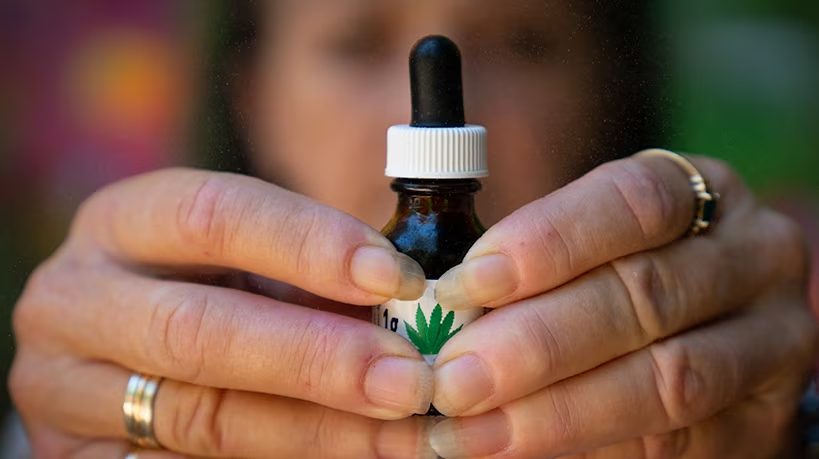
The bottle total, liquid volume, serving size, and ingredient list provide the basic numbers needed to understand a CBD oil.
Doing the Concentration Maths
CBD concentration is commonly expressed in milligrams per millilitre, written as mg/mL. A milligram measures the amount of CBD. A millilitre measures the liquid volume. To find the concentration, divide the total CBD by the bottle volume:
total CBD in mg / bottle volume in mL = CBD in mg per mL
For a 750 mg bottle containing 30 mL:
750 mg / 30 mL = 25 mg/mL
If the labeled serving is 1 mL, that serving contains 25 mg. If the serving is 0.5 mL, it contains 12.5 mg. These examples explain the label maths, not how much you personally should use. Follow the product directions and do not increase the serving simply because another bottle displays a larger number.
Now compare that with a 1,500 mg bottle containing 30 mL:
1,500 mg / 30 mL = 50 mg/mL
That oil is twice as concentrated. However, a 1,500 mg bottle containing 60 mL would also provide 25 mg/mL, the same concentration as the first 750 mg example. This is why the big number on the front cannot tell you potency on its own.
You can also estimate servings by dividing bottle volume by serving volume. A 30 mL bottle with a 1 mL serving contains about 30 labeled servings. Droppers are not always precision measuring devices, so use marked measurements where available rather than counting an unmarked tube as exactly 1 mL.
Dividing total CBD by bottle volume reveals the concentration in milligrams per millilitre.
Once you can compare mg per mL, LiveGood CBD Oil (Full-Spectrum) is easy to evaluate. It comes from the top 1% of hemp farms in the country and uses MCT oil as the carrier for faster absorption and maximum benefit. The 750 mg strength is $14.95 for members or $29.95 retail. The 1,500 mg strength is $19.95 member or $39.95 retail, in Natural or Peppermint, plus limited-time Cinnamon. Highest Quality. Lowest Prices. Every Day.
Reading a Certificate of Analysis
A certificate of analysis, or COA, is a laboratory report for a product sample. A useful COA shows what the laboratory measured, the methods used, the date tested, and identifying information for the sample. It should come from a laboratory that is independent of the seller, rather than being an in-house spreadsheet or a marketing summary.
Start with the cannabinoid panel. Find CBD and note the unit. Results may appear as mg/mL, mg/g, or a percentage. Do not compare numbers until the units match. If the COA states CBD in mg/mL, multiply that result by the bottle's total millilitres to estimate CBD in the bottle. For example, 24 mg/mL in a 30 mL bottle equals about 720 mg.
Some reports separate CBD from CBDA, the acidic form found in raw hemp. They may also provide a calculated "total CBD" figure. Check whether the front label promises CBD specifically, total CBD, hemp extract, or total cannabinoids. Those phrases are not interchangeable.
Then review THC. Look for delta-9 THC and any other THC compounds listed. "ND" usually means not detected above the laboratory's reporting threshold. It does not always mean absolute zero. The report may call that threshold the limit of detection or limit of quantitation.
A fuller COA can include results for pesticides, heavy metals, residual solvents, microbes, and mycotoxins, which are toxins made by certain molds. Look for an actual result or pass status, not merely a list of tests the company says it performs. A COA improves transparency, but it cannot prove that a product is risk-free or that it will produce a particular wellness outcome.
A useful certificate of analysis reports measured cannabinoids, clear units, testing details, and the sample identity.
Batch Numbers and Why They Matter
The COA is only relevant when it belongs to the product in your hand. Find the batch, lot, or production number printed on the bottle or carton. Then compare it character for character with the sample number or batch number on the laboratory report.
A company may provide COAs through a QR code, a website lookup tool, or customer service. Scan the code and confirm that it opens a specific laboratory document, not just the brand's homepage. The product name, strength, bottle size, and spectrum type should also agree. A report for a 750 mg natural oil does not automatically verify a 1,500 mg flavored oil.
Check the testing and production dates. A report from several years earlier may describe an old formulation or a different hemp crop. Also look for the laboratory's name and contact details. "Lab tested" on the front label is a claim, not proof by itself. Third-party testing is demonstrated by an accessible report from an outside laboratory that can be matched to the current batch.
Independent investigations have repeatedly found CBD products containing more or less CBD than their labels state. Some have also found unexpected THC. Small analytical differences can occur, but a major mismatch deserves caution. If the batch cannot be matched, the report is incomplete, or the company will not provide it, you do not have enough information to confirm the label.
Finally, compare the COA with the expiration or best-by date. Store the oil according to its label, usually away from excess heat, light, and moisture, because testing at manufacture does not prevent changes caused by poor storage.

The batch number on the CBD bottle should match the identifier shown on its laboratory report.
Spectrum Labels and Trace THC
"Full spectrum," "broad spectrum," and "isolate" describe the type of hemp-derived material in the oil. They do not tell you the CBD concentration, establish quality, or predict how you will respond. You still need the mg/mL figure and batch-matched COA.
Full-spectrum CBD contains CBD plus other naturally occurring hemp compounds, potentially including minor cannabinoids, terpenes, and trace THC. Terpenes are aromatic compounds found in many plants. Their presence does not automatically make an oil stronger or better. Full spectrum also does not mean every hemp compound is present in a meaningful amount.
Broad-spectrum CBD is processed to include CBD and some additional hemp compounds while removing THC. However, "THC-free" should be checked against the laboratory result. Depending on the test and its reporting limit, a result may show no detectable THC rather than proving that no THC molecule is present.
CBD isolate is highly purified CBD with other cannabinoids largely removed. A credible isolate COA should show CBD as the dominant cannabinoid and THC as not detected at the stated test limit. Isolate can offer a simpler cannabinoid panel, but the word alone does not guarantee purity or accurate labeling.
Trace THC is a genuine drug-test consideration. Full-spectrum products can expose you to small amounts, and repeated use may increase the possibility of a positive result. Broad-spectrum and isolate products may lower that concern when supported by appropriate testing, but no over-the-counter CBD label can promise that you will pass a drug test.
CBD supplement research remains early, and Epidiolex is the only FDA-approved prescription medicine containing CBD. That approval does not apply to CBD supplements. CBD can interact with many prescription medicines through CYP450 enzymes, a group of liver enzymes that process drugs. Ask your doctor before using CBD if you take prescription medication. You should also talk to your doctor during pregnancy or breastfeeding, or if you have a liver, kidney, or other existing medical condition. For a closer comparison, see full spectrum versus broad spectrum CBD oil.
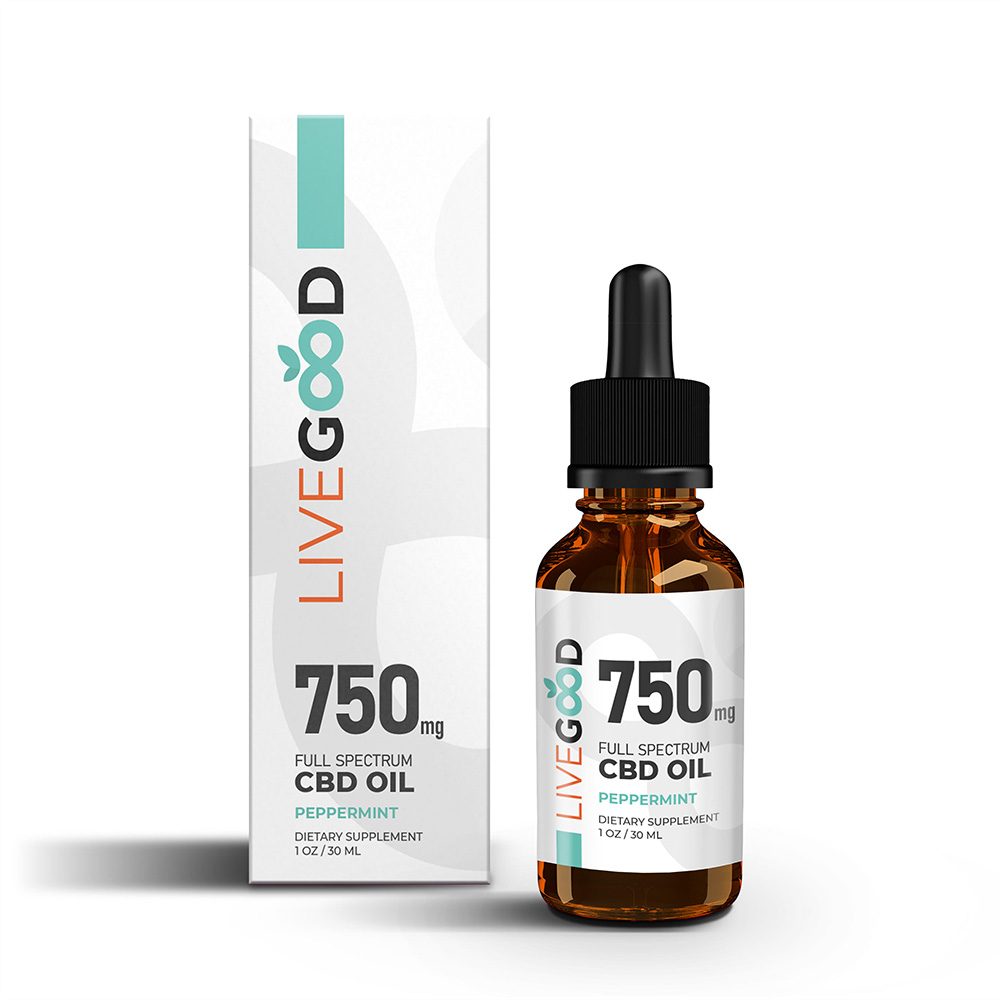
Spectrum terminology should be checked against the COA, especially when trace THC is a concern.
Frequently Asked Questions
How do you read a CBD label?
Read a CBD label by checking total CBD, bottle volume, serving size, ingredients, spectrum type, and the matching laboratory report. Divide total milligrams by total millilitres to find mg/mL. Then confirm that the COA matches the bottle's batch number and shows results for CBD, THC, and relevant contaminants.
What does the mg number on CBD oil mean?
The prominent mg number usually means the total CBD in the entire bottle, not the amount in one serving. A 750 mg label on a 30 mL bottle works out to 25 mg/mL. Always check whether the number refers to CBD, hemp extract, or total cannabinoids, since these are different measurements.
What is a certificate of analysis?
A certificate of analysis is a laboratory report describing what was measured in a product sample. For CBD oil, it commonly lists CBD, THC, other cannabinoids, and sometimes contaminants such as heavy metals, pesticides, solvents, and microbes. The most useful COA identifies the laboratory, test date, sample, methods, units, and product batch.
How do you know if CBD is third party tested?
CBD is third-party tested when an independent laboratory has issued an accessible report for the product's current batch. Match the lot number, product name, strength, and test date to your bottle. A QR code or "lab tested" statement is not enough if it does not lead to a complete, batch-specific COA.
What does full spectrum mean on a label?
Full spectrum means the oil contains CBD alongside other hemp compounds and may contain trace THC. The phrase does not reveal the exact amounts, so read the cannabinoid panel on the COA. Because even small THC exposure can matter for workplace or athletic screening, full-spectrum CBD carries a real drug-test consideration.