
Is CBD Calming or Energizing? What Research Suggests
 Written by Ben Glinsky
Ask AI about this article and CBD Oil (Full-Spectrum)





CBD is more often described as calming than energizing, but neither effect is guaranteed. How it feels can vary with the dose, product composition, timing, and person, while expectations can strongly influence self-reports. Here is what research suggests, and where the evidence remains uncertain.
Key Takeaways
- Expect individual variation: CBD may feel calming, neutral, tiring, or occasionally alerting, depending on the person and situation.
- Do not expect a THC-like high: CBD does not bind strongly to CB1 receptors in the way THC does.
- Consider the whole formula: Full-spectrum oils contain other cannabinoids, terpenes, and trace THC that may shape the experience.
- Treat dose claims cautiously: The idea that low and high amounts produce opposite effects is plausible, but human evidence is limited.
- Check quality and safety: Look for an independent certificate of analysis, follow the label, and discuss medication interactions with your doctor.
Why Reports Point Both Ways
Ask ten people how CBD feels and you may hear ten slightly different answers. Some describe a quieter or more settled feeling. Others report sleepiness, no noticeable change, or an unexpectedly alert feeling. These reports are real experiences, but they do not prove that CBD will create the same response in you.
Several variables change the picture. The amount matters, but so do the time of day, whether you have eaten, your sleep level, and your previous experience with cannabis products. Your body size and metabolism may affect how quickly compounds are processed. So can genetics, liver function, and medications. Even the reason you decided to take CBD can shape what you notice afterward.
Product differences add another layer. A CBD isolate contains cannabidiol without the wider range of hemp compounds. Broad-spectrum and full-spectrum products contain more components, and those formulas are not interchangeable. Two bottles displaying the same CBD amount may therefore feel different.

People can experience the same CBD product differently based on personal, product, and situational factors.
This is why there is no defensible promise that CBD will make you calm, active, focused, or happier. Research does not support using a CBD supplement as a reliable way to improve mood or generate energy. If you want CBD to feel active, it may not match that goal because it is not a stimulant. If you want a predictable calming effect, the evidence is also less certain than many product descriptions imply.
How CBD Differs From THC
CBD, short for cannabidiol, and THC, short for tetrahydrocannabinol, both come from cannabis. Their effects differ because they interact with the body in different ways.
THC binds directly to CB1 receptors, which are signaling sites found in high numbers in the brain. This activity is largely responsible for the intoxication, altered perception, and euphoria commonly called a high. CBD does not bind strongly to CB1 receptors in the same way. Instead, laboratory research suggests that it influences several signaling systems indirectly. Scientists are still working out which pathways matter most at the amounts people commonly use.
That difference means CBD itself is generally considered nonintoxicating. It should not produce the characteristic high associated with THC. However, nonintoxicating does not mean that you cannot feel anything. Some people report drowsiness, fatigue, digestive changes, or a subtle shift in how they feel. A supplement can affect you without producing intoxication.
CBD does not engage CB1 receptors in the same direct way as intoxicating THC.
The product type matters here. Full-spectrum CBD contains trace amounts of THC along with other hemp compounds. Depending on the formula, serving pattern, and your sensitivity, that trace THC may contribute to the experience. It may also create a risk of a positive drug test. Broad-spectrum products are made to remove THC, while isolates contain CBD alone, but no manufacturing process should be treated as perfect without current independent test results.
CBD supplements should also be distinguished from Epidiolex, the one FDA-approved prescription CBD medicine. Its approved uses, pharmaceutical manufacturing, and medically supervised doses do not establish that over-the-counter CBD supplements have the same effects.
Dose and the Biphasic Idea
You may see CBD described as biphasic. A biphasic response means a substance could produce one pattern at a lower amount and a different, sometimes opposite, pattern at a higher amount. Caffeine offers a familiar comparison: a moderate amount may feel useful, while too much can leave someone uncomfortable or tired later.
For CBD, people sometimes claim that lower amounts are energizing and higher amounts are calming or sedating. That is an appealingly simple rule, but human research has not confirmed it as a dependable formula. Some of the idea comes from laboratory or animal research. Human studies often use different populations, products, schedules, and amounts, making direct comparisons difficult. Studies also do not consistently define what counts as a low or high amount.
A larger serving is not necessarily more calming, and a smaller serving is not necessarily energizing. The response may not follow a straight line. One person may feel no obvious effect across several amounts, while another may notice drowsiness. Taking more can also increase the chance of unwanted effects.
For a practical approach, follow the product's labeled directions rather than trying to recreate a research dose or chasing a stronger sensation. Do not drive or operate machinery until you know how a product affects you. Keep timing, food, and other supplements consistent when observing your response. A short written note about the serving, time, meals, and how you felt can be more useful than changing several variables at once.
CBD can interact with many medicines, partly through liver enzymes called CYP450 enzymes. These enzymes help process drugs. Talk to your doctor or pharmacist before using CBD with prescription medication, and do not adjust a medicine or its dose on your own.
What Else Is in the Bottle
The amount of CBD on the front label is only part of the story. The bottle may contain CBD isolate, broad-spectrum hemp extract, or full-spectrum hemp extract. It also contains a carrier oil and may include flavorings or other ingredients.
Full-spectrum products retain a range of naturally occurring hemp compounds. These can include minor cannabinoids, which are cannabis compounds other than CBD and THC, and terpenes, the aromatic compounds that give plants their characteristic scents. Full-spectrum products also contain trace THC. Some researchers have proposed that these compounds may work together, an idea often called the entourage effect. It remains a hypothesis, not a guarantee that full-spectrum CBD will feel stronger, calmer, or better.
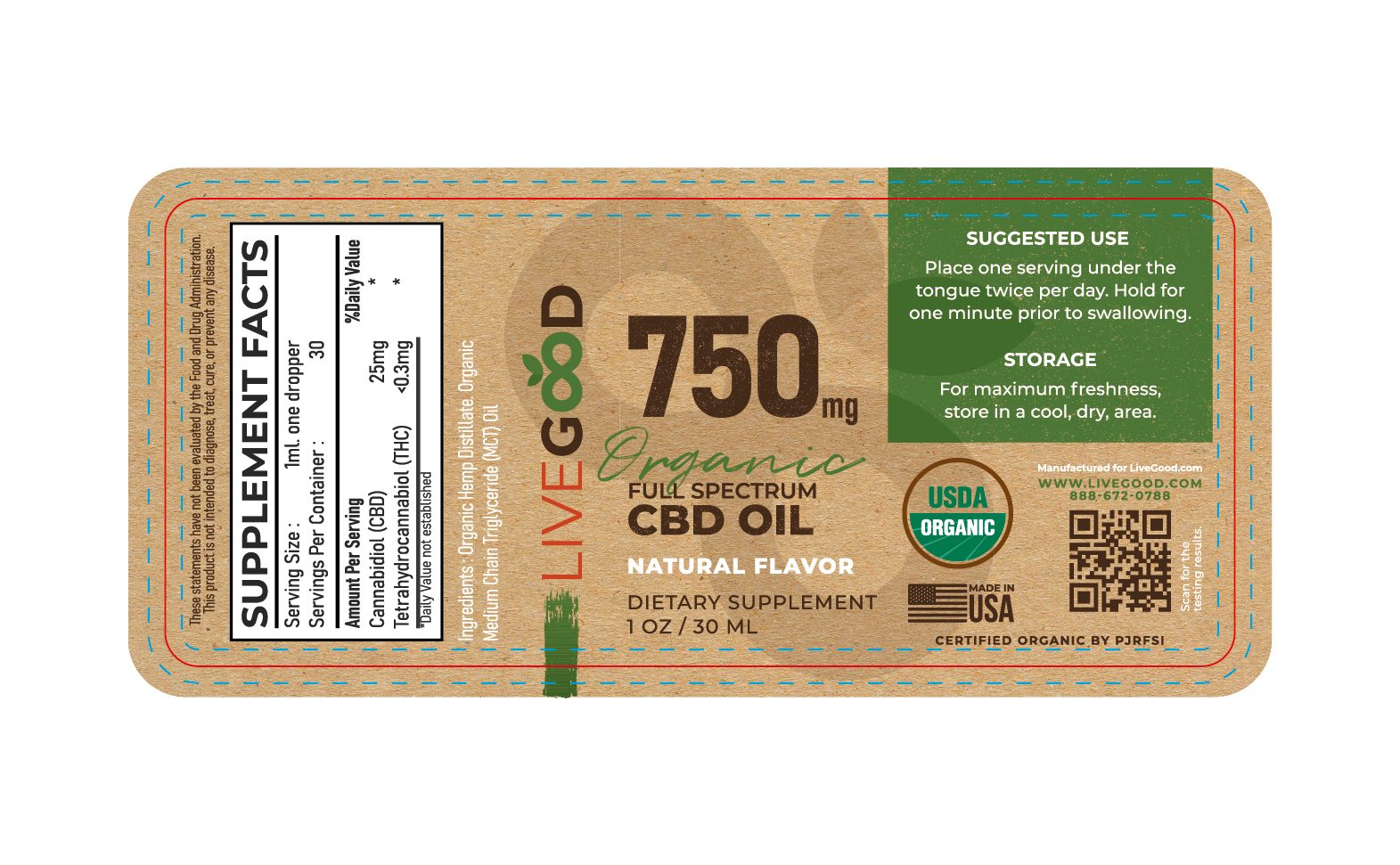
A CBD oil's extract type, carrier oil, and verified cannabinoid profile all deserve attention.
Carrier oils can affect texture, taste, and how you use the product. MCT oil, usually made from coconut-derived fats, is a common option because cannabinoids dissolve in fat. Flavorings may make a daily routine easier, but they do not determine whether CBD is calming or energizing.
Label accuracy deserves close attention. Independent testing has repeatedly found that some CBD products contain more or less CBD than stated, unexpected THC, or contaminants. Look for a recent third-party certificate of analysis, commonly called a COA. It should match the bottle's batch number and report cannabinoid levels. A useful report also screens for concerns such as pesticides, heavy metals, residual solvents, and microbes. A COA cannot predict how you will feel, but it helps confirm what you are taking.
If a full-spectrum option fits your routine, LiveGood's CBD Oil (Full-Spectrum) is derived from the top 1% of hemp farms in the country and uses MCT oil as its carrier for faster absorption and maximum benefit. The 750mg strength is $14.95 for members or $29.95 retail. The 1500mg strength is $19.95 member or $39.95 retail, in Natural or Peppermint, plus limited-time Cinnamon. Follow the label, track your response, and avoid assuming a stronger serving will feel better. "Highest Quality. Lowest Prices. Every Day."
Expectation and Self-Reported Effects
Expectation can change what you notice. In research, this is often discussed through placebo and nocebo effects. A placebo effect occurs when positive expectations contribute to a perceived benefit. A nocebo effect occurs when negative expectations contribute to an unpleasant experience. Neither means that someone is imagining the experience. Expectations can influence attention, interpretation, and physical sensations.
CBD is especially vulnerable to this problem because many studies and consumer surveys depend on self-reported feelings. If you take a product labeled for nighttime relaxation, you may pay closer attention to yawning or a quieter evening. If the same formula is marketed for daytime balance, you may notice different details. Packaging, reviews, price, flavor, and advice from a friend can all set expectations before the first serving.
Context matters too. Taking CBD after a stressful day is not the same as taking it after a full night's sleep on a quiet weekend. If you feel calmer, CBD may have contributed, but the change could also reflect your surroundings, a meal, reduced caffeine, or simply sitting down for a few minutes. If you feel more active, that does not establish that CBD increased energy. Feeling less preoccupied can be interpreted as alertness even when there has been no direct stimulant effect.
You can reduce some guesswork by observing patterns instead of judging one use. Keep the product, labeled serving, timing, and routine consistent. Record sleep, caffeine, meals, and other major factors. Focus on whether an effect repeats. This personal tracking is not a clinical trial, but it can help separate a stable pattern from an isolated good or bad day.
What Research Has Not Settled
Research has not established that everyday CBD supplements reliably calm or energize healthy adults. Studies vary widely in CBD amount, delivery method, product purity, participant characteristics, and outcome measured. Some examine a single use, while others follow repeated use. Small studies may detect an interesting signal without being large enough to provide a dependable answer for the public.
Researchers also face a product problem. An oral CBD isolate used in a controlled setting is not equivalent to every full-spectrum oil sold online. Different cannabinoid and terpene profiles make comparisons difficult. Actual bottle contents may not match labels, and expectations can influence subjective outcomes such as calmness, sleepiness, mood, or alertness.
Research has not yet established CBD as a reliable source of either calmness or energy.
Safety requires the same honest perspective. CBD can cause side effects, including drowsiness, fatigue, diarrhea, appetite changes, and changes in liver-related laboratory tests. It can interact with many medications through CYP450 enzymes. The risk depends on the medicine, CBD exposure, and the person, so a pharmacist or doctor is better equipped to assess your specific combination.
Talk to your doctor before using CBD if you take prescription medication, have a liver or kidney condition, have another existing medical condition, or are pregnant or breastfeeding. Safety during pregnancy and breastfeeding has not been established. Avoid combining CBD with alcohol or other substances that make you sleepy unless a clinician says the combination is appropriate.
The most accurate conclusion is modest. CBD may feel calming to some people, while others feel sleepy, neutral, or occasionally alert. Research does not support promising mood improvement, sharper focus, or an energy boost. Choose a clearly labeled product, verify the COA, follow label directions, and pay attention to repeatable patterns. Consistency and careful observation are more useful than expecting a dramatic first-dose sensation.
Frequently Asked Questions
Is CBD calming or energizing?
CBD is more commonly described as calming, but it can feel neutral, tiring, or occasionally alerting. The experience may change with the labeled serving, product type, trace THC, timing, food, and individual response. Current research does not show that CBD consistently creates either calmness or energy, so it should not be treated as a predictable sedative or stimulant.
Does CBD make you sleepy?
CBD can make some people sleepy, but drowsiness is not universal. Fatigue and sleepiness are possible side effects, while other users notice little or no change. Product composition, other medications, alcohol, sleep debt, and time of day can affect the experience. Avoid driving or operating machinery until you understand how a particular product affects you.
Does the dose change how CBD feels?
The amount may change how CBD feels, but there is no proven rule that low servings energize and high servings calm. Biphasic effects are scientifically plausible, yet the available human evidence is too inconsistent for a universal dosing formula. Follow the label rather than increasing the amount to chase a sensation, and discuss CBD with your doctor if you take medication.
Why do people report such different effects?
People report different effects because bodies, products, settings, and expectations differ. CBD isolate is not identical to full-spectrum oil, which contains other cannabinoids, terpenes, and trace THC. Food, sleep, caffeine, metabolism, medications, and the reason for taking CBD can also shape what someone notices. Label inaccuracies make comparisons between products even harder.
Does CBD make you feel high?
CBD itself does not usually produce the intoxicating high associated with THC because it does not bind strongly to CB1 receptors in the same way. Still, full-spectrum CBD contains trace THC, and some people may notice drowsiness or other changes. Trace THC can also matter for drug testing, especially with repeated use or a mislabeled product.