
Is Whey Protein Isolate Easier to Digest?
 Written by Nauder Khazan
Ask AI about this article and Whey Protein Isolate - With Colostrum






Whey protein isolate is often easier to digest than whey concentrate because extra filtration removes most of the lactose, a milk sugar that commonly causes gas and bloating. That difference can help if you have lactose intolerance, but isolate still contains dairy protein and is not safe for someone with a milk allergy. Here is how whey protein isolate digestion works and what else can affect your stomach.
Key Takeaways
- Less lactose is the main advantage: Extra filtration removes most of the lactose found in whey concentrate.
- Low lactose does not mean dairy-free: Isolate still contains milk proteins and is not safe for a milk allergy.
- Your full shake matters: Sweeteners, gums, milk, serving size, and drinking speed can all cause discomfort.
- Enzymes may help in specific cases: Lactase helps digest lactose, while proteases help break protein into smaller pieces.
- Personal tolerance comes first: If a carefully tested isolate still bothers you, a non-dairy protein may be a better fit.
What Filtration Removes
Whey is the liquid portion of milk that separates from the curds during cheesemaking. That liquid contains protein, lactose, fat, minerals, and water. Manufacturers dry and filter it to create whey protein powder.
Whey protein concentrate receives some filtration, but it keeps varying amounts of lactose and fat. Whey protein isolate goes through additional filtration. This removes most of the lactose and fat while keeping a high proportion of protein. Because lactose is one of the most common reasons a whey shake causes digestive trouble, removing most of it can make a noticeable difference.

Additional filtration removes most lactose and fat while preserving the whey proteins.
Filtration does not turn whey into a non-dairy product. The powder still contains whey proteins, including beta-lactoglobulin and alpha-lactalbumin. These protein names matter because a person with a milk allergy can react to them even when very little lactose remains.
Isolate is also different from hydrolyzed whey. Hydrolysis is a separate process that cuts long protein chains into smaller pieces called peptides. You can think of peptides as short sections of protein. Some people find hydrolyzed protein comfortable, but its taste and price can differ. An isolate is not automatically hydrolyzed unless the label specifically says so.
The practical takeaway is simple. Filtration mainly changes how much lactose, fat, and non-protein material remains. It does not remove the dairy proteins themselves, and it does not guarantee that every stomach will tolerate the finished powder.
Lactose Intolerance vs Milk Allergy
Lactose intolerance and milk allergy are different problems. Understanding that difference is essential before choosing whey protein isolate.
Lactose intolerance happens when your small intestine makes too little lactase. Lactase is the enzyme that breaks lactose into sugars your body can absorb. When undigested lactose reaches the large intestine, gut bacteria ferment it. Fermentation can produce gas, bloating, cramps, and loose stools. Symptoms often depend on how much lactose you consume and how much lactase your body still produces.
Since whey isolate contains much less lactose than whey concentrate, some people with lactose intolerance can use it comfortably. However, the amount of lactose varies by product, flavor, and manufacturing process. Isolate should not automatically be described as lactose-free unless its label makes and supports that claim.
A milk allergy is an immune response to milk proteins. Even a small amount may cause hives, swelling, vomiting, wheezing, breathing difficulty, or a serious whole-body reaction. Removing lactose does not remove the proteins that trigger a milk allergy.

Whey isolate may suit some people with lactose intolerance, but it remains unsafe for anyone with a milk allergy.
If you have a diagnosed milk allergy, avoid whey isolate, whey concentrate, hydrolyzed whey, casein, and products containing bovine colostrum. Check the allergen statement on every label. Seek urgent medical help if you develop trouble breathing, throat tightness, faintness, or swelling after consuming a product.
If you are unsure whether past symptoms came from lactose intolerance or an allergy, talk with your doctor or an allergist before testing whey on your own.
Why Isolate Often Sits Better
The simplest explanation is that whey isolate delivers the protein with less lactose. If lactose is your main trigger, there is less milk sugar available for gut bacteria to ferment. That may mean less gas, pressure, and urgency than you experience with whey concentrate.
Isolate also contains less fat than many concentrates. Fat is not inherently difficult to digest, but it can slow stomach emptying. A lower-fat shake may feel lighter, especially before or after exercise. Still, this effect depends on the rest of your drink. Blending isolate with whole milk, nut butter, and a large amount of fruit creates a very different meal from mixing it with water.
Whey is considered a relatively fast-digesting protein compared with casein, the milk protein that forms a thicker mixture in the stomach. This means amino acids from whey generally become available relatively quickly. Amino acids are the small building blocks released when your body digests protein. Whey provides all nine essential amino acids, which your body must obtain from food.
Fast digestion does not guarantee digestive comfort. How long a shake takes to move through your stomach depends on its size, calorie content, fat, fiber, and what else you recently ate. Stress, exercise intensity, and individual gut function also matter. There is no single digestion time that applies to every scoop or every person.
For a useful comparison, keep the test simple. Use the label serving, mix the isolate with water, drink it slowly, and note how you feel for several hours. Change one factor at a time rather than switching the powder, liquid, serving size, and sweetener all at once.
Other Causes of Bloating and Gas
A low-lactose isolate can still cause symptoms when something else in the shake is responsible. The powder is only one part of what reaches your digestive system.
Start with serving size. A very large shake places more fluid, protein, flavoring, and sweetener in your stomach at once. Follow the product's label directions rather than doubling the serving. Drinking quickly can also make you swallow extra air, which may feel like protein-related bloating.
Next, check the mixing liquid. Regular cow's milk adds lactose back into the shake. If you are testing your tolerance, use water or a suitable lactose-free liquid first. Once you know the powder works for you, you can test other ingredients separately.

Serving size, mixing liquid, sweeteners, and drinking speed can all influence digestive comfort.
Sugar alcohols such as sorbitol, maltitol, and erythritol can cause gas or loose stools in some people. They are sweeteners that are only partly absorbed. Certain fibers, including inulin or chicory root fiber, may also ferment in the colon. Gums and thickeners are tolerated by many people, but sensitive individuals sometimes notice discomfort.
Timing matters too. A large shake immediately before intense exercise can bounce in the stomach or contribute to nausea. Give yourself more time, reduce the volume, or move the shake until after training. Drinking it alongside a heavy meal may also make it feel slower to digest.
Keep a short food and symptom log if the cause is unclear. Record the product, amount, mixer, timing, and symptoms. Stop using the product and talk to your doctor if discomfort is persistent, severe, or accompanied by vomiting, blood in the stool, unexplained weight loss, or trouble swallowing.
Digestive Enzymes and Whether They Help
Digestive enzymes are substances that break food into smaller parts your body can absorb. Your body already makes many of them, but some protein powders include additional enzymes.
Lactase has the clearest role when lactose is the issue. It breaks lactose into glucose and galactose, two simpler sugars. A lactase-containing product may help someone with lactose intolerance handle a small amount of remaining lactose. It cannot make whey safe for a milk allergy because it acts on milk sugar, not milk protein.
Proteases are enzymes that break proteins into peptides and amino acids. They may help with protein breakdown, but the evidence that enzyme blends prevent bloating in everyone is limited. Your stomach and small intestine already produce enzymes for this job. Added proteases are not a guarantee of faster absorption or a symptom-free shake.
Other enzymes sometimes found in blends target carbohydrates or fats. Whether they help depends on what is causing your discomfort and whether the product contains a meaningful amount of the relevant enzyme. More types of enzymes on a label do not automatically mean better digestion.
Use enzymes as one part of a careful test, not as a way to ignore ongoing symptoms. Follow label directions. If you are pregnant, breastfeeding, taking prescription medication, or managing a kidney, liver, digestive, or other existing medical condition, talk to your doctor before adding a supplement.
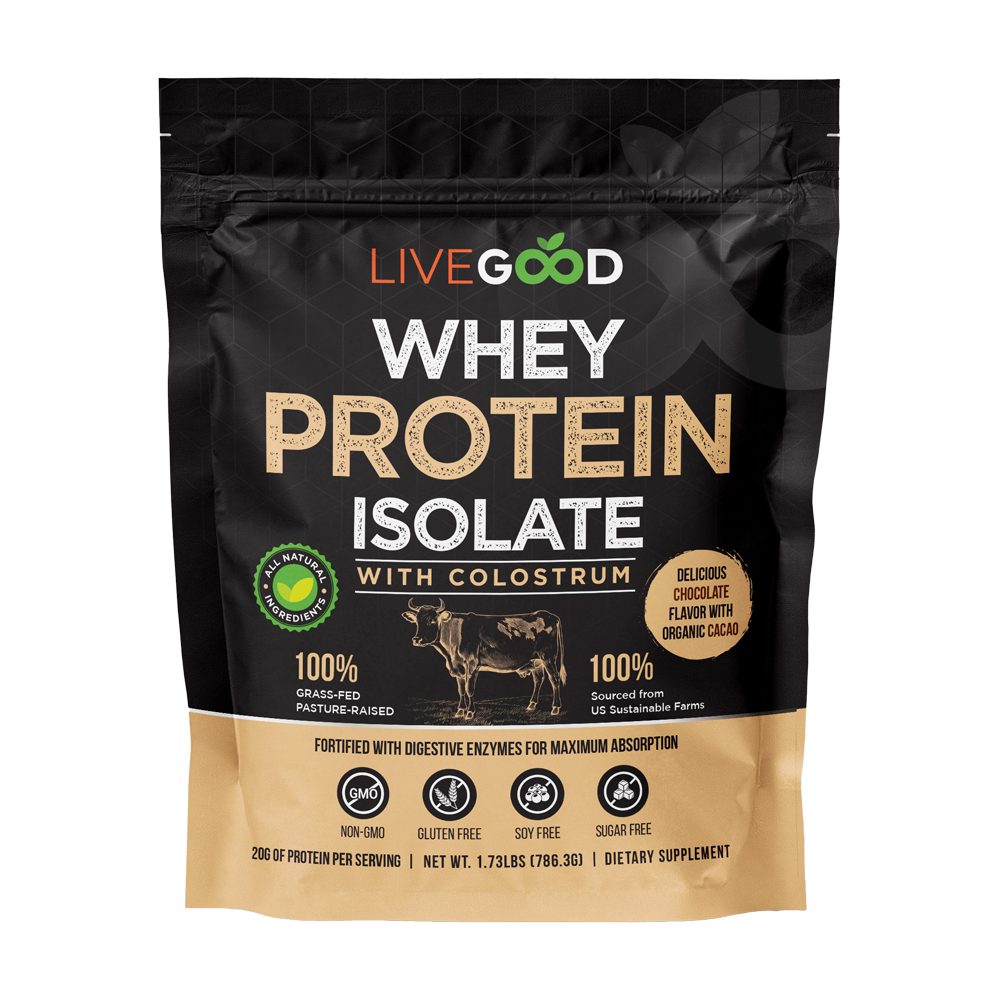
After confirming that dairy suits you, LiveGood Whey Protein Isolate - With Colostrum offers 20 grams of clean protein with all nine essential amino acids. The chocolate isolate uses organic cacao and whey from 100% grass-fed, pasture-raised cows on sustainable US farms. Colostrum and digestive enzymes help support absorption, gut health, and immune function. Members pay $39.95 versus $49.95 retail, advancing LiveGood's mission to "Provide the highest quality supplements in the world, at the lowest prices possible." Avoid it if you have a milk allergy.
When to Choose a Non-Dairy Protein
Choose a non-dairy protein if you have a milk allergy. Whey isolate is not an appropriate workaround, even when the label reports very little lactose. Colostrum and casein are also dairy ingredients and should be avoided by someone allergic to milk proteins.
A non-dairy option may also make sense if lactose intolerance is severe or if you continue to experience symptoms after a controlled isolate test. You do not need to force whey into your routine. Pea, rice, soy, and blended plant proteins can all contribute to your daily protein intake.
Pea, rice, soy, and blended plant proteins offer dairy-free alternatives when whey is not a good fit.
Plant proteins differ in amino acid profile and texture. Soy is a complete protein, meaning it supplies all nine essential amino acids. Pea protein is rich in several essential amino acids but relatively lower in methionine. Rice protein is relatively lower in lysine. Blending pea and rice can create a more balanced amino acid profile. You do not have to combine complementary proteins in the same shake, as long as your overall diet is varied.
Read the full ingredient list when comparing products. A dairy-free label does not rule out sweeteners, fibers, or gums that may bother you. Start with the label serving, choose a simple mixing liquid, and evaluate one product at a time. Consistency gives you a better answer than trying several powders in the same week.
Protein powder is a convenient food supplement, not a requirement. You can also meet protein needs with meals and snacks that suit your diet. If you have a medical condition, kidney or liver concerns, or unusually high protein needs, ask your doctor or a registered dietitian how much protein and which sources are appropriate for you.
Frequently Asked Questions
Is whey protein isolate easier to digest?
Whey protein isolate is often easier to digest than whey concentrate because it contains much less lactose and fat. The lower lactose content is especially relevant if lactose fermentation causes your gas or bloating. It is not guaranteed to suit everyone, since serving size, sweeteners, milk proteins, and other ingredients can also affect digestion.
Does whey isolate contain lactose?
Whey isolate usually contains a small amount of lactose, although filtration removes most of what was present in the original whey. Exact amounts vary among products and flavors. Do not assume an isolate is completely lactose-free unless the manufacturer specifically states that on the label and provides an appropriate allergen statement.
Can you take whey isolate if you are lactose intolerant?
Many people with lactose intolerance can tolerate whey isolate, but your response depends on your individual threshold and the product's remaining lactose. Try the label serving with water and no added dairy, then monitor your symptoms. Do not use whey isolate if you have a milk allergy, which is an immune reaction to dairy proteins.
Why does whey protein cause bloating?
Whey protein may cause bloating because of lactose, a large serving, swallowed air, added sweeteners, fermentable fibers, or the liquid used for mixing. Drinking a shake too close to intense exercise can also contribute. Test a simple isolate mixed with water, drink it slowly, and change only one variable at a time.
Do digestive enzymes help?
Digestive enzymes may help when they match the cause of the problem. Lactase helps break down lactose, while proteases assist with protein breakdown. Evidence does not show that every enzyme blend prevents digestive discomfort for everyone. Enzymes also cannot make whey or colostrum safe for someone with a milk allergy.