






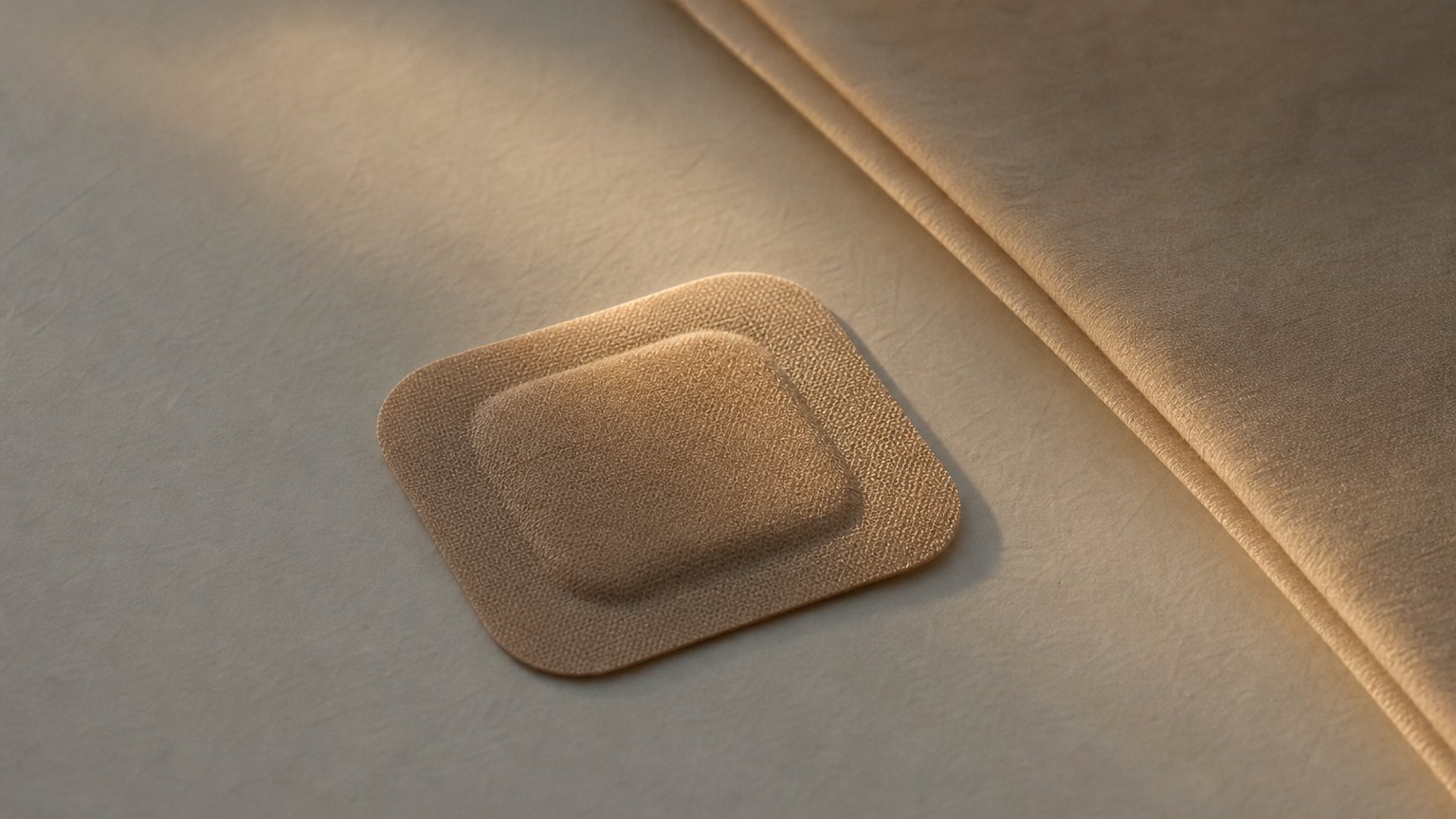
Melatonin patches may deliver melatonin through your skin, but research on their effectiveness is limited compared with oral melatonin. They are convenient and may offer gradual release, yet the amount your body actually absorbs can vary. Here is what transdermal delivery means, why bypassing digestion is not automatically better, and how to assess a sleep patch realistically.
Key Takeaways
- Evidence remains limited: Far fewer human studies have examined melatonin patches than oral melatonin products.
- Skin is a strong barrier: A patch must move melatonin through the outer skin layer before it can reach circulation.
- Bypassing the liver is not proof: Avoiding first-pass metabolism may change delivery, but it does not guarantee better absorption or sleep.
- Label amounts need context: The melatonin placed in a patch may not equal the amount that enters your bloodstream.
- Your routine still matters: A consistent bedtime, dim evening light, and sensible caffeine timing remain central to healthy sleep.
How Transdermal Delivery Works
Transdermal means that an ingredient travels across the skin. A transdermal patch holds one or more ingredients against your body, usually within an adhesive layer or a small reservoir. The goal is to release those ingredients gradually so they can pass through the skin and enter circulation.
That journey is not simple. The skin's outer layer, called the stratum corneum, is designed to keep outside substances out and water inside. Only certain molecules cross it readily. Size, chemical structure, concentration, and whether a molecule mixes well with water or oil can all influence movement through the skin.
Patch design matters too. Manufacturers may use specific adhesives, carrier materials, or penetration-enhancing ingredients to help a compound cross the skin. Heat, moisture, skin thickness, placement, and wear time can also affect delivery. This is why evidence for one patch formulation cannot automatically be applied to every melatonin patch.
Melatonin is a relatively small molecule, and laboratory work suggests that transdermal delivery is possible under the right conditions. Possible does not mean predictable, however. A patch needs formulation-specific testing to show how much melatonin crosses human skin, how quickly it appears in the blood, and how consistently it is delivered from person to person.

A transdermal patch holds ingredients against the skin, but the amount that crosses into circulation depends on the finished formulation.
In practical terms, a patch can provide a convenient, pill-free format. What it cannot do is make the skin barrier irrelevant. Claims about steady or complete absorption should be supported by testing on the finished patch, not assumed from the delivery method alone.
The First-Pass Metabolism Argument
When you swallow melatonin, it travels through your digestive system and is absorbed into blood vessels that lead to the liver. The liver breaks down part of the melatonin before it reaches wider circulation. This process is called first-pass metabolism.
Oral melatonin availability can vary considerably among people. Food, digestion, age, liver activity, the product's formulation, and other factors may change how quickly melatonin appears in the blood and how much reaches circulation. This variability helps explain why the same oral amount may feel different from one person to another.
A patch is marketed as bypassing the stomach and first-pass metabolism because an ingredient crossing the skin enters circulation without first passing through the digestive tract. That is a real potential advantage of transdermal delivery. It may also allow a patch to release an ingredient over a longer period instead of producing the quicker rise associated with many immediate-release tablets.
Still, bypassing the liver does not prove that a patch delivers more melatonin. The digestive tract is no longer the main obstacle, but the skin becomes the obstacle instead. If only a small or inconsistent amount crosses the skin, the theoretical advantage may not produce a meaningful benefit.
Be cautious with claims that digestion destroys nearly all oral supplements or that patches are automatically more effective. Those statements oversimplify both delivery routes. The useful question is not whether a product bypasses digestion. It is whether the finished product has evidence showing reliable delivery and a meaningful result in people.
What Evidence Exists for Melatonin Patches
Published research shows that melatonin can cross human skin when it is placed in a suitable transdermal formulation. Small human studies have also reported gradual changes in blood melatonin levels after transdermal application. These findings support the biological possibility of patch delivery, but they do not establish that every commercial patch works the same way.
The larger gap is sleep research. There are relatively few well-designed clinical trials testing finished melatonin patches for outcomes such as time to fall asleep, total sleep time, nighttime waking, or next-day alertness. Available studies tend to be small, use specialized formulations, or focus on how melatonin moves through the body rather than whether a retail patch improves sleep.
That is much thinner evidence than the research base for oral melatonin. Even oral findings are not uniformly positive. Results differ according to the population studied, timing, formulation, dose, and the sleep outcome being measured. Melatonin is a hormone involved in telling your body when it is nighttime. It is not simply a sedative, so timing may matter as much as the amount.
Customer reviews can tell you whether people find a patch comfortable, convenient, or easy to include in a bedtime routine. They cannot separate the patch's effect from expectation, changes in bedtime habits, or normal night-to-night variation. If a sleep patch contains several ingredients, reviews also cannot show which ingredient contributed to the experience.
The honest answer is that melatonin patches are plausible, but not well established. Better research needs to test specific finished products, confirm actual delivery, compare them with oral forms, and track both sleep outcomes and next-day effects.
Patches vs Oral Melatonin
The main difference between a patch and a tablet is the route into your body. A tablet is swallowed and absorbed through the digestive tract. A patch attempts to move melatonin across your skin over several hours. Neither route is automatically the right choice for everyone.
| Feature | Melatonin patch | Oral melatonin |
|---|---|---|
| Delivery route | Across the skin | Through the digestive tract |
| Release pattern | Intended to be gradual | Immediate or extended release, depending on the product |
| Research base | Limited human sleep research | More extensive, although results are mixed |
| Convenience | No pill to swallow | Widely available and easy to remove from a routine |
| Dose certainty | Absorbed amount may be unclear | Label amount is known, but blood levels still vary |
| Common concerns | Adhesive irritation and uncertain absorption | Digestive discomfort, drowsiness, or variable absorption |
A patch may appeal to you if you dislike swallowing pills or want an overnight format. An oral product may be easier to evaluate because immediate-release and extended-release forms have received more study. Extended-release tablets are specifically designed to release melatonin over time, so gradual delivery is not unique to patches.
Whichever form you consider, avoid assuming that more melatonin means better sleep. Follow the product label rather than combining forms or increasing use on your own. Also look at your complete evening routine. Bright light, late caffeine, alcohol, irregular bedtimes, and scrolling in bed can work against your body's nighttime signals.
Dose Labelling and What Is Actually Delivered
A patch label may list the amount of melatonin contained in each patch. That number does not necessarily tell you how much melatonin will enter your bloodstream. Some of the ingredient may remain in the patch when you remove it, while another portion may stay within the upper skin layers.
Researchers use the word bioavailability to describe how much of an ingredient reaches circulation in an active form. For a patch, they may also measure flux, meaning the amount that crosses a certain area of skin over a set period. These measurements require controlled testing. You cannot calculate them from the front label alone.
Delivery may change with skin location, temperature, sweat, body hair, skin products, and how firmly the patch adheres. Irritated or damaged skin can behave differently from healthy skin and should generally be avoided unless a product label specifically says otherwise. Apply any patch only where directed, usually to clean, dry, hair-free skin. Rotate locations if the label recommends it.
Do not cut a patch unless its directions clearly allow it. Some patches depend on their full structure to control release. Cutting one may change the exposed area, damage a reservoir, or make the delivered amount less predictable. Avoid using heating pads over a patch because heat can alter skin absorption.
Check the directions for when to apply the patch, how long to wear it, and when to remove it. If the label does not explain the amount per patch, wear time, ingredients, or manufacturer contact information, consider a more transparent option. Consistency matters more than chasing an intense first-night effect, and supplements should support a healthy bedtime routine rather than replace one.
LiveGood Sleep Patches use transdermal patches with highly absorbable natural ingredients and are formulated to promote fast, long-lasting support for deep, restful, high-quality sleep. Apply one 30 minutes before bed and remove it after eight hours, following the label directions. They are $14.95 for members and $29.95 retail, reflecting LiveGood's mission to "Provide the highest quality supplements in the world, at the lowest prices possible."
When Sleep Problems Need a Doctor
An occasional difficult night is common. A recurring sleep problem deserves more attention, especially when it affects your energy, concentration, mood, work, school, or ability to drive safely. A patch should not be used to cover up symptoms that need evaluation.
Talk to your doctor if sleep trouble continues for several weeks, happens multiple nights each week, or is getting worse. Seek medical guidance if you snore loudly, wake up gasping, have uncomfortable urges to move your legs, regularly fall asleep during the day, or experience major changes in mood. These patterns can have several causes, and adding melatonin does not identify the cause.
Melatonin can interact with medications. Speak with your doctor or pharmacist before using it if you take anticoagulants, which reduce blood clotting, immunosuppressants, which reduce immune activity, or diabetes medication. You should also ask your doctor before use if you take any prescription medicine, have an existing medical condition, or have kidney or liver problems.
Pregnant or breastfeeding people should consult their doctor before using melatonin. Children and teenagers should not use a melatonin patch without guidance from a pediatric healthcare professional. A child's sleep problem may require changes in scheduling, light exposure, behavior, or treatment of another issue, and patch delivery has not been well studied in children.
Possible melatonin effects include sleepiness, headache, dizziness, vivid dreams, and nausea. Patches may also cause redness, itching, or irritation where the adhesive touches your skin. Remove the patch and seek advice if a reaction is significant or persistent. Do not drive or operate machinery if you feel drowsy the next day.
Frequently Asked Questions
Do melatonin patches work?
Melatonin patches can deliver melatonin through the skin, but there is not enough high-quality research to say that commercial patches consistently improve sleep. Absorption depends on the specific formulation, skin, placement, and wear time. Some people prefer their convenience or gradual-release design, while others may receive little predictable melatonin from a patch that lacks finished-product testing.
Are sleep patches effective?
Sleep patches may support a bedtime routine, but their effectiveness depends on their ingredients and whether those ingredients cross the skin in useful amounts. Research cannot be transferred automatically from oral ingredients to patch versions. Look for clear directions and transparent labelling, keep expectations realistic, and evaluate sleep across several nights rather than relying on one experience or customer reviews.
How is a patch different from a tablet?
A patch attempts to deliver melatonin across your skin, while a tablet is absorbed through your digestive system and then passes through the liver. Patches are generally intended to release ingredients gradually and avoid swallowing a pill. Tablets have a larger research base, including immediate-release and extended-release options, but individual absorption and response can still vary.
How long do melatonin patches last?
A melatonin patch lasts for the wear time stated on its label, often several hours or overnight, but there is no universal duration. Release depends on the patch design, adhesion, skin, and remaining ingredient. Remove it when directed rather than wearing it longer for a stronger effect. Longer contact may increase skin irritation without guaranteeing more useful absorption.
Is melatonin safe to use nightly?
Melatonin appears reasonably well tolerated by many adults during short-term use, but nightly long-term use deserves a conversation with your doctor. Safety data over extended periods are less certain, and regular sleep trouble may need evaluation. Ask before use if you are pregnant, breastfeeding, have kidney or liver concerns, or take anticoagulants, immunosuppressants, diabetes medication, or other prescriptions.