
Mushroom Coffee: What Is Actually in It
 Written by Nauder Khazan
Ask AI about this article and Healthy Organic Weight Management Coffee with Mushrooms





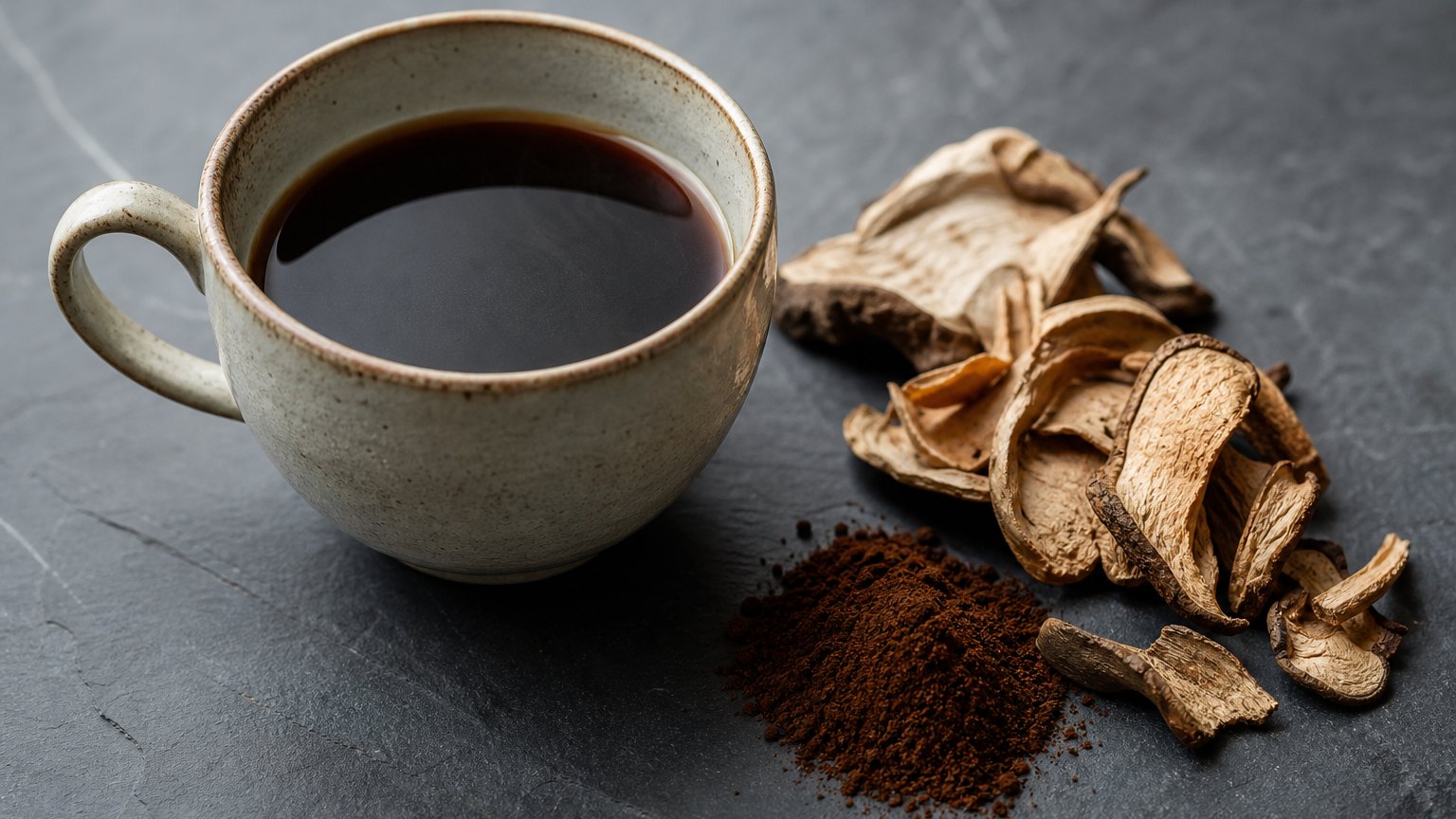
Mushroom coffee combines coffee with one or more mushroom ingredients, often chaga, lion's mane, cordyceps, or reishi. Its possible benefits depend on the mushroom species, the part used, the extraction method, and the amount in each cup. Here is how to look past the front-label claims and see what you are actually drinking.
Key Takeaways
- Check the mushroom source: Fruiting body extracts generally contain more mushroom compounds than mycelium grown on grain.
- Look for beta-glucans: A disclosed beta-glucan amount is more useful than a large but vague mushroom blend number.
- Expect modest mushroom doses: Many coffee blends contain much less mushroom than their branding suggests.
- Treat benefits as preliminary: Human research on mushroom coffee and chaga coffee remains limited.
- Consider caffeine and safety: Caffeine varies, while chaga's oxalates and possible medication interactions deserve attention.
Which Mushrooms Are Usually Used
Mushroom coffee is not made from one standard recipe. It may contain a single mushroom or a blend of several species. The coffee itself can be instant coffee, ground coffee, or a coffee alternative with little or no actual coffee.
Chaga is common in products marketed around antioxidants. Chaga, or Inonotus obliquus, grows mainly on birch trees in cold regions. The dark mass that is harvested is technically a hardened fungal growth called a sclerotium, not a typical cap-and-stem mushroom.
Lion's mane is frequently included in blends promoted for focus. It has a shaggy white appearance and contains compounds that are being studied for their effects on nerve-related pathways. That biological interest does not establish that a small amount in coffee improves cognition in people.
Cordyceps is usually marketed for energy or exercise support. Commercial products are generally cultivated rather than collected from the wild. Reishi often appears in evening beverages or products positioned around stress support, although coffee's caffeine may work against an evening routine.
Turkey tail, maitake, and shiitake are also used. Their cell walls naturally contain beta-glucans, a type of complex carbohydrate. The species name matters, but it is only the start. Two products listing the same mushroom can differ greatly because one uses a concentrated extract while another uses a small amount of unextracted powder.
For chaga mushroom coffee benefits, the honest answer is that the ingredient has interesting laboratory data, but the finished drink has rarely been tested in controlled human trials.
Fruiting Body vs Mycelium on Grain
The most useful label distinction is whether a product contains the fruiting body or mycelium grown on grain. The fruiting body is the part most people recognize as a mushroom. Mycelium is the network of thread-like fungal cells that grows through its food source.
Mycelium itself is a legitimate part of a fungus. The problem is how many commercial ingredients are produced. Mycelium may be grown through rice, oats, sorghum, or another grain. When the entire growing material is dried and milled, the final powder can contain substantial leftover grain starch. You may be buying a mushroom-and-grain mixture rather than a concentrated mushroom ingredient.
This is not a minor technical difference. Grain can dilute beta-glucans and other fungal compounds while increasing alpha-glucans, which commonly include starch. A label may still display a large number of milligrams because that number counts the whole powder, including the growth medium.
A fruiting body extract usually provides a more concentrated mushroom ingredient. Extraction uses hot water, alcohol, or both to make selected compounds easier to measure and mix. However, the word "extract" alone does not prove quality. You still need a declared beta-glucan amount and a clear species listing.
Chaga requires slightly different wording because the harvested conk is a sclerotium rather than a classic fruiting body. For chaga, look for an extract made from the actual wild or cultivated chaga sclerotium, not merely cultured mycelium with grain. If a company does not identify the fungal part and growing method, you cannot tell how much of the listed weight is mushroom.
Beta-Glucans: The Marker That Matters
Beta-glucans are naturally occurring carbohydrates that form part of mushroom cell walls. They are not one single substance. Their branching patterns and chemical bonds differ among mushrooms, grains, yeast, and other sources.
For shoppers, beta-glucans are useful because they can be measured. A label stating the percentage or milligrams of beta-glucans tells you more than phrases such as "full spectrum," "functional blend," or "10:1 extract." Those terms may describe processing, but they do not reveal the final amount of the marker compound.
Suppose a powder lists 1,000 mg of mushroom material. If it contains 20 percent beta-glucans, that would provide 200 mg. If another 1,000 mg ingredient contains only 2 percent, it provides 20 mg. The front label can make those products look equivalent even though their measured composition is very different.
Also check whether the company reports alpha-glucans. A high alpha-glucan level can indicate starch from grain, especially in mycelium-on-grain powders. It is not a perfect test, but it adds useful context. Ideally, the product identifies the species, fungal part, extraction method, beta-glucan content, and serving amount.
Beta-glucans should not be treated as proof that a coffee will produce a specific health outcome. They are a quality and identity marker, not a guarantee of effectiveness. A transparent number helps you compare products, while human studies are still needed to determine what a given dose actually does.
How Much Mushroom Is Actually in a Cup
Mushroom branding can make the fungi look like the main ingredient, but coffee is often the largest component. A serving may contain several grams of total powder while providing only a few hundred milligrams of a multi-mushroom blend.
Start with the Supplement Facts or ingredient panel. Look for an amount next to each mushroom. If six mushrooms share a 600 mg proprietary blend, the label does not tell you whether each contributes 100 mg or one species makes up nearly the entire blend. It also does not tell you how much beta-glucan reaches the cup.
Next, distinguish raw powder from extract. One gram of dried mushroom powder is not equivalent to one gram of a concentrated extract. Ratios such as 8:1 or 10:1 suggest that more raw material was used, but extraction ratios can be calculated in different ways. Beta-glucan standardization remains the more practical comparison.
Be cautious when a label lists only a trademarked blend, "mushroom complex," or "adaptogenic mushrooms" without amounts. Those phrases may be accurate, but they do not let you evaluate the dose. Also check the serving size. A large pouch can still provide very little mushroom per scoop.
There is no established effective dose for mushroom coffee as a category. That means more milligrams are not automatically better, and you should not increase servings to imitate a supplement study. Follow the label. Look for real amounts, fungal parts, and beta-glucans. Consistency and transparency matter more than dramatic front-label promises.
Healthy Organic Weight Management Coffee with Mushrooms is instant organic coffee with healthy fiber to help reduce hunger, maca to support learning, memory, and mood, green tea to support brain function and fat burning, plus adaptogens from six mushrooms. Each scoop has about 100 mg of caffeine and mixes into hot or cold water. It is $19.95 for members versus $34.95 retail, reflecting LiveGood's mission to "Provide the highest quality supplements in the world, at the lowest prices possible."
Caffeine Content and Why It Is Often Lower
Most mushroom coffee contains caffeine because it still contains coffee. The amount may be lower than in a standard cup if part of the coffee has been replaced by mushroom powder, fiber, tea extracts, or other ingredients. However, there is no universal caffeine level.
A typical brewed coffee can vary widely based on bean type, grind, serving size, and brewing time. Instant mushroom coffee is more predictable when the label states caffeine per scoop. Some products provide around half the caffeine of a strong brewed cup. Others provide about the same amount as regular coffee. Decaffeinated and coffee-free mushroom drinks are also available.
Lower caffeine may appeal to you if regular coffee makes you feel restless or interferes with sleep. It does not guarantee a smoother experience. Your response depends on your caffeine tolerance, medications, sleep, meal timing, and whether the formula contains other caffeine sources such as green tea.
Read the full label rather than assuming mushrooms cancel out caffeine's effects. They do not neutralize caffeine. If one scoop contains 100 mg and you use two scoops, you are getting about 200 mg before counting other coffee, tea, energy drinks, or pre-workout products.
Use mushroom coffee early enough that it does not disrupt your sleep, and follow the serving directions. If you are pregnant or breastfeeding, have an existing medical condition, or take prescription medication, talk to your doctor about caffeine and the mushroom ingredients before making it a daily habit.
What the Human Evidence Shows
Research on mushroom coffee itself is sparse. Most claims come from studies of isolated mushrooms, cell experiments, animal research, or traditional use. Those forms of evidence can help researchers decide what to study next, but they cannot show that a small multi-mushroom serving in coffee produces the same result in people.
Chaga contains beta-glucans, polyphenols, pigments, and other compounds with antioxidant activity in laboratory tests. Antioxidant activity means a substance can interact with unstable molecules under test conditions. It does not prove that drinking chaga coffee prevents illness, causes weight loss, improves hair growth, or creates a special benefit for women. Reliable human trials for those claims are absent.
Small human studies of other mushroom ingredients, including lion's mane, have reported preliminary findings. Results are not consistent enough to promise improved cognition, mood, or other outcomes, especially when the dose and preparation differ from a coffee blend. Cordyceps and reishi research has similar limitations.
Safety also matters. Chaga can be high in oxalates, natural compounds that can contribute to kidney problems at high intakes. Published case reports have connected heavy, prolonged chaga use with kidney injury. Chaga and some other mushrooms may also interact with anticoagulants, which are medications that reduce blood clotting.
Do not use mushroom coffee as a treatment for any condition. Talk to your doctor before using it if you take prescription medication, especially anticoagulants, or if you are pregnant, breastfeeding, or living with a kidney, liver, or other medical condition. For everyone else, follow the label and judge the drink mainly by its ingredients, caffeine, transparency, taste, and fit within your routine.
Frequently Asked Questions
What is in mushroom coffee?
Mushroom coffee contains coffee plus mushroom powder or extracts, sometimes with fiber, tea, herbs, or flavorings. Common mushrooms include chaga, lion's mane, cordyceps, reishi, turkey tail, and maitake. Check whether the formula uses fruiting bodies or mycelium on grain, how many milligrams are included, and whether beta-glucan content is disclosed.
Does mushroom coffee have caffeine?
Most mushroom coffee has caffeine, although the amount varies by formula. It is often lower than regular brewed coffee because mushrooms and other ingredients replace some of the coffee. Do not assume that every blend is low-caffeine. Check the caffeine per serving, include caffeine from green tea or other sources, and follow the labeled scoop size.
What are the benefits of chaga coffee?
Potential chaga coffee benefits remain unproven in humans. Chaga contains beta-glucans and compounds that show antioxidant activity in laboratory research, but that does not establish weight, hair, cognitive, or disease-related outcomes. Chaga can also be high in oxalates. People with kidney concerns or those taking anticoagulants should talk to their doctor before using it.
Is mushroom coffee better than regular coffee?
Mushroom coffee is not automatically better than regular coffee. It may offer lower caffeine or a convenient way to consume mushroom extracts, but many products provide small or undisclosed mushroom amounts. Regular coffee is often less expensive and has a larger body of human research. Your better choice depends on caffeine tolerance, ingredient quality, taste, price, and personal goals.
How do you know if a product has real mushroom?
A transparent label should name each species, identify the fungal part, disclose the serving amount, and report beta-glucans. Prefer fruiting body extracts, or chaga sclerotium extract, over mycelium grown on grain when you want a concentrated mushroom ingredient. High alpha-glucans may indicate leftover grain starch. Vague proprietary blends make meaningful comparison difficult.