
Natural Sources of Whey Protein in Food
 Written by Ben Glinsky
Ask AI about this article and Whey Protein Isolate - With Colostrum





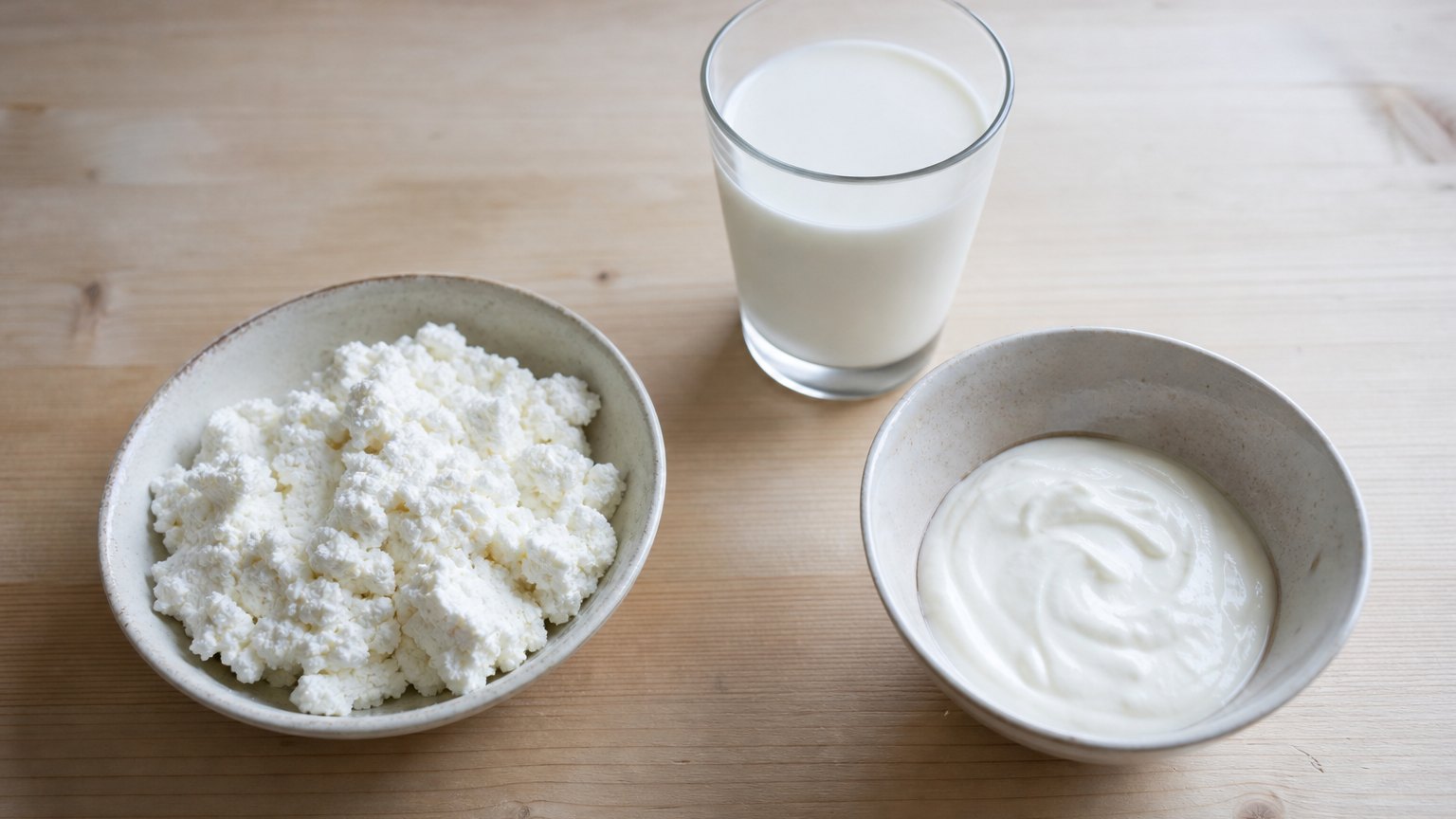
Whey protein occurs naturally in dairy foods because whey is the liquid portion of milk. Milk, regular yogurt, kefir, and ricotta are useful sources, while Greek yogurt contains less whey than many people assume because much of it is strained out. Here is how these foods compare, including practical low-sugar choices.
Key Takeaways
- Start with dairy foods: Natural whey comes from milk, so plant foods do not contain it.
- Look beyond total protein: A dairy food can be high in protein without being particularly high in whey.
- Give ricotta special attention: Traditional ricotta is made by collecting proteins from leftover liquid whey.
- Choose plain products: Plain milk, yogurt, kefir, and ricotta provide whey without the added sugar common in flavored versions.
- Use powder for convenience: Whey isolate concentrates milk protein into a serving that whole foods usually cannot match.
What Whey Actually Is
Milk contains water, fat, carbohydrate, minerals, and two main groups of protein. Roughly 80 percent of its protein is casein and 20 percent is whey. Casein forms curds, while whey generally remains in the watery liquid surrounding those curds.
That distinction matters because whey is not a separate ingredient added to fresh milk. It is already there. When milk is turned into cheese or strained yogurt, the curds and liquid separate. The pale yellow liquid is whey. If you have seen a small pool of liquid on top of yogurt, you have seen whey in its natural form.
Liquid whey and whey protein are related, but they are not identical. Liquid whey is mostly water. It also contains lactose, which is milk sugar, along with minerals and a relatively modest amount of protein. Whey protein powder is made by filtering and drying that liquid so the protein becomes much more concentrated.
Whey is considered a complete protein because it contains all nine essential amino acids. Essential means your body cannot make enough of them, so you need to obtain them through food. Whey is especially rich in leucine, an amino acid involved in the normal process of building and repairing muscle tissue.
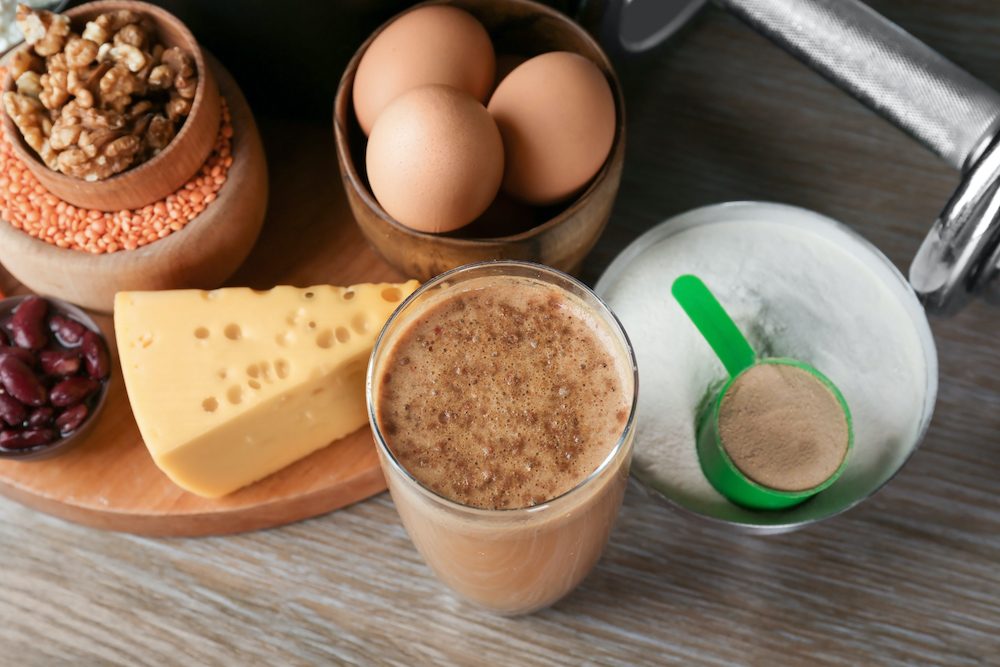
Whey is the watery portion of milk that separates from casein curds during dairy processing.
This is why the clearest answer to "Where does whey come from?" is milk. Dairy processing simply determines whether a food retains its whey, removes it, or concentrates it.
Dairy Foods That Contain Whey
Milk is the simplest natural source. One cup provides about 8 grams of total protein, with roughly one-fifth naturally belonging to the whey group. Choosing plain milk keeps added sugar at zero, although milk still contains lactose. Lactose appears under total sugars on the Nutrition Facts label but is not an added sweetener.
Regular yogurt also retains whey. Some of it remains mixed throughout the yogurt, and some may rise to the top during storage. Stirring that liquid back in keeps the whey in your serving. Plain yogurt is usually the lower-sugar choice because flavored cups may include added sugar, syrups, or sweetened fruit preparations.
Kefir, a fermented milk drink, contains both whey and casein unless it has been heavily strained. Look for plain, unsweetened kefir if sugar is a concern. You can add cinnamon or a small amount of fruit for flavor while controlling the sweetness yourself.

Plain milk, regular yogurt, and kefir retain naturally occurring whey without requiring added sugar.
Fresh cheeses can contain some whey, but the amount varies. Cottage cheese curds are mainly casein, though moisture around the curds may contain whey. Soft cheeses often retain more moisture than aged hard cheeses. Cheddar, Parmesan, and similar cheeses lose most of their whey when the liquid is drained during production.
You can also collect liquid whey by straining ordinary yogurt at home. This homemade liquid can be stirred into soups, bread dough, oatmeal, or smoothies. It contributes some protein, but it is not equivalent to a scoop of protein powder. Much of the liquid is water and lactose, so drinking large amounts is not an efficient way to obtain concentrated protein.
Ricotta: Cheese Made From Whey
Ricotta stands apart from most cheeses because traditional ricotta is made from whey rather than primarily from casein curds. Its name comes from an Italian term meaning "recooked," which describes the classic production method.
After another cheese is made, the leftover liquid whey still contains small amounts of whey proteins. Cheesemakers heat that liquid, often with added acid. The heat and acidity cause proteins such as alpha-lactalbumin and beta-lactoglobulin to gather into delicate curds. Those curds are skimmed or strained to become ricotta.
That makes ricotta one of the most direct natural food sources of whey-derived protein. However, supermarket ricotta is not always made from whey alone. Manufacturers may add whole milk, skim milk, or cream to improve yield, texture, and flavor. Check the ingredient list if you want a product made primarily from whey.
Traditional ricotta is made by heating leftover whey and collecting its delicate protein curds.
A half-cup serving commonly supplies around 9 to 14 grams of total protein, depending on the recipe and fat level. Not every gram should automatically be counted as whey, especially when milk has been added. The label reports total protein, not the exact split between whey and casein.
For a low-sugar meal, use plain ricotta in savory dishes. Spread it on whole-grain toast with tomatoes and herbs, spoon it into eggs, or pair it with roasted vegetables. If you prefer it sweet, cinnamon, cacao, or a few berries can add flavor without turning it into a heavily sweetened dessert.
Why Greek Yogurt Has Less, Not More
Greek yogurt is widely described as a high-protein food, which is correct. But high total protein does not necessarily mean high whey protein. Traditional Greek yogurt is made by straining regular yogurt, and the liquid removed during straining is whey.
As water and whey drain away, the yogurt becomes thicker. The remaining solids contain concentrated casein, the protein that forms much of the yogurt's structure. This is why a serving of Greek yogurt can deliver considerably more total protein than regular yogurt while containing a smaller proportion of whey.
Straining yogurt creates a thicker texture while removing much of its liquid whey.
The apparent contradiction comes down to concentration. Imagine starting with several cups of ordinary yogurt and straining them into one thick cup. That final cup contains more milk solids and more protein overall, but much of the free liquid whey has left with the drainage. Both statements can therefore be true: Greek yogurt is high in protein, and Greek yogurt has had whey strained out.
Manufacturing methods also vary. Some companies use ultrafiltration, a process that separates components through very fine filters. Others add milk protein concentrate to create a thicker, higher-protein product. The Nutrition Facts panel tells you the total protein, but it rarely identifies how much is whey.
Choose plain Greek yogurt when you want substantial total protein with little or no added sugar. Choose plain regular yogurt when retaining more naturally occurring liquid whey is the priority. If liquid appears on either product, stir it in rather than pouring it away. Neither choice is universally better. They simply provide different proportions of milk's proteins.
How Much Protein These Foods Deliver
Natural dairy foods can contribute to your daily protein intake, but most do not provide a scoop-sized amount of whey protein in one serving. Their Nutrition Facts labels show total protein, combining whey with casein and any other protein ingredients.
Here is a practical comparison. Values vary by brand, serving size, and processing method.
| Food | Typical serving | Approximate total protein | What to know about whey |
|---|---|---|---|
| Milk | 1 cup | 8 grams | Roughly 1.5 to 2 grams comes from whey proteins |
| Plain kefir | 1 cup | 9 to 10 grams | Usually retains the whey naturally present in milk |
| Plain regular yogurt | 1 cup | 8 to 12 grams | Retains more liquid whey than strained yogurt |
| Plain Greek yogurt | 3/4 to 1 cup | 15 to 23 grams | High in total protein, but much of the whey was strained out |
| Ricotta | 1/2 cup | 9 to 14 grams | Traditionally made from whey, though many products include milk |
| Cottage cheese | 1/2 cup | 12 to 14 grams | Protein is mainly casein, with variable whey in the moisture |
Dairy foods provide useful total protein, but their whey content is usually much lower than a serving of concentrated powder.
Milk offers the easiest estimate. If a cup contains about 8 grams of protein and approximately 20 percent is whey, that works out to around 1.6 grams of whey protein. It is a meaningful contribution, but far below the 20 to 30 grams of protein commonly found in a serving of whey powder.
For a low-sugar routine, build meals around plain dairy rather than flavored versions. You might use milk in oatmeal, regular yogurt with nuts, kefir in an unsweetened smoothie, or ricotta in a savory snack. These foods also supply nutrients such as calcium and phosphorus. Compare labels because protein and added sugar can differ substantially between similar-looking products.
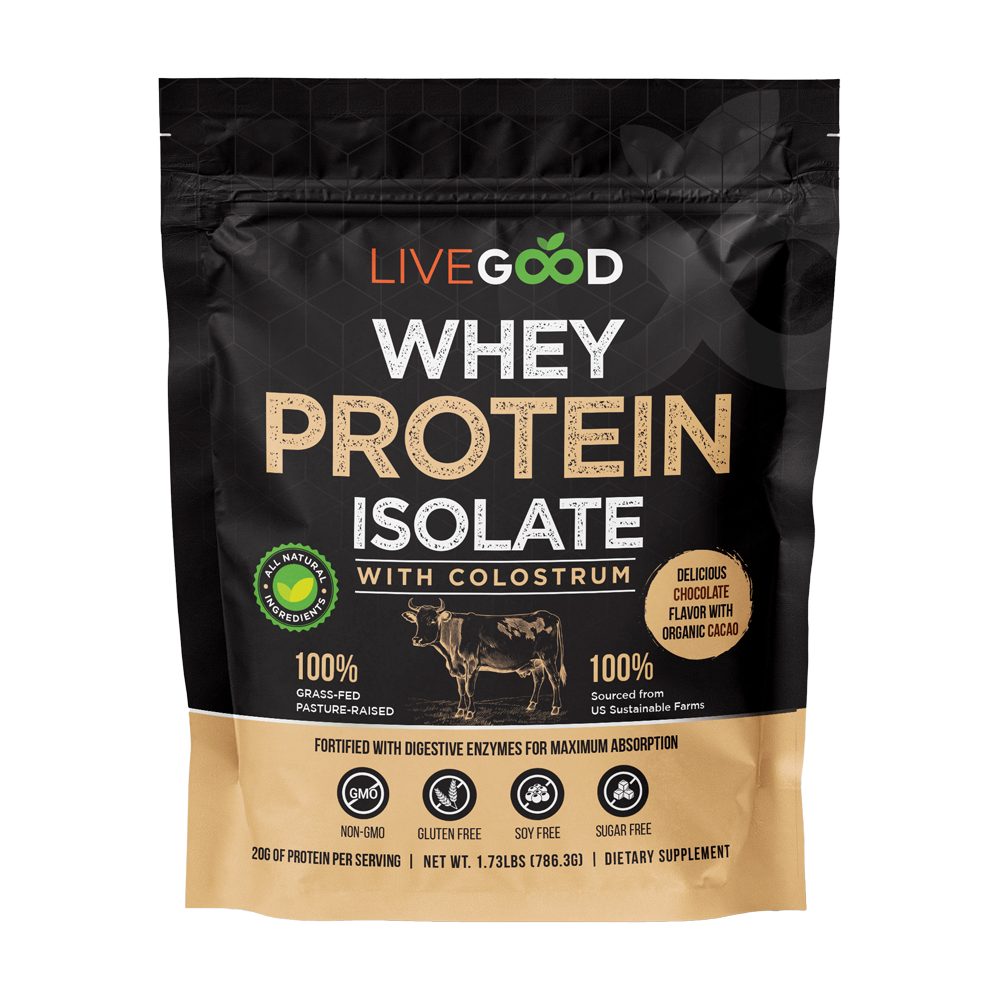
If whole foods leave a gap, LiveGood Whey Protein Isolate - With Colostrum is a convenient chocolate option made with organic cacao. Each serving provides 20 grams of clean whey protein isolate with all nine essential amino acids, plus colostrum and digestive enzymes to support absorption, gut health, and immune function. It is 100% grass-fed, pasture-raised, and sourced from sustainable US farms. It costs $39.95 for members versus $49.95 retail, reflecting our mission: "Provide the highest quality supplements in the world, at the lowest prices possible."
Where a Powder Fits
Whey powder is not a whole-food source, but it begins with the same natural liquid whey found in dairy. Manufacturers filter out much of the water, lactose, and minerals, then dry the remaining material. The result delivers far more protein in a smaller serving than milk or yogurt.
Whey concentrate retains varying amounts of lactose, fat, and other milk components. Whey isolate is filtered more extensively and typically has a higher percentage of protein with less lactose and fat. Whey hydrolysate has been partially broken into smaller protein pieces called peptides. These forms differ in processing and composition, but all come from milk.
A powder can be useful when you cannot conveniently obtain enough protein from meals. It may fit after exercise, at breakfast, or as part of a snack. For a lower-sugar serving, mix it with water or unsweetened milk and skip added honey, juice, or sweetened yogurt. Check both total sugar and added sugar on the label rather than assuming every chocolate or vanilla powder is the same.
Whole foods still deserve a central place in your diet because they provide a wider mix of nutrients and textures. A supplement is simply a consistent way to fill a gap. Follow the product's label directions rather than adding extra servings automatically.
Whey comes from milk, so it is unsuitable for anyone with a milk protein allergy. People with lactose intolerance may tolerate some isolates better than milk, but tolerance varies and an isolate is not automatically lactose-free. If you are pregnant, breastfeeding, take prescription medication, or have kidney, liver, or another existing medical condition, talk to your doctor before using a protein supplement.
Frequently Asked Questions
What foods contain whey protein?
Milk, regular yogurt, kefir, ricotta, and some moist fresh cheeses contain whey protein. Ricotta is especially notable because traditional versions are produced from leftover whey. Hard cheeses contain much less because most whey drains away during cheesemaking. Plain, unsweetened dairy options provide these proteins without the added sugars commonly found in flavored yogurt and milk drinks.
Can you get whey protein naturally?
Yes, you can obtain whey naturally from dairy foods such as milk, yogurt, kefir, and whey-based ricotta. The liquid on top of yogurt is also whey and can be stirred back in. These foods provide less concentrated whey than a powder, since their protein includes casein and the food also contains water, lactose, fat, and minerals.
Does Greek yogurt contain whey?
Greek yogurt can retain some whey, but traditional straining removes much of the liquid whey from ordinary yogurt. Its high protein content mainly reflects concentrated milk solids, especially casein. Production methods vary, so one brand may contain a different protein mix than another. Choose Greek yogurt for high total protein, not because it is necessarily rich in whey.
How much whey is in milk?
About 20 percent of milk's protein is whey, while roughly 80 percent is casein. Since one cup of milk commonly provides around 8 grams of total protein, it contains approximately 1.5 to 2 grams of whey protein. This is an estimate because milk composition varies. The rest of the cup is primarily water, lactose, fat, and minerals.
Is food better than a whey supplement?
Neither is automatically better because they serve different purposes. Dairy foods provide protein along with calcium and other nutrients, making them useful foundations for meals. Whey powder provides a larger, more predictable amount of protein with less volume. Use food first when practical, then consider a supplement for convenience or to fill a documented gap in your normal intake.