
Nitric Oxide and Blood Flow: What the Research Shows
 Written by Nauder Khazan
Ask AI about this article and Organic Super Reds





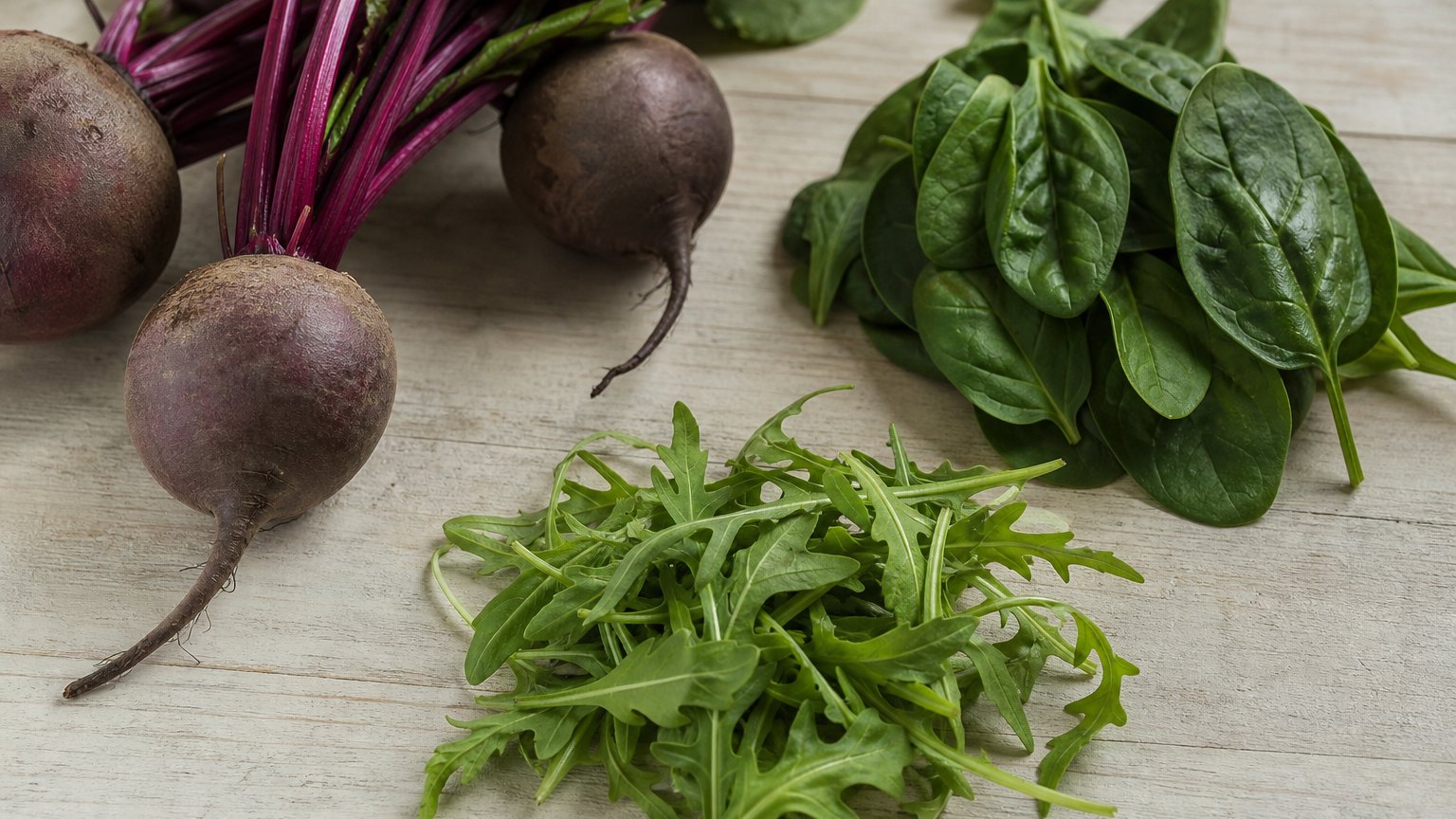
Nitric oxide helps blood vessels relax, which allows blood to move more easily through them. Your body makes it on its own, while nitrate-rich vegetables and regular exercise can support the process. Here is how the pathway works, what the evidence supports, and where common claims go too far.
Key Takeaways
- Nitric oxide relaxes blood vessels: It signals the smooth muscle around vessel walls to loosen, helping the vessels widen.
- Vegetables provide the best-evidenced dietary lever: Beets, arugula, spinach, lettuce, and other leafy greens supply nitrate that your body can convert into nitric oxide.
- Oral bacteria are part of the pathway: Strong antibacterial mouthwash may reduce nitrate conversion by removing helpful bacteria from the tongue.
- Exercise supports your endothelium: Regular movement encourages the cells lining your blood vessels to produce nitric oxide.
- Supplements have limits: They may support nitric oxide production, but they cannot correct a blocked artery or replace medical care.
What Nitric Oxide Does in Blood Vessels
Nitric oxide, often shortened to NO, is a tiny signaling molecule made throughout your body. It is not the same as nitrous oxide, the gas sometimes used during dental procedures. Nitric oxide lasts only briefly, but it helps cells communicate and has an especially important job inside blood vessels.
The inner lining of each blood vessel is called the endothelium. When these cells release nitric oxide, it travels into the layer of smooth muscle surrounding the vessel. The muscle relaxes, the vessel widens, and resistance to blood flow decreases. This widening is called vasodilation.
That process helps your circulation adjust from moment to moment. A working muscle needs more oxygen and nutrients than a resting muscle, for example. Nitric oxide helps local blood vessels respond to that demand. It also helps maintain normal vessel flexibility and discourages platelets, the blood cells involved in clotting, from sticking unnecessarily to the vessel wall.
The ability of the endothelium to respond appropriately is known as endothelial function. Aging, smoking, inactivity, high blood sugar, and some cardiovascular conditions can impair it. That does not mean every cold hand, tired day, or slow workout is caused by low nitric oxide. These symptoms have many possible explanations, and there is no simple home test that tells you whether your nitric oxide level is low.
Nitric oxide supports healthy blood flow, but circulation depends on much more than one molecule. Heart function, blood volume, vessel structure, nerve signals, activity, hydration, and overall metabolic health all matter too.
The Nitrate to Nitric Oxide Pathway
Your body has two main ways to produce nitric oxide. One uses the amino acid L-arginine and an enzyme called nitric oxide synthase. An enzyme is a protein that speeds up a chemical reaction. The endothelial form of this enzyme, often called eNOS, produces nitric oxide within the cells lining your blood vessels.
The second route begins with nitrate from food. This is called the nitrate to nitrite to nitric oxide pathway, and it depends partly on bacteria in your mouth.
After you eat nitrate-rich vegetables, nitrate is absorbed from your digestive tract into your blood. Your salivary glands then collect some of it and release it back into your saliva. Bacteria living on your tongue convert nitrate into nitrite. You swallow that nitrite, and stomach acid converts some of it into nitric oxide and related compounds. More nitrite enters the bloodstream, where it can be converted into nitric oxide in tissues, particularly when oxygen availability is lower.
This pathway explains why beets and leafy greens receive so much research attention. They do not contain a lasting dose of nitric oxide itself. They supply nitrate, which your body processes through several coordinated steps.
Nitrate in vegetables should not be viewed in the same way as processed meat. Vegetables also provide vitamin C, plant compounds, fiber, and other nutrients. Processed meats contain different combinations of nitrite, protein, salt, and compounds formed during processing or high-heat cooking. The health effects of a whole food depend on its complete nutritional context, not one ingredient in isolation.
Dietary Sources That Actually Raise It
Nitrate-rich vegetables are the most reliable dietary way to increase nitrate and nitrite availability. Beetroot is the best-known option, but it is not the only one. Arugula, spinach, lettuce, Swiss chard, celery, and other leafy greens can contain substantial amounts.
Nitrate content varies considerably. Soil, season, farming conditions, storage, and cooking all influence how much a vegetable provides. That is why two servings of spinach or two beet powders may not deliver identical amounts. A large beetroot milligram number on a supplement label also does not automatically reveal its nitrate content.
You can make the pathway part of an ordinary eating pattern:
- Add arugula or spinach to sandwiches, salads, and grain bowls.
- Blend beetroot or leafy greens into a smoothie.
- Roast beets as a side dish or add cooked beets to salads.
- Use lettuce, celery, and mixed greens regularly rather than relying on one food.
- Pair nitrate-rich vegetables with a varied diet that supplies vitamin C and other antioxidants.
Research on beetroot juice and dietary nitrate has found improvements in certain blood-flow, exercise, and blood-pressure measurements in some populations. Results are not universal. The response can vary with a person's age, health, usual vegetable intake, fitness, nitrate dose, and the outcome being measured.
More is not always better. A vegetable-rich diet is the practical foundation. If you have kidney disease, follow a potassium- or oxalate-restricted diet, take prescription medication, or manage an existing medical condition, ask your doctor or dietitian which foods and supplements fit your needs.
LiveGood Organic Super Reds is a great-tasting red fruit and vegetable extract powder formulated to support the body's production of nitric oxide and healthy circulation. Mix it with water or a smoothie, either as a pre-workout option or an afternoon pick-me-up. It is $19.95 for members compared with $34.95 retail, reflecting LiveGood's goal of making everyday wellness support more accessible. Follow the label directions rather than increasing the serving for a stronger effect.
Why Antibacterial Mouthwash Interferes
The bacteria in your mouth are not all harmful. Some species on the tongue perform the first essential step in the dietary nitrate pathway by turning nitrate into nitrite. Strong antibacterial or antiseptic mouthwash can temporarily reduce those bacteria, leaving less nitrite available for later nitric oxide production.
Small human studies have shown that antiseptic mouthwash can reduce salivary and blood nitrite after a nitrate-rich meal or drink. Some studies also report changes in blood-pressure measurements. These findings support the biological mechanism, but they do not prove that occasional mouthwash use causes cardiovascular disease or a meaningful circulation problem in every person.
The type of mouthwash matters. Research often uses antiseptic formulas containing ingredients such as chlorhexidine, which may affect oral bacteria more strongly than a basic fluoride rinse. Frequency matters too. Using a strong rinse several times each day is not the same as occasional use.
You should not stop a dentist-prescribed mouth rinse on your own. Chlorhexidine and similar products may be recommended for a specific gum, infection, or dental concern. Ask your dentist whether the rinse is still needed, how long to use it, and whether a non-antibacterial option would be suitable later.
Good oral hygiene remains essential. Brush with fluoride toothpaste, clean between your teeth, and attend regular dental visits. The goal is not to preserve every oral bacterium. It is to avoid unnecessary disruption while controlling the bacteria that contribute to cavities and gum disease. If you regularly use nitrate-rich foods, avoiding an unneeded antiseptic rinse around that meal may help preserve the conversion pathway.
Exercise and Endothelial Function
Exercise supports nitric oxide production through a physical force called shear stress. As blood moves faster during activity, it creates gentle friction along the vessel lining. The endothelium senses that change and activates eNOS, the enzyme that makes nitric oxide from L-arginine.
This response helps blood vessels widen so active muscles receive more blood. Repeated exercise also appears to improve how responsive the endothelium is over time. In practical terms, a consistent routine matters more than one exhausting workout.
Aerobic activities such as brisk walking, cycling, swimming, and jogging increase blood flow for sustained periods. Resistance exercise also supports vascular and metabolic health. You do not need an advanced program to begin. A short daily walk, regular movement breaks, and two or more manageable strength sessions each week can create a useful foundation. Increase activity gradually if you are currently sedentary.
Exercise does not work in isolation. Smoking damages the endothelium and reduces nitric oxide availability. Poorly controlled blood sugar, inadequate sleep, and long periods of sitting may also work against normal vessel function. Meals rich in vegetables, regular activity, sufficient sleep, and avoiding tobacco support the same vascular system from different directions.
Do not use nitric oxide products to push through chest pain, unusual shortness of breath, faintness, or a sudden drop in exercise tolerance. Stop exercising and seek medical advice. If you have heart disease, significant circulation problems, or another existing condition, talk to your doctor before changing your exercise routine.
You may not feel nitric oxide working. Better endothelial function is not usually experienced as a rush or buzz. Track practical signs such as walking comfort, workout consistency, and recovery while keeping expectations realistic.
What Supplements Cannot Do
Most products marketed as nitric oxide supplements do not contain useful amounts of nitric oxide itself. The molecule is too short-lived for a conventional powder or capsule. Instead, these products usually supply ingredients involved in nitric oxide pathways, such as beetroot nitrate, L-citrulline, or L-arginine.
Research on dietary nitrate is stronger and more consistent than research on many loosely defined nitric oxide boosters. L-citrulline can raise blood levels of L-arginine, which the body may use to make nitric oxide. L-arginine has also been studied, but oral absorption and results vary. A blend containing these ingredients is not automatically effective. Dose, ingredient quality, nitrate standardization, study population, and the outcome measured all matter.
No supplement can remove a clot, open a blocked artery, repair severe blood-vessel damage, or diagnose the cause of poor circulation. It also cannot compensate for smoking, prolonged inactivity, or an eating pattern that lacks vegetables. Consistency with basic habits is more useful than chasing a strong sensation from a booster.
Supplements may cause headache, lightheadedness, stomach upset, or changes in blood pressure. Anyone who takes nitrate medication for angina must not use nitric oxide-boosting supplements. The combination can be dangerous. If you use any prescription medication, are pregnant or breastfeeding, have kidney or liver disease, or manage an existing medical condition, talk to your doctor before adding one.
If circulation is why you are researching sexual symptoms, do not treat that as a supplement problem. Erectile dysfunction can be an early sign of cardiovascular disease and warrants medical assessment. A clinician can check for vascular, metabolic, hormonal, neurological, medication-related, and psychological factors. Supplements should never delay that evaluation or be presented as treatment.
Frequently Asked Questions
How do you increase nitric oxide naturally?
You can support nitric oxide production by eating nitrate-rich vegetables, exercising regularly, avoiding tobacco, and maintaining healthy oral bacteria. Beets, arugula, spinach, lettuce, and celery are useful food choices. A varied diet and consistent activity provide broader benefits than relying on one ingredient. If you have a medical condition or take prescription medication, discuss major diet or supplement changes with your doctor.
What foods are highest in nitrates?
Leafy greens and certain root vegetables tend to contain the most dietary nitrate. Arugula, spinach, lettuce, Swiss chard, celery, and beetroot are common sources. The exact amount changes with growing conditions, storage, and preparation, so food lists cannot guarantee a precise dose. Eating a variety of these vegetables regularly is more practical than trying to identify one perfect source.
Does nitric oxide affect blood flow?
Yes, nitric oxide affects blood flow by signaling the smooth muscle around blood vessels to relax. This allows the vessels to widen and respond to changing oxygen demands. Nitric oxide is only one part of circulation, however. Heart health, vessel structure, hydration, activity, medications, and medical conditions also influence how effectively blood reaches your tissues.
Does mouthwash reduce nitric oxide?
Some antibacterial mouthwashes can temporarily reduce nitric oxide production from dietary nitrate. They remove oral bacteria that convert nitrate into nitrite, an important step in the pathway. The effect depends on the rinse and how often it is used. Do not discontinue a prescribed dental rinse without asking your dentist, since controlling an oral infection or gum problem may take priority.
When should you see a doctor about circulation?
See a doctor for persistent coldness, numbness, swelling, leg pain while walking, slow-healing sores, erectile dysfunction, or a noticeable decline in exercise tolerance. Seek urgent care for chest pain, fainting, sudden weakness, severe shortness of breath, or a limb that becomes abruptly cold, pale, painful, or numb. Erectile dysfunction can be an early cardiovascular warning sign and deserves medical assessment.