
Pomegranate Powder for Women: Benefits and How to Use It
 Written by Ben Glinsky
Ask AI about this article and Organic Super Reds





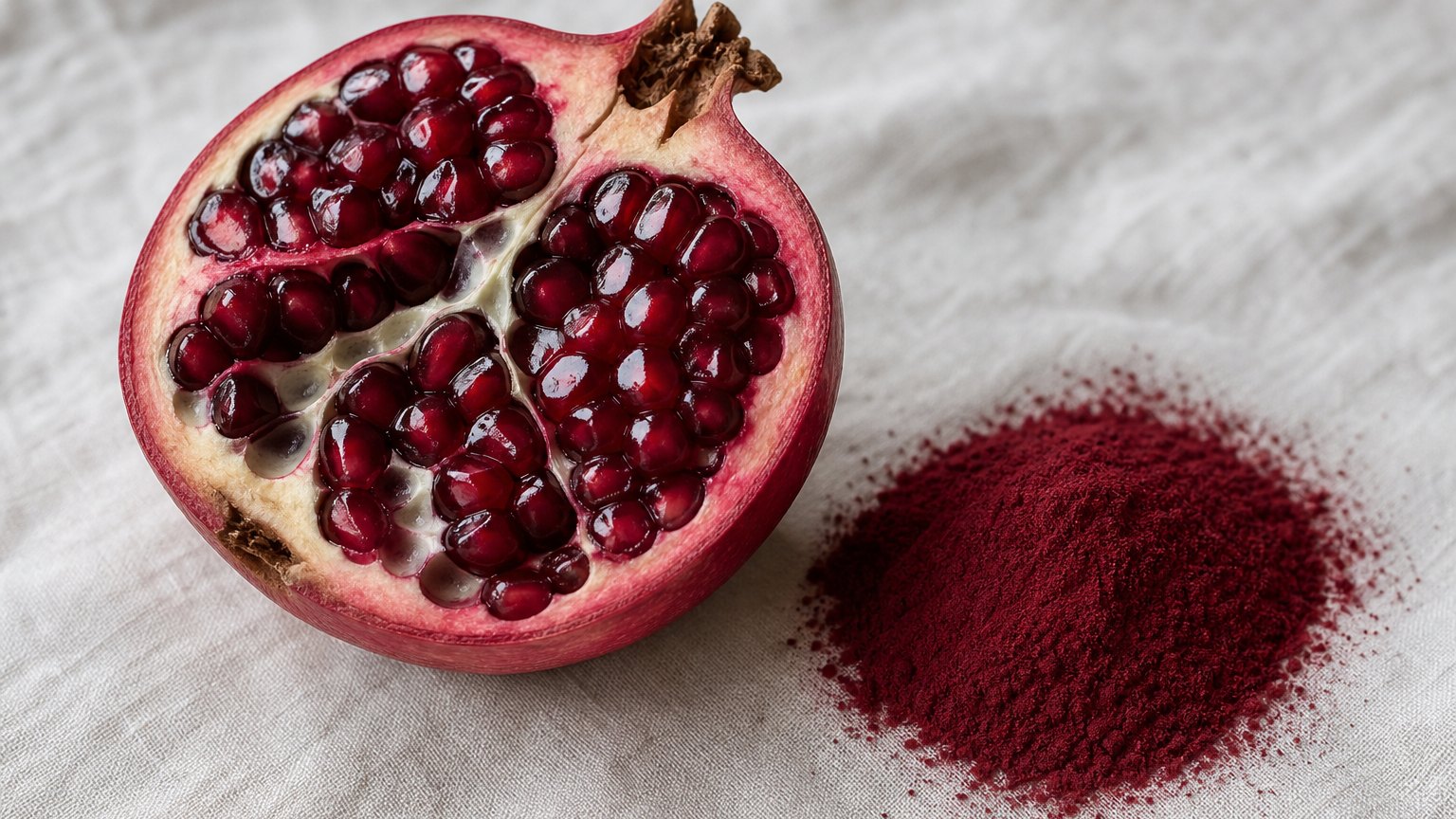
Pomegranate powder provides antioxidant polyphenols that may support skin and cardiovascular wellness in women. Its effects depend on the type of powder you buy and, unusually, whether your gut bacteria can turn pomegranate compounds into urolithin A. Here is what the research suggests, what remains uncertain, and how to use the powder safely.
Key Takeaways
- Polyphenols lead the list: Pomegranate supplies punicalagins and other plant compounds with antioxidant activity.
- Gut bacteria change the outcome: Only some people efficiently produce urolithin A from pomegranate compounds.
- Women's research is limited: Small studies have examined skin responses and cardiovascular markers, but results are not conclusive.
- Powders are not identical: Whole-fruit powder, juice powder, and standardized extract can provide very different amounts of active compounds.
- Medication checks matter: Pomegranate can affect drug-metabolizing enzymes, including pathways relevant to statins and blood pressure medication.
What Pomegranate Powder Contains
Pomegranate powder is a broad label, not one standard ingredient. Some products dry and grind the juice or edible arils. Others include the peel, where many of the fruit's tannins are concentrated. Standardized extracts may state a specific amount of polyphenols, punicalagins, or ellagic acid. These forms should not be treated as interchangeable.
The most discussed compounds are polyphenols. These are naturally occurring plant chemicals that help protect the plant and can act as antioxidants in the body. Pomegranate polyphenols include punicalagins, ellagitannins, ellagic acid, and anthocyanins. Anthocyanins are pigments that help give the fruit its deep red color.
Whole-fruit powder may also retain some fiber and naturally occurring carbohydrate. Juice powder usually has less fiber, while an extract may contain little of the fruit's original nutrient profile. Drying and processing can also change the amount of vitamin C, so pomegranate powder should not automatically be viewed as a concentrated vitamin C supplement.
For women, the most relevant research focuses on antioxidant intake, skin responses, healthy circulation, and cardiovascular markers. These pathways are not exclusive to women, however. You can find related sex-specific context in our pomegranate powder benefits for men article.
Read the Supplement Facts panel rather than relying on the fruit image on the front. Look for the plant part used, serving size, added sugar, and whether active compounds are standardized.
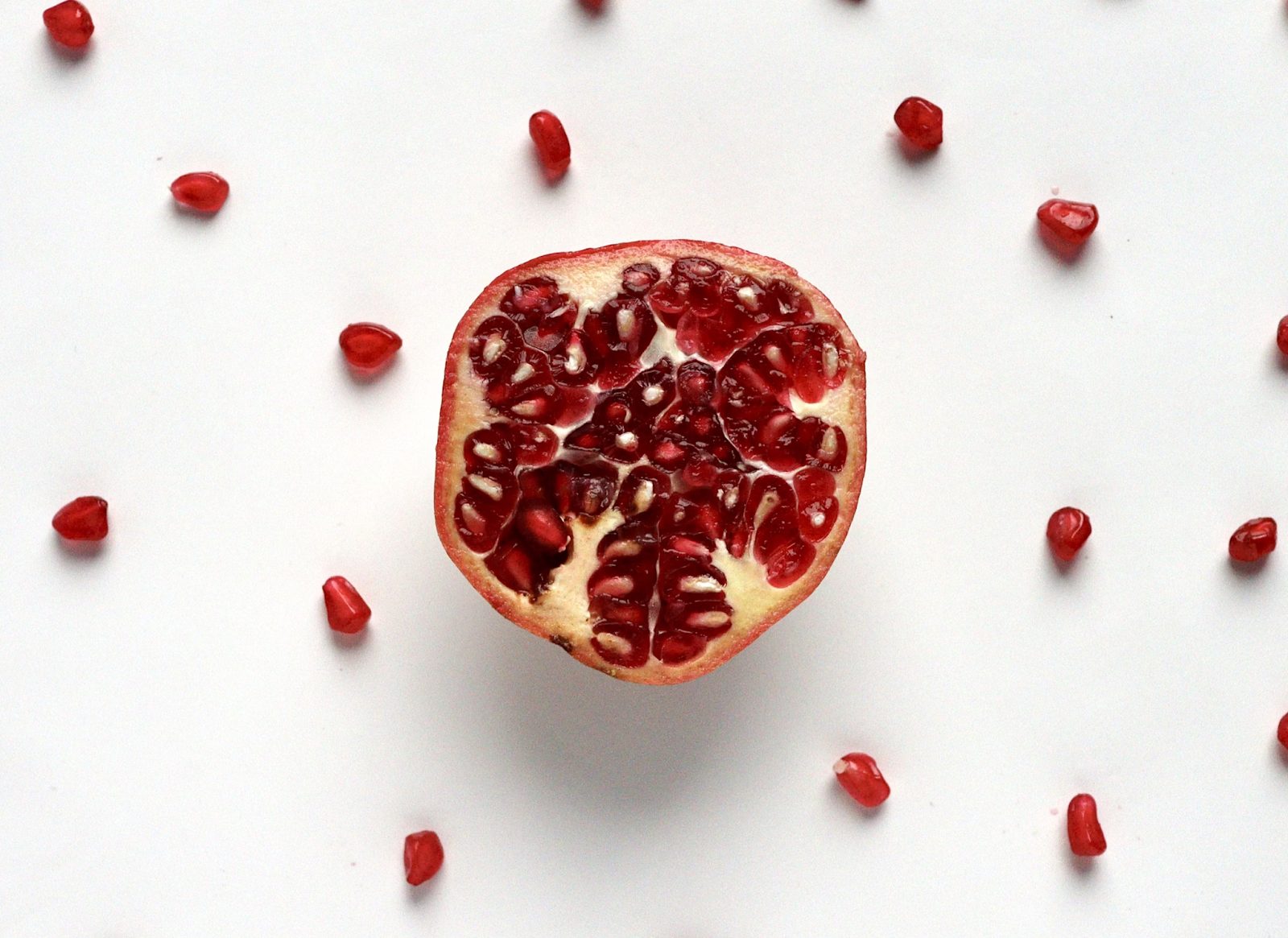
Pomegranate powders differ depending on whether they are made from juice, arils, peel, or a standardized extract.
Punicalagins and Urolithin A
Punicalagins are large polyphenols found mainly in pomegranate peel and juice. They are part of a family called ellagitannins. Because these molecules are large, your body does not simply absorb all of them intact.
During digestion, punicalagins can break down into ellagic acid. Bacteria in the colon may then transform that ellagic acid into smaller compounds called urolithins. Urolithin A is the best studied of these metabolites. A metabolite is simply a substance produced when your body or its microbes process another compound.
This distinction matters. Pomegranate powder normally does not provide a predictable dose of urolithin A itself. It provides chemical building blocks that certain gut bacteria may convert into urolithins. Two women can take the same powder and produce very different amounts.
Early research on urolithin A has examined mitochondrial function. Mitochondria are structures inside cells that help turn nutrients into usable energy. Direct urolithin A supplements have also been studied for cellular energy and muscle-related measures in older adults. Those findings cannot automatically be applied to pomegranate powder because conversion is variable and the studied products are different.
Pomegranate still supplies polyphenols even if you produce little urolithin A. Its value does not depend on one metabolite. Still, converter status helps explain why one person may show a measurable biological response while another does not.

Gut bacteria may convert pomegranate ellagitannins into urolithins, but the amount varies from person to person.
Why Only Some People Are Converters
A urolithin converter is someone whose gut microbiome can turn ellagic acid into one or more urolithins. The microbiome is the community of bacteria and other microorganisms living in the digestive tract. Only certain bacterial species appear to carry out the necessary steps.
Researchers sometimes group people into metabotypes based on what they produce. One person may mainly produce urolithin A. Another may produce urolithin B or related compounds. Some people produce little that can be detected. Estimates vary across populations and studies, so there is no dependable percentage that applies to every group of women.
Age, eating pattern, digestive health, medications, geography, and the makeup of your microbiome may all influence conversion. Your status can also be more complicated than a permanent yes or no. Gut communities can shift, although there is no established home routine guaranteed to turn a non-converter into a converter.
You usually cannot tell your status from how you feel. Commercial testing is not part of routine wellness care, and it is rarely necessary before eating pomegranate. Researchers determine metabotypes by measuring urolithins in blood, urine, or stool after a controlled intake.
This variability is one reason to be cautious with confident claims. A study of isolated urolithin A tests a known dose. A study of pomegranate powder tests a mixture that must be digested and transformed. Those are different questions. Honest, evidence-grounded education means keeping that difference clear instead of promising that every serving will create the same result.
Skin and Cardiovascular Research
Small human studies offer a few reasons for interest, but they do not establish dramatic pomegranate powder benefits for women. The form of pomegranate, the dose, and the outcome measured all matter.
In one controlled study involving healthy women, researchers compared pomegranate juice, pomegranate extract, and a placebo over several weeks. They measured the skin's response to ultraviolet exposure rather than judging general appearance. The extract group showed a modest change in an ultraviolet-related redness measure, while findings were not identical across the juice and extract groups. This does not prove that any pomegranate powder will remove wrinkles, change skin tone, or replace sunscreen.
Cardiovascular research has included pomegranate juice and extracts. Studies have measured blood pressure readings, blood-vessel function, blood lipids, and markers of oxidative stress. Some trials report favorable changes in selected measurements, while others find little or no meaningful difference. Many are small, short, or use a concentrated product that may not match an everyday powder.
The practical takeaway is modest. Pomegranate can contribute polyphenols to a varied eating pattern and may support healthy circulation and normal antioxidant defenses. It should not replace sleep, movement, fiber-rich foods, or medical care. Sunscreen and other protective habits remain central to skin care.
Also check whether a study used fruit, juice, extract, or isolated urolithin A. A result from one form cannot be assumed for all the others, and research on an ingredient does not establish the same outcome for a multi-ingredient supplement.
Small studies have examined pomegranate extracts for skin responses and cardiovascular wellness markers.
How to Use the Powder
Start with the directions on your product label because concentrations differ widely. A spoonful of whole-fruit powder is not equivalent to the same weight of a standardized peel extract. There is no universal daily amount that fits every pomegranate product or every person.
You can mix the labeled serving into water, yogurt, oatmeal, or a smoothie. Pomegranate has a tart flavor, so berries, banana, or plain yogurt can soften the taste. If your powder contains added sweetener, include that when considering your overall intake. A powder that clumps often blends more smoothly when mixed with a small amount of liquid first.
Time of day is mostly a matter of consistency. Morning may be convenient with breakfast, while afternoon can work well in water or a smoothie. Pomegranate is not a stimulant, so you should not expect an immediate energy surge. Regular habits are more useful than repeatedly changing the amount or timing to chase a noticeable feeling.
If you are new to concentrated fruit powders, follow the lowest labeled serving and see how your stomach responds. Tart, tannin-rich products can cause digestive discomfort in some people. Do not exceed label directions to imitate a research study, especially when the study used a different extract.
Store the container tightly closed in a cool, dry place. Moisture can cause clumping and may affect quality. Powder is convenient, but fresh arils remain a useful whole-food option because they provide texture and fiber as part of a meal.

Pomegranate powder can be mixed into water, yogurt, oatmeal, or a fruit smoothie according to label directions.
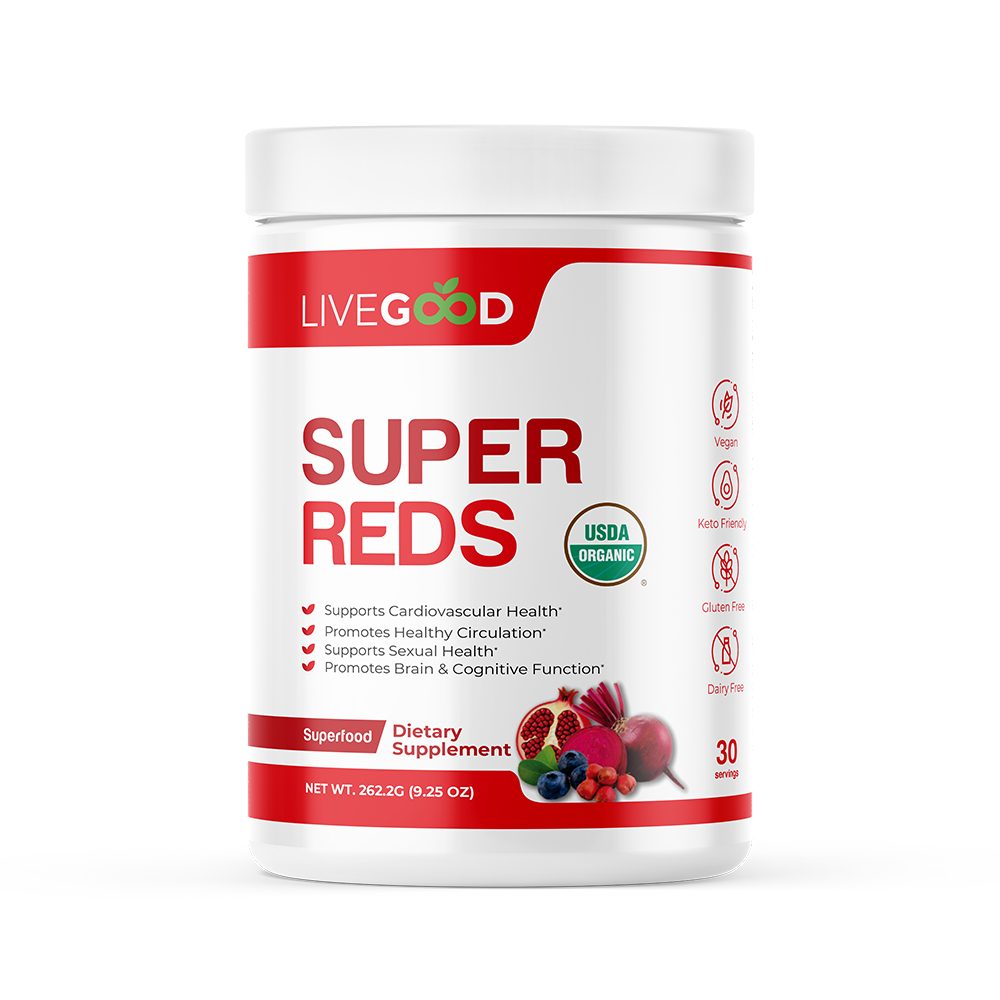
Organic Super Reds is a great-tasting red fruit and vegetable extract powder that contains pomegranate as one of several ingredients. It supports the body's production of nitric oxide to promote healthy blood circulation. Mix it with water or a smoothie, either before a workout or as an afternoon pick-me-up. It is $19.95 for members versus $34.95 retail, helping make daily wellness more accessible. Highest Quality. Lowest Prices. Every Day.
Interactions Worth Knowing
Pomegranate can inhibit CYP enzymes and interact with statins and blood pressure medication, similar in principle to grapefruit. CYP enzymes are proteins, mainly in the liver and intestines, that help process many medications. Inhibiting an enzyme can change how much of a drug remains in your body.
The comparison with grapefruit does not mean the interaction strength is identical. Pomegranate interaction evidence in people is limited, and effects may vary by product and dose. Concentrated extracts may also behave differently from a small serving of fruit. Still, an interaction can matter when a medication requires carefully controlled blood levels.
Talk to your doctor or pharmacist before using pomegranate powder if you take a statin, blood pressure medication, blood thinner, or another prescription with a grapefruit warning. Do not stop or adjust a prescription on your own. Bring the exact label to the conversation because the clinician needs to know whether you are considering whole-fruit powder, peel extract, or a multi-ingredient formula.
You should also talk to your doctor before use during pregnancy or breastfeeding, or if you have a kidney condition, liver condition, upcoming surgery, or another existing medical condition. This is especially relevant for concentrated supplements because food-level experience does not always establish supplement safety.
Pomegranate allergy is uncommon but possible. Stop using the powder and seek appropriate care if you develop swelling, hives, wheezing, or trouble breathing. For milder nausea, cramping, or loose stool, stop the product and discuss the reaction with a healthcare professional before trying it again.
Check concentrated pomegranate products with your doctor or pharmacist if you use prescription medication.
Frequently Asked Questions
What are the benefits of pomegranate powder for women?
Pomegranate powder provides polyphenols that may support antioxidant defenses, healthy circulation, and normal skin responses. Small studies in women have examined ultraviolet-related skin measures, while broader research has explored cardiovascular markers. Evidence is still limited, and results depend on the powder's composition and your gut microbiome. It should support, not replace, a balanced diet and routine care.
How do you use pomegranate powder?
Mix the label-directed serving into water, yogurt, oatmeal, or a smoothie. The tart flavor pairs well with berries, banana, or plain yogurt. You can take it whenever it fits your routine because no time of day has been shown to work for everyone. Begin cautiously if concentrated fruit powders tend to bother your stomach.
What is urolithin A?
Urolithin A is a compound that certain gut bacteria make from ellagic acid, which comes from pomegranate ellagitannins such as punicalagins. It has been studied for its relationship to mitochondrial and cellular energy processes. Not everyone carries the microbes needed to produce it efficiently, so consuming pomegranate does not guarantee a consistent amount of urolithin A.
How much pomegranate powder per day?
There is no single daily amount for all pomegranate powders, so use only the serving listed on your product label. Whole-fruit powder, juice powder, peel powder, and standardized extract have different concentrations. Research amounts cannot be transferred directly between these forms. Ask your doctor before use if you have an existing medical condition or are pregnant or breastfeeding.
Does pomegranate interact with medication?
Yes, pomegranate can inhibit CYP drug-metabolizing enzymes and may interact with statins, blood pressure medication, blood thinners, and other prescriptions. The principle is similar to grapefruit, although the size and consistency of the effect are less certain. Ask your doctor or pharmacist to review the exact product, and never change a prescription without medical guidance.