
Shilajit and Sea Moss: What to Know Before Buying
 Written by Ben Glinsky
Ask AI about this article and Himalayan Shilajit & Organic Sea Moss





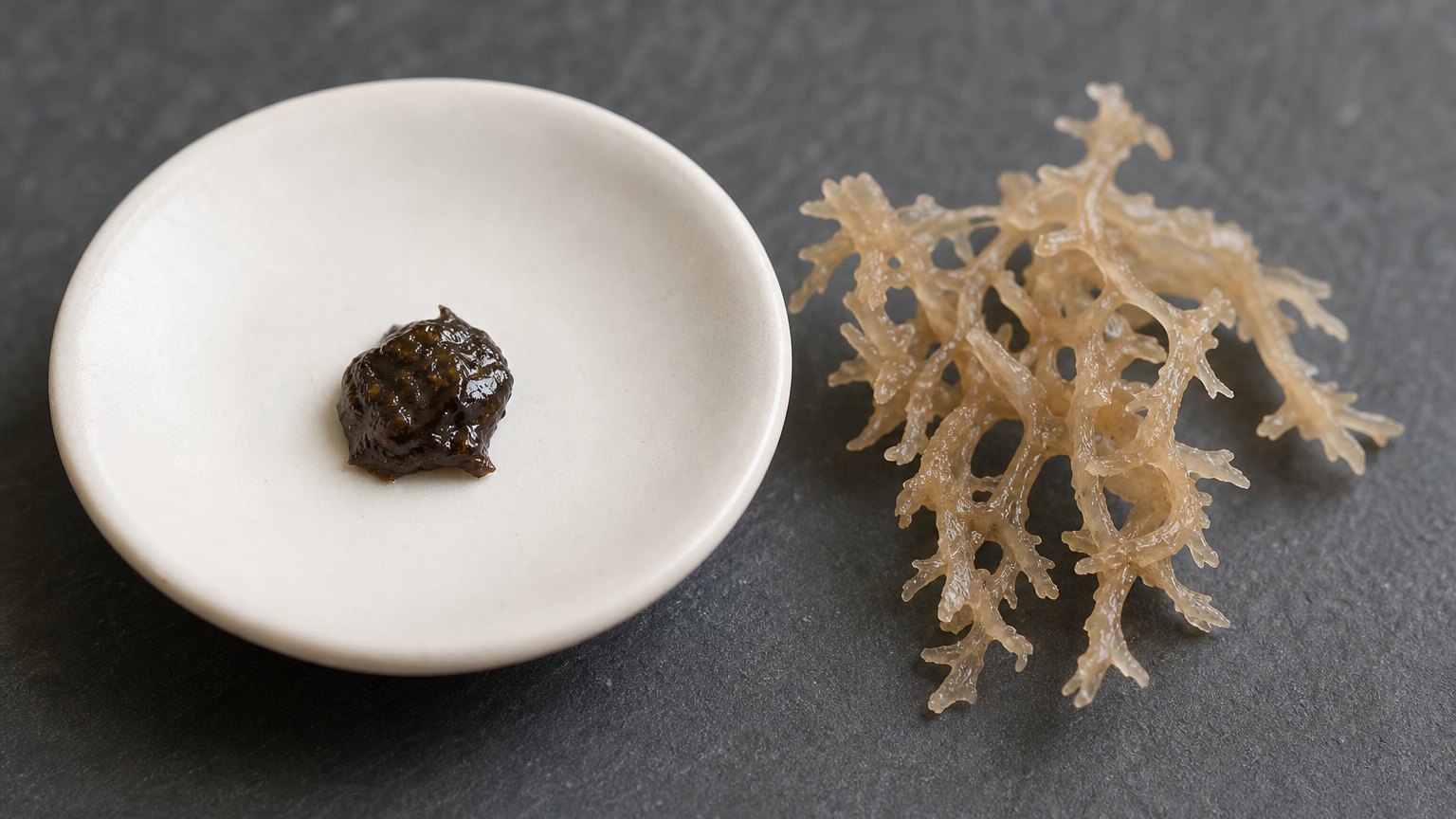
Himalayan shilajit and sea moss are mineral-containing ingredients, but neither has strong evidence behind the long list of benefits promoted online. The most important buying questions involve shilajit purification, heavy metal testing, and the amount of iodine in sea moss.
Key Takeaways
- Evidence remains limited: Small studies cannot support most of the broad claims made for shilajit or sea moss.
- Purification is essential: Raw or poorly purified shilajit can contain lead, arsenic, and mercury.
- Iodine can vary widely: Sea moss may provide modest iodine or far more than you expect, depending on the species and source.
- Testing matters more than geography: The word Himalayan does not prove that shilajit is pure, authentic, or properly processed.
- Labels should provide specifics: Look for ingredient amounts, iodine content, sourcing details, and a lot-specific Certificate of Analysis.
What Shilajit Actually Is
Shilajit is a dark, sticky substance that seeps from layers of rock in mountainous regions. It forms over a very long period as plant material and other organic matter break down and interact with minerals. Shilajit is associated most closely with the Himalayas, although similar material occurs in other mountain ranges.
Calling a product Himalayan describes its claimed geographic origin. It is not a quality grade. Shilajit from the Himalayas can still be poorly processed, mislabeled, or contaminated.
One of its main components is fulvic acid. Fulvic acid is a mixture of small organic compounds produced as natural material decomposes. You may see it marketed as if it were one precisely defined nutrient, but its composition can differ substantially between samples. Shilajit also contains trace minerals, meaning minerals present in relatively small amounts. Those amounts vary with the source and processing method.
Shilajit has a long history in Ayurvedic practice, a traditional medical system from India. Traditional use can help researchers identify questions worth studying, but it does not by itself prove that an ingredient produces a particular result in people.
Commercial shilajit comes as resin, powder, liquid, or capsules. The form is less important than identity, purification, dose transparency, and contaminant testing. Raw material should not be treated as safer or more effective simply because it appears less processed. For shilajit, appropriate purification is a basic safety requirement.
What Sea Moss Actually Is
Sea moss is a general market name for several edible red seaweeds. Traditional Irish moss usually refers to Chondrus crispus, which grows in colder Atlantic waters. Many products sold as sea moss use Gracilaria species from warmer regions. These are related types of red algae, but they are not identical and may have different nutrient profiles.
Sea moss naturally contains carbohydrates, fiber-like compounds, and minerals absorbed from seawater. It can supply iodine, which your thyroid uses to make hormones that help regulate metabolism. It may also contain smaller amounts of iron, magnesium, potassium, and other minerals. The exact amounts depend on the species, growing location, season, processing, and serving size.
You may have heard that sea moss contains 92 of the 102 minerals the body needs. That popular statement is not a reliable nutrition standard. The human body does not have an accepted list of 102 required minerals, and detecting tiny traces of an element does not mean a serving provides a useful amount.
Fresh or dried sea moss is often soaked and blended into a gel. Gels contain substantial water and can spoil or grow microbes if handled or refrigerated poorly. Capsules avoid the preparation step, but they still require careful sourcing and testing.
Seaweed can absorb both nutrients and unwanted substances from its environment. That makes origin and contaminant screening relevant. Organic language may describe how sea moss was grown or handled, but it does not replace tests for iodine, heavy metals, and microbes.
The Heavy Metal Problem With Shilajit
Raw or poorly purified shilajit can contain lead, arsenic, and mercury, so purification and third-party testing are essential. These metals may come from the surrounding rock and soil, environmental pollution, or inadequate manufacturing controls. Products may also differ from batch to batch because shilajit is a naturally variable material.
Heavy metals are concerning because repeated exposure can allow some of them to build up in the body. You cannot reliably detect them by looking at, smelling, or tasting a supplement. A smooth texture or dark color says nothing meaningful about purity.
A trustworthy test should measure at least lead, arsenic, cadmium, and mercury. Arsenic results deserve context. Total arsenic includes different chemical forms, while inorganic arsenic is the more toxic form of greatest concern. If total arsenic is elevated, a more detailed analysis can show how much is inorganic.
Do not settle for a statement that a product is simply free of heavy metals. Modern laboratory equipment can detect extremely small quantities, so a responsible report usually lists measured results and the limits used to judge them. Ask for a Certificate of Analysis, often shortened to COA, that matches the lot number on your container. A generic report from years ago does not establish the quality of today's batch.
Children and people who are pregnant or breastfeeding should be especially cautious about avoidable heavy metal exposure. Anyone with a kidney or liver condition, another existing medical condition, or prescription medications should talk to their doctor before using shilajit. Do not use untreated shilajit collected directly from rock.
Iodine Variability in Sea Moss
Iodine is essential, but more is not always better. Your thyroid uses iodine to produce hormones that influence metabolism, growth, and many everyday body functions. Too little iodine can be a problem, but a sudden or consistently high intake can also disrupt thyroid function.
Sea moss does not contain one predictable amount of iodine. Levels can change with the species, harvest site, season, washing process, and concentration of the finished product. Two products with similar serving sizes may provide very different amounts. A sea moss gel can also vary because the amount of water added changes its concentration.
For context, the recommended dietary allowance for most adults is 150 micrograms of iodine per day. The adult tolerable upper intake level is 1,100 micrograms per day from all sources. These figures are general nutrition reference points, not personalized dosing instructions. Individual needs and sensitivity can differ.
Excess iodine from sea moss can cause both hyperthyroidism and hypothyroidism. Hyperthyroidism means the thyroid becomes overactive. Hypothyroidism means it becomes underactive. Anyone with thyroid disease or taking thyroid medication must ask their doctor before using sea moss. Pregnancy and breastfeeding also change iodine needs, so medical guidance is appropriate.
Check whether the supplement label states iodine per serving in micrograms. Then consider your complete routine, including multivitamins, prenatal products, kelp, seaweed snacks, and other thyroid-support supplements. Following the sea moss label does not guarantee an appropriate total intake if several products supply iodine. Avoid increasing the serving because you do not feel an immediate effect.
What the Human Research Shows
Human research on shilajit is limited. A few small studies have examined areas such as fatigue, physical performance, and male reproductive measures. Many involve few participants, short study periods, or preparations that may not match products currently sold. Some were also funded by ingredient manufacturers. These limitations do not make the results meaningless, but they reduce how confidently they can be applied.
The fertility research on shilajit is small and preliminary. It does not establish that shilajit improves fertility, sexual function, or reproductive outcomes. Larger independent trials would be needed before making those conclusions.
Evidence for sea moss is even thinner. Seaweed as a broader food category has been studied, but research on sea moss itself is largely based on laboratory work, animal studies, nutrient analysis, or traditional use. Those forms of research can suggest possibilities. They cannot show that a sea moss capsule produces a specific benefit in people.
Iodine supports normal thyroid hormone production when intake is appropriate. Fiber-like compounds may also contribute to the nutritional qualities of edible seaweed. However, those basic facts do not prove claims about immunity, digestion, skin, energy, or cholesterol. Nutrient content and clinical effectiveness are different questions.
There is also no good human evidence showing that shilajit and sea moss have a special synergistic effect when taken together. Fulvic acid is often said to enhance absorption, but that broad claim has not been established for all the minerals in sea moss or for combined supplements. Treat the pairing as a convenient formulation, not a proven shortcut. Supplements can support a consistent wellness routine, but they do not replace balanced meals, sleep, activity, or appropriate medical care.
How to Judge Quality
Start with the label and testing documents, not dramatic benefit claims. A responsible manufacturer should make it possible to understand what you are taking and how the product was evaluated.
For shilajit, look for a clear amount per serving and an explanation of purification. A fulvic acid percentage can provide useful standardization, meaning batches are made to meet a defined level, but it does not replace identity or safety testing. The supplier should be able to verify that the material is genuine shilajit rather than an undeclared substitute.
For sea moss, look for the species or a meaningful sourcing description, the amount per serving, and the iodine content in micrograms. If iodine is not listed, you cannot easily judge how the supplement fits with food and other products in your routine.
Request a recent, lot-specific COA from an independent laboratory. Match its lot number to your bottle. Review the actual results for lead, arsenic, cadmium, mercury, and microbes rather than relying only on a badge or the phrase third-party tested. Potency testing should also confirm important label claims, including iodine when it is declared.
Check the full ingredient list for fillers, colors, or extra herbal ingredients you did not intend to take. More ingredients do not automatically make a formula more useful. Also confirm the serving size, storage directions, expiration date, and manufacturer contact information.
Finally, be skeptical of products promising instant energy, guaranteed sexual results, thyroid correction, or treatment for any health condition. High quality starts with realistic language. Himalayan origin, organic positioning, or a premium price may be relevant details, but none can substitute for purification, transparent amounts, and current laboratory evidence.
LiveGood Himalayan Shilajit & Organic Sea Moss combines Himalayan shilajit and organic sea moss in capsules rich in trace minerals, fulvic acid, and iodine. The formula supports brain and nervous system function, healthy thyroid and hormone balance, sexual health, gut health, and healthy cholesterol. Follow the label and take it on an empty stomach as directed. It is $15.95 for members versus $34.95 retail, reflecting LiveGood's mission to "Provide the highest quality supplements in the world, at the lowest prices possible."
Frequently Asked Questions
What are the benefits of shilajit and sea moss?
Shilajit and sea moss can provide fulvic compounds, trace minerals, and iodine, but their broader benefits are not well established in human studies. Iodine supports normal thyroid hormone production when consumed in an appropriate amount. Evidence for claims involving energy, cognition, sexual health, digestion, or combined effects remains limited, so these ingredients should support a routine rather than replace proven health habits.
Is shilajit safe?
Purified shilajit may be appropriate for some adults, but raw or poorly processed material can contain lead, arsenic, and mercury. Choose a product with independent, lot-specific contaminant results and follow its label. Talk to your doctor first if you take prescription medication, are pregnant or breastfeeding, have a kidney or liver condition, or live with another medical condition.
Does sea moss contain too much iodine?
Sea moss can contain excessive iodine, although the amount varies greatly among species, harvests, and products. Check for iodine listed in micrograms per serving and include iodine from your food and other supplements. Excess intake can contribute to either an overactive or underactive thyroid. If you have thyroid disease or use thyroid medication, ask your doctor before taking sea moss.
Should you take shilajit and sea moss together?
You can take shilajit and sea moss together if the combined product has suitable amounts and passes appropriate quality testing, but no strong evidence shows the pairing works better than either ingredient alone. A combined capsule may be convenient. Review its iodine content and contaminant testing, follow label directions, and ask your doctor if you use medication or have an existing condition.
How do you check for heavy metals?
Check heavy metals by requesting a lot-specific Certificate of Analysis from an independent laboratory. The report should match the lot number on your container and show measured results for lead, arsenic, cadmium, and mercury. For arsenic, look for inorganic arsenic data when relevant. A general purity promise or undated testing badge is less useful than a current report with numerical results and stated limits.