
Supplements for Body Recomposition: What Works
 Written by Nauder Khazan
Ask AI about this article and Whey Protein Isolate - With Colostrum





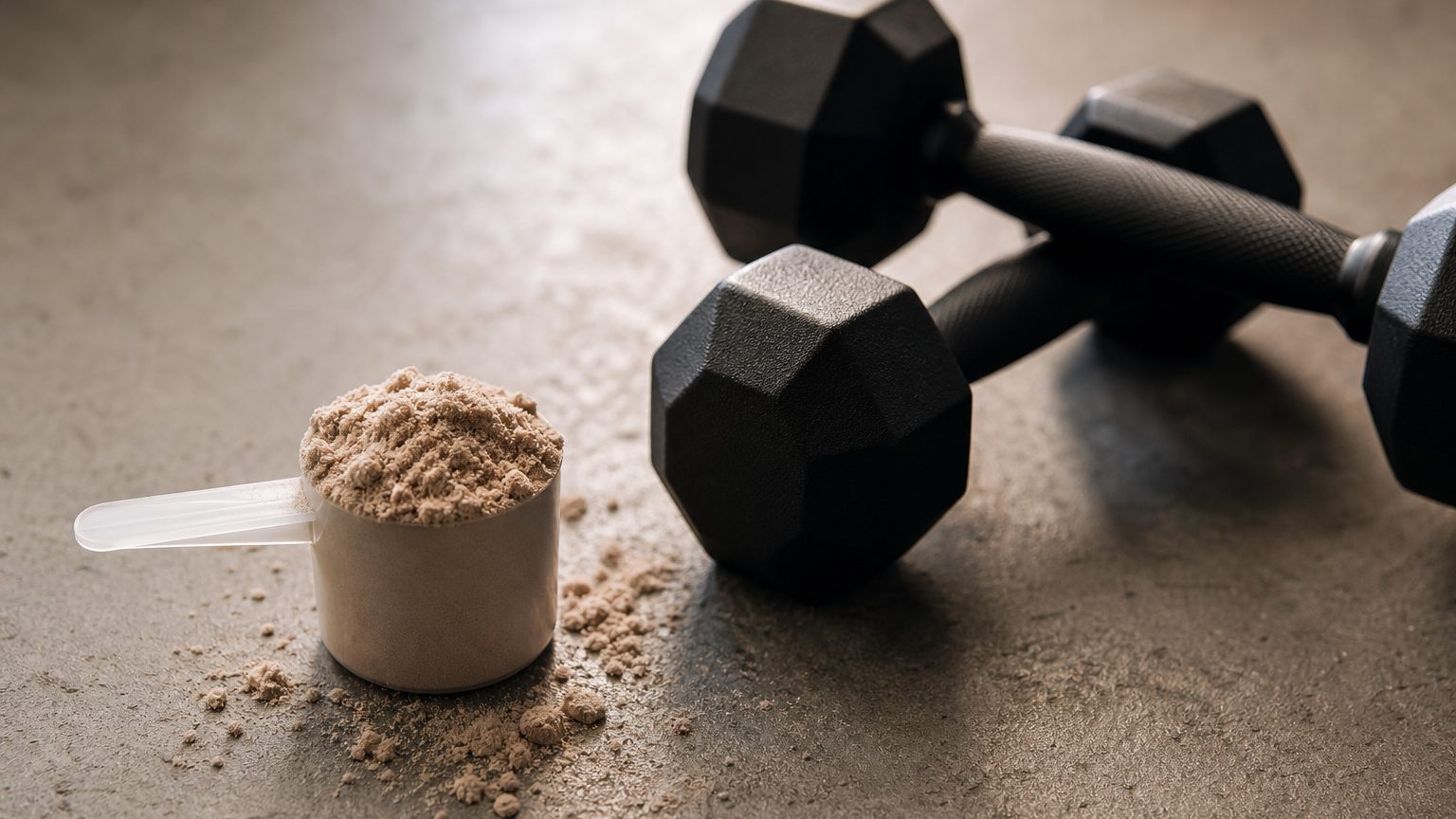
If you want supplements for fat loss and muscle gain, start with the honest answer: supplements are not the main driver. A modest calorie deficit, enough protein and consistent resistance training do most of the work. Protein powder, creatine and caffeine can help, but only when they support those fundamentals.
Key Takeaways
- Build the foundation first: A modest calorie deficit, high protein intake and resistance training matter far more than any supplement.
- Use protein for convenience: Protein powder helps when food alone does not consistently provide enough protein.
- Consider creatine for performance: Creatine can support strength and training capacity, which may help you maintain or build muscle.
- Treat caffeine as optional: It can improve alertness and workout performance, but it does not replace sleep or sound nutrition.
- Skip most fat burners: These products are often caffeine-based, while evidence for many additional ingredients is weak or inconsistent.
What Actually Drives Recomposition
Body recomposition means reducing body fat while maintaining or building muscle. It is possible, but the process is usually slower than focusing on fat loss or muscle gain separately. Beginners, people returning after time away from training and those with more body fat often have the clearest opportunity to do both at once.
Fat loss requires an energy deficit. That means you regularly consume slightly fewer calories than your body uses. A severe deficit may make the scale move faster, but it can also reduce training quality, increase hunger and make muscle retention harder. A modest deficit is more compatible with strength training and adequate recovery.
Your three priorities are straightforward:
- Follow a modest calorie deficit that you can maintain without feeling depleted.
- Eat enough protein to provide the amino acids your muscles use for repair and growth.
- Perform resistance training that becomes gradually more challenging over time.
Resistance training includes lifting weights, using machines, working with resistance bands or doing demanding bodyweight exercises. Gradual progression might mean adding a little weight, completing another repetition or improving your form. The goal is to give your muscles a reason to stay.
Sleep, daily movement and stress management also affect appetite, recovery and workout performance. Supplements sit below all of these. They may make a good routine more convenient or productive, but they cannot turn an inconsistent plan into an effective one. That hierarchy protects both your results and your budget.
Protein Is the One That Matters
Protein is the most useful supplement category for recomposition, but protein powder is not uniquely fat-burning or muscle-building. Its main advantage is convenience. It helps you reach an effective daily protein intake without preparing another full meal.
A practical target for active adults pursuing recomposition is about 1.6 to 2.2 grams of protein per kilogram of body weight each day. That is approximately 0.7 to 1 gram per pound. The higher end may be useful during a calorie deficit, when preserving muscle becomes more challenging. Your needs can vary with body size, training experience, calorie intake and medical history.
Spread protein across three to five meals or snacks rather than placing nearly all of it at dinner. A serving after training can be convenient, but there is no narrow window that determines your results. Total daily intake and consistency matter more than drinking a shake immediately after your final repetition.
Whey is a complete protein, meaning it provides all nine essential amino acids that your body cannot make. It is also rich in leucine, an amino acid that helps signal muscle protein synthesis, the process of building new muscle protein. Research on whey protein supports its use as a high-quality protein source alongside resistance training.
Protein powder is optional if foods such as dairy, eggs, fish, poultry, lean meat, soy, beans and lentils already cover your needs. If you have kidney or liver disease, another existing medical condition, or you are pregnant or breastfeeding, talk to your doctor before significantly changing your protein intake or using supplements.
If a shake makes your protein target easier, Whey Protein Isolate - With Colostrum is a practical option. Each chocolate serving provides 20 grams of protein with all nine essential amino acids, using 100% grass-fed, pasture-raised whey sourced from sustainable US farms and organic cacao. It also includes colostrum to support gut and immune health, plus digestive enzymes to support digestion and nutrient absorption. Members pay $39.95, compared with $49.95 retail, reflecting LiveGood's "Highest Quality. Lowest Prices. Every Day." approach.
Creatine and Caffeine
Creatine monohydrate is one of the most thoroughly studied sports supplements. Your body naturally makes creatine, and you also get small amounts from foods such as meat and fish. Inside muscle, creatine helps replenish adenosine triphosphate, or ATP, the energy used during short, demanding efforts such as lifting and sprinting.
Creatine does not directly remove body fat. Its value during recomposition is indirect but meaningful. By supporting strength, repeated high-effort exercise and training capacity, it may help you preserve or build muscle while dieting. Research on creatine commonly finds better strength and lean-mass outcomes when supplementation is combined with resistance training.
Creatine can increase body weight because it draws water into muscle cells. This is not the same as gaining body fat. The initial change can make scale readings confusing, so also track waist measurements, gym performance and how your clothing fits. Creatine works through consistent use rather than a noticeable pre-workout rush. Follow label directions rather than assuming more will work better.
Caffeine has a different role. It can increase alertness, reduce how difficult exercise feels and support performance during some strength and endurance workouts. It may also cause a small, temporary increase in energy use, but that does not make it a reliable fat-loss solution.
Use the lowest label-directed serving that supports your workout. More caffeine can mean shakiness, digestive discomfort, a racing heartbeat or poorer sleep. Regular use can also build tolerance. Count coffee, tea, energy drinks and pre-workout products toward your total intake. If you take prescription medication, have an existing medical condition, or are pregnant or breastfeeding, talk to your doctor before using supplemental caffeine.
The Categories That Do Not Deliver
Most products marketed as fat burners contain caffeine, sometimes from several sources with unfamiliar names. The brief energy or appetite effect may feel noticeable, but it should not be confused with meaningful, sustained fat loss. Adding stimulants does not overcome excess calorie intake, and high doses can interfere with sleep and recovery.
Evidence for many common fat-loss ingredients is poor, mixed or too small to matter in everyday life. This includes raspberry ketones, garcinia cambogia and many proprietary herbal blends. Green tea extracts have produced inconsistent weight-management results, and concentrated extracts are not equivalent to drinking ordinary tea. Conjugated linoleic acid, or CLA, has shown small and inconsistent changes in body composition. L-carnitine is involved in energy metabolism, but taking more does not reliably produce major fat loss in otherwise well-nourished adults.
Branched-chain amino acids, usually called BCAAs, are another easy place to overspend. Leucine, isoleucine and valine are essential amino acids, but complete proteins already provide them. If your daily protein intake is adequate, adding BCAAs is unlikely to improve muscle growth beyond what you get from protein-rich foods or a complete protein powder.
So-called testosterone boosters also deserve caution. Many rely on herbs with limited human evidence, especially in people whose hormone levels are already within a normal range. A supplement cannot substitute for medical evaluation if you have symptoms that concern you.
No supplement selectively removes belly fat. Your genetics and physiology influence where fat comes off first. Products marketed specifically to women or men rarely change the basic evidence, either. Recomposition fundamentals are the same, although individual calorie needs, health considerations and training programs differ. Avoid proprietary blends that hide ingredient amounts, and talk to your doctor about potential interactions with prescription medications.
Building a Sensible Stack
A sensible recomposition stack is deliberately small. Begin by tracking your food and training for a couple of weeks. You do not need perfect numbers, but you should know whether you are eating enough protein, maintaining a modest calorie deficit and getting stronger or completing more work over time.
Add supplements only to solve a specific problem:
- Use protein powder if you regularly fall short of your protein target or need a quick meal component.
- Consider creatine monohydrate if you want evidence-backed support for strength and repeated high-intensity exercise.
- Use caffeine selectively if it improves training without disrupting sleep, increasing anxiety-like feelings or encouraging dependence.
You do not need to start all three at once. Adding one product at a time makes it easier to judge tolerance, cost and usefulness. Follow each label's directions. Avoid combining multiple stimulant products, especially when the caffeine amount is unclear.
Measure progress with more than body weight. Weigh under similar conditions and look at weekly averages, since water, sodium, carbohydrate intake and digestion can change the scale from day to day. Track waist measurements every few weeks, take consistent progress photos if you find them helpful and keep a simple workout log. Maintaining strength during a calorie deficit is often a positive sign that you are preserving muscle.
Give the process time. Day-to-day changes are mostly noise, while meaningful recomposition develops across months of consistent training and nutrition. If weight and measurements are not changing after several weeks, review calorie intake and daily activity before buying another supplement.
Quality matters, but complexity does not. Choose products with clear labels, recognizable ingredients and disclosed amounts. Supplements should make your routine easier to follow, not create a second full-time job. Consistency over quick fixes remains the most reliable approach.
Frequently Asked Questions
What supplements help lose fat and build muscle?
Protein powder, creatine monohydrate and caffeine have the clearest practical roles. Protein helps you meet daily needs, creatine supports strength and training capacity, and caffeine may improve workout performance. None directly accomplishes both goals by itself. A modest calorie deficit and progressive resistance training still determine whether your supplement routine has a useful foundation.
Can you build muscle and lose fat at the same time?
Yes, you can build muscle while losing fat, although the rate depends on your starting point and training history. Beginners, people returning to exercise and those carrying more body fat often have an easier time. Keep the calorie deficit modest, eat enough protein and train each major muscle group consistently. Experienced, lean lifters may make slower progress.
Do fat burners work?
Most fat burners do not produce meaningful long-term fat loss on their own. Many are largely caffeine combined with herbs that have weak or inconsistent evidence. Caffeine may temporarily improve energy, appetite control or exercise performance, but tolerance and side effects can limit its value. Your calorie intake, training, sleep and daily activity remain much more influential.
How much protein do you need for recomposition?
A practical daily range is about 1.6 to 2.2 grams of protein per kilogram of body weight, or roughly 0.7 to 1 gram per pound. Spread it across several meals and adjust for your size, diet and training. People with kidney or liver conditions, existing medical conditions, or pregnancy or breastfeeding should talk to their doctor before making a major change.
Is creatine useful when cutting?
Yes, creatine can be useful during a cutting phase because it supports strength and repeated high-effort training. That may help you maintain muscle while eating fewer calories. It does not directly burn fat, and it may increase scale weight through additional water stored in muscle. Follow the product label and evaluate progress using strength, measurements and weight trends.