
What Do Collagen Peptides Actually Do?
 Written by Nauder Khazan
Ask AI about this article and Collagen Peptides






Collagen peptides are mainly used to support skin elasticity, joint function, and the structure of connective tissues such as bone. The results in human trials are generally modest, and swallowed collagen does not travel intact to your skin. Here is what digestion does to it, why small peptides may still matter, and where the evidence remains uncertain.
Key Takeaways
- Collagen is digested first: Your body breaks it into amino acids and small peptides before absorbing it.
- Small peptides may send signals: Compounds such as prolyl-hydroxyproline may influence cells involved in connective tissue maintenance.
- Skin evidence is promising but modest: Some trials report improvements in hydration or elasticity after consistent use, but study quality varies.
- Other benefits are less certain: Joint and bone research is encouraging in places, while evidence for hair, nails, muscle, and weight is limited.
- Collagen is not complete protein: It is low in tryptophan and should not replace varied dietary protein.
What Happens After You Swallow Collagen
Collagen is a structural protein. In your body, it helps give shape and strength to skin, cartilage, tendons, ligaments, bones, and other connective tissues. The collagen in a supplement, however, does not arrive at those tissues in its original form.
Collagen peptides are made through hydrolysis. That means water and enzymes are used to cut large collagen proteins into smaller pieces. Hydrolyzed collagen and collagen peptides are essentially two names for this same easier-to-mix form. The smaller size helps the product dissolve, but digestion still continues after you swallow it.
In your stomach and small intestine, digestive enzymes break most of the peptides down further. Much of the collagen enters circulation as individual amino acids, including glycine, proline, and hydroxyproline. These are raw materials your body can use in many places. They are not reserved for skin, joints, or any other single destination.

Digestion breaks hydrolyzed collagen into amino acids and small peptides before they enter circulation.
A small portion may also be absorbed as short chains of two or three amino acids. One commonly studied example is prolyl-hydroxyproline, sometimes shortened to Pro-Hyp. Researchers have detected these collagen-derived peptides in the blood after people consume hydrolyzed collagen.
That distinction matters. Taking collagen does not directly refill collagen stores. Your body decides how to use the absorbed material based on its needs, overall diet, health, and activity. The more interesting question is whether the small peptides do more than provide building blocks.
The Signalling Idea, Explained Simply
The signalling hypothesis begins with those small collagen-derived peptides that survive digestion. Researchers think some may act like messages, not just construction material. In laboratory experiments, peptides such as Pro-Hyp can interact with fibroblasts, the cells that help produce collagen and other parts of connective tissue.
A simple way to picture this is a home repair project. Amino acids are the lumber, nails, and concrete. A signalling peptide may be more like a note telling the crew that maintenance is needed. The note does not become the repaired wall, and it cannot complete the work by itself. It may influence what the crew does next.

Some collagen-derived peptides may act as signals to cells involved in connective tissue maintenance.
This could help explain why collagen sometimes performs differently from an equal amount of unrelated protein. Collagen provides an unusual amino acid pattern and certain short peptides. In theory, those features may support collagen-making activity in tissues that encounter the peptides.
But this mechanism is not fully settled. Much of the detailed signalling evidence comes from cell studies or animal research. Those models are useful for understanding possibilities, but they do not prove that a supplement creates a meaningful visible or physical change in every person.
Your body also needs more than collagen peptides to make its own collagen. Vitamin C is required for key steps in collagen formation. Adequate energy, minerals, sleep, and protection from smoking and excessive ultraviolet exposure matter too. Collagen may support the process, but it cannot compensate for every factor that affects connective tissue.
What Skin Research Has Found
Skin is the best-studied reason people take collagen peptides. In multiple randomized trials, participants taking hydrolyzed collagen have experienced small improvements in measures such as skin hydration or elasticity compared with a placebo. Many studies run for about 8 to 12 weeks, so collagen is better viewed as a consistency experiment than a quick beauty fix.
Hydration describes how much water the outer layers of skin retain. Elasticity refers to how well skin returns toward its original shape after being stretched. Researchers measure these features with instruments, which can detect changes that may be subtler than what you notice in a mirror.

Skin studies most often track hydration and elasticity after several weeks of consistent collagen use.
The findings are encouraging, but they need context. Trials use different collagen sources, peptide sizes, serving amounts, added nutrients, and testing methods. Some are small. Many are funded by collagen manufacturers, which does not automatically make the findings wrong, but it raises the need for independent replication. Reviews often combine very different products, making it difficult to know whether all collagen peptides work alike.
There is also no guarantee that you will see a clear before-and-after difference. Age, sun exposure, smoking, protein intake, skincare, hormones, and genetics can all affect skin. A supplement cannot replace sunscreen, balanced nutrition, or basic skin care.
Evidence for hair and nails is much thinner. Small studies and personal reports suggest possible support for nail strength or growth, but strong controlled evidence is limited. Hair claims are especially uncertain because growth can be affected by nutrient deficiencies, stress, medications, and many health factors. Collagen should not be treated as a universal answer to a visible change in hair or nails.
Joints, Bone and the Rest
Collagen is a major component of cartilage, tendons, ligaments, and bone matrix. That makes joint and bone support biologically plausible. Some trials in active adults report improvements in joint comfort or function after several months of collagen peptide use. Other studies find smaller effects or no clear advantage, so the response is not predictable.
The time frame is important. Connective tissue changes slowly. A single serving is unlikely to produce a noticeable feeling. When research reports a benefit, collagen is generally taken consistently while participants continue their normal activity or a structured exercise program.
Collagen peptides may support connective tissue, but movement and a balanced diet remain essential.
Bone research is more preliminary. A few longer studies, including research in postmenopausal women, have reported changes in bone-related measurements after regular collagen peptide use. These findings do not establish that collagen alone protects bone health. Resistance training, weight-bearing movement, adequate calcium, vitamin D, total protein, and medical care remain central.
Collagen is also marketed for muscle and exercise recovery. It supplies plenty of glycine and proline, but relatively little leucine, an amino acid that strongly helps trigger muscle protein building. It is also low in tryptophan and is not a complete protein. For that reason, collagen should not replace complete sources such as dairy, eggs, fish, meat, soy, or suitable protein combinations.
Evidence for healthy weight management is limited. Collagen contributes protein and may fit into a filling meal or snack, but trials do not show that it specifically targets body fat. Likewise, claims involving digestion or broad whole-body renewal are ahead of the evidence. The most defensible uses remain support for skin elasticity and connective tissue, with realistic expectations.
Who Is Unlikely to Notice Much
You may notice little if you already eat enough protein, have a nutrient-rich diet, and are looking for a dramatic visible change. Your body can make collagen from amino acids found in ordinary foods. A supplement offers a concentrated collagen amino acid profile, but it does not create an entirely new biological pathway.
You are also less likely to evaluate it fairly if you take it only occasionally. Skin and connective tissue studies usually last weeks or months. Follow the product label and keep the rest of your routine reasonably stable. Photos taken in similar lighting or notes about everyday joint comfort are more useful than relying on one good or bad day.
Collagen is animal-derived, so it is not suitable for a vegan diet. Check whether a product comes from bovine, marine, porcine, or poultry sources if you have allergies or dietary restrictions. Mild digestive symptoms or an unpleasant taste can occur. Stop taking it and seek care if you experience signs of an allergic reaction.
If you are pregnant, breastfeeding, taking prescription medication, living with a kidney or liver condition, or managing an existing medical condition, talk to your doctor before using collagen. The extra protein and specific source may not be appropriate for everyone.
Quality, ingredients, and price also vary. Collagen type numbers describe where those types occur in the source tissue, but they do not mean intact type I collagen travels directly to your skin. For help comparing formats and labels without repeating the mechanism, see our top collagen supplement guide.
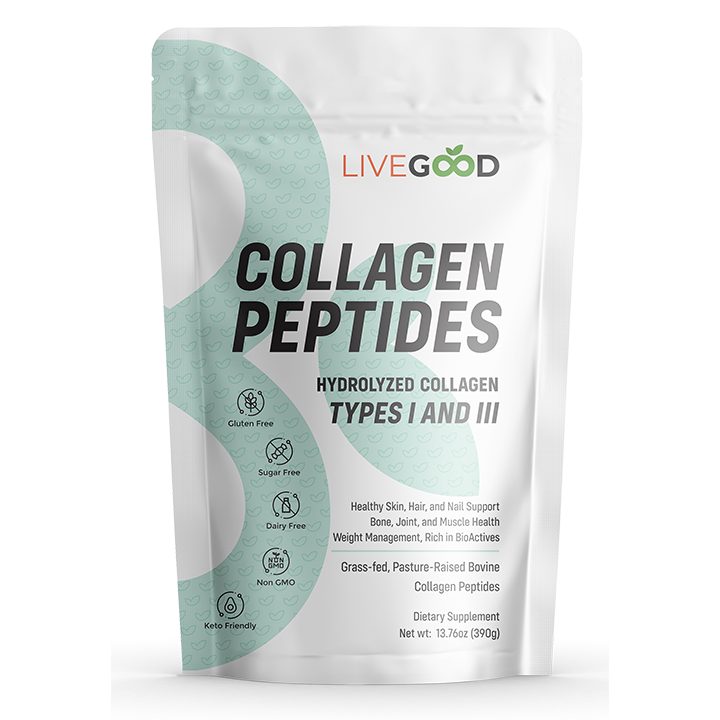
For a practical daily option, LiveGood Collagen Peptides provides hydrolyzed types I and III and is the first and only collagen product that also includes Velositol, Polynol and ApresFlex. It is formulated to support skin elasticity, hair and nail growth, joint function, muscle and bone structure, and healthy weight management. Follow the label consistently rather than expecting a quick change. Members pay $29.95 versus $49.95 retail, supporting LiveGood's mission to "Provide the highest quality supplements in the world, at the lowest prices possible."
Frequently Asked Questions
What do collagen peptides do for your body?
Collagen peptides provide amino acids and small peptide fragments that your body can use for normal protein and connective tissue maintenance. Some fragments may also signal cells involved in collagen production. Human trials suggest possible support for skin hydration, elasticity, and joint function, but responses vary. The peptides do not remain intact or travel directly to one chosen tissue.
What are collagen peptides good for?
Collagen peptides are most reasonably used to support skin elasticity and the normal structure of joints, tendons, ligaments, and bones. Skin research is the most developed, although average changes are usually modest. Joint and bone findings are promising but mixed. Evidence for major hair, nail, muscle, digestive, or weight changes is currently much less convincing.
Do collagen peptides actually get absorbed?
Yes, collagen peptides are absorbed after digestion, mainly as individual amino acids and partly as very small peptide chains. Researchers have identified collagen-derived compounds such as prolyl-hydroxyproline in the bloodstream after consumption. Absorption does not mean the supplement enters skin or cartilage as ready-made collagen. Your body distributes and uses the absorbed material according to its needs.
How long before collagen peptides do anything?
Collagen peptides are digested and absorbed within hours, but a noticeable result, if one occurs, usually takes much longer. Many skin studies assess outcomes after roughly 8 to 12 weeks, while connective tissue research may run for several months. Use the label directions consistently and judge patterns over time. Some people will not notice an obvious change.
Is collagen worth taking if you eat enough protein?
Collagen may still be worth trying for a specific skin or connective tissue goal, but it is less essential when your overall protein and nutrient intake are already strong. Its distinctive peptides could have signalling effects, although that advantage is not fully established. Because collagen is low in tryptophan and is not a complete protein, it should supplement rather than replace dietary protein.