
What Happens if You Stop Taking Collagen Peptides?
 Written by Nauder Khazan
Ask AI about this article and Collagen Peptides





If you stop taking collagen peptides, nothing dramatic should happen. There is no withdrawal or rebound effect, but any benefits you experienced may gradually fade over weeks or months as your tissues continue their normal turnover. Here is what that means for your skin, joints, hair, nails, and daily routine.
Key Takeaways
- No withdrawal occurs: Collagen is a source of protein, not a drug that creates physical dependence.
- Benefits may fade gradually: Skin or joint changes, if you experienced them, are more likely to diminish over weeks or months than overnight.
- A short break is usually uneventful: Missing collagen for a day or even a week is unlikely to cause an obvious change.
- Natural aging continues: Supplements do not stop the gradual, age-related changes in your body's collagen production.
- Cycling is not required: You can stop, restart, or use collagen consistently based on your goals, tolerance, and budget.
There Is No Withdrawal Effect
Stopping collagen peptides does not cause a withdrawal syndrome. You should not experience cravings, chemical dependence, or a sudden physical reaction simply because you removed collagen from your routine.
Withdrawal happens when the body adapts to a substance that changes signaling in the brain or other organs. Certain medications, nicotine, and caffeine can produce this kind of adaptation. Collagen does not work that way. It is a protein source that your digestive system breaks into amino acids and small protein fragments called peptides.
Your body uses amino acids as building materials for many purposes. They are not stored in a special collagen supplement reserve. Once digested, they join the same general supply of amino acids that also comes from foods such as meat, fish, dairy, eggs, beans, and soy.

Stopping collagen does not produce withdrawal because collagen peptides are digested nutrients, not dependence-forming drugs.
You also will not develop a rebound effect. Rebound means a symptom temporarily becomes worse than its original baseline after a substance is stopped. Collagen has no known mechanism that would shut down your natural collagen production and then cause an exaggerated decline when you quit.
If you stop for a week, you may notice no difference at all. If you feel an immediate change, consider other variables too. Sleep, hydration, training, weather, skin care, diet, and expectations can all affect how your skin or joints feel from one day to the next.
What Actually Fades, and How Slowly
If collagen was providing a noticeable benefit, that benefit may slowly become less apparent after you stop. You are not losing collagen peptides directly from your skin or joints. Instead, your body continues its usual cycle of building, maintaining, and breaking down tissue without the additional daily protein source.
The timeline is not precise. Most supplement studies evaluate collagen during continued use, often over several weeks or months. Far fewer studies follow participants long enough after stopping to show exactly when an effect disappears. Claims that everyone will lose results after a specific number of days go beyond what the evidence can support.
Skin hydration or elasticity may gradually return toward its previous level over weeks or months. That does not mean your skin will suddenly sag or develop wrinkles because you missed a serving. Changes in skin also depend on sun exposure, age, menopause, smoking, nutrition, sleep, and skin care.

Any noticeable changes after stopping collagen are more likely to unfold gradually than appear overnight.
Joint-related changes can be equally gradual. If you felt more comfortable during activity while using collagen, you might eventually notice that the difference is less clear. However, collagen does not act as a physical cushion that disappears when you stop taking it. Exercise habits, injury history, body mechanics, and training load may have a much larger effect on day-to-day comfort.
Evidence for hair and nail effects is more limited. Hair and nails grow slowly, so any change would take time to become visible. Stopping collagen is not expected to make your hair suddenly fall out. If you experience unusual hair loss, nail changes, or persistent joint discomfort, talk with your doctor rather than assuming collagen is the cause.
Why Collagen Is Not Like a Medication
Collagen supplements and medications serve different purposes. A medication often targets a particular enzyme, receptor, hormone, or biological pathway. A receptor is like a docking point on a cell. When a drug attaches to it, the drug can change how that cell behaves.
Collagen peptides are digested nutrients. Hydrolyzed collagen has been broken into smaller pieces to make it easier to mix and digest. Your digestive system breaks those pieces down further into amino acids and some small peptides. Your body then decides where to use them. You cannot direct a scoop of collagen only to your face, knees, hair, or nails.

Hydrolyzed collagen is broken into amino acids and small peptides during digestion.
This is also why stopping does not switch off a drug-like effect. You are simply removing one source of dietary protein and returning to the protein and amino acids supplied by the rest of your diet. Your body keeps making collagen, provided it has the necessary nutrients and normal biological signals to do so.
Collagen is unusual among proteins because it contains plenty of glycine and proline, two amino acids used in collagen-rich tissues. It is not a complete replacement for dietary protein, however. It contains relatively little of some essential amino acids, which your body cannot make on its own. A varied diet still matters.
Results from collagen research are modest and vary by product, serving, study length, and population. Some studies report support for skin hydration, elasticity, or joint function, while others provide less certain results. That uncertainty is another reason not to assume every change after stopping is caused by collagen.
The Age-Related Decline Continues Either Way
Your body naturally makes and breaks down collagen throughout life. With age, the balance gradually shifts. Collagen production generally becomes less efficient, while years of sun exposure, movement, hormonal changes, and other lifestyle factors continue to affect collagen-rich tissues.
Taking collagen does not pause that process. Stopping it does not suddenly restart aging, either. The underlying course continues whether or not collagen peptides are part of your routine. If supplementation was supporting a measurable or noticeable benefit, stopping simply removes that support. Your skin, joints, bones, and other tissues then continue along the path shaped by your age, genetics, health, diet, and lifestyle.

Normal collagen turnover and age-related changes continue whether or not you use a supplement.
This distinction matters because marketing sometimes makes collagen sound as though it replaces a fixed supply that is running out. Human biology is more complicated. Your body constantly remodels collagen. It builds new fibers and removes damaged ones. Dietary protein provides raw materials, but vitamin C, overall nutrition, hormones, movement, sleep, and sun protection also influence tissue maintenance.
Practical habits remain useful whether you take collagen or not. Eat enough total protein, include fruits and vegetables that supply vitamin C, use sun protection, avoid smoking, and perform appropriate strength and weight-bearing exercise. These habits support the body broadly and should not be replaced by a supplement.
No supplement can promise to reverse normal aging. Collagen peptides are better viewed as an optional addition to a consistent wellness routine. If you stop taking them, you return to your usual nutritional baseline rather than entering an accelerated decline.
Should You Cycle Collagen?
You do not need to cycle collagen. Cycling means taking a supplement for a set period, stopping for a break, and then starting again. This approach can be useful for evaluating whether a product is helping, but there is no established biological need to give your body a break from collagen peptides.
If you tolerate collagen and want to maintain a possible benefit, consistent use makes more sense than an on-and-off schedule. Follow the product label rather than increasing the serving in an attempt to get faster results. Supplements support a routine, they do not replace nutritious food, movement, sleep, or appropriate medical care.
A planned break can still provide useful information. Track the outcome that matters to you before stopping. For example, note skin dryness, nail breakage, or comfort during the same type of activity. Keep other parts of your routine as stable as possible. Reassess after several weeks, not after one missed serving. If nothing changes, the supplement may not have been making a noticeable difference for you.

Tracking the same skin, nail, or activity measures can help you evaluate a planned break.
Stop sooner if you develop an unwanted reaction. Collagen can cause digestive discomfort in some people, and its animal source may matter if you have food allergies or dietary restrictions. Formulas with additional ingredients require their own safety review. Talk to your doctor before use if you are pregnant or breastfeeding, take prescription medication, have an existing medical condition, or have kidney or liver concerns.
You do not have to take collagen forever. The honest decision is personal: continue if it fits your goals and you find it useful, or stop if the cost, convenience, tolerance, or results do not justify keeping it in your routine.
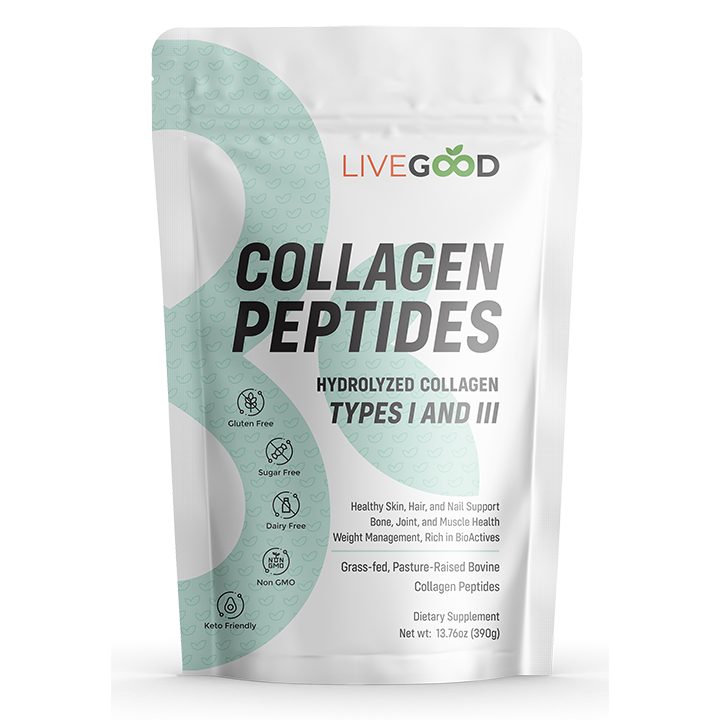
If consistent use fits your goals, LiveGood Collagen Peptides combines hydrolyzed collagen types I and III with Velositol, Polynol, and ApresFlex, which LiveGood identifies as a first-of-its-kind combination. It supports skin elasticity, hair and nail growth, joint function, muscle and bone structure, and healthy weight management. Follow the label directions. It is $29.95 for members and $49.95 retail, supporting LiveGood's mission to "Provide the highest quality supplements in the world, at the lowest prices possible."
Frequently Asked Questions
What happens if you stop taking collagen peptides?
Nothing sudden should happen if you stop taking collagen peptides. Collagen does not cause dependence, so there is no withdrawal or rebound. If it was supporting your skin, nails, or joint function, those effects may become less noticeable over the following weeks or months. Your body will continue making and remodeling collagen using nutrients from your regular diet.
Will your skin get worse if you stop collagen?
Your skin will not suddenly become worse when you stop collagen. Any improvement in hydration or elasticity that occurred during use may gradually fade, but research does not establish an exact post-supplement timeline. Aging, sun exposure, skin care, smoking, hormones, diet, and hydration may influence your skin more than stopping one supplement.
Skin appearance reflects many factors, including sun exposure, nutrition, hydration, hormones, and daily care.
Is there a collagen withdrawal?
No, collagen peptides are not associated with a withdrawal syndrome. They are digested as a source of amino acids and small peptides rather than acting on a receptor in the way many drugs do. Stopping simply removes that source from your diet. An immediate headache, mood change, or physical crash would not be an expected collagen withdrawal response.
How long do collagen benefits last after stopping?
Possible collagen benefits may fade over several weeks or months, but there is no reliable countdown that applies to everyone. Few studies are designed to track participants for long periods after supplementation ends. The timing depends on what changed during use, how noticeable the change was, your age, your diet, and other daily habits.
Do you need to take collagen forever?
No, you do not need to take collagen forever. Continued use may be reasonable if you tolerate it, can afford it, and believe it supports a goal that matters to you. You can also stop without tapering. If you are unsure whether it helps, take a planned break and compare the same practical measures over several weeks.