
What Ingredients Are in Super Greens Powder?
 Written by Ben Glinsky
Ask AI about this article and Organic Super Greens





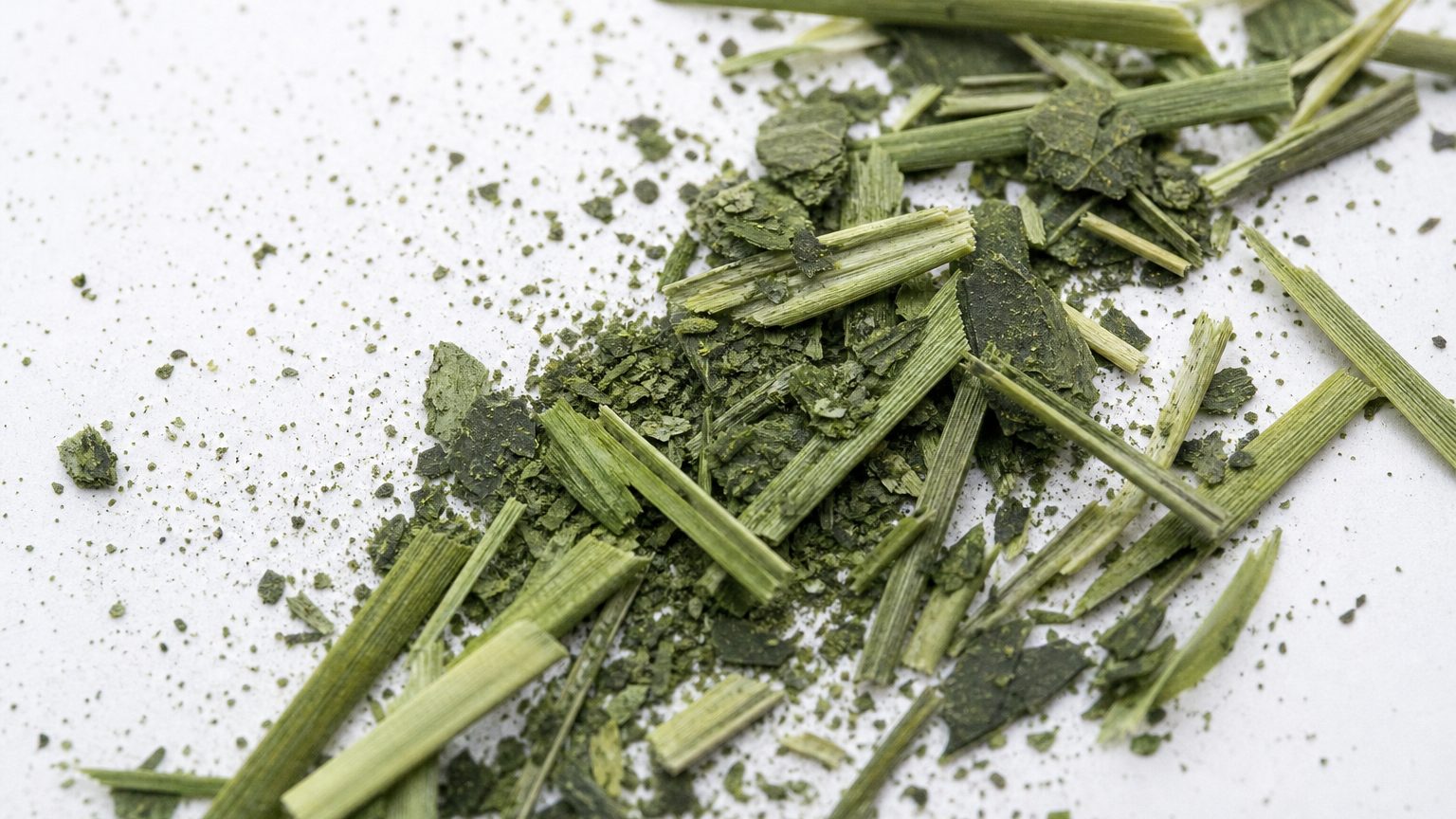
Super greens powders usually combine cereal grasses, algae, leafy vegetables, fruit and vegetable concentrates, and optional extras such as probiotics, enzymes, mushrooms or adaptogens. The exact recipe varies widely, so knowing how to read the label matters more than counting the ingredients.
Key Takeaways
- Expect several ingredient families: Most formulas combine grasses, algae, vegetables and concentrated plant ingredients.
- Check amounts, not ingredient counts: A long list does not tell you whether each ingredient appears in a meaningful quantity.
- Watch for proprietary blends: These disclose the blend's total weight while hiding the amount of each ingredient.
- Treat extras separately: Probiotics, enzymes, mushrooms and adaptogens require their own label details to be useful.
- Keep eating whole vegetables: Greens powder can support your routine, but it usually provides much less fibre than whole produce.
The Ingredient Families in Greens Powders
There is no official recipe for a super greens powder. One product may contain five plant powders, while another lists 30 or more ingredients. Most formulas can still be sorted into a few recognizable families.
| Ingredient family | Common examples | What it contributes |
|---|---|---|
| Cereal grasses | Wheatgrass, barley grass, oat grass, alfalfa | Dried plant material containing naturally occurring plant nutrients and pigments |
| Algae | Spirulina, chlorella | Concentrated whole algae with protein, pigments and micronutrients |
| Leafy vegetables | Spinach, kale, parsley, broccoli leaf | Familiar vegetables in dried powder or concentrated form |
| Fruit and vegetables | Beet, carrot, tomato, blueberry, acerola | Plant compounds, flavor, color and, in some products, vitamins |
| Mushrooms | Reishi, lion's mane, cordyceps, maitake | Fungal ingredients often included for general wellness support |
| Probiotics and enzymes | Lactobacillus, Bifidobacterium, protease, amylase | Live microorganisms or proteins that help break down food components |
| Adaptogens | Ashwagandha, rhodiola, holy basil | Botanicals traditionally used to support the body's response to everyday stress |
This classification helps you look past marketing terms. For example, a label advertising "40 superfoods" may contain many fruit powders but only a small amount of actual leafy greens. Another may use fewer ingredients at clearly disclosed amounts.
Also read the "Other Ingredients" line. That is where you may find flavors, sweeteners, gums, anti-caking agents or ingredients used to improve mixing. These are different from the active ingredients listed in the Supplement Facts panel.
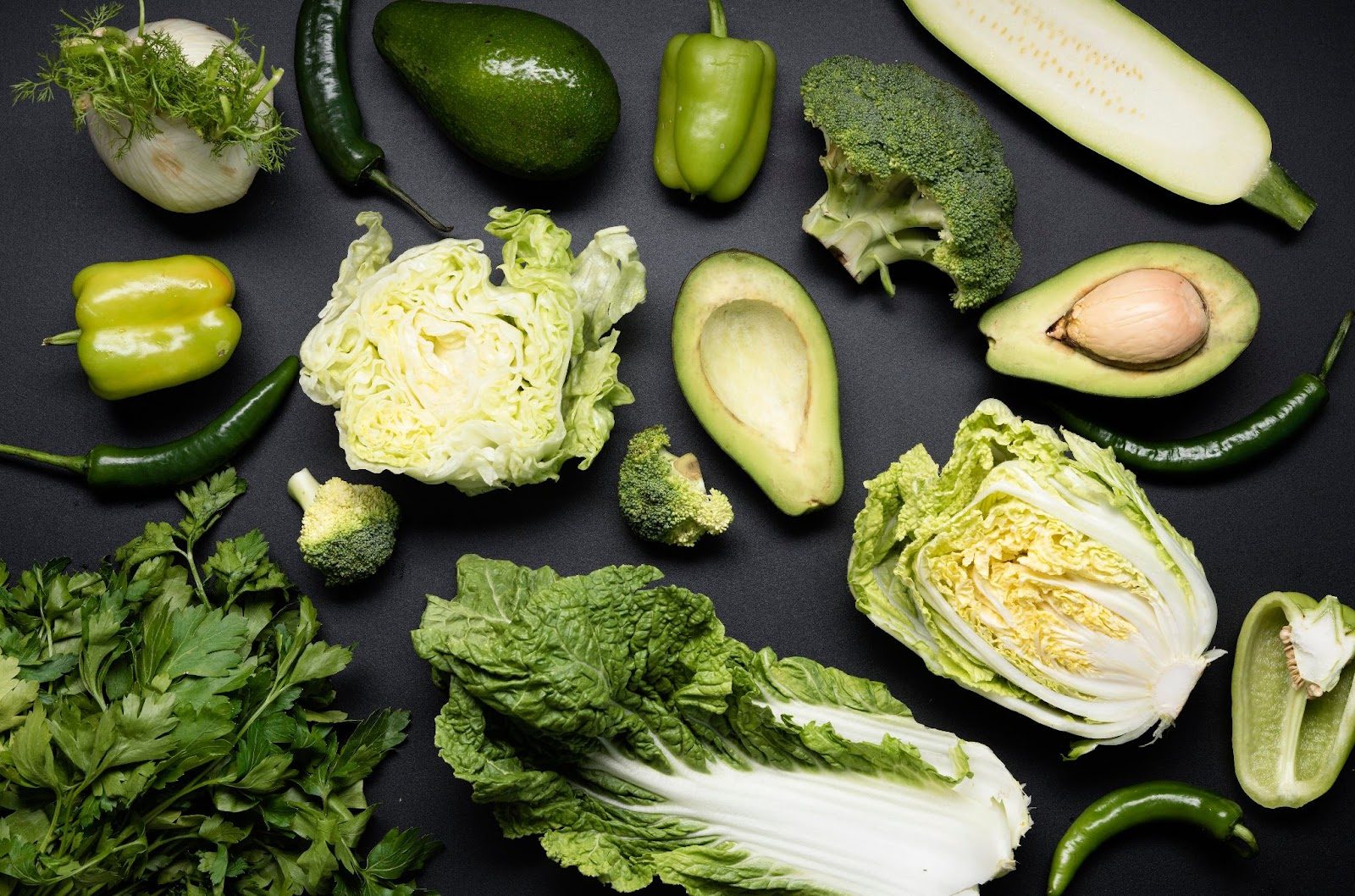
Sorting greens powder ingredients into families makes a long label easier to understand.
Cereal Grasses and Algae
Cereal grasses often form the base of a greens powder because they are mild enough to use in relatively large amounts. Wheatgrass, barley grass and oat grass are the young green leaves of cereal plants, harvested before the mature grain develops. They may appear as whole grass powder or grass juice powder.
Those forms are not identical. Whole grass powder retains more of the original plant material, including some fibre. Juice powder is made by pressing the grass, removing much of the insoluble fibre, and drying the liquid. It can be more concentrated by weight, but the finished product may still contain little fibre per serving. Check the Nutrition Facts or Supplement Facts panel rather than assuming "grass" means a high-fibre product.
Spirulina and chlorella are algae rather than vegetables. Spirulina is a blue-green cyanobacterium, a type of microorganism that performs photosynthesis. Chlorella is a single-celled green alga. Both contain protein, natural pigments and varying amounts of micronutrients. However, a typical greens serving may include far less algae than the quantities used in ingredient research.
Quality control is especially relevant for algae. Poorly controlled growing conditions can introduce contaminants. Look for a manufacturer that clearly identifies the algae and provides credible quality-testing information. Do not assume that "natural" guarantees purity.
Wheatgrass itself does not contain the mature wheat grain, but cross-contact can occur during growing or processing. If you have celiac disease, a wheat allergy or another reason to avoid gluten strictly, choose a product specifically labeled and tested for your needs. Talk to your doctor if you are unsure whether an ingredient is appropriate for an existing medical condition.
Fruit and Vegetable Concentrates
Leafy vegetables such as kale, spinach, parsley and broccoli can appear as whole-food powders. The vegetables are dried and milled, which makes them convenient and shelf-stable. Drying removes water, so the powder is concentrated by weight, but processing and storage can reduce some heat-sensitive nutrients.
Other ingredients may be listed as extracts, juice powders or concentrates. An extract isolates selected components using water, alcohol or another processing method. A juice powder starts with juice and generally leaves much of the original fibre behind. A concentrate removes part of the water before the ingredient is dried. These terms describe different materials, even when the front label groups them all as vegetables.
Common additions include beet, carrot, tomato, pumpkin, blueberry, cranberry and acerola cherry. They may contribute natural pigments and plant compounds. Acerola is sometimes included as a source of vitamin C, while beet provides betalain pigments. The actual contribution depends on the form and amount, not the ingredient's reputation.
A vitamin or mineral listed with a Daily Value offers more useful information than a picture of produce on the container. Daily Value is the reference amount used on nutrition labels to show how much one serving contributes to a typical daily diet. If no amount or Daily Value appears, you cannot tell how much of that nutrient the ingredient supplies.
Most greens powders contain only a few grams of total powder per scoop. A cup of cooked vegetables or a large salad offers much more food volume, water and usually fibre. Use greens as a convenient addition on busy days, not as permission to stop buying produce.
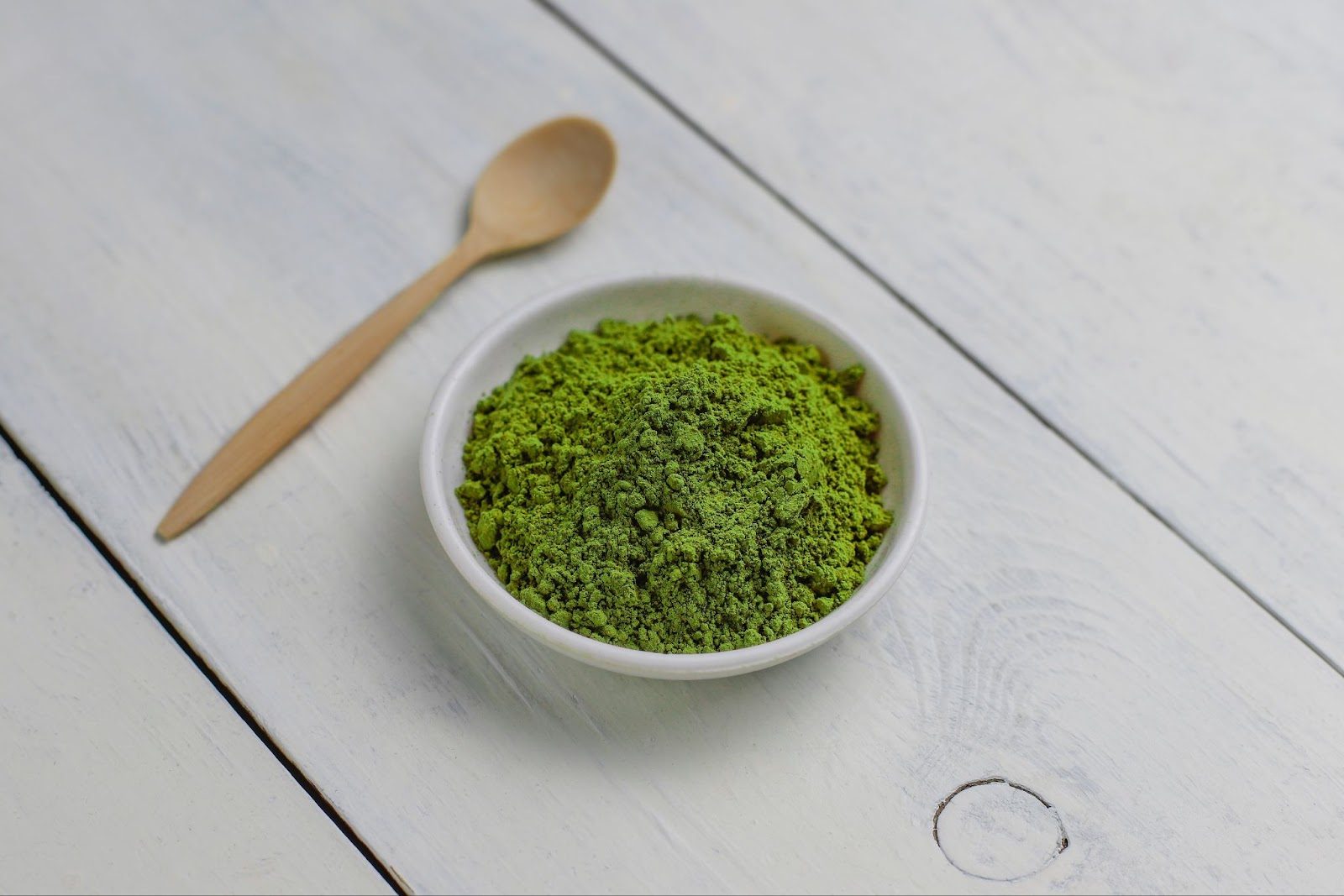
Whole-food powders, juice powders and extracts can come from the same plant but are not identical ingredients.
Probiotics, Enzymes and Adaptogens
Some greens powders go beyond plants by adding probiotics, digestive enzymes, mushrooms and adaptogens. These ingredients are not automatically beneficial just because they make the formula sound more complete. Each needs enough label detail to evaluate.
Probiotics are live microorganisms intended to provide a benefit when consumed in adequate amounts. Look for the complete strain name, not only a broad word such as "Lactobacillus." Different strains can behave differently. A useful label also lists colony-forming units, abbreviated CFU, which estimate the number of viable microorganisms. Check whether that count is promised through the expiration date or only when the product is manufactured, and follow storage instructions.
Digestive enzymes are proteins that help split food into smaller components. Amylase acts on carbohydrates, protease on proteins and lipase on fats. Enzymes should be listed by activity units, which describe what they can do, rather than only by milligrams. Evidence for routine enzyme supplementation in otherwise healthy people is limited, and a dusting of several enzymes may add more label appeal than practical value.
Adaptogens are herbs traditionally used to support resilience to everyday physical or mental stress. Examples include ashwagandha, rhodiola and holy basil. Research varies by herb, extract and outcome, so "adaptogen blend" is not a guarantee of a noticeable effect. Mushrooms such as reishi, lion's mane and cordyceps also vary by species, plant part and extraction method. A named species and disclosed amount are more informative than "mushroom complex."
These extras can also make a product less suitable for some people. Talk to your doctor before using a complex greens formula if you take prescription medication, are pregnant or breastfeeding, have a kidney or liver condition, or manage another existing medical condition. More ingredients create more opportunities for interactions or sensitivities.
How to Spot a Proprietary Blend
A proprietary blend is a group of ingredients listed under one shared name and one total weight. The ingredients must generally appear in descending order by weight, but the label does not reveal how much of each one is present.
Imagine a label that says "Superfood Matrix, 5,000 mg" followed by wheatgrass, spirulina, kale, chlorella, ashwagandha and 15 other ingredients. You know the entire mixture weighs five grams. You do not know whether it contains two grams of spirulina or only a few milligrams. The first ingredient is present in the largest amount, but even its exact quantity remains hidden.
Use this quick label check:
- Find the serving size and total grams per serving.
- Compare that total with the number of ingredients.
- Look for individual amounts beside the main ingredients.
- Check whether probiotics include strains and CFU.
- Check whether enzymes use activity units.
- Read the "Other Ingredients" line for sweeteners, flavors and processing aids.
- Review allergens, certifications, storage directions and warnings.
Ingredient order offers clues. If flavor, fibre, a sweetener or a relatively inexpensive base appears before the ingredients you wanted, much of the scoop may come from that base. Conversely, a transparent label lets you see whether the formula matches your priorities.
Also check added sugar, sodium and fibre per serving. Some fruit-flavored powders rely on sweeteners to soften grassy flavors. That is not automatically a problem, but it should be visible. Be cautious with extreme promises about cleansing, alkalizing the body or replacing vegetables. Those claims are not made reliable by adding more ingredients.
The practical rule is simple: favor clear forms, useful amounts and relevant testing over the longest ingredient list. Transparency lets you compare products instead of buying a story.
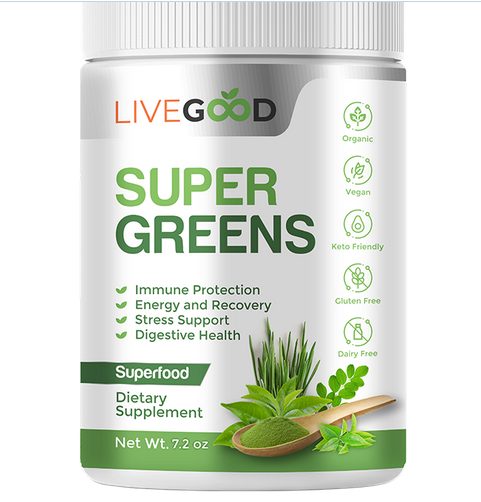
A transparent label shows the serving size, individual amounts and other ingredients clearly.
LiveGood Organic Super Greens is a USDA certified organic greens powder designed to help fill nutrient gaps as "a safety net for your health." Mix one delicious scoop with water or a smoothie each day, following the label directions. It is $19.95 for members versus $34.95 retail, reflecting the belief that wellness should not be a luxury. Highest Quality. Lowest Prices. Every Day.
Frequently Asked Questions
What ingredients are in super greens powder?
Super greens powder commonly contains cereal grasses, algae, leafy vegetables, fruit and vegetable concentrates, and sometimes probiotics, enzymes, mushrooms or adaptogens. Typical examples include wheatgrass, barley grass, spirulina, chlorella, kale, spinach and beet. Formulas differ considerably, so check the Supplement Facts panel for exact forms and amounts rather than relying on pictures or ingredient counts.
What is the main ingredient in greens powder?
The main ingredient is often wheatgrass, barley grass or another cereal grass, but there is no standard formula. Ingredients are generally listed from greatest to least weight within each list or blend. The first named ingredient therefore offers a useful clue, although a proprietary blend can still conceal its exact amount. Always compare the ingredient order with the total serving size.
Are greens powders actually healthy?
Greens powders can support a balanced diet by providing convenient plant ingredients, but their nutritional value depends on the formula and serving size. They are not automatically high in every vitamin, mineral or phytonutrient, which is a naturally occurring plant compound. Evidence for whole diets rich in produce is much stronger than evidence for greens powders as a category. Choose transparent labels and keep expectations realistic.
Do greens powders replace vegetables?
No, greens powders do not replace whole vegetables. Whole produce supplies water, food volume, varied textures and usually much more fibre, all of which matter in a balanced diet. A powder can be a practical supplement when your meals fall short, but it should sit alongside vegetables rather than take their place. Check the fibre line because many greens products provide very little per scoop.
What should you avoid in a greens powder?
Avoid formulas that hide every ingredient inside a proprietary blend, make unrealistic health promises or provide no meaningful quality information. Check for allergens, added sugar, sweeteners and ingredients that may interact with medication. People who are pregnant or breastfeeding, take prescriptions, have kidney or liver conditions, or manage another medical condition should talk to their doctor before using a multi-ingredient greens powder.