
What to Avoid When Taking Collagen
 Written by Ben Glinsky
Ask AI about this article and Collagen Peptides





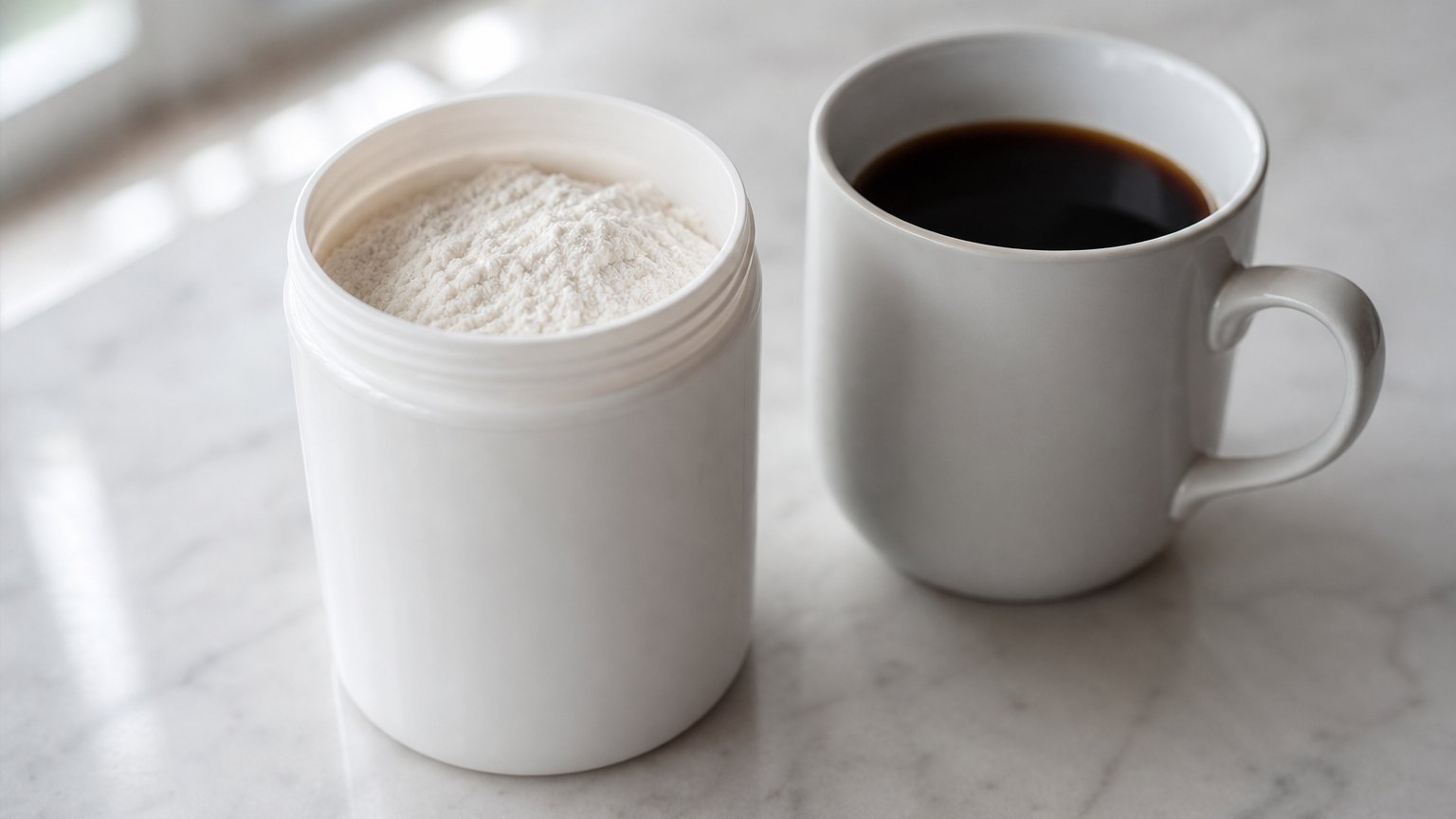
The list of things to avoid when taking collagen is shorter than social media makes it seem. Focus on allergens, questionable product quality, added ingredients and medical considerations, not myths about coffee, hot liquids or specific foods destroying collagen peptides.
Key Takeaways
- Keep your coffee: Normal coffee temperatures do not meaningfully destroy hydrolyzed collagen peptides.
- Check the collagen source: Fish, shellfish, bovine and porcine collagen may be unsuitable for certain allergies or dietary preferences.
- Look beyond the front label: Choose clearly sourced collagen with meaningful quality and contaminant testing.
- Ask before combining supplements: Talk to your doctor if you take prescription medication, are pregnant or breastfeeding, or have a medical condition.
- Skip unnecessary cycling: There is no good evidence that routine breaks improve collagen's effects.
The Myths Worth Dismissing
You do not need to take collagen on an empty stomach, separate it from fiber or avoid eating particular foods with it. There is no meaningful evidence that an ordinary meal prevents collagen peptides from being digested and used. Your digestive system breaks dietary proteins into amino acids and small protein fragments called peptides whether you take them alone or with breakfast.
Vitamin C does help your body make its own collagen. However, that does not mean collagen powder becomes useless unless you mix it with orange juice at the same moment. Meeting your vitamin C needs through your overall diet is the more practical goal. Fruits and vegetables such as citrus, berries, peppers and broccoli can contribute.
Another myth is that a larger serving must work faster. More is not automatically better, and an oversized serving may be harder on your stomach. Follow the product label rather than increasing the amount in response to slow or subtle results.
Finally, collagen does not travel directly from your drink to your skin or joints. It is digested first, and the body decides how to use the resulting building blocks. Research on oral collagen is promising for some measures of skin and joint support, but findings vary by formulation, amount, study length and population. Collagen is also not a complete protein, meaning it does not provide all nine essential amino acids in balanced amounts. It should not replace varied protein foods.
Does Hot Coffee Destroy Collagen?
No, putting collagen peptides in hot coffee does not meaningfully destroy them. The confusion comes from the fact that heat can change the shape of intact proteins, a process called denaturation. Collagen peptides, however, have already been hydrolyzed. Hydrolysis means the original collagen was broken into much smaller pieces during manufacturing.
Digestion breaks those peptides down further after you consume them. The normal heat of coffee does not suddenly remove their amino acids or make the powder nutritionally empty. There is also no convincing human evidence that coffee blocks collagen peptide absorption or that you must wait 30 minutes between the two.
Extremely high heat maintained for a long period can affect many food ingredients. That is different from stirring collagen into a freshly brewed cup and drinking it normally. In everyday use, taste and texture are more relevant than peptide destruction. Some powders dissolve more smoothly when added gradually, while others may clump if dropped into a small amount of liquid all at once.
If coffee helps you remember your daily serving, it is a reasonable routine. Follow the mixing instructions on the label, especially if the product contains ingredients beyond collagen that may have their own preparation guidance. You can also use water, oatmeal, yogurt or a smoothie. Choose the option you will use consistently rather than creating an unsupported rule about temperature.
Allergens: Marine, Bovine and Porcine Sources
The collagen source is one of the few things you genuinely need to check. Collagen supplements come from animal tissue, commonly fish, cattle, pigs or chickens. A broad term such as "marine collagen" does not tell you enough by itself, so read the source statement and allergen warning.
Fish-derived collagen can be a problem for someone with a fish allergy. Some marine products may come from shellfish or be processed in facilities that also handle shellfish. If you have a fish or shellfish allergy, do not assume every marine collagen is safe. Confirm the exact species, review cross-contact warnings and ask your allergist when the label is unclear.
Bovine collagen generally comes from cattle hide or bone. It is not automatically a dairy product because it comes from cattle. Still, flavored collagen blends may contain milk ingredients such as whey, casein or creamer. People with a milk allergy need to check the complete ingredient and allergen statements, not just the collagen source. A beef allergy or alpha-gal syndrome, an allergy to a sugar found in mammalian products, may also make bovine or porcine collagen unsuitable. Ask your doctor or allergist for individual guidance.
Porcine collagen comes from pigs, so it may conflict with pork allergies, religious practices or personal dietary choices. Collagen itself is not vegan or vegetarian. Products described as vegan collagen support or collagen builders usually contain nutrients intended to support the body's collagen production rather than animal-derived collagen peptides.
Stop using a product and seek urgent help for signs of a serious allergic reaction, including trouble breathing or swelling of the face, lips, tongue or throat.
Interactions and Who Should Check First
Collagen itself does not have many well-established prescription drug interactions. That does not make every collagen supplement appropriate for everyone. Formulas may include herbs, minerals, sweeteners or other active ingredients with separate safety considerations. Review the full Supplement Facts panel instead of evaluating only the word "collagen" on the front.
Talk to your doctor before taking collagen if you use prescription medication, are pregnant or breastfeeding, or have an existing medical condition. This is especially relevant if you have a kidney or liver condition, have been told to limit protein, or are following a medically supervised diet. Collagen contributes dietary protein, even though it is not a complete protein.
Mild side effects can include fullness, an unpleasant aftertaste or digestive discomfort. These effects do not prove the supplement is harmful, but you should stop and check with a healthcare professional if symptoms are persistent, severe or concerning. Do not keep increasing the serving in an attempt to force a faster result.
Quality matters here too. Look for a clearly identified animal source, a complete ingredient list, lot information and evidence of independent testing. Independent or third-party testing means an outside laboratory checks factors such as ingredient identity, microbes or heavy metals. A current certificate of analysis, often shortened to COA, can provide results for a specific batch. Vague phrases such as "premium quality" are not substitutes for documented standards.
If you are scheduled for a procedure or your medical team asks you to pause supplements, follow their instructions. Bring the complete label so they can assess every ingredient rather than collagen alone.
Do You Need to Cycle Collagen?
No, most people do not need to cycle collagen. Cycling means taking a supplement for a set period, stopping for a planned break and then restarting. There is no good evidence that this pattern improves collagen absorption, prevents tolerance or makes collagen peptides work better.
Collagen is a source of protein fragments and amino acids, not a stimulant. It is not known to create the type of tolerance that would require regular breaks. Studies of collagen supplements typically use consistent daily intake for weeks or months, although study designs and results vary. That does not establish an ideal lifelong schedule, but it also does not support mandatory cycling.
A practical approach is to follow the label and choose a daily time you can remember. Morning and night are both acceptable. Taking collagen with food is also fine unless your product's directions say otherwise. Consistency makes it easier to judge whether the routine is useful to you.
You can stop collagen without tapering. There is no known withdrawal effect. Consider pausing if you develop side effects, discover an allergen, no longer want the product or your doctor advises you to stop. If you notice no meaningful benefit after a fair and consistent trial, it is reasonable to reconsider whether the cost and routine make sense for you.
Planned breaks may still be appropriate for personal preference or medical guidance. They simply are not required by evidence. Do not confuse cycling with taking an occasional missed day, either. Missing one serving does not erase your progress, and you should not double the next serving unless the label specifically directs it.
For a simple daily option, LiveGood Collagen Peptides provides hydrolyzed collagen types I and III. It is the first and only collagen product that also includes Velositol, Polynol and ApresFlex. The formula supports skin elasticity, hair and nail growth, joint function, muscle and bone structure, and healthy weight management. Follow the label directions and use it consistently. It is $29.95 for members versus $49.95 retail, advancing LiveGood's mission to "Provide the highest quality supplements in the world, at the lowest prices possible."
What Actually Undermines Results
The biggest problems are inconsistent use, poor product information and expectations that no supplement can meet. Collagen supports a wellness routine. It does not replace sleep, a balanced diet, sun protection, movement or appropriate medical care.
Start with the label. Avoid products that hide the animal source, fail to list all added ingredients or make dramatic promises. Look for hydrolyzed collagen or collagen peptides, which indicate that the protein has already been broken into smaller pieces. Check the serving size rather than assuming every scoop contains the same amount. When quality testing is claimed, look for details about who performed it and what was tested.
Your wider diet also matters. Because collagen is not a complete protein, it should not be your only major protein source. Include varied sources that supply all essential amino acids, such as eggs, dairy, fish, meat, soy or complementary plant proteins, according to your dietary needs. Regular fruit and vegetable intake helps provide vitamin C and other nutrients involved in normal tissue maintenance.
Some habits can work against your broader skin and connective tissue goals over time. Smoking and repeated unprotected ultraviolet exposure can damage existing collagen. A consistently high-sugar dietary pattern may also promote glycation, a process in which sugars attach to proteins and affect their structure. This does not mean a dessert or sweetened coffee taken beside collagen cancels the serving.
Finally, avoid judging success from a few days of use or from vague before-and-after impressions. Research does not guarantee visible results for every person. Decide what you are evaluating, keep the rest of your routine reasonably stable and give the product a consistent trial. Honest expectations and daily habits matter more than perfect timing or food rules.
Frequently Asked Questions
What should you avoid when taking collagen?
Avoid collagen made from a source you are allergic to, products with unclear ingredients and formulas that lack credible quality information. You generally do not need to avoid coffee, hot drinks, fiber or specific foods. Also avoid taking more than the label recommends. Talk to your doctor first if you use prescription medication or have a medical condition.
Can you put collagen in hot coffee?
Yes, you can put hydrolyzed collagen peptides in hot coffee. Ordinary brewing temperatures do not remove their amino acids or make them useless. Collagen peptides have already been broken into smaller fragments, and digestion breaks them down further. Unless the product label gives different preparation instructions because of added ingredients, coffee is a practical way to take a daily serving.
Do you need to cycle collagen supplements?
No, collagen supplements do not normally need to be cycled. Evidence does not show that scheduled breaks improve absorption or prevent tolerance. Follow the label and use the product consistently if you choose to take it. You can stop without tapering, although side effects, an upcoming procedure or advice from your doctor are sensible reasons to pause.
Can collagen cause side effects?
Yes, collagen can cause side effects, although many people tolerate it well. Possible issues include fullness, an unpleasant taste or digestive discomfort. Allergic reactions can occur when the collagen or another ingredient comes from a source you react to. Stop using it and seek urgent care if you develop breathing trouble or swelling of the face, lips, tongue or throat.
Who should not take collagen?
People allergic to the collagen source or another ingredient should not take that product. Anyone with a kidney or liver condition, a medically required protein restriction, another existing condition, or a prescription medication routine should talk to their doctor first. The same applies during pregnancy and breastfeeding. Religious, vegetarian and vegan dietary needs may also rule out animal-derived collagen.