
What Is in Focus Patches? Ingredient Guide
 Written by Ben Glinsky
Ask AI about this article and Energy and Focus Patches





Focus patches usually combine one or more focus-oriented ingredients, such as caffeine, L-theanine, B vitamins, ginkgo, bacopa, ginseng, or mushroom extracts. They also contain an adhesive and carrier system, which determines how the patch stays on your skin and whether its active ingredients can move through the skin at all.
Key Takeaways
- Formulas vary widely: There is no standard focus patch recipe, so always read the full ingredient panel.
- Caffeine is not guaranteed: Some patches use caffeine for alertness, while caffeine-free formulas rely on amino acids, vitamins, or herbs.
- B vitamins support normal metabolism: They help your body process energy but are not stimulants and may feel subtle unless your intake is low.
- Herbal evidence is mixed: Most research examines swallowed extracts, not patches, so results cannot be assumed to transfer between forms.
- Patch materials matter: Adhesives, carriers, and penetration enhancers influence ingredient delivery and the chance of a skin reaction.
The Ingredient Families in Focus Patches
There is no universal ingredient list for a focus patch. One formula may pair caffeine with L-theanine, while another may emphasize B vitamins, botanical extracts, minerals, or mushrooms. Some products are caffeine-free. That makes the label more useful than the words "focus blend" on the front of the package.
Most formulas draw from five broad groups:
| Ingredient family | Why it may be included | What to check |
|---|---|---|
| Caffeine and L-theanine | Alertness and calm, attentive focus | Caffeine amount and other stimulant sources |
| B vitamins | Normal energy metabolism and nervous system function | Individual forms and amounts, not just "B complex" |
| Herbal extracts | Traditional or researched cognitive support | Plant species, extract type, and standardization |
| Minerals and other nutrients | General nervous system or energy support | Dose, overlapping supplements, and delivery evidence |
| Adhesives and carriers | Hold the patch in place and help release ingredients | Full inactive ingredient list and skin sensitivities |
A transparent label should identify each active ingredient and its amount. A proprietary blend may list ingredients without telling you how much of each is present. That makes the formula harder to evaluate, especially when caffeine or interaction-prone herbs are involved.
Also look for directions, age limits, warnings, and a complete list of inactive ingredients. "Natural" does not automatically mean stimulant-free, suitable for children, or compatible with medication. If the patch does not disclose its active amounts or adhesive materials, you are missing information that matters.

A complete focus patch label should identify active ingredients, amounts, directions, warnings, and inactive materials.
Caffeine and L-Theanine
Caffeine is a stimulant, meaning it temporarily increases alertness and reduces the feeling of tiredness. It is one of the most direct ingredients found in some adult focus patches. However, not every patch contains it. Check the actual panel rather than assuming that words such as "energy," "clarity," or "focus" mean caffeine is present.
The amount matters. Count caffeine from the patch alongside coffee, tea, energy drinks, pre-workout products, and medications that contain stimulants. Too much caffeine can contribute to restlessness, a rapid heartbeat, headaches, or disrupted sleep. Children, people who are pregnant or breastfeeding, and anyone with an existing medical condition should ask a doctor before using a caffeinated patch.
L-theanine is an amino acid naturally present in tea leaves. Amino acids are small compounds the body uses in many biological processes. L-theanine is commonly paired with caffeine because research on orally consumed caffeine and L-theanine suggests the combination may support attention while promoting a calmer experience than caffeine alone for some people.
That evidence has limits. Most studies use capsules or drinks with measured oral doses. They do not prove that the same quantities pass through the skin or produce identical results in a patch. L-theanine is not a stimulant, and a caffeine-free patch containing it should not be expected to feel like coffee.
If you take stimulant medication or medicines that affect alertness, sleep, or blood pressure, review the complete formula with your doctor. Do not add multiple caffeine products just because each one seems modest on its own.

Caffeine and L-theanine are often paired, but most research has examined oral forms rather than skin patches.
B Vitamins and Why They Are Included
B vitamins appear in many focus patches because they help your body turn food into usable energy and support normal nervous system function. They do not supply energy in the way calories do, and they are not stimulants. If you already get enough from food and other supplements, adding more may not create a noticeable feeling.
Common label entries include:
- Vitamin B1, or thiamine, which supports normal carbohydrate metabolism and nerve function.
- Vitamin B2, or riboflavin, which participates in cellular energy production.
- Vitamin B3, or niacin, which supports energy metabolism. Some forms can cause flushing when used in meaningful oral amounts.
- Vitamin B5, or pantothenic acid, which helps the body make coenzyme A, a compound involved in processing nutrients.
- Vitamin B6, often listed as pyridoxine or P-5-P, which supports neurotransmitter production. Neurotransmitters are chemical messengers used by nerve cells.
- Folate and vitamin B12, which support red blood cell formation and normal nervous system function.
More is not always better. Long-term excessive vitamin B6 intake, for example, can damage nerves. Niacin, folate, and B12 may also overlap with multivitamins, energy products, and fortified foods. Compare the amounts across everything you use.
Patch delivery adds another uncertainty. B vitamins are commonly studied after being swallowed or injected, not delivered through a general wellness patch. The amount printed on a patch label may describe what the product contains, but it does not necessarily show how much reaches your bloodstream. Look for clear amounts and realistic claims rather than assuming a patch bypasses every absorption limitation.

B vitamins support normal energy metabolism and nervous system function, but they are not stimulants.
Herbal Nootropics and Their Evidence
"Nootropic" is a broad marketing and research term for an ingredient intended to support cognitive performance. In focus patches, that often means plant extracts or mushrooms. The word does not guarantee that an ingredient works, that it has been tested through the skin, or that it is appropriate for you.
Ginkgo biloba may be included for memory or cognitive support. Research on swallowed ginkgo extracts is mixed, and findings from standardized oral products cannot establish the effectiveness of a patch. Ginkgo may affect blood clotting, so talk to your doctor if you take anticoagulant or antiplatelet medication or have a bleeding condition.
Bacopa monnieri is a traditional herb studied for memory and cognitive support. Some oral studies report benefits after consistent use, but formulas and extract strengths differ. Bacopa may interact with thyroid medicines, sedatives, and other prescriptions. Evidence for transdermal bacopa remains limited.
Ginseng and rhodiola are often described as adaptogens. An adaptogen is an herb marketed to help the body respond to physical or mental stress. Research is variable, and the term itself does not describe a guaranteed effect. Ginseng may interact with diabetes medicines, blood thinners, and stimulants. Rhodiola may not fit well with medicines that affect mood or alertness.
Lion's mane is a mushroom used in products intended to support cognitive wellness. Human research is still developing, and patch-specific evidence is sparse. People with mushroom allergies should be cautious.
With any botanical, check the exact species, plant part, extract ratio, and standardized compounds. Those details tell you more than a vague phrase such as "herbal focus matrix." For a broader discussion beyond ingredients, see focus patch benefits and side effects.
Botanical ingredients vary by species, extract strength, and delivery form, so specific label details matter.
The Adhesive and Carrier System
The inactive part of a focus patch is not truly unimportant. Your skin is designed to keep outside substances out. Its outer layer, called the stratum corneum, is a tightly packed barrier that many vitamins and botanical compounds do not cross easily.
A patch therefore needs more than active ingredients. It usually includes several functional layers:
- A backing layer protects the formula from clothing, moisture, and air.
- An adhesive keeps the patch attached and may also hold the active ingredients.
- A carrier dissolves or disperses ingredients so they can move within the patch.
- A release liner covers the sticky surface until use.
- A penetration enhancer may temporarily help certain compounds move through the skin barrier.
Common medical and wellness patch adhesives include acrylic, silicone, and rubber-based materials. Carriers or enhancers may include water, alcohol, propylene glycol, glycerin, fatty acids, or other solvents. Their presence does not prove that every active ingredient is absorbed well. Molecule size, fat solubility, concentration, skin condition, wear time, and patch design all affect delivery.
These materials also help explain why two patches with similar active ingredients can feel different on your skin. Adhesive chemicals, fragrances, botanical extracts, solvents, and prolonged contact can each contribute to irritation or an allergic response. Even a product described as hypoallergenic can bother an individual user.
Before buying, inspect both active and inactive ingredients. Follow the label directions, apply only as directed, and avoid using a patch on damaged skin. If you have adhesive allergies or a history of contact dermatitis, which is a rash caused by something touching the skin, ask a healthcare professional whether the materials are suitable. Timing questions are covered separately in how long focus patches take to work.
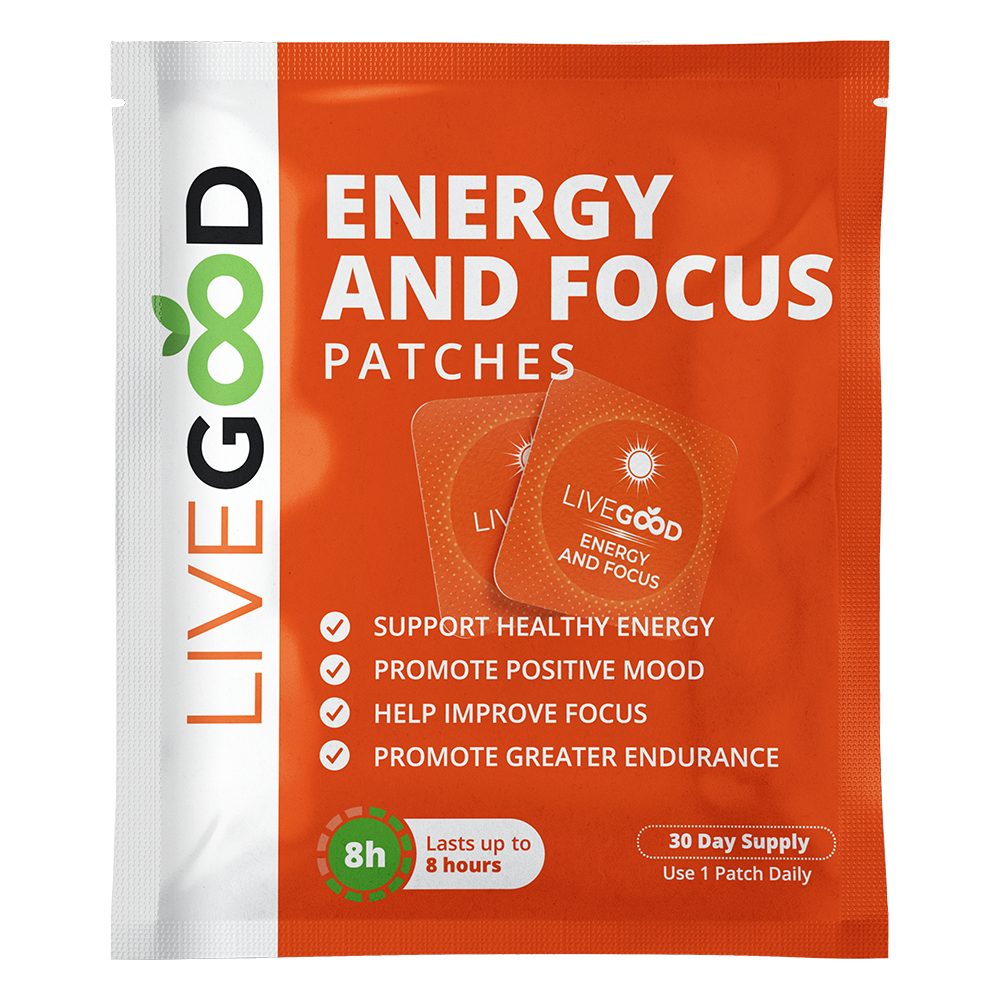
If a patch format fits your routine, LiveGood Energy and Focus Patches are transdermal patches formulated with highly absorbable vitamins, minerals, and botanical extracts. They are designed to deliver the blend through the skin to support sustained energy and focus, with effects starting in about 30 minutes and wear for up to 8 hours. They cost $14.95 for members versus $29.95 retail, supporting more accessible wellness through the membership model. Always follow the label directions.
Frequently Asked Questions
What ingredients are in focus patches?
Focus patches commonly contain caffeine, L-theanine, B vitamins, minerals, and botanical ingredients such as ginkgo, bacopa, ginseng, rhodiola, or lion's mane. The patch also needs an adhesive, backing, carrier, and sometimes a penetration enhancer. Formulas differ substantially, so check the active amounts and the complete inactive ingredient list before choosing one.
Do focus patches contain caffeine?
Some focus patches contain caffeine, but many do not. A caffeine-free formula may instead use L-theanine, B vitamins, herbs, mushrooms, or other nutrients. Read the ingredient panel and look for a stated caffeine amount. If caffeine is present, include it when calculating your total intake from coffee, tea, energy drinks, medications, and other supplements.
What is L-theanine used for?
L-theanine is included to promote calm, attentive focus, either alone or alongside caffeine. It is an amino acid found naturally in tea. Research has mainly examined measured oral servings, so it is uncertain whether a patch provides the same exposure or outcomes. L-theanine does not act like caffeine and should not be expected to create a strong stimulant effect.
Are the ingredients in focus patches safe?
Focus patch ingredients may be suitable for many adults when used according to the label, but safety depends on the complete formula and your health circumstances. Caffeine, herbs, vitamins, and adhesives each have different cautions. Talk to your doctor before use if you take prescription medication, are pregnant or breastfeeding, have kidney or liver conditions, or have another existing medical condition. Ask a pediatrician before considering one for a child.
Can patch ingredients cause skin irritation?
Yes, active ingredients, solvents, penetration enhancers, fragrances, and adhesives can irritate the skin or trigger contact dermatitis. Check the inactive ingredient list if you know you react to tapes or adhesives. Remove the patch if significant redness, itching, swelling, or burning develops, and follow the label's guidance. Seek medical advice if the reaction is severe, spreads, or does not improve.