
Whey Protein Isolate vs Concentrate: What Is Different
 Written by Ben Glinsky
Ask AI about this article and Whey Protein Isolate - With Colostrum





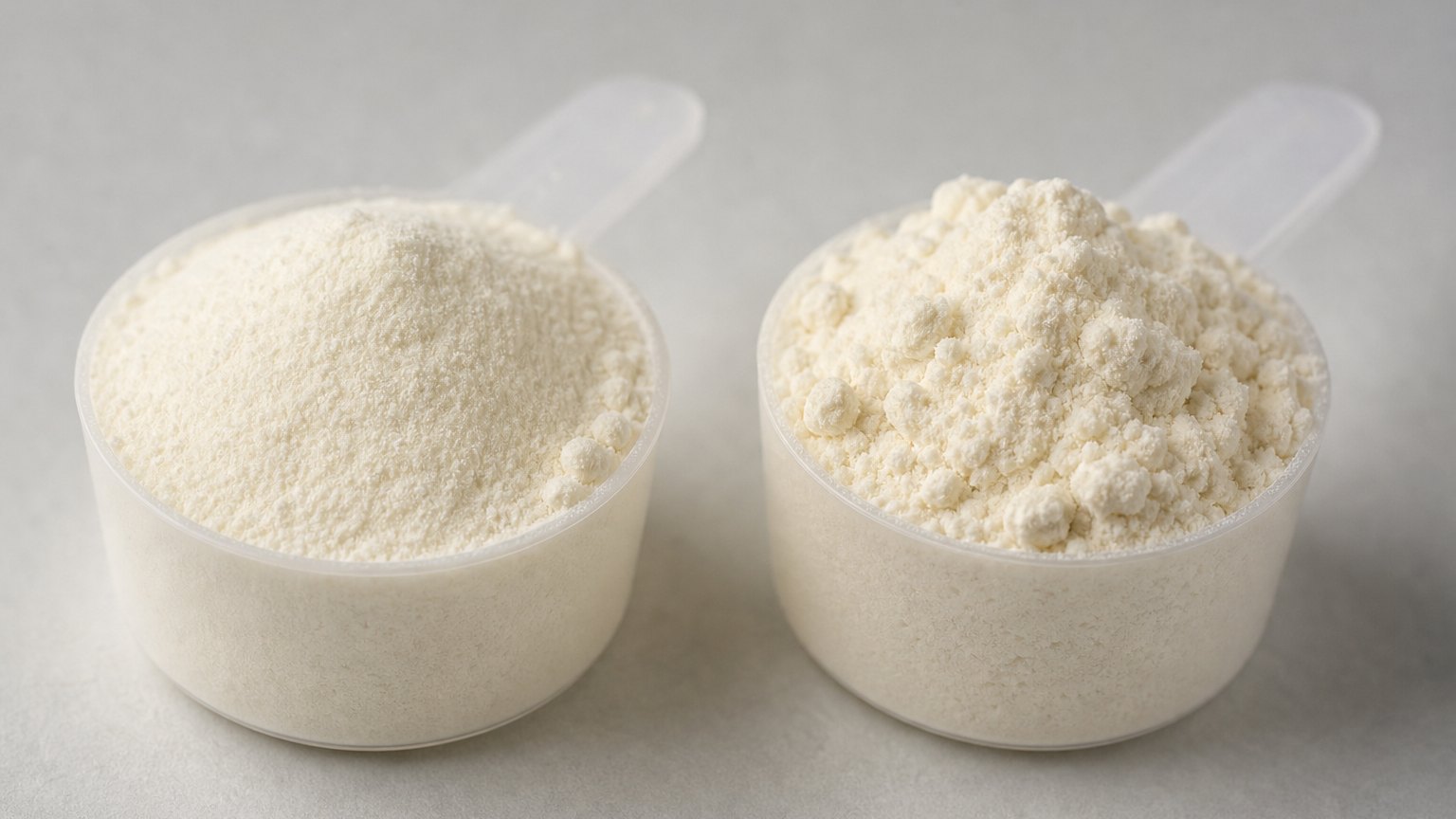
Whey protein isolate is filtered further, so it is about 90 percent protein with less lactose, fat, and carbohydrate. Whey protein concentrate is usually 70 to 80 percent protein, retains more of the other milk components, and often costs less. Neither is automatically better, so the right choice depends on your digestion, diet, budget, and preferences.
Key Takeaways
- Filtration creates the difference: Isolate goes through additional processing that removes more lactose, fat, and carbohydrate.
- Check the protein percentage: Concentrate is commonly 70 to 80 percent protein, while isolate is generally about 90 percent.
- Consider lactose sensitivity: Isolate usually contains less lactose, but it is not always completely lactose-free.
- Compare cost correctly: Concentrate often has a lower package price, but cost per gram of protein gives you a fairer comparison.
- Expect similar muscle support: When total protein intake is equal, neither form has a clear muscle-building advantage for most people.
How Each One Is Made
Whey begins as a liquid portion of milk. During cheesemaking, milk separates into solid curds and liquid whey. The curds contain most of the casein protein, while the liquid contains whey protein along with water, lactose, minerals, and small amounts of fat.
Manufacturers filter that liquid to collect and concentrate the protein. The filtered whey is then dried into a powder. How far the filtration goes determines whether the result is usually called whey protein concentrate or whey protein isolate.
Whey concentrate receives enough filtration to remove much of the water and some nonprotein material. It still contains more lactose, fat, and carbohydrate than isolate. Common concentrate powders provide around 70 to 80 percent protein by weight, although the exact percentage varies by ingredient and product.

Additional filtration removes more lactose, fat, and carbohydrate from whey isolate than from concentrate.
Whey isolate goes through additional filtration. Manufacturers may use fine membranes or other separation methods to remove more lactose, fat, and minerals. The resulting whey ingredient is generally about 90 percent protein by dry weight.
More processing does not make isolate artificial, nor does less processing make concentrate automatically more nutritious. Both come from milk and contain the same basic whey proteins. Concentrate retains more nonprotein milk components, but that does not guarantee a meaningful health advantage in a finished protein powder. Isolate simply offers more protein and less lactose, carbohydrate, and fat for the same amount of powder.
Flavoring, sweeteners, cacao, enzymes, and other ingredients can change the nutrition of the finished product. That is why the ingredient list and Nutrition Facts panel matter more than the word on the front of the container.
The Protein Percentage Numbers
The terms whey protein 80 and whey protein 90 usually describe how much of the whey ingredient is protein by weight. Whey protein 80, often written as WPC80, is a concentrate containing roughly 80 percent protein. Whey protein 90 generally refers to an isolate with about 90 percent protein.
This percentage is not the same as the grams of protein listed per serving. A 30-gram serving of an unflavored 80 percent concentrate would theoretically provide about 24 grams of protein. A 30-gram serving of a 90 percent isolate would theoretically provide about 27 grams. Finished powders may provide less because flavors and other ingredients also take up part of the serving weight.
| Typical feature | Whey concentrate | Whey isolate |
|---|---|---|
| Protein by weight | About 70-80% | About 90% |
| Lactose | More | Less |
| Fat and carbohydrate | Slightly more | Less |
| Filtration | Less extensive | More extensive |
| Typical price | Lower | Higher |

Protein percentages describe how much of the powder's weight comes from protein, not the number of grams in every serving.
You can estimate a finished powder's protein percentage by dividing the protein grams by the total serving weight and multiplying by 100. For example, 20 grams of protein in a 25-gram serving equals 80 percent. This is only an estimate because labels round some values, but it helps you compare products.
A higher percentage is useful when you want more protein in less powder. It does not mean that every isolate has better sourcing, flavor, texture, or overall formulation. Those qualities must be evaluated separately. An 80 percent concentrate can still be a complete, useful protein source with all nine essential amino acids.
Lactose: The Practical Difference
Lactose is the natural sugar in milk. Your small intestine normally makes an enzyme called lactase to break it down. If you make too little lactase, lactose can reach the large intestine undigested and lead to gas, bloating, cramping, or diarrhea.
Because whey concentrate retains more of the milk's carbohydrate, it generally contains more lactose than isolate. Some people with mild lactose intolerance can still use concentrate without discomfort, especially in a modest serving. Others notice symptoms and do better with isolate. Individual tolerance varies, so the label and your own response matter.
Whey isolate is filtered to remove most of the lactose, but it should not automatically be described as lactose-free. The remaining amount differs among products. Flavor systems and other dairy-derived ingredients can also affect the finished powder. If you need to avoid lactose strictly, look for a specific lactose-free statement rather than assuming that every isolate qualifies.
Lactose intolerance is also different from a milk allergy. Intolerance involves difficulty digesting lactose. A milk allergy is an immune reaction to milk proteins, which remain present in both isolate and concentrate. Someone with a milk allergy should not treat whey isolate as a safe alternative unless a doctor has specifically advised it.
Digestive enzymes may help support digestion, but they do not turn whey into a non-dairy product. Start with the label directions, and pay attention to how you feel. Talk to your doctor if you have a diagnosed allergy, significant digestive symptoms, or another medical condition that affects your food choices.
Cost Per Gram of Protein
Concentrate usually costs less because it requires less filtration. If you digest it comfortably and do not need to minimize lactose, fat, or carbohydrate, it is often the more economical choice. For many people, that makes concentrate protein a sensible everyday option rather than a lower-quality substitute.
The package price does not tell the whole story. Compare cost per gram of protein with this simple calculation:
- Multiply the number of servings by the grams of protein per serving.
- Divide the package price by the total grams of protein.
For example, imagine a $30 powder with 25 servings and 20 grams of protein per serving. The package contains 500 grams of protein, so each gram costs 6 cents. A $36 powder with 25 servings and 24 grams per serving contains 600 grams of protein. It also costs 6 cents per gram, despite its higher package price.

Comparing cost per gram of protein provides a clearer value check than package price alone.
Cost per serving still matters if you use one measured serving at a time, but cost per gram reveals how much protein you are actually buying. Also consider taste, texture, ingredient transparency, sourcing, and whether the product agrees with your stomach. A powder you dislike or cannot digest is not good value, even if its mathematical cost is lower.
Isolate's extra filtration usually commands a premium. That premium can be worthwhile when lower lactose or a higher protein percentage solves a practical problem. Otherwise, concentrate is often fine and cheaper. Wellness should not be a luxury, and paying more only makes sense when the difference serves a need you actually have.
Does Either Build More Muscle?
Both whey isolate and concentrate provide complete protein. Complete means they contain all nine essential amino acids, the protein building blocks your body cannot make on its own. Both also provide leucine, an essential amino acid that helps signal the process of building new muscle protein.
For most healthy adults, there is no strong reason to expect isolate to build more muscle than concentrate when total protein and training are the same. Isolate gives you slightly more protein for a given weight of powder, but you can account for that by comparing the protein grams on the label.
The larger factors are your total daily protein intake, resistance training, overall diet, recovery, and consistency. A higher percentage on the container cannot compensate for irregular training or a diet that does not meet your energy and nutrient needs.
Isolate is sometimes described as dramatically faster to absorb. Whey is generally considered a rapidly digested protein, but the small composition differences between isolate and concentrate have not established a meaningful muscle-building advantage for most users. Marketing language about instant recovery or superior gains goes beyond what the comparison can support.
For bulking, either one can work. Concentrate's slightly higher fat and carbohydrate content may add a small number of calories, but the difference is usually modest. Your full meal plan matters much more. For calorie-conscious eating, isolate may make it easier to get more protein with fewer nonprotein calories, but it does not directly cause weight loss.
Protein powder is a convenient food supplement, not a replacement for balanced meals, sleep, or progressive exercise. Consistency over time matters more than choosing the theoretically perfect whey category.
Which Fits Which Person
Choose whey concentrate if you tolerate dairy well, want a complete protein, and prefer to keep costs lower. It is a practical choice for general fitness, smoothies, post-workout shakes, and filling gaps when food alone does not provide enough protein. For most people with no lactose issue, concentrate is entirely reasonable.
Choose whey isolate if lactose tends to bother you, you want more protein in a smaller amount of powder, or you are carefully limiting carbohydrate and fat. It may also suit you if a concentrate repeatedly causes digestive discomfort. Isolate's main benefits are its composition and tolerability, not inherently better muscle results.
Taste and texture can guide the decision too. Concentrate is often described as creamier because it retains slightly more fat and carbohydrate. Isolate may mix more lightly. Formulas vary, however, so flavoring and other ingredients can matter more than the whey type.
Your digestion, nutrition goals, ingredient preferences, and budget can help determine which whey form fits your routine.
Whichever form you choose, check these details:
- Protein grams per serving and serving size
- Total carbohydrate, fat, and added sugar
- Milk and other allergen statements
- Ingredient sources and added flavors
- Ingredients such as digestive enzymes
- Cost per gram of protein
If you are pregnant or breastfeeding, take prescription medications, have kidney or liver concerns, or live with an existing medical condition, talk to your doctor before adding a protein supplement. People with milk allergies also need medical guidance because both forms contain milk proteins.
The honest answer is simple. Concentrate offers solid protein and good value for people who tolerate it. Isolate offers less lactose and a higher protein percentage for people who benefit from those differences. Choose according to your body and routine, not the idea that more filtration is always superior.
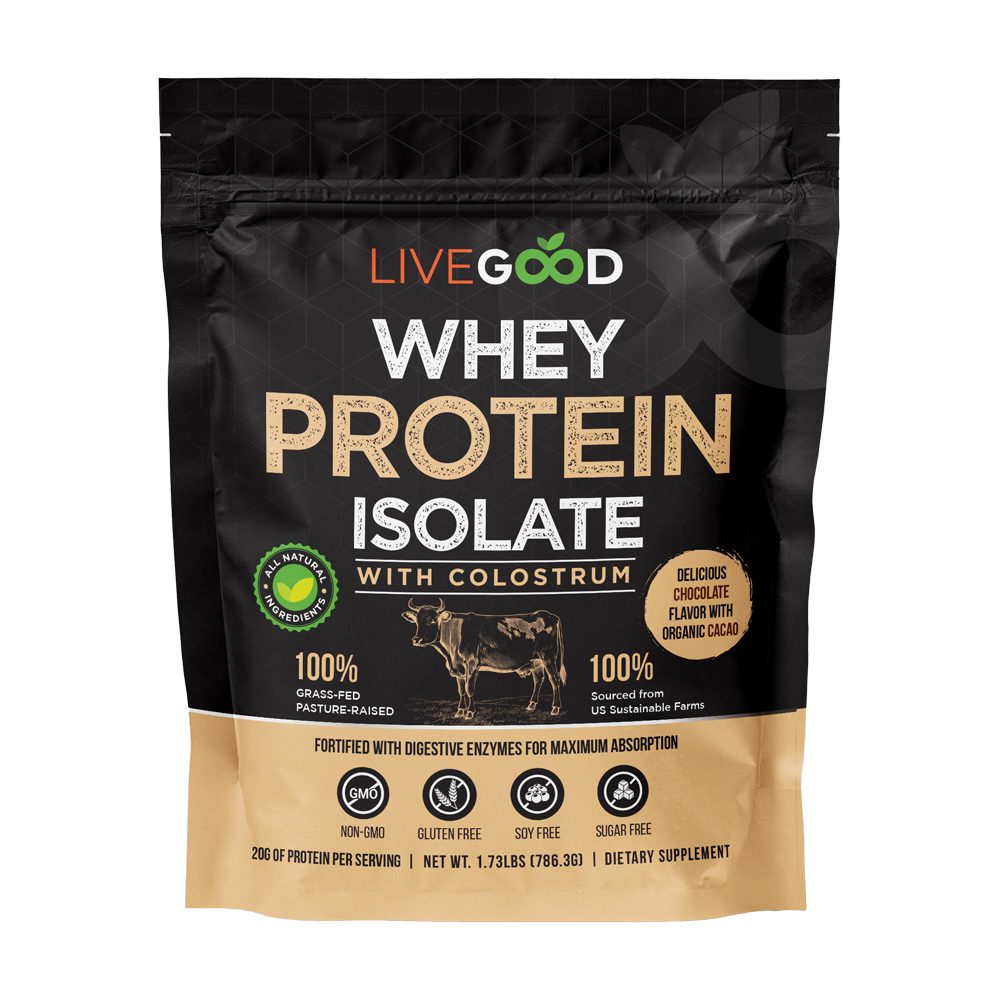
If isolate fits your needs, Whey Protein Isolate - With Colostrum is a chocolate powder made with organic cacao. It provides 20 grams of clean protein and all nine essential amino acids, plus colostrum and digestive enzymes to support absorption, gut health, and immune function. Its whey comes from 100% grass-fed, pasture-raised cows on sustainable US farms. It is $39.95 for members versus $49.95 retail, reflecting LiveGood's mission to "Provide the highest quality supplements in the world, at the lowest prices possible."
Frequently Asked Questions
What is the difference between whey isolate and concentrate?
Whey isolate undergoes more filtration than concentrate, leaving it with a higher percentage of protein and lower amounts of lactose, fat, and carbohydrate. Concentrate is commonly 70 to 80 percent protein, while isolate is usually around 90 percent. Both come from milk, contain the same essential amino acids, and can support your daily protein intake.
Is whey isolate better than concentrate?
Whey isolate is not universally better than concentrate. It may be preferable if you are sensitive to lactose or want more protein with less carbohydrate and fat. Concentrate is often the better-value choice for someone who digests dairy comfortably. When equal protein amounts are compared, both can support muscle-building goals alongside resistance training.
What does whey protein 80 vs 90 mean?
Whey protein 80 versus 90 usually refers to the approximate percentage of protein in the whey ingredient by weight. An 80 percent product is commonly whey concentrate, while a 90 percent ingredient is generally whey isolate. The finished powder's percentage may be lower when cacao, flavors, sweeteners, enzymes, or other ingredients are included.
Is concentrate better value?
Whey concentrate is often better value for people who tolerate its lactose and do not need to minimize fat or carbohydrate. It generally has a lower package price because it requires less filtration. Still, calculate the price per total gram of protein before deciding. An isolate with more protein per serving can sometimes narrow the apparent price difference.
Which is better for lactose intolerance?
Whey isolate is generally the more practical choice for lactose intolerance because additional filtration removes most of the lactose. It is not guaranteed to be completely lactose-free, so check the product's label and allergen information. Neither isolate nor concentrate is suitable for a milk allergy simply based on lactose content, since both still contain milk proteins.