
Whey Isolate vs Mass Gainer: Which Do You Need?
 Written by Ben Glinsky
Ask AI about this article and Whey Protein Isolate - With Colostrum





Whey protein isolate and mass gainer can both supply protein, but they solve different problems. Isolate adds protein with minimal calories, while a mass gainer adds a large amount of carbohydrate and calories. The right choice depends less on which one builds muscle and more on whether you struggle to eat enough.
Key Takeaways
- Make it a calorie decision: Choose isolate when you need more protein without a large calorie increase.
- Read the full serving size: A mass gainer may contain 500 to 1,250 calories, often spread across several large scoops.
- Expect mostly carbohydrate: Many gainers provide 80 to 250 grams of carbohydrate, with protein added to the formula.
- Use food first when practical: Oats, milk, nut butter, fruit, and yogurt are often less expensive and easier to customize.
- Judge muscle results by the whole routine: Resistance training, total protein, total calories, sleep, and consistency matter more than the powder category.
The Real Difference Is Calories
The whey protein vs mass gainer decision becomes much simpler when you compare calories rather than marketing claims. Whey protein isolate is a concentrated source of milk protein. Most products provide roughly 20 to 25 grams of protein and 100 to 130 calories per serving, with very little carbohydrate or fat.
A mass gainer usually contains some whey or another protein, but most of its calories come from carbohydrate. A full serving commonly provides 500 to 1,250 calories. Some products reach that number with 80 to 250 grams of carbohydrate, 20 to 60 grams of protein, and a smaller amount of fat.
| Typical full serving | Whey isolate | Mass gainer |
|---|---|---|
| Calories | 100-130 | 500-1,250 |
| Protein | 20-25 g | 20-60 g |
| Carbohydrate | 0-3 g | 80-250 g |
| Sugar | 0-2 g | 5-30+ g |
These are broad label ranges, not standards. Some gainers contain less sugar but still provide a large carbohydrate load through ingredients such as maltodextrin, a rapidly digested starch. Also check how many scoops make one serving. The impressive front-label number may require three or four scoops and a very large shake.
Neither powder automatically builds more muscle. Protein helps provide amino acids, the building blocks your body uses to maintain and repair muscle. Calories provide energy. If your protein intake is already adequate, the main thing a mass gainer adds is easier access to more calories.

Whey isolate concentrates protein into a relatively low-calorie serving, while mass gainers devote much more of the serving to carbohydrate.
What Is Actually in a Mass Gainer
A mass gainer is usually a calorie powder with protein attached. That does not make it bad, but it does make the ingredient list and nutrition panel more important than the product name.
The first ingredient is often maltodextrin or another powdered carbohydrate. Maltodextrin is made from starch and may not appear under the sugar line on the Nutrition Facts panel. A product can therefore list only a modest amount of sugar while still delivering well over 100 grams of total carbohydrate. Other gainers use oat flour, rice powder, dextrose, corn-derived carbohydrates, or blends of several sources.
Protein commonly comes from whey concentrate, whey isolate, milk protein, casein, or a mixture. Whey concentrate retains more lactose, the natural sugar in milk, than isolate. Casein is another milk protein that digests more slowly. The practical question is not whether the blend sounds advanced. It is how much protein you receive relative to the serving's total calories.
Fat may come from powdered oils, seeds, or nut ingredients. Some formulas also add creatine, vitamins, minerals, digestive enzymes, or herbal ingredients. Those additions make label reading especially important. Follow the label directions, and do not accidentally double up on ingredients you already take separately.
Sugar content varies widely. Some gainers provide around 5 grams per serving, while others contain 20, 30, or more. Total carbohydrate still matters even when the sugar number looks low. Compare products using the full prepared serving, including any calories from milk, nut butter, or other ingredients you add.

The Nutrition Facts panel reveals whether a mass gainer's calories come primarily from carbohydrate, protein, fat, or added sugar.
Who Genuinely Needs One
A mass gainer may be useful when you consistently struggle to consume enough food for your activity level and goals. That can happen with a demanding training schedule, a physically active job, limited meal breaks, a small appetite, or early fullness during meals. In these cases, drinking calories may feel easier than adding another full plate of food.
Before buying one, track several ordinary days of eating. You do not need perfect numbers. Look for a repeatable pattern. Are you regularly skipping meals? Does your appetite disappear after training? Are you meeting your protein goal but falling well short of your planned calories? If the calorie gap is large and food-based options have not been practical, a gainer offers convenience.
Being naturally slim does not automatically mean you need one. The common term "hardgainer" describes someone who finds it difficult to increase body mass, but it is not a medical diagnosis. Sometimes the issue is simply inconsistent eating, underestimated activity, or portions that are smaller than assumed. A week of honest tracking often tells you more than the label on a supplement tub.
A mass gainer also cannot direct every added calorie toward muscle. Resistance training gives your muscles a reason to adapt, while adequate protein supplies amino acids. Sleep, training quality, genetics, and the size of your calorie surplus also affect the result. A very large calorie jump is not automatically more productive.
If you only need more protein, choose whey. If you already meet both protein and calorie needs through food, you may need neither. Talk to your doctor or a registered dietitian if you have an existing medical condition, a kidney or liver condition, are pregnant or breastfeeding, or take prescription medications that could interact with added ingredients.
The Cheaper Way to Add Calories
Whole food is usually the less expensive way to add calories. It also lets you control the texture, serving size, carbohydrate source, fat, fiber, and sweetness. A homemade shake can be adjusted in small steps instead of jumping straight to a 1,000-calorie commercial serving.
Start with a liquid such as milk or a milk alternative. Add oats or a banana for carbohydrate. Nut butter, seeds, or avocado can increase calories and fat. Greek yogurt can add protein and thickness. Whey isolate can raise the protein content without forcing the total calories dramatically higher.
For example, a shake made with milk, oats, banana, peanut butter, and whey can easily provide several hundred calories. Exact numbers depend on the ingredients and portions, so calculate your own recipe rather than relying on a generic estimate. If it feels too filling, reduce the oats or split the shake into two smaller servings. If you only need a modest increase, use less nut butter or choose water instead of milk.
Homemade does not automatically mean nutritionally balanced. A shake built mostly from syrup, juice, or large amounts of added sugar can be just as one-sided as a poorly designed commercial gainer. Aim for a mix of protein, carbohydrate, fat, and foods you digest comfortably.
Food also gives you options beyond shakes. Rice, potatoes, pasta, olive oil, eggs, dairy foods, beans, nuts, and dried fruit can raise meal calories without requiring an oversized serving. Consistency matters more than finding a supposedly perfect bulking food. Choose additions you can afford, tolerate, and repeat.

A homemade shake lets you adjust calories with familiar ingredients such as oats, fruit, milk, and nut butter.
Choosing for Your Situation
Use your current diet to make the choice. Do not choose based only on whether the package says "lean," "mass," or "muscle." Those words do not reveal what your body or diet currently lacks.
Choose whey protein isolate when:
- You regularly fall short of your protein target.
- You want protein without adding hundreds of calories.
- You prefer a powder with little carbohydrate or fat.
- You want to add protein to a homemade shake while choosing the other ingredients yourself.
- You tolerate whey isolate and milk-derived ingredients.
Consider a mass gainer when:
- You have tracked your intake and repeatedly fall short on calories.
- Larger meals are difficult to finish.
- Your schedule makes another meal unrealistic.
- You understand the full serving size and can fit it into your routine.
- A homemade shake is not practical or portable enough.
Choose neither when your normal meals already cover your protein and energy needs. Supplements can make a routine more convenient, but they do not replace progressive resistance training or a varied diet. Progressive training means gradually asking your muscles to do more over time, such as adding a little weight, completing another repetition, or improving technique.
If dairy causes bloating or discomfort, remember that isolate usually contains less lactose than whey concentrate, but it is not appropriate for a milk allergy. A mass gainer may contain several milk ingredients, sweeteners, or very large servings that are harder to digest. Starting with the label serving directions and assessing tolerance is more sensible than assuming more powder will produce better results.
Finally, compare cost per serving, not container price. A gainer tub may disappear quickly because one serving requires multiple scoops. Whey isolate plus oats, milk, fruit, or nut butter often provides more control and may cost less per shake.
Your usual calorie and protein intake should determine whether whey isolate, a mass gainer, or no supplement fits your routine.
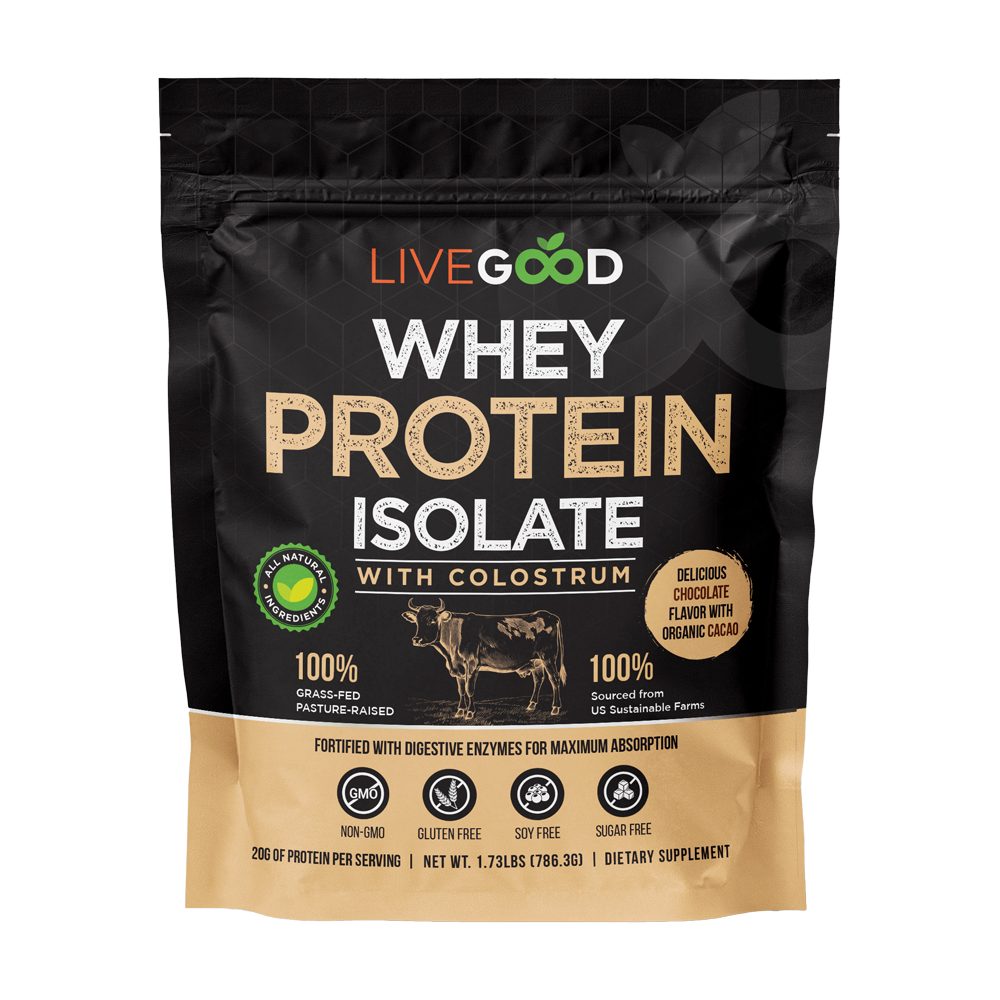
If whey isolate fits your calorie needs, LiveGood Whey Protein Isolate With Colostrum provides 20 grams of clean protein with all nine essential amino acids. The chocolate formula uses organic cacao, 100% grass-fed, pasture-raised whey sourced from sustainable US farms, colostrum to support gut and immune health, and digestive enzymes to support absorption. It costs $39.95 for members or $49.95 retail, reflecting the mission to "Provide the highest quality supplements in the world, at the lowest prices possible."
Frequently Asked Questions
Is whey or mass gainer better for building muscle?
Neither is inherently better for building muscle. Whey efficiently adds protein, while a mass gainer adds protein plus a much larger amount of carbohydrate and calories. Your results depend on resistance training, adequate daily protein, enough total energy, recovery, and consistency. Choose the product that fills the actual gap in your diet rather than the one with the more aggressive marketing.
How many calories are in a mass gainer?
A full mass gainer serving commonly contains about 500 to 1,250 calories, although formulas vary. Check the serving size carefully because the listed amount may require three or four scoops. Milk and other additions raise the prepared shake's calories further. Compare calories, protein, total carbohydrate, sugar, fat, and servings per container before deciding whether it fits your needs.
Do you need a mass gainer to bulk?
No, you do not need a mass gainer to support a bulking plan. Regular meals and snacks can provide the calories and protein needed alongside resistance training. A gainer is mainly a convenience option for someone who repeatedly struggles to eat enough. Whole foods are usually less expensive and offer greater control over ingredients, portions, fiber, and sweetness.
Can you make your own mass gainer?
Yes, you can make a customizable mass gainer with ordinary foods. Blend a liquid with ingredients such as oats, banana, yogurt, nut butter, seeds, and whey protein. Calculate the nutrition from your actual portions, since homemade shakes can range from moderate to very high in calories. Adjust one ingredient at a time until the shake fits your appetite and daily plan.
Are mass gainers high in sugar?
Some mass gainers are high in sugar, but the amount varies considerably. A serving may contain roughly 5 to 30 grams or more. Low sugar does not always mean low carbohydrate because maltodextrin and similar starches contribute carbohydrates without necessarily appearing as sugar. Read the total carbohydrate line, ingredient list, serving size, and preparation instructions rather than judging the formula by sugar alone.