
Whey Protein Isolate and Lean Muscle Growth
 Written by Ben Glinsky
Ask AI about this article and Whey Protein Isolate - With Colostrum





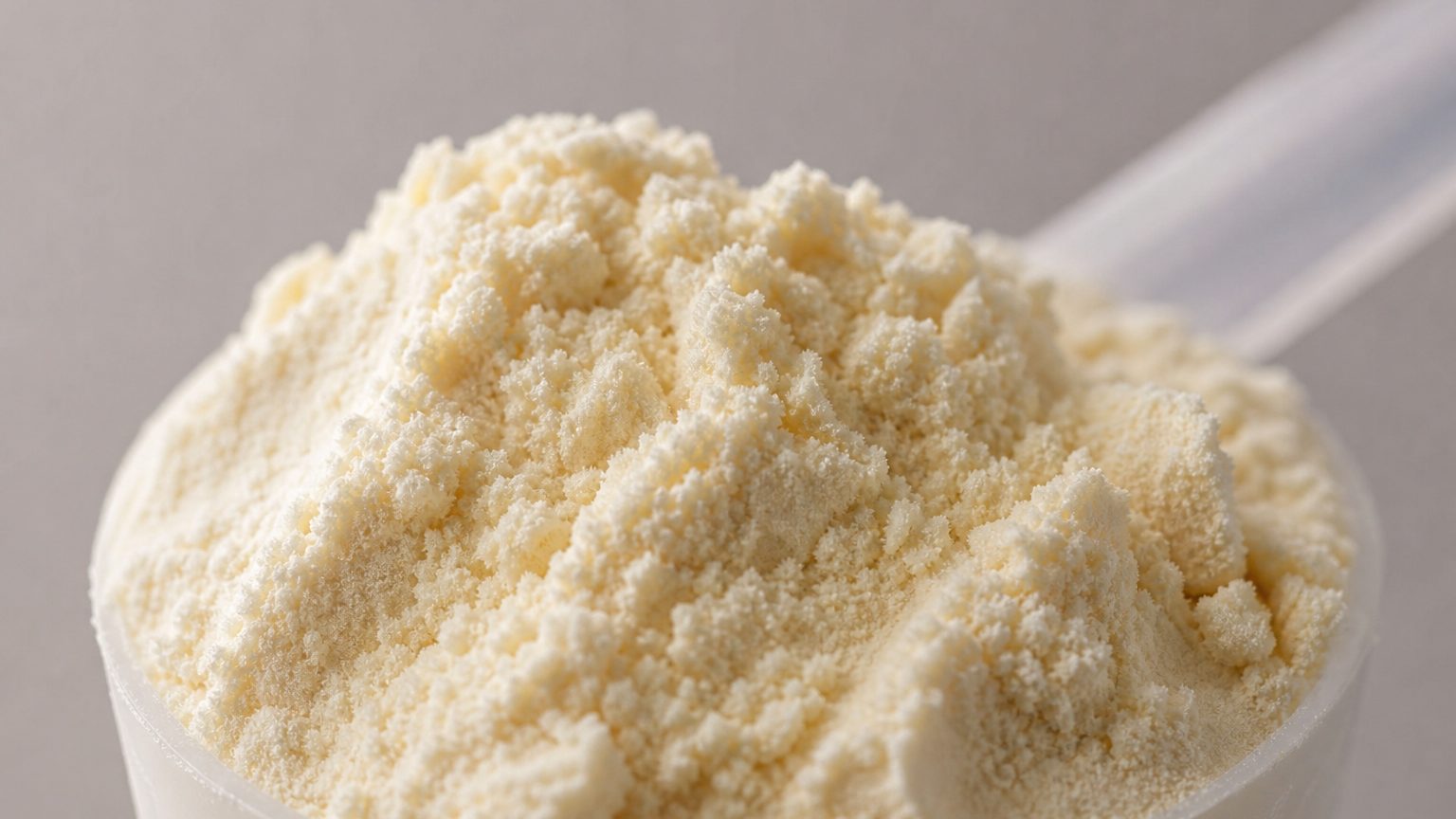
Whey protein isolate can support lean muscle growth because it provides fast-digesting, leucine-rich complete protein. Its real value is convenience, while your total daily protein intake and progressive strength training have a much greater effect on results. Here is what isolate contributes, how the leucine threshold works, and how to use a powder without buying into the hype.
Key Takeaways
- Isolate supplies complete protein: It contains all nine essential amino acids your body cannot make on its own.
- Leucine starts the signal: A sufficient amount of leucine helps activate muscle protein synthesis after a meal or workout.
- Daily protein matters more: Meeting your overall protein needs consistently is more important than choosing isolate over another quality protein.
- Training provides the reason to grow: Progressive resistance exercise challenges muscle, while protein supplies material for repair and adaptation.
- Lean is mostly marketing: Isolate is relatively low in fat and lactose, but it does not automatically create a lean physique or cause fat loss.
What Isolate Actually Is
Whey is one of the main proteins in milk. During cheese production, liquid whey separates from the curds. Manufacturers filter and dry that liquid to make whey protein powder.
Whey concentrate retains varying amounts of lactose, milk fat, and other milk components. Whey isolate goes through additional filtration to remove more of those components, leaving a powder with a higher proportion of protein by weight. The exact nutrition still varies by product, so check the serving size, protein, calories, carbohydrates, fat, and ingredients on the label.
Isolate is a complete protein. That means it provides all nine essential amino acids, the protein building blocks that must come from food. It is also rich in leucine, one of three branched-chain amino acids. Leucine has a particularly important role in signaling your muscle tissue to begin building new protein.
Whey is digested relatively quickly compared with slower proteins such as casein. That makes isolate convenient after training, but faster is not automatically better in every situation. Your muscles respond to protein eaten throughout the day, not only to the shake consumed immediately after a workout.

Whey isolate is filtered to provide a high proportion of complete milk protein with relatively little fat and lactose.
Isolate usually contains less lactose than concentrate, but it is not necessarily lactose-free. It also remains a milk-derived ingredient. Avoid whey if you have a milk allergy. If you are sensitive to lactose, compare labels and start only as directed, since tolerance differs from person to person.
The Leucine Threshold
The leucine threshold is the amount of leucine in a meal needed to strongly stimulate muscle protein synthesis. Muscle protein synthesis, often shortened to MPS, is the process your body uses to assemble new muscle proteins. It supports routine repair and adaptation after resistance training.
Think of leucine as part of the start signal, not the entire construction crew. Once that signal is activated, your body still needs the other essential amino acids to build muscle protein. Whey works well here because it provides both leucine and the full set of essential amino acids.
Research often places an effective leucine target near 2 to 3 grams in a protein-rich meal, although there is no identical threshold for everyone. Body size, age, training status, meal composition, and the amount of protein eaten can all affect the response. Older adults may need a larger high-quality protein serving to produce a response similar to that seen in younger adults.
A serving containing roughly 20 to 40 grams of high-quality protein often supplies enough essential amino acids and leucine for many adults, depending on body size and circumstances. This is research context, not a reason to exceed a product's label directions.

Leucine helps start the muscle-building signal, while all essential amino acids provide the building materials.
More leucine does not mean unlimited muscle growth. Once a meal has produced a strong MPS response, adding substantially more leucine is unlikely to keep turning that response higher. This is sometimes called the muscle-full effect. The practical lesson is to eat sufficient high-quality protein at several meals rather than putting nearly all of it into one oversized shake.
Why Total Daily Protein Matters More
A whey shake can stimulate muscle protein synthesis for a few hours, but muscle gain is the result of repeated training and nutrition habits over weeks and months. If your daily diet is consistently low in protein, one well-timed serving will not fully make up for the shortfall. If you already eat enough protein, isolate may offer convenience without producing a special advantage over food.
For healthy adults who perform regular resistance training, a commonly researched range is approximately 1.4 to 2.0 grams of protein per kilogram of body weight per day. A 150-pound person weighs about 68 kilograms, making that roughly 95 to 136 grams per day. Needs are individual, and the upper end is not automatically necessary for every recreational lifter.
A peer-reviewed position paper on protein and exercise emphasizes both adequate daily intake and distributing protein across the day. A practical pattern is three to five protein-containing meals or snacks, with each providing a meaningful amount rather than saving nearly all your protein for dinner.
Food can do this job. Dairy, eggs, fish, poultry, meat, soy foods, beans, lentils, and combinations of plant proteins can all contribute. Powder is useful when appetite, schedule, travel, or food preparation makes those options inconvenient.
Your training remains the main stimulus. Progressive overload means gradually asking your muscles to do more, such as adding weight, repetitions, sets, or better control. Protein supports the response to that challenge. It does not replace the challenge itself. Sleep, sufficient energy intake, and consistent recovery also shape your progress.
Lean Is a Marketing Word
Muscle is considered lean body tissue, so the phrase "lean muscle" is not technically wrong. The problem is that supplement marketing often makes it sound as if one type of protein creates a uniquely lean or defined result. Protein does not decide whether your appearance becomes lean, bulky, or defined.
Whey isolate is sometimes marketed as a lean protein because additional filtration generally leaves less fat and carbohydrate than whey concentrate. That can make the calories per gram of protein slightly lower. It may be useful when you want protein with fewer accompanying nutrients, but those small label differences do not give isolate a separate muscle-building pathway.

A lean appearance reflects training, nutrition, genetics, and overall body composition, not a special type of protein.
Visible muscle definition depends on several factors, including how much muscle you have, your overall body composition, genetics, training, and long-term energy balance. Whey protein does not target body fat or cause fat loss. A shake also adds calories, just like other foods and drinks. Whether it fits your goals depends on what it replaces or adds to your full diet.
Do not assume that words such as "lean," "clean," or "shredded" establish nutritional superiority. Compare actual numbers and ingredients instead. Look at protein per serving, calories, added sugar, lactose tolerance, taste, cost, and whether you will use the product consistently.
Isolate can be a sensible choice, especially if you prefer its protein concentration or tolerate it better than concentrate. It is still a tool. Your results come mainly from progressive training, enough total protein, suitable calorie intake, and patience.
Practical Use Around Training
You do not need to drink whey the moment your final set ends. The post-workout "anabolic window," meaning the period when muscle responds well to nutrients, is wider than older gym advice suggested. Getting a protein-rich meal or shake within a few hours of training is a practical approach.
Your most useful timing depends on when you last ate. If you had a meal containing enough protein one or two hours before training, there is little urgency. If you trained after several hours without food, a post-workout meal or shake becomes more helpful. You can also take whey before training if that timing is more comfortable.
Use enough powder to help close a real gap in your day, and follow the product's serving directions. A shake can be mixed with water for simplicity or blended with milk, fruit, oats, or other foods when you need a more substantial snack. Remember that added ingredients change the shake's calories and nutrients.
For a deeper look at serving size and individual factors, see how to take whey protein isolate and whether two scoops is too much.
Whey can be used before or after training when it conveniently helps fill a daily protein gap.
Some people experience bloating, gas, nausea, or loose stools from whey, sweeteners, gums, or a serving that is too large for them. Reduce the serving or stop using it if symptoms occur. Talk to your doctor before using a protein supplement if you are pregnant or breastfeeding, take prescription medication, have kidney or liver problems, or manage another existing medical condition.
Consistency beats perfect timing. Choose a routine that helps you meet your protein needs without crowding out varied, nutrient-rich foods.
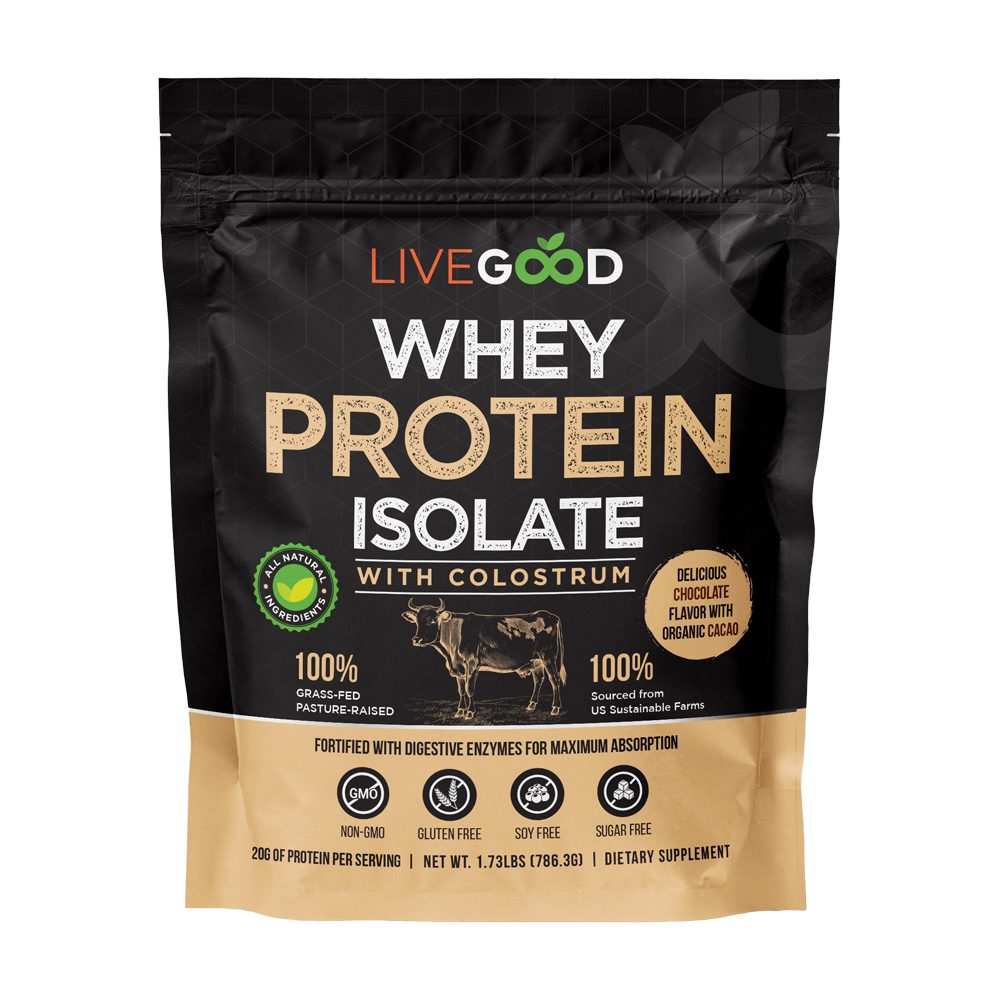
LiveGood's Whey Protein Isolate - With Colostrum is chocolate isolate made with organic cacao, providing 20 grams of clean protein and all nine essential amino acids per serving. Colostrum and digestive enzymes are included to support nutrient absorption, gut health, and immune function. The whey is 100% grass-fed, pasture-raised, and sourced from sustainable US farms. Use it according to the label when food is not convenient. It is $39.95 for members versus $49.95 retail, because wellness should not be a luxury.
Frequently Asked Questions
Does whey isolate build lean muscle?
Yes, whey isolate can support muscle growth when it helps you consume enough protein alongside progressive resistance training. It supplies all nine essential amino acids and is rich in leucine, which helps initiate muscle protein synthesis. It does not create a uniquely "lean" type of muscle, and it cannot replace adequate food, training, sleep, or recovery.
How much protein do you need to build muscle?
Many healthy adults who perform resistance training can use a research-based range of about 1.4 to 2.0 grams of protein per kilogram of body weight each day. Your appropriate intake depends on body size, diet, age, activity, and health. Spread protein across several meals, and talk to your doctor before changing intake if you have kidney, liver, or other medical conditions.
Is isolate better than concentrate for muscle?
Isolate is not clearly better than concentrate for building muscle when both provide the same amount of high-quality protein. Isolate generally contains more protein by weight and less lactose and fat, which may suit some diets or digestive preferences. Concentrate can work just as well if you tolerate it, enjoy it, and meet your daily protein target.
When should you take whey for muscle growth?
Take whey when it conveniently fills a protein gap, often within a few hours before or after resistance training. If you recently ate a protein-rich meal, there is no need to rush. Daily intake and consistent distribution matter more than a precise minute on the clock. Follow the label directions and choose timing that feels comfortable for your digestion.
Can you build muscle without protein powder?
Yes, you can build muscle without protein powder by getting enough protein from regular foods. Dairy, eggs, fish, meat, soy, beans, lentils, and other protein-rich choices can support your needs. Powder is simply a portable, easy-to-measure option. Progressive training, sufficient daily protein, overall nutrition, and recovery determine much more than whether you use a shake.