






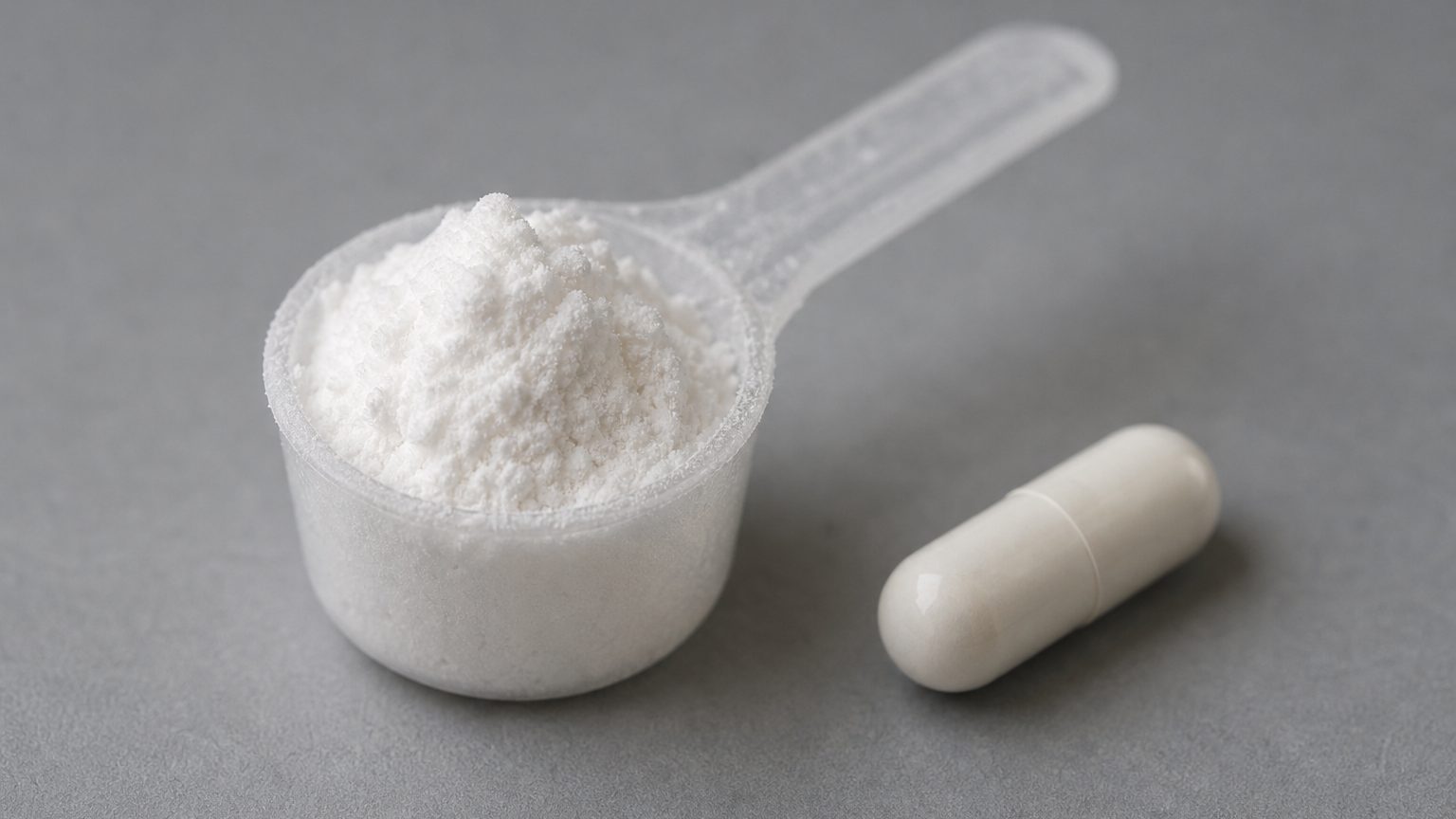
The best HMB supplement is one that clearly provides a research-aligned dose, identifies the form of HMB, and avoids hiding amounts in a blend. For most buyers, calcium HMB at about 3 grams daily is the practical benchmark, but whether HMB is worthwhile depends on your age, training history, and goals.
Key Takeaways
- Start with the form: Calcium HMB has the much larger evidence base, while free acid HMB enters the bloodstream faster.
- Check the full daily amount: HMB research commonly uses about 3 grams per day, often divided across multiple servings.
- Match it to your situation: Evidence is strongest for older adults, people new to training, and people facing an unusually demanding period.
- Stay realistic if you lift: Results in experienced, well-trained lifters are mixed and often modest.
- Consider creatine separately: Creatine has a stronger performance evidence base, while HMB may offer complementary muscle support.
Calcium HMB Versus Free Acid
HMB is short for beta-hydroxy-beta-methylbutyrate. Your body makes small amounts when it processes leucine, an essential amino acid found in protein-rich foods. Supplements provide HMB in one of two main forms: calcium HMB, often written as Ca-HMB, or free acid HMB, written as HMB-FA.
Calcium HMB binds HMB to calcium, creating a stable salt. It is the older and far more widely studied form. Decades of HMB research, including much of the work involving older adults and new exercisers, used calcium HMB. If you want the form with the deepest research history, this is the straightforward choice.
Free acid HMB does not include the calcium salt. It is absorbed more quickly and generally reaches a higher concentration in the blood sooner. That difference can sound decisive in marketing, but faster absorption has not been shown consistently to produce better long-term strength or muscle results. The free acid form also has a smaller overall evidence base.
In practice, form matters less than marketing may suggest. Calcium HMB is a sensible default because more research has tested it. Free acid HMB may appeal to someone who values faster absorption around a workout, but it should not automatically command a large price premium. Check the actual HMB amount too. A label listing the weight of the calcium compound may not always equal the same weight of active HMB, so look for wording that makes the delivered HMB dose clear.
The Dose Research Actually Uses
About 3 grams of HMB per day is the most common adult amount used in research. Many calcium HMB protocols divide that total into three 1-gram servings across the day. Some products provide the entire daily amount in one serving. You should follow the product label rather than increasing the amount simply to copy a study.
There is no firmly established perfect time to take HMB. Studies have used different schedules, including divided servings with meals and servings taken before exercise. Calcium HMB has sometimes been taken roughly one to two hours before training, while faster-absorbing free acid HMB has been taken closer to the workout. These schedules offer context, not proof that a precise minute produces better results.
Consistency is the more useful priority. HMB is not a stimulant, and you should not expect an immediate burst of energy. Research protocols usually provide it every day, including rest days, because muscle repair and turnover continue between workouts. A practical schedule might be breakfast, lunch, and dinner for a divided product, or one consistent daily time if the label calls for a single serving.
When comparing bottles, calculate how many capsules, scoops, or servings are required to reach the labeled daily amount. A front label may feature HMB prominently while supplying only 500 milligrams per capsule. Reaching 3 grams would then require six capsules. Also check whether the listed amount applies per capsule or per full serving. This small piece of label math can reveal whether a product is convenient and what it truly costs per research-aligned daily serving.
Who the Evidence Supports Most
HMB is often marketed to anyone who wants more muscle, but the research is not equally convincing for everyone. The clearest potential tends to appear when muscles are facing a new or unusually high level of stress.
Older adults are one of the better-supported groups. Research on HMB suggests it may help maintain lean tissue and physical function, particularly when paired with resistance exercise and adequate protein. It is not a treatment for age-related muscle loss, and it cannot replace strength training, enough food, or medical care. Still, it may be a reasonable supporting ingredient for an older adult building a consistent activity routine.
People who are new to resistance training may also respond more clearly than experienced lifters. A beginner's body is adapting to a large new training stimulus, so there is more room to measure changes in soreness, strength, and body composition. HMB has also been studied during periods of inactivity or demanding physical stress, but anyone dealing with an injury, surgery, hospitalization, or an existing medical condition should talk to a doctor rather than self-treating with a supplement.
Evidence becomes thinner and more mixed in trained lifters. Some studies report improvements in recovery, strength, or lean mass, while others find little added benefit when training and protein intake are already well managed. Women and men can both use HMB, but there is not strong evidence that one sex needs a special formula.
Ask what gap you are trying to fill. If you already train consistently, eat enough protein, sleep well, and use creatine, HMB may produce only a subtle difference. If you are older, restarting exercise, or entering a demanding training block, it may be easier to justify trying.
HMB With Creatine
HMB and creatine are different ingredients. HMB is a product of leucine metabolism and is studied mainly for supporting muscle protein balance and recovery. Creatine helps your cells rapidly recycle adenosine triphosphate, or ATP, the immediate energy used during hard muscular efforts. That can support repeated high-intensity exercise and gradual improvements in strength and training capacity.
You can take them together. There is no inherent need to separate their timing, and combination products can make a daily routine simpler. Some research has found that pairing HMB with creatine improves certain strength or body-composition measures. Other studies have not found a clear advantage beyond creatine alone. The combined evidence is less settled than marketing sometimes implies.
Creatine monohydrate should generally be the priority if your main goal is gym performance. It is the most studied form of creatine, and its evidence base in healthy adults is much stronger and more consistent than HMB's. A typical maintenance amount in creatine research is 3 to 5 grams daily. Again, that is research context, not a reason to exceed your product's directions.
Adding HMB may make more sense if you are older, new to training, returning after time away, or especially interested in maintaining muscle during a demanding period. Neither ingredient replaces progressive resistance training or sufficient dietary protein. Think of the combination as support for a good routine, not a shortcut around one.
If you take prescription medication, are pregnant or breastfeeding, have a kidney or liver condition, or live with another medical condition, talk to your doctor before using either ingredient.
What to Check on a Label
A good label lets you answer basic questions without guessing. Start with the Supplement Facts panel rather than the claims on the front. Look for these details:
- The form: The label should identify calcium HMB, free acid HMB, or another clearly named source. If it says only "muscle support complex," you cannot tell what you are buying.
- The amount: Look for approximately 3 grams across the labeled daily serving if you want an amount that matches most HMB research. Confirm whether that figure represents active HMB or the full weight of a calcium HMB ingredient.
- The serving size: Check how many capsules or scoops provide the stated amount. A low capsule count on the front does not guarantee a full daily dose.
- The other ingredients: Unnecessary flavors, colors, sweeteners, and large proprietary blends add complexity without establishing that the HMB works better.
- Quality verification: Independent testing from a recognized organization can help verify identity and screen for contaminants. This is especially relevant for competitive athletes who need certification against substances prohibited in sport. Do not assume a product is independently tested unless the label or manufacturer provides specific, verifiable details.
- Cost per daily serving: Compare the price of the amount you would actually take, not simply the bottle price. A cheaper bottle can cost more if it requires several servings to reach the labeled daily total.
Be skeptical of claims promising dramatic muscle gain, immediate recovery, or guaranteed results. HMB is more likely to provide modest support in the right person than a transformation everyone can feel. You can also review possible HMB side effects and safety considerations before choosing a product. Follow label directions, and ask your doctor for personal guidance if you use prescription medication or have an existing medical condition.
LiveGood Creatine + HMB provides 5 grams of creatine monohydrate plus 3 grams of HMB per serving, with no junk fillers, flavors, or additives. Creatine supports rapid cellular energy needs in muscles, the brain, and the heart, while HMB helps maintain muscle tissue. It is $19.95 for members versus $34.95 retail, reflecting LiveGood's mission to "Provide the highest quality supplements in the world, at the lowest prices possible."
Frequently Asked Questions
What should you look for in an HMB supplement?
Look for a clearly identified HMB form, a transparent daily amount, and simple serving instructions. Most research uses approximately 3 grams per day, so calculate how many capsules or scoops supply that amount. Calcium HMB has the largest evidence base. Also check other ingredients, quality-testing information, and cost per full daily serving rather than comparing bottle prices alone.
What is the difference between calcium HMB and free acid HMB?
Calcium HMB is HMB bound to calcium and is the form used in most published research. Free acid HMB is absorbed faster and reaches the bloodstream sooner, but that has not consistently translated into better long-term results. Calcium HMB is therefore a practical default, while free acid HMB may suit buyers who value faster absorption and accept a smaller evidence base.
How much HMB should you take?
Research commonly studies about 3 grams of HMB each day, frequently split into three servings. Some labels provide that total at once, so follow your product's directions. Studies generally use HMB daily, including on non-training days. There is no proven ideal clock time, and taking it consistently matters more than trying to hit an exact pre-workout window.
Should you take HMB with creatine?
You can take HMB and creatine together, but the combination is optional. Creatine monohydrate has stronger evidence for supporting strength and high-intensity exercise, while HMB may provide complementary muscle support for older adults, beginners, or people returning to training. Research on the combination is mixed, so do not assume adding HMB will improve results for every experienced lifter.
Who benefits most from HMB?
Older adults and people beginning or resuming resistance exercise have the strongest case for considering HMB. It may also be relevant during unusually demanding periods, although results vary. Evidence in well-trained lifters is thinner and less consistent. HMB supports a routine rather than replacing adequate protein, resistance training, recovery, or medical care for muscle-related health concerns.