
Bone Support Supplements: What to Look For
 Written by Nauder Khazan
Ask AI about this article and Osteo Complete - Advanced Bone Support





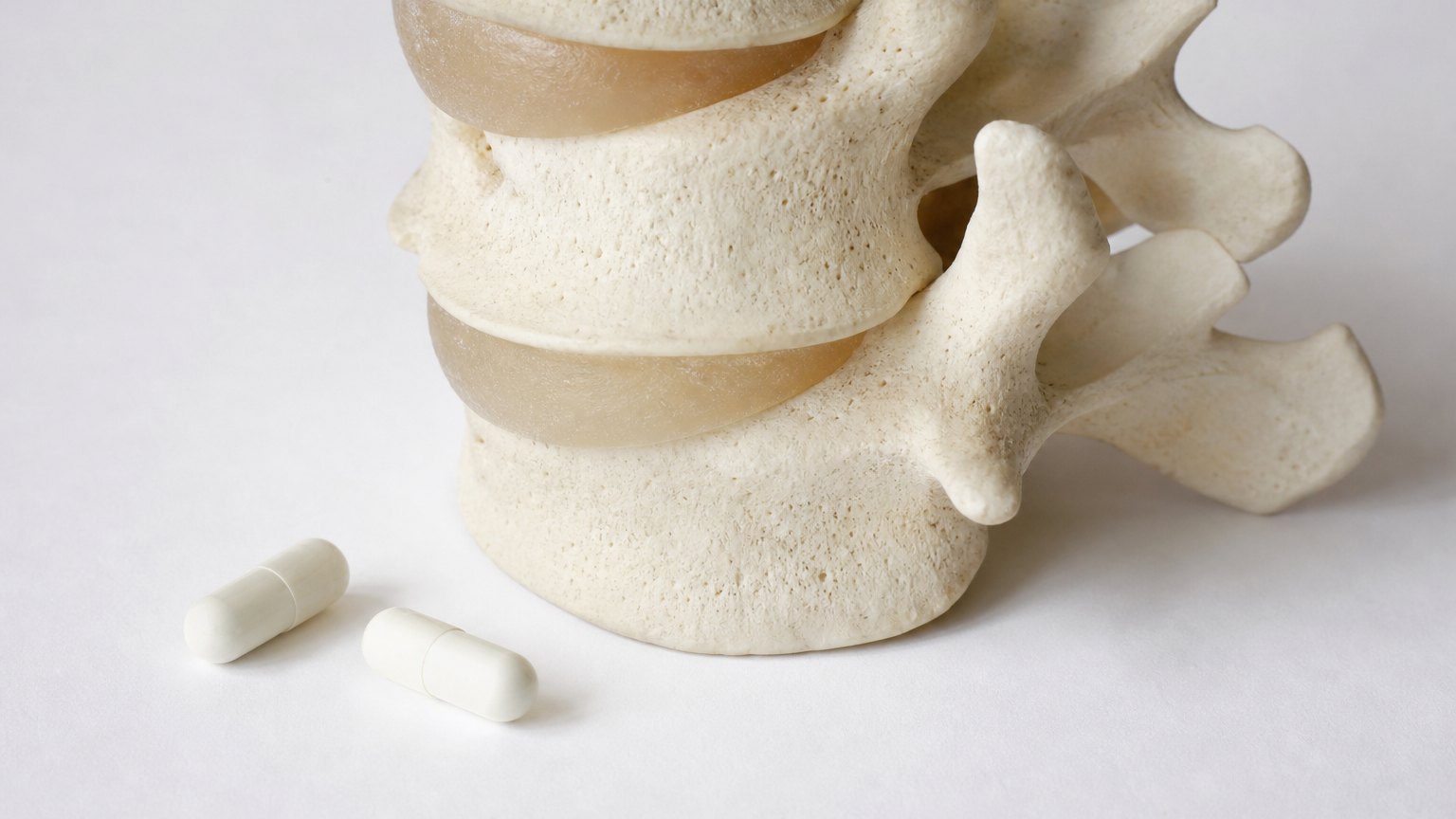
A useful bone mineral formula starts with calcium and vitamin D, while vitamin K2 and magnesium may play supporting roles. But supplements are only part of the picture. Your strongest day-to-day lever is giving bone a reason to stay strong through weight-bearing and resistance exercise.
Key Takeaways
- Start with the foundation: Calcium supplies raw material for bone, while vitamin D helps your body absorb and use it.
- Treat K2 and magnesium as support: Both participate in bone biology, but more is not automatically better.
- Load your bones regularly: Resistance training and weight-bearing activity provide the physical signal that helps maintain bone strength.
- Fill gaps, do not stack blindly: Food is the preferred calcium source, and a supplement should address a real shortfall.
- Read the full label: Check elemental calcium, vitamin D amount, serving size, added nutrients, warnings, and quality information.
What Bone Is Made Of and How It Remodels
Bone may look solid and unchanging, but it is living tissue. Its flexible framework is mostly collagen, a structural protein also found in skin, tendons, and cartilage. Minerals harden that framework. The main mineral is a calcium-phosphate crystal called hydroxyapatite, often represented by the chemical formula Ca10(PO4)6(OH)2. Living bone is more complex than a perfectly pure laboratory crystal because other minerals and ions are woven into its structure.
Your skeleton is constantly being renewed through a process called remodeling. Cells known as osteoclasts remove small areas of older or damaged bone. Other cells, called osteoblasts, build new bone in their place. This work helps repair everyday wear and lets bone adapt to the forces you place on it.
During childhood and early adulthood, bone formation usually outpaces removal. Most people reach peak bone mass, their highest lifetime amount of bone, by their late 20s. Later, removal can gradually move ahead of formation. Genetics, hormones, nutrition, medication use, activity, and age all influence that balance.
Bone mineral density describes how much mineral is packed into an area of bone. It is not something you can judge from appearance or symptoms. A DEXA scan, a low-dose X-ray test commonly performed at the hip and spine, is the standard route for measuring it. If you are worried about bone loss, medical assessment and a DEXA scan are more useful than trying to diagnose yourself from a supplement label.
Calcium and Vitamin D: The Foundation
Calcium is the most abundant mineral in the body, and almost all of it is stored in bones and teeth. It also supports muscle contraction, nerve signaling, and normal blood clotting. When dietary calcium is consistently low, the body can draw calcium from bone to keep those other systems working.
Most adults ages 19 to 50 need about 1,000 mg of calcium per day from food and supplements combined. Women generally need 1,200 mg after age 50. Men usually need 1,000 mg through age 70 and 1,200 mg after that. These are general targets, not automatic supplement doses.
Food should come first when possible. Dairy products, calcium-set tofu, canned salmon or sardines with soft bones, fortified plant milks, and some leafy greens can contribute meaningful amounts. Food spreads calcium across the day and supplies other useful nutrients. Very high calcium supplementation has also been debated for possible cardiovascular risk, although research is not conclusive. That uncertainty is another reason to avoid taking more than you need.
Vitamin D helps your intestines absorb calcium. Adults through age 70 generally need 600 IU, or 15 micrograms, daily, while adults over 70 generally need 800 IU, or 20 micrograms. Sun exposure, skin tone, season, location, age, and diet can all affect vitamin D status. A blood test can help your doctor identify deficiency and choose an appropriate plan.
A calcium supplement is most useful when it fills the difference between your usual food intake and your target. It does not replace prescribed treatment for osteoporosis or another diagnosed condition.
Where K2 and Magnesium Fit
Vitamin K helps activate several proteins involved in normal bone biology. Vitamin K2 is one form, found in foods such as natto and some fermented or animal foods. One K-dependent protein, osteocalcin, helps bind minerals within bone tissue.
That mechanism has made K2 popular in bone formulas, but the clinical evidence needs context. Research suggests K2 can affect markers related to vitamin K status and bone metabolism. Evidence that routine K2 supplementation meaningfully improves bone density or reduces fractures in generally healthy people is mixed. Calcium and vitamin D remain the clearer nutritional foundation. Our overview of vitamin D3 and K2 explains the pairing in more detail.
Vitamin K2 can interfere with warfarin and other vitamin K-antagonist medicines. If you take one of these prescriptions, do not add or sharply change K2 intake without talking to the clinician managing your medication. Consistent vitamin K intake may be especially important in this situation.
Magnesium contributes to bone structure and supports enzymes involved in vitamin D metabolism. Nuts, seeds, beans, whole grains, and leafy greens are useful food sources. Low magnesium status can be a concern, but taking extra magnesium has not consistently been shown to improve bone density when someone already gets enough.
Other ingredients, including boron and silica, are sometimes included in full-spectrum formulas. They participate in connective tissue or mineral-related processes, but evidence for specific bone outcomes is more limited. Think of them as supporting ingredients rather than substitutes for calcium, vitamin D, adequate food, or exercise.
Loading Is the Strongest Lever
Bones respond to force. When muscles pull against bone and your skeleton supports impact or body weight, bone tissue receives a signal to maintain or adapt its structure. That makes loading through exercise one of the strongest actions you can take for long-term bone support.
Weight-bearing exercise means you work against gravity while standing. Brisk walking, stair climbing, hiking, dancing, and jogging are examples. Resistance exercise makes muscles work against an outside load. That load might come from dumbbells, machines, resistance bands, or your own body weight during squats and pushups.
Walking supports mobility and overall health, but it may not challenge every major bone site enough by itself. A balanced routine usually includes resistance work for the hips, legs, back, chest, shoulders, and arms. The challenge should increase gradually as your strength and skill improve. Consistency matters more than one intense session.
Impact activities such as hopping or running can add a stronger bone-loading signal, but they are not appropriate for everyone. If you have low bone density, a previous fracture, poor balance, joint limitations, or an existing medical condition, ask a doctor or physical therapist which movements are safe. Supervised strength training may be a better starting point.
Protein, sufficient calories, sleep, and recovery help your body respond to training. Supplements cannot create the same mechanical signal. Research on creatine and bone health is still developing, and any potential role is secondary to resistance exercise itself. The practical formula is simple: nourish bone, load it regularly, and give the body time to adapt.
Who Is Most at Risk of Bone Loss
Everyone loses some bone with age, but the pace and consequences differ. Risk rises after menopause because falling estrogen can accelerate bone breakdown. Older men are also affected, particularly as hormone levels, activity, muscle mass, and balance change.
Other risk factors include a parent who had a hip fracture, low body weight, smoking, heavy alcohol use, limited physical activity, and a previous fracture caused by a minor fall. Long periods of low calorie intake can also reduce the nutrients and hormonal support needed for healthy bone remodeling.
Some medical conditions affect nutrient absorption or bone metabolism. Examples include celiac disease, inflammatory bowel conditions, overactive thyroid or parathyroid glands, chronic kidney disease, and certain hormonal disorders. Long-term use of glucocorticoid medicines, such as prednisone, is another well-established concern. Some seizure medicines and other prescriptions may also affect bone health.
A DEXA scan is commonly recommended for women age 65 and older. Postmenopausal women under 65 may also need screening when their risk is elevated. Guidance for men varies, but many medical groups advise discussing screening around age 70 or earlier when risk factors are present. Your doctor can apply the guideline that fits your history.
Do not wait for bone pain to decide whether you need assessment. Low bone density often has no clear symptoms before a fracture. If you have several risk factors, unexplained height loss, a prior low-impact fracture, or concerns about a medication, talk to your doctor. A scan and medical review can show whether nutrition and exercise are enough or whether diagnosed bone loss requires prescribed care.
What to Check on a Label
Start with the Supplement Facts panel, not the claims on the front. A bone mineral formula should tell you exactly what each serving provides and how many tablets or capsules make up that serving.
Look for the amount of elemental calcium. Elemental calcium is the actual quantity of calcium supplied, not the total weight of the calcium compound. Calcium citrate, calcium carbonate, calcium malate, and hydroxyapatite can all provide calcium, but their compound weights differ. No form is automatically the right choice for every person.
Next, check vitamin D. Labels may list it in micrograms, IU, or both. Vitamin D3 is common, but the amount matters more than a familiar ingredient name. Compare the formula with other supplements you take so you do not unintentionally duplicate vitamin D, calcium, magnesium, or vitamin K.
Review these practical details:
- Serving size and number of daily servings
- Elemental calcium per serving
- Vitamin D amount and form
- Magnesium amount, if included
- Vitamin K2 amount and warning relevance
- Other active ingredients and their disclosed amounts
- Directions, allergens, expiration date, and storage instructions
- Independent quality verification, when stated on the package
Avoid assuming that a longer ingredient list is better. Proprietary blends can make it difficult to see how much of each ingredient you receive. Also consider whether the serving is realistic enough to take consistently.
Talk to your doctor before using a bone formula if you take prescription medication, are pregnant or breastfeeding, have kidney or liver disease, have a history of kidney stones, or live with another medical condition. Follow the product directions unless your clinician advises otherwise.
If a multi-ingredient option fits your needs, Osteo Complete - Advanced Bone Support is a full-spectrum bone and joint formula. It combines highly absorbable DimaCal DiCalcium Malate and calcium hydroxyapatite with boron, silica-rich bamboo extract, glucosamine, and eggshell membrane for a 360-degree approach to supporting bone, cartilage, and connective tissue strength. Follow the label directions. It is $16.95 for members versus $39.95 retail, helping make a consistent wellness routine more accessible.
Frequently Asked Questions
What should a bone support supplement contain?
A bone support supplement should usually begin with calcium and vitamin D in amounts that fit your dietary gaps. Magnesium or vitamin K2 may provide additional support, but they are not replacements for the foundation. Check elemental calcium, serving size, disclosed ingredient amounts, and medication warnings. A longer formula is not necessarily better, especially if it duplicates nutrients you already take.
How much calcium do you need?
Most adults need 1,000 to 1,200 mg of calcium daily from food and supplements combined. The exact target depends on age and sex. Estimate what you regularly get from dairy, fortified foods, tofu, fish, and greens before choosing a supplement. Food sources are preferred, and taking very large supplemental amounts without a clear need is not recommended.
Do you need vitamin K2 for bones?
You do not necessarily need a separate vitamin K2 supplement to support your bones. K2 activates proteins involved in bone mineralization, but evidence for routine supplementation is mixed. Adequate calcium, vitamin D, food, and exercise have clearer roles. Because K2 interacts with warfarin, anyone taking a vitamin K-antagonist medicine should consult the clinician managing that prescription first.
Does exercise help bone density?
Yes, resistance and weight-bearing exercise can help maintain or improve bone density by placing useful stress on the skeleton. Strength training, stair climbing, hiking, dancing, and appropriate impact activity are common options. The exercise must be consistent and gradually challenging. If you have low density, a prior fracture, balance problems, or pain, get professional guidance before adding impact movements.
When should you get a bone density scan?
A bone density scan is generally recommended for women at age 65, with earlier screening when risk is elevated. Men may be advised to discuss screening around age 70 or sooner if they have important risk factors. Previous low-impact fractures, long-term steroid use, low body weight, and certain medical conditions are reasons to ask earlier. Your doctor can determine the right timing.