
Collagen and Skin Elasticity: What Trials Show
 Written by Nauder Khazan
Ask AI about this article and Collagen Peptides






Oral collagen may modestly improve measured skin elasticity and hydration in some people. Several randomized trials point in that direction, but the studies are often short, industry funded, and tied to specific collagen peptide preparations. Here is what the findings mean for you, including why a device reading does not guarantee a visible change.
Key Takeaways
- A modest benefit is possible: Several trials report improvements in measured elasticity after regular oral collagen use.
- The evidence has limits: Many studies are short, small, industry funded, or based on a specific peptide formula.
- Device readings are not photographs: A statistically meaningful elasticity change may be too subtle to see in the mirror.
- Consistency matters: Most positive trials last at least 8 weeks, rather than testing one or two servings.
- Protect skin from the sun: Sun protection has much stronger evidence for limiting UV-related skin aging than collagen supplements.
What the Trials Measured
Skin elasticity describes how well skin stretches and returns toward its original shape. In collagen studies, researchers usually do not judge elasticity by looking at participants. They use an instrument that applies gentle suction to a small area of skin, often on the face or forearm. The device records how far the skin moves and how well it returns after the suction stops.

Clinical trials often use gentle suction instruments to measure how skin stretches and returns.
Trials may also measure hydration with a probe that estimates water in the outer skin layer. Other outcomes can include skin density, roughness, participant questionnaires, or standardized photographs. These are separate measures. Better hydration can make skin feel softer, but it does not automatically mean its underlying collagen structure has changed.
The stronger trials are randomized and placebo controlled. Randomized means participants are assigned by chance to collagen or a comparison product. Placebo controlled means the comparison looks and tastes similar but does not contain the tested collagen. Ideally, neither the participants nor the researchers taking measurements know who received which product until the study ends.

Controlled studies compare changes in the collagen group with changes in a similar placebo group.
Researchers then compare changes from the starting measurement and differences between groups. A result can be statistically significant, meaning it is unlikely to be explained by chance within that study, while still being small in everyday terms. That distinction matters when interpreting claims that collagen improves elasticity.
Where the Evidence Is Reasonably Consistent
Across several randomized trials, hydrolyzed collagen peptides have produced modest improvements in instrument-measured skin elasticity, hydration, or both. Hydrolyzed means the collagen protein has been broken into smaller peptide chains. Peptides are short strings of amino acids, the building blocks your body uses to make proteins.
The findings are not identical, but the overall direction is reasonably consistent. Positive studies generally involve daily use for multiple weeks. Benefits tend to be gradual rather than immediate, and not every trial finds a meaningful difference for every measurement. Some participants may respond more than others.

Hydrolyzed collagen contains smaller peptide chains that are broken down further during digestion.
There is also a plausible biological explanation. Your digestive system breaks collagen peptides down into smaller peptides and amino acids. Your body can then use those materials throughout the body. Laboratory research suggests that certain peptides may also act as signals involved in normal collagen production. However, swallowed collagen does not travel intact to the face or become skin collagen on command.
The fairest conclusion is that oral collagen can support skin elasticity for some people, with an expected effect that is modest. The evidence is more encouraging than a complete dismissal would suggest, but it is not strong enough to promise tighter-looking skin. If you want more background on how these proteins are processed and used, see what collagen peptides do for your health.
The Limitations Worth Knowing
Many collagen trials are funded by ingredient manufacturers or companies connected to the tested product. Industry funding does not automatically make a study wrong. It does increase the need to examine how the trial was designed, whether the results were fully reported, and whether independent researchers have repeated the work.
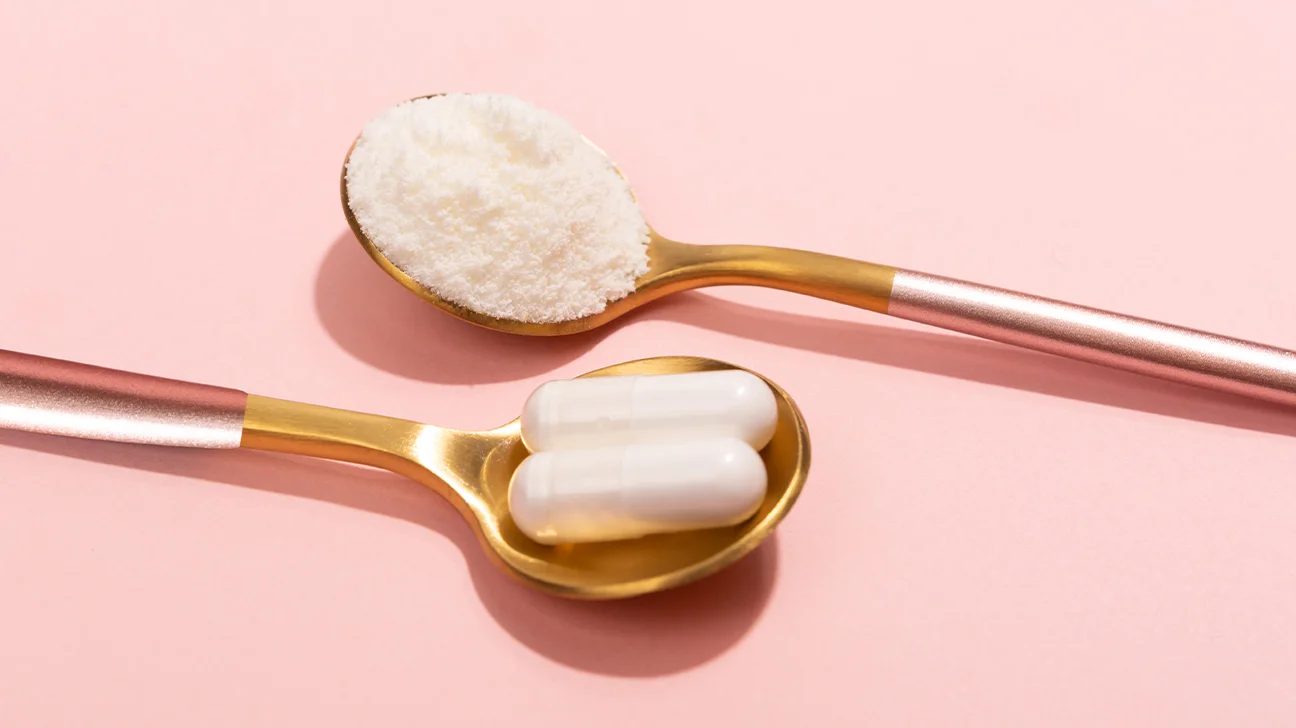
Funding, study design, and independent replication all affect how confidently trial results can be interpreted.
Study length is another concern. Many trials run for 8 to 12 weeks, sometimes a little longer. That can show a short-term change in an instrument reading, but it cannot tell us whether the effect lasts for years. It also leaves uncertainty about what happens after someone stops taking the supplement.
Trial size and product differences matter too. Studies often include a few dozen or a few hundred adults. They may test collagen from different animal sources, different daily amounts, or branded peptide preparations with unique processing methods. A positive result for one preparation cannot automatically be applied to every collagen powder, gummy, capsule, or drink.

Collagen supplements vary by animal source, collagen type, peptide preparation, and serving amount.
There is no clearly proven collagen type or source that works best for everyone. Types I and III are commonly associated with skin structure, but the formulation and tested peptide profile may matter as much as the type number on the label. Collagen is also animal derived. Check the source if you have food allergies or dietary restrictions. Talk to your doctor before using a supplement if you take prescription medication, are pregnant or breastfeeding, have kidney or liver concerns, or manage another medical condition.
Measured Elasticity Versus Visible Change
An elasticity instrument can detect changes too small for you or anyone else to notice. This is useful for research because it provides an objective number. It also means a positive trial should not be translated into a promise that your skin will look tighter, lifted, or dramatically different.
Your reflection is influenced by much more than elasticity. Hydration, lighting, facial movement, sleep, skin thickness, and normal day-to-day variation can all change how skin looks. A study may find an average improvement across a group even though some participants have little or no response.

A measurable change in elasticity may be too subtle to produce an obvious visual difference.
Visible assessments introduce their own problems. Photographs need identical lighting, camera distance, expression, and positioning. Participant questionnaires can capture how skin feels, but expectations may affect the answers. This is why objective measurements are helpful, even though they do not tell the whole story.
Collagen should therefore be viewed as an optional support, not a skin-tightening solution. Daily broad-spectrum sunscreen, shade, protective clothing, and avoiding tanning have much stronger evidence for limiting the collagen damage caused by ultraviolet light. Not smoking, eating enough protein, and getting vitamin C from a varied diet also support your body's normal collagen production. A supplement cannot compensate for repeated unprotected sun exposure or replace basic skin care.
Realistic Timelines
Most trials reporting improved elasticity or hydration evaluate participants after about 8 to 12 weeks of daily collagen use. Some collect earlier readings around 4 weeks, but that is usually too soon to judge the full study outcome. There is little reason to expect a noticeable skin effect after one serving.
If you choose to try collagen, follow the product's label directions and give the routine a consistent, defined trial. Taking more than the label recommends is not a shortcut. Collagen can be mixed into a drink or food when the product instructions allow it. Morning versus evening has not been shown to make a meaningful difference for skin elasticity, so choose a time you can maintain.
A consistent 8-to-12-week routine is more useful for evaluation than expecting an immediate effect.
Before starting, decide what you will evaluate. Skin comfort or hydration may be easier to track than elasticity at home. If you use photographs, take them in the same room, at the same time of day, without changing lighting or facial expression. Even then, expect uncertainty because you do not have the instruments used in a clinical trial.
Reassess after roughly 8 to 12 weeks. If you notice no worthwhile difference, it is reasonable to stop rather than assume you need an ever-higher amount. Supplements work best as one part of a steady wellness routine, not as quick fixes. Continue sun protection and balanced nutrition whether or not you use collagen.
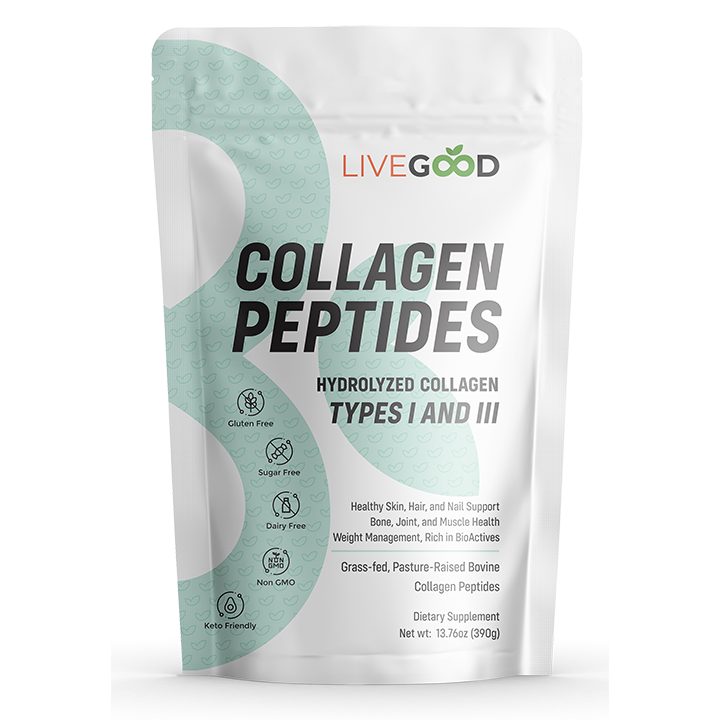
If you choose a supplement, LiveGood Collagen Peptides provides hydrolyzed collagen types I and III and is the first and only collagen product that also includes Velositol, Polynol and ApresFlex. The formula supports skin elasticity, hair and nail growth, joint function, muscle and bone structure, and healthy weight management. Follow the label directions and build it into a consistent routine. It is $29.95 for members versus $49.95 retail, helping make ongoing wellness support more accessible.
Frequently Asked Questions
Does collagen improve skin elasticity?
Collagen may modestly improve instrument-measured skin elasticity when taken consistently for several weeks. Multiple randomized trials report positive results, but not every study or participant shows the same response. Many trials are short, industry funded, and based on specific peptide products. The evidence supports a possible benefit, not a promise of visibly tighter skin.
How long does collagen take to affect skin?
Collagen studies commonly assess skin outcomes after 8 to 12 weeks of daily use. Some report earlier changes, especially in hydration, but one serving is unlikely to produce a meaningful difference. Follow the label rather than increasing the amount, keep other skin-care habits consistent, and judge the routine over months rather than days.
Are collagen skin studies reliable?
Some collagen studies use sound randomized, placebo-controlled designs, but the overall evidence has important weaknesses. Many trials are small, last only a few months, receive industry funding, and test proprietary peptide preparations. Their results are useful but should be interpreted cautiously. More large, independent, long-term studies would make the conclusion more certain.
Is topical or oral collagen better?
Oral collagen has more direct trial evidence for measured elasticity, but there are few useful head-to-head comparisons with topical collagen. Collagen molecules applied to skin are generally too large to reach deeper layers intact, although a topical product may help moisturize the surface. Neither approach should replace sunscreen, which has stronger evidence for limiting UV-related skin aging.
What else affects skin elasticity?
Sun exposure, age, genetics, smoking, hormonal changes, nutrition, and hydration all influence skin elasticity. The most practical step is regular sun protection, including broad-spectrum sunscreen, shade, and protective clothing. Adequate protein and vitamin C support normal collagen production. Sleep and avoiding smoking also matter, while no food or supplement can guarantee tighter-looking skin.