
CBD and Dogs: What Owners Should Know First
 Written by Nauder Khazan
Ask AI about this article and CBD Oil - For Pets (500mg Beef)






There is no established CBD dosage for dogs that every owner can safely copy from a chart. The right next step is to ask your veterinarian about your dog's weight, health, medications, and the exact product you are considering. Here is why those details matter and how to have a useful conversation without guessing.
Key Takeaways
- Skip generic dosing charts: Veterinary medicine has not established one standard CBD dose for all dogs, products, or situations.
- Check every ingredient: Human tinctures may contain xylitol, an artificial sweetener that is highly toxic to dogs.
- Review medications first: CBD can affect liver enzymes that process many prescription drugs.
- Ask for current testing: A third-party certificate of analysis, or COA, should confirm cannabinoid content and screen for contaminants.
- Watch your dog closely: Excessive sleepiness, vomiting, poor coordination, or unusual behavior calls for prompt veterinary guidance.
Why There Is No Reliable Dosing Chart
A CBD dosage chart for dogs looks convenient, but it can create false confidence. Veterinary medicine does not have one established CBD dose that applies across products, breeds, ages, health conditions, and medication plans. That is why this article does not provide a number or calculator for you to copy.
Body weight is only one part of the decision. A veterinarian may also consider your dog's age, liver function, kidney function, current symptoms, diet, and prescription medications. Two dogs at the same weight may process a product differently. The reason an owner is considering CBD also changes what the vet needs to evaluate.
Products add another layer of uncertainty. A bottle's total CBD content does not tell you how much is in each drop or serving unless the concentration and serving size are clear. Oils, chews, and capsules can have very different formulas. Independent testing has also repeatedly found that some CBD products contain more or less cannabidiol than their labels claim.

A reliable CBD discussion starts with your dog's health history, the complete label, and current laboratory results.
Before using any product, find its recent third-party certificate of analysis. A COA is a laboratory report that should match the product's batch number. It should list CBD and THC content and show testing for pesticides, heavy metals, leftover extraction solvents, microbes, and mold-related toxins. If the manufacturer cannot provide one, choose a different product.
A label's weight-based directions can be a starting point for a veterinary conversation, not a substitute for one. Ask your veterinarian to review the label and COA before deciding how much or how often to give it.
The Xylitol Danger in Human Products
The most urgent problem with giving a dog human CBD oil may not be the CBD. Some human tinctures, flavored drops, gummies, and other oral products contain xylitol. Xylitol is a sugar substitute that can cause a dangerous release of insulin in dogs, leading to severely low blood sugar. Larger exposures can also damage the liver.
Never assume a product is suitable for a dog because it is described as natural, sugar-free, or hemp-derived. Read the complete ingredient list every time. Xylitol may appear in sweetened liquids, chewable products, gummies, oral sprays, and products intended to improve flavor. Chocolate, caffeine, essential oils, and high THC content can introduce additional risks.
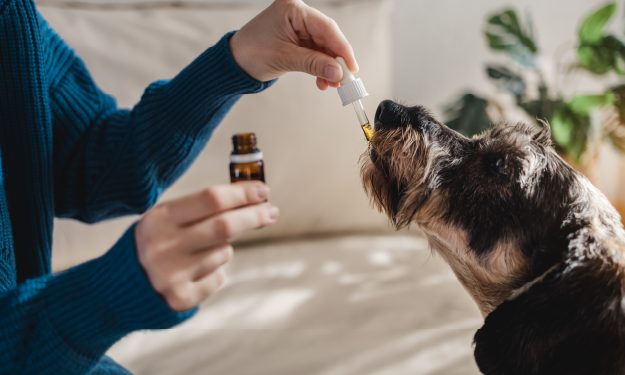
Check human tinctures and flavored products carefully because xylitol and other ingredients may be dangerous for dogs.
If your dog consumes a product containing xylitol, do not wait for symptoms. Contact your veterinarian, an emergency veterinary hospital, or an animal poison control service immediately. Do not induce vomiting unless a veterinary professional specifically tells you to do so. Weakness, vomiting, shaking, collapse, and seizures can occur, but waiting for those signs can delay needed care.
Human CBD products can also be much more concentrated than pet formulas. Full-spectrum products contain multiple hemp compounds and may include trace THC. Dogs are particularly sensitive to THC, and excessive exposure can cause marked sleepiness, poor balance, urine dribbling, agitation, or an exaggerated response to sound and touch.
For a closer comparison of formulations, read Can You Give Your Pet Human CBD Oil?. The practical rule is simple: never give a human CBD product to a dog until a veterinarian has reviewed the complete label and current COA.
What Veterinary Research Actually Covers
Veterinary CBD research is still early. Published studies include short-term safety work, studies of how dogs absorb and clear cannabinoids, and small trials conducted in specific clinical settings. These studies use particular formulas under controlled conditions. Their results cannot establish one dosage for every commercial oil, chew, or dog.
You may see the term pharmacokinetics in research summaries. It simply means how a substance enters the body, moves through it, and is removed. These studies show that dogs can absorb CBD, but absorption varies with the formulation, food, timing, and individual animal. Research using one tested oil does not validate another product with a different concentration or ingredient list.

Veterinary cannabinoid research is growing, but it has not established one standard CBD dose for every dog.
CBD is also not an FDA-approved animal drug. Epidiolex is the one FDA-approved prescription medicine containing purified CBD, and it is approved for certain seizure disorders in people. Its approval does not mean over-the-counter CBD supplements are approved medicines for dogs or equivalent to that prescription product.
Quality is a major research gap. Independent analyses have found label and content mismatches in commercial cannabinoid products. Some products may contain unexpected THC or less CBD than stated. A recent batch-specific COA matters because a general marketing claim about laboratory testing does not confirm the bottle in your hand.
Drug interactions deserve equal attention. CBD can affect CYP450 enzymes, a group of liver proteins that help process many medications. The familiar grapefruit warning on some human prescriptions is a useful analogy, although the exact interaction is not identical. A dog taking prescription medicine needs a veterinarian's review first. Any person using prescriptions who is considering CBD should ask a doctor as well.
Full-spectrum products contain trace THC. This can matter when drug testing applies, especially for people subject to workplace or athletic testing. Pet products should never be consumed by people.
Signs a Dog Is Not Tolerating It
Stop giving the product and contact your veterinarian if your dog develops a concerning change after CBD. Possible adverse effects reported with cannabinoid products include unusual sleepiness, low energy, vomiting, diarrhea, reduced appetite, drooling, restlessness, or changes in behavior. These signs are not proof that CBD caused the problem, but their timing matters.
Poor balance, stumbling, urine dribbling, dilated pupils, marked sensitivity to movement or sound, and profound drowsiness may suggest THC exposure. This can happen when a dog gets into a human cannabis product or receives a mislabeled or unexpectedly concentrated hemp product. Tell the veterinarian exactly what your dog consumed. Honest details help the clinical team choose appropriate monitoring and care.

Watch for unusual sleepiness, digestive changes, poor balance, or behavior that differs from your dog's normal routine.
Seek urgent veterinary help for collapse, seizures, breathing difficulty, inability to stand, repeated vomiting, extreme weakness, or suspected exposure to xylitol, chocolate, or a high-THC product. Bring the package, ingredient list, and COA if available. The product's concentration, amount missing, and approximate time of exposure are useful details.
Do not respond to side effects by trying to calculate a smaller amount on your own. First rule out an interaction, accidental overdose, contamination, or another illness. Dogs with liver or kidney conditions, pregnant or nursing dogs, puppies, older dogs, and dogs taking prescriptions may need additional caution or may not be appropriate candidates.
Keep a simple written log if your veterinarian agrees to a trial. Record the product, time given, food, medications, and any changes you observe. A log is more useful than relying on memory, especially when several family members care for the dog.
What to Ask Your Vet
Bring the actual bottle or clear photos of the front label, ingredient panel, and directions to your appointment. Also download the batch-specific COA. Your veterinarian cannot meaningfully assess a product from the words "pet CBD" alone.
Start with these questions:
- Is there a veterinary reason to avoid CBD for my dog?
- Could it interact with any prescription, supplement, sedative, or flea and tick product my dog receives?
- Do my dog's liver or kidney health, age, or medical history change the risk?
- Does this product's COA match the batch number and stated concentration?
- Does the report confirm THC content and contaminant screening?
- How should I follow the label for this specific dog, and how often should we reassess?
- Which changes mean I should stop, call the clinic, or seek emergency care?
- Will any follow-up examination or laboratory testing be appropriate?
Bring the product packaging and batch-specific certificate of analysis when discussing CBD with your veterinarian.
Tell your veterinarian what you hope to observe, but avoid using a supplement to delay an examination. New behavior changes, mobility problems, appetite changes, shaking, or sleep disruption may have many causes. Your dog deserves an accurate evaluation rather than an assumption about what is happening.
Veterinarians in some jurisdictions face restrictions on recommending or discussing cannabis-derived products. If your vet cannot provide a dosage, ask what safety information they can review, whether another veterinarian has relevant experience, and which warning signs matter for your dog. Do not treat a lack of legal prescribing authority as proof that an online chart is reliable.
Finally, discuss frequency rather than guessing. How often a product is given can affect total exposure and interaction risk. The useful answer must account for the exact formula, your dog's health, and every other medication being used.
For owners whose veterinarian agrees that a pet CBD product fits their dog's routine, CBD Oil - For Pets (500mg Beef) is a beef-flavored, full-spectrum formula made with the same highest quality ingredients and processes as the human formulas. Follow its weight-based label directions, add it to food, and start low and go slow under veterinary guidance. It is $12.95 for members versus $24.95 retail, supporting LiveGood's mission to "Provide the highest quality supplements in the world, at the lowest prices possible."
Frequently Asked Questions
How much CBD can you give a dog?
There is no universal amount of CBD that is appropriate for every dog. Product concentration, weight, age, liver and kidney health, medications, and the reason for use all affect the decision. Ask your veterinarian to review the exact label and batch-specific COA, then follow the product directions only with that professional guidance. Do not substitute an online calculator for veterinary advice.
Is CBD safe for dogs?
CBD is not risk-free for dogs, and safety depends heavily on the product and the individual animal. Veterinary studies remain limited, while commercial formulas vary in concentration, THC content, ingredients, and contaminants. Dogs can experience sleepiness, digestive upset, behavioral changes, or drug interactions. A veterinarian should review the product before use, particularly when a dog has a medical condition or takes medication.
Can you give a dog human CBD oil?
Do not give a dog human CBD oil unless a veterinarian has checked every ingredient and the laboratory report. Human products may contain xylitol, chocolate flavoring, essential oils, concentrated cannabinoids, or more THC than expected. Xylitol is especially dangerous and requires immediate veterinary attention after exposure. A pet-specific label is preferable, but it still needs quality and interaction review.
What are the side effects of CBD in dogs?
Possible side effects include unusual drowsiness, low energy, vomiting, diarrhea, reduced appetite, drooling, restlessness, and behavior changes. Stumbling, urine dribbling, profound sleepiness, or exaggerated sensitivity may point to THC exposure. Stop the product and contact your veterinarian if a new symptom appears. Collapse, seizures, breathing trouble, or suspected xylitol exposure require urgent veterinary care.
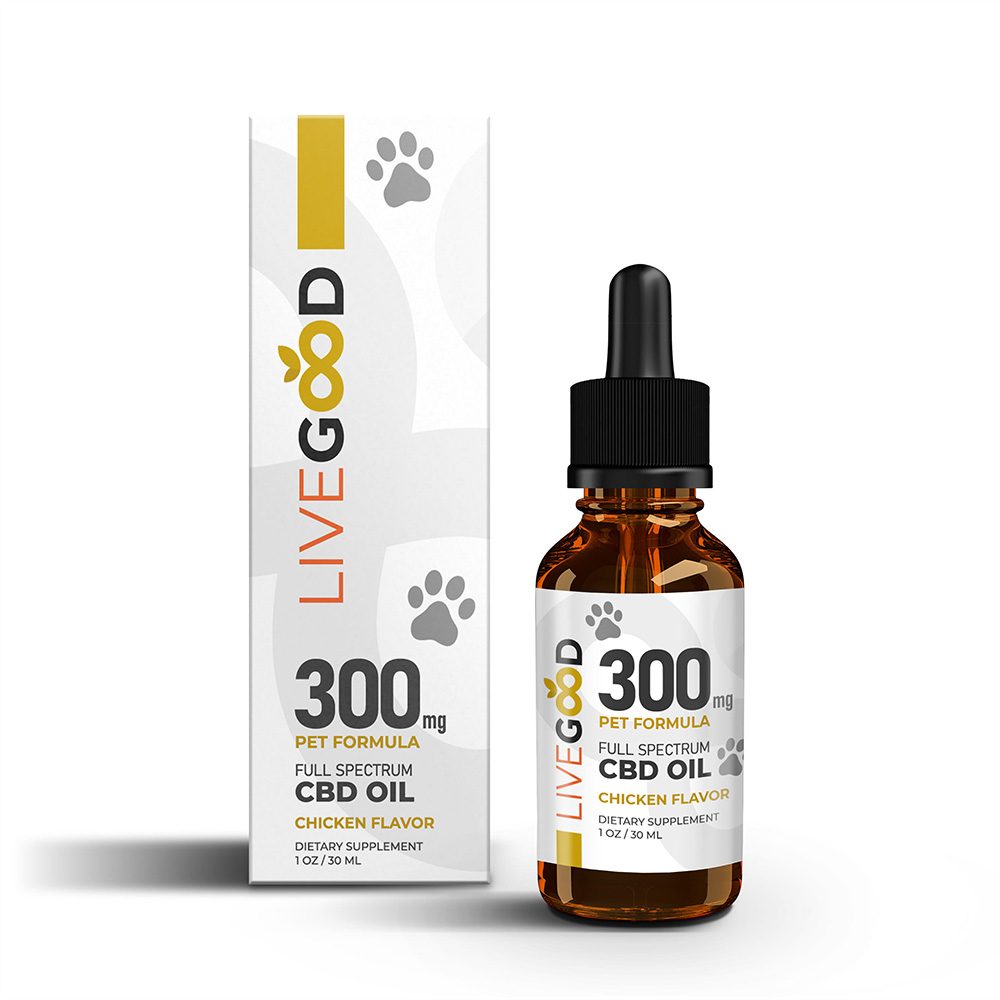
Prompt veterinary guidance is the safest response when a dog develops concerning symptoms after cannabinoid exposure.
Should you talk to a vet before giving CBD?
Yes, you should talk to a veterinarian before giving CBD to your dog. Bring the ingredient list, concentration, label directions, and batch-specific COA so the vet can assess quality and possible interactions. This step is especially important for dogs taking prescriptions or living with liver, kidney, or other health conditions. Local rules may limit what a veterinarian can recommend, but a safety review is still valuable.