
Cordyceps vs Tiger Milk Mushroom Compared
 Written by Nauder Khazan
Cordyceps and tiger milk mushroom are very different fungi. Cordyceps is studied mainly for exercise performance and oxygen use, while tiger milk mushroom research centers on respiratory measurements in South East Asia. Neither has enough strong human evidence to justify the sweeping claims often made online.
Key Takeaways
- They are unrelated fungi: Cordyceps includes insect-parasitizing species, while tiger milk mushroom is a tropical fungus valued mainly for its underground sclerotium.
- Cordyceps research is mixed: Small studies have examined oxygen use, endurance, and fatigue, but results are inconsistent.
- Tiger milk research is preliminary: A few small South East Asian studies have measured breathing-related outcomes, without proving that it treats respiratory conditions.
- Product identity matters: Most cordyceps supplements use cultivated CS-4 rather than wild Ophiocordyceps, and tiger milk products can vary by strain and preparation.
- Medication interactions are possible: Both may interact with immune-modifying and anticoagulant medicines, so check with a doctor or pharmacist first.
Two Unrelated Fungi
The word "mushroom" makes cordyceps and tiger milk mushroom sound closely related. They are not. They come from different fungal groups, grow in different environments, and supply different materials for supplements.
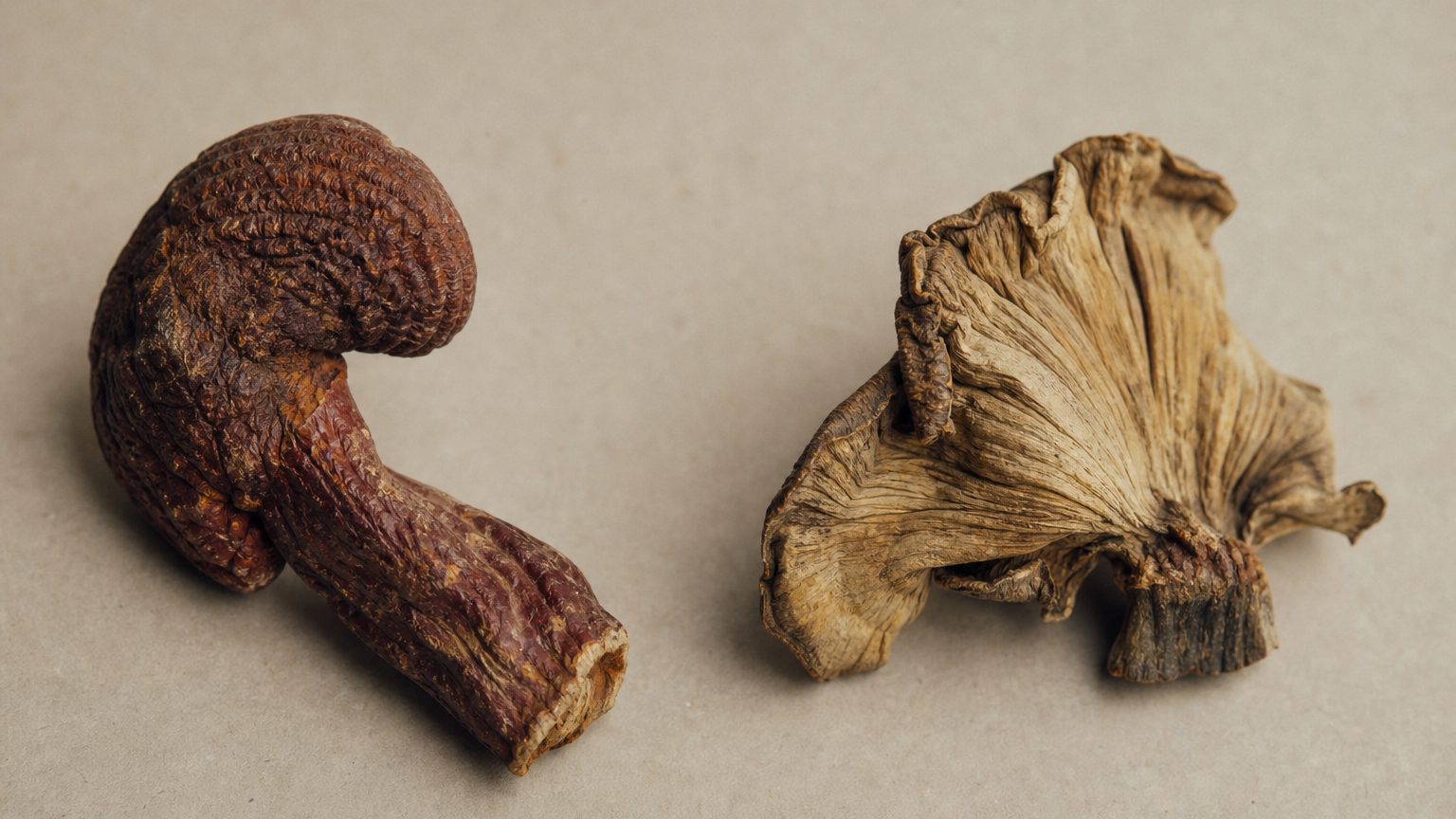
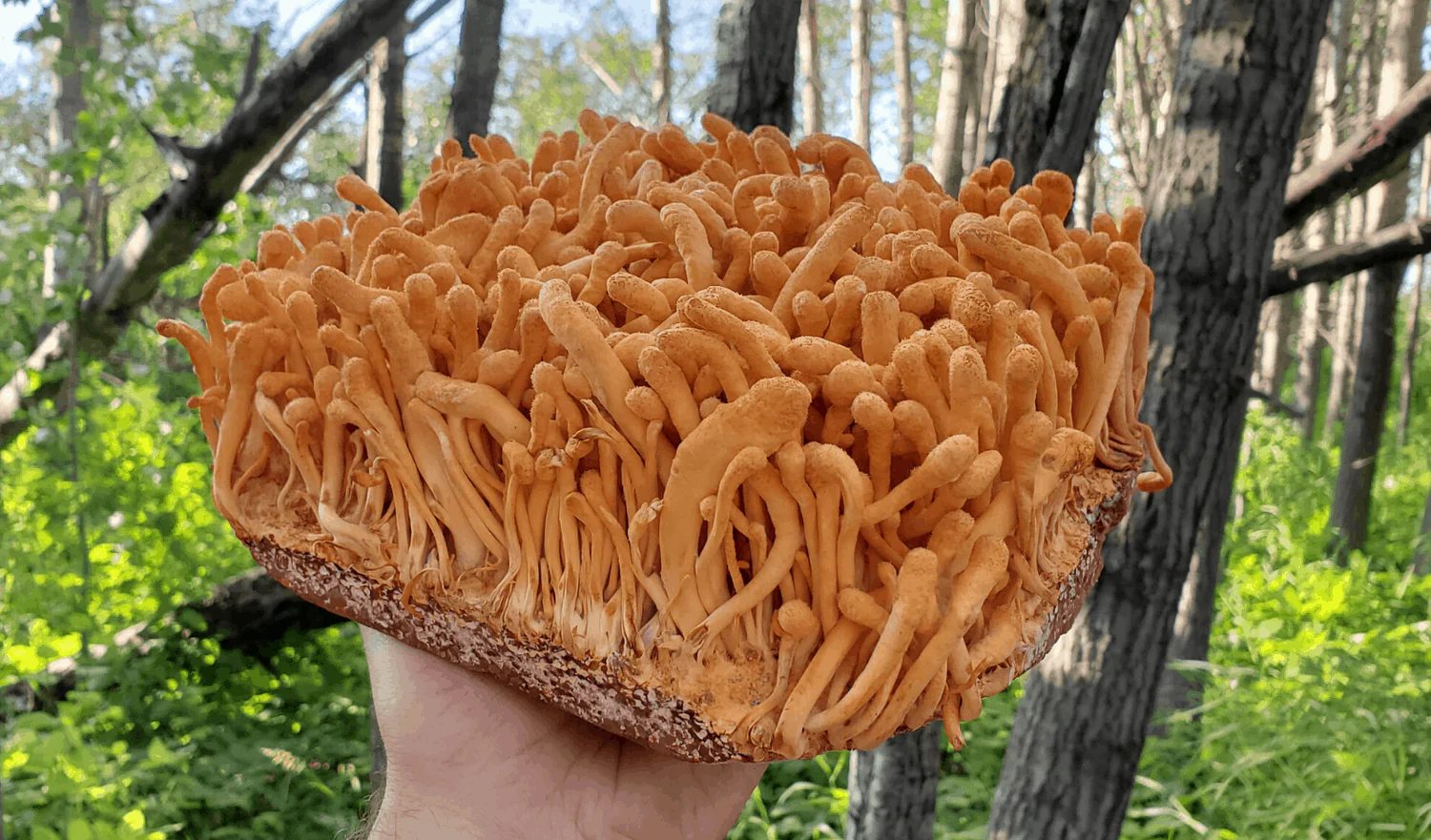
Cordyceps is a broad name for fungi that parasitize insects and other arthropods. The famous wild species from the Tibetan Plateau is Ophiocordyceps sinensis, previously called Cordyceps sinensis. It develops through caterpillar larvae and is rare, expensive, and difficult to harvest sustainably. Most cordyceps products are therefore made from cultivated CS-4 material rather than wild Ophiocordyceps. Some products instead use cultivated Cordyceps militaris, which may contain a different mix of naturally occurring compounds.
Tiger milk mushroom is usually Lignosus rhinocerus, a tropical fungus associated with Malaysia and other parts of South East Asia. Supplements generally use its sclerotium. A sclerotium is a firm underground mass that stores nutrients for the fungus. It is not the familiar cap-and-stem portion you might picture when you hear "mushroom."
These differences make simple milligram comparisons misleading. A gram of cultured cordyceps mycelium, the threadlike body of a fungus, is not equivalent to a gram of tiger milk mushroom sclerotium. Species, strain, growing method, plant material used during cultivation, and extraction method can all affect the finished product.

Cordyceps and tiger milk mushroom come from different fungal groups and supply different materials for supplements.
Traditional use also differs. Cordyceps has a history in Chinese practices, while tiger milk mushroom is associated mainly with Indigenous and traditional practices in South East Asia. That history can guide research questions, but it does not establish clinical effectiveness.
What Cordyceps Is Studied For
Most modern cordyceps research focuses on physical performance. Researchers have asked whether cordyceps can influence oxygen use, perceived fatigue, time to exhaustion, or the way cells produce usable energy during exercise.
One common measurement is VO2 max, which describes the greatest amount of oxygen your body can use during intense activity. Another is ventilatory threshold, the point at which your breathing starts increasing more quickly as exercise becomes harder. These laboratory measurements can offer clues, but an improvement in one number does not necessarily mean you will run faster or feel a noticeable energy boost.
Human findings are mixed. Some small trials involving CS-4 have reported changes in exercise-related measurements, particularly among older or less-trained adults. Other studies involving trained athletes have found little or no meaningful improvement. Trials of Cordyceps militaris are also small and use different preparations, serving amounts, and study lengths. That makes the results difficult to combine.

Cordyceps research often measures oxygen use and endurance, but findings vary by preparation and study population.
Cordyceps is not a stimulant like caffeine. You should not assume it will create a quick surge of energy. If it has an effect, that effect may be subtle and may depend on the exact species, preparation, and person taking it.
Laboratory and animal studies also explore cordycepin, polysaccharides, and other fungal compounds. Cordycepin is a molecule found especially in C. militaris, while polysaccharides are long chains of sugar molecules. These early findings help researchers choose what to study next, but they cannot confirm a benefit in people.
For another comparison involving this fungus, see cordyceps vs lingzhi. In either comparison, the label's species and ingredient form matter more than the word "mushroom" on the front.
What Tiger Milk Mushroom Is Studied For
Tiger milk mushroom is studied most often for respiratory-related measurements. This reflects its history of traditional use in Malaysia and nearby regions. It does not mean the fungus has been proven to treat asthma, chronic cough, infections, or any other respiratory condition.
One small, open-label human study followed 50 adults who took a cultivated Lignosus rhinocerus preparation for three months. Open-label means the participants and researchers knew what was being taken. The study reported changes in self-rated respiratory symptoms and some pulmonary function measurements. Pulmonary function tests measure how much air a person can move and how quickly they can move it.
The published tiger milk mushroom study also measured selected immune and antioxidant markers. A marker is a measurable substance that may reflect a biological process. Changes in markers are not the same as proving that people experience better long-term health outcomes.

Tiger milk mushroom supplements typically use the fungus's underground sclerotium rather than a familiar cap and stem.
The study is useful as an early signal, but it had no placebo group. A placebo group receives an inactive comparison, which helps researchers separate an ingredient's effects from expectations, normal symptom changes, and other influences. Fifty participants are also too few to answer broad safety and effectiveness questions.
Most additional tiger milk mushroom work has been performed in cells or animals. Researchers have examined proteins, beta-glucans, and other compounds in the sclerotium. Beta-glucans are complex carbohydrates found in fungal cell walls. Their presence does not guarantee a particular health result, since absorption, processing, and serving size all matter.
For now, tiger milk mushroom is best described as an emerging research ingredient. It should not replace an inhaler, allergy plan, infection treatment, or any other care recommended by a medical professional.
How Thin the Evidence Really Is
The biggest similarity between cordyceps and tiger milk mushroom is not what they do. It is how much uncertainty surrounds them. Marketing often moves from a cell experiment to a confident promise, but human health research does not work that way.
Cordyceps has more human research overall, yet the trials are generally small. They also examine several materials under the same broad name. Wild Ophiocordyceps, cultivated CS-4 mycelium, and C. militaris fruiting bodies are not interchangeable. A positive result for one preparation cannot automatically be assigned to another bottle.
Tiger milk mushroom has much less human research. The frequently cited respiratory study was small, open-label, and lacked a placebo comparison. Larger randomized controlled trials are needed. In that type of trial, participants are assigned by chance to an ingredient or comparison group. This design reduces bias and gives researchers a clearer view of cause and effect.
Small studies can provide useful leads, but larger placebo-controlled trials are needed to confirm meaningful benefits.
There is also limited independent replication for both fungi. Replication means a separate research team repeats a study and gets a similar result. One encouraging trial is a reason to investigate further, not a final answer.
When you evaluate a supplement, look for the scientific species, the part used, the serving amount, and whether the material is an extract or whole cultivated biomass. For cordyceps, check whether the label says CS-4, C. militaris, or something else. For tiger milk mushroom, look for Lignosus rhinocerus and identification of the sclerotium or extract.
Be cautious with phrases such as "clinically proven" when a company cites only one small study or research on a different preparation. Honest, evidence-grounded education means explaining what a study found and what it could not establish. At present, neither fungus has convincing evidence for treating a disease, and neither should be treated as a substitute for sleep, training, nutrition, or medical care.
Safety and Who Should Be Careful
Short human studies suggest that many adults tolerate cultivated cordyceps or tiger milk mushroom, but long-term safety information is limited. Possible cordyceps side effects include digestive discomfort, nausea, diarrhea, dry mouth, and allergic reactions. Tiger milk mushroom studies report relatively few serious concerns, although the number of participants studied is too small to identify uncommon reactions.
Any fungal ingredient can cause an allergy. Stop using it and seek urgent care if you develop trouble breathing, swelling of the face or throat, or another severe reaction. A mild rash or persistent digestive symptoms are also reasons to stop and contact a healthcare professional.
Both fungi may interact with immune-modifying and anticoagulant medication. Anticoagulants are medicines that reduce blood clot formation. Immune-modifying medicines include drugs used after an organ transplant and medicines that change immune activity. The interaction evidence is incomplete, but the potential consequences make professional guidance worthwhile. Cordyceps may also affect blood sugar, creating another concern for people taking diabetes medication.
Checking the species, fungal part, preparation, and medication warnings can help you evaluate a supplement label.
Avoid assuming that taking both is safer because they are natural. Combining them increases the number of compounds you are exposed to, and the combination itself has not been adequately studied. Follow label directions rather than copying an amount from a study that used a different extract.
If you are pregnant or breastfeeding, safety has not been established. You should also get medical guidance if you have a mushroom allergy, an autoimmune condition, a bleeding disorder, an upcoming procedure, or a kidney or liver condition. People managing respiratory symptoms should not delay evaluation or replace prescribed care with tiger milk mushroom.
Bring the exact labels to your appointment. A doctor or pharmacist can review the species, preparation, other ingredients, and your full medication list before you decide whether either supplement fits your routine.
Frequently Asked Questions
What is the difference between cordyceps and tiger milk mushroom?
Cordyceps and tiger milk mushroom are unrelated fungi with different research priorities. Cordyceps products commonly contain cultivated CS-4 or C. militaris and are studied mainly for exercise and oxygen-use measures. Tiger milk mushroom, usually Lignosus rhinocerus sclerotium, appears primarily in early South East Asian respiratory research. Neither can be judged by the word "mushroom" alone.
Does cordyceps improve exercise performance?
Cordyceps might influence certain exercise measurements, but it has not consistently improved real-world performance in human trials. A few small studies report changes in oxygen use or fatigue-related outcomes, while others show little benefit, especially in trained athletes. Results may also differ between CS-4 and C. militaris, so the exact material on the label matters.
What is tiger milk mushroom used for?
Tiger milk mushroom is traditionally used in South East Asia and is now marketed mainly for respiratory wellness. Small preliminary studies have measured breathing tests, symptom scores, and biological markers, but they do not prove that it treats a respiratory condition. Most supporting research remains limited to cells, animals, or small human groups without strong placebo-controlled designs.
Can you take both together?
There is not enough research to confirm that taking cordyceps and tiger milk mushroom together is safe or more useful than taking either alone. Their potential medication interactions may overlap, especially with anticoagulants and immune-modifying drugs. If you want to combine them, ask a doctor or pharmacist to review the exact products and your medications first.
Who should avoid functional mushrooms?
People with mushroom allergies should avoid functional mushroom supplements, while several other groups need medical guidance before using them. This includes anyone who is pregnant or breastfeeding, takes anticoagulants or immune-modifying medication, has an autoimmune, kidney, liver, or bleeding condition, or expects surgery. Stop use and seek care if signs of a serious allergic reaction appear.