
Do All-in-One Anti-Inflammatory Supplements Work?
 Written by Ben Glinsky
Ask AI about this article and Factor4 - Advanced Inflammation Management






An all in one anti inflammatory supplement can be a practical way to support a healthy inflammatory response, especially if one bottle helps you stay consistent. The tradeoff is that combination formulas often provide less of each ingredient than studies used, and very little research tests the finished combinations themselves. Here is how to judge whether convenience is worth that compromise for you.
Key Takeaways
- Convenience can improve consistency: One bottle is easier to remember than several separate products.
- Ingredient amounts still matter: A long ingredient list means little if the relevant doses are too small.
- Combination evidence is limited: Research usually studies individual ingredients, not the exact finished blend you can buy.
- Labels need close reading: Compare active compounds, serving sizes, and standardized extracts rather than front-label claims.
- Single ingredients offer more control: They may be preferable when you want a research-aligned amount of one specific compound.
What These Formulas Usually Contain
Most all-in-one formulas combine ingredients that have been studied individually for their roles in normal inflammatory-response pathways. Common choices include fish oil, turmeric or curcumin, ginger, boswellia, garlic, green tea extracts, and Coenzyme Q10, usually shortened to CoQ10.
Each ingredient is different. Fish oil supplies the omega-3 fats EPA and DHA. Turmeric contains curcuminoids, a family of naturally occurring plant compounds that includes curcumin. CoQ10 is a substance involved in cellular energy production and antioxidant protection. Garlic provides sulfur-containing compounds, while ginger and boswellia contain their own groups of plant chemicals.
These ingredients are often placed together because they work through different biological pathways. That sounds logical, but it does not automatically prove that the combination works better than any ingredient alone. A blend may be thoughtfully designed without having direct clinical research behind its exact recipe.
Also check what else is in the formula. Some products include black pepper extract to affect curcumin absorption, while others use specialized curcumin forms. Fish oil products may add antioxidants to protect the oil from oxidation. These details can change how closely a product resembles the ingredient used in research.

All-in-one formulas often combine omega-3 fats, plant extracts, and antioxidant-support nutrients in one daily serving.
Finally, remember that "anti-inflammatory" is a broad marketing category, not a guarantee of a medical result. Dietary supplements can support normal body functions, but they are not substitutes for evaluation when you have persistent pain, swelling, fever, or another unexplained symptom.
The Dose Dilution Problem
A capsule or softgel has limited space. Once a manufacturer places four, six, or ten ingredients into a daily serving, each one may need to be included at a smaller amount. This is the central weakness of many all-in-one products.
Imagine that research on an ingredient used several hundred milligrams per day. A blend might include that ingredient but provide only a fraction of that amount. The front label can still feature its name prominently. You may see an impressive list without getting amounts that resemble the studies behind those ingredients.
Fish oil offers a clear example of why label details matter. The total amount of fish oil is not the same as the combined amount of EPA and DHA. Likewise, 500 mg of turmeric powder is not necessarily comparable with 500 mg of a concentrated curcumin extract. The extract's curcuminoid percentage, formulation, and absorption characteristics all matter.
This does not mean every smaller dose is useless. Research doses are not universal minimums, and more is not automatically better. Ingredients may also be included to complement the formula rather than serve as its main component. Still, you should not assume that merely appearing on the label means an ingredient is present at a research-aligned amount.

The Supplement Facts panel shows whether each ingredient is present in a clearly disclosed amount.
Dose dilution becomes harder to evaluate when a label lists only a proprietary blend total. A proprietary blend names the ingredients but may not disclose each amount. Transparent, individual quantities give you a much better basis for comparison.
Almost No Research Tests Combinations
Most supplement research asks whether one ingredient influences a particular measurement. Researchers might study a defined fish oil, curcumin, garlic, or CoQ10 preparation under controlled conditions. They usually do not study the exact multi-ingredient product sitting on a store shelf.
That distinction matters. Evidence for the ingredients is not the same as evidence for the finished formula. You cannot simply add several separate studies together and conclude that the combination will produce all of their findings. Different studies may use different populations, doses, product forms, time periods, and outcome measures.
The word "synergy" deserves similar caution. Synergy means two or more ingredients have a greater combined effect than expected from either one alone. It is possible in biology, but it must be tested rather than assumed. A varied formula is not automatically synergistic just because its ingredients have different roles.
Combination studies are difficult and expensive. Researchers must determine whether the blend performed differently from a placebo, meaning an inactive comparison, and ideally whether it performed differently from its individual components. Few consumer formulas have that level of evidence.

Research on individual ingredients does not automatically establish how a finished combination will perform.
A fair conclusion is that an all-in-one blend may offer reasonable nutritional support when its ingredients and amounts are transparent. However, confidence should come mainly from formulation quality, safety, and realistic expectations, not from claims that every ingredient's separate research transfers perfectly to the bottle. Be especially skeptical of promises tied to arthritis, autoimmune disease, weight loss, or another medical condition.
Where Convenience Genuinely Wins
Convenience is not a minor benefit. A theoretically ideal routine does little for you if it is so complicated that you rarely follow it. One bottle can mean fewer purchasing decisions, fewer containers to store, and fewer servings to remember.
This is where an all-in-one formula may make sense even when every ingredient is not present at the amount used in a standalone study. Your goal may be broad daily wellness support rather than recreating one research protocol. If a simple formula fits breakfast every day, it may be more useful in practice than four separate bottles that you take inconsistently.
Convenience can also lower the total cost of maintaining a routine. Buying several high-dose standalone products may cost more and create overlapping ingredients. A combination can help you avoid unnecessary duplication, although you still need to compare the actual serving amounts and number of servings per bottle.
A simpler supplement routine may be easier to follow consistently than several separate bottles.
The right question is not simply, "Is a blend stronger or weaker?" Ask whether it provides meaningful, disclosed amounts in a form you can use consistently. Your eating pattern matters too. A supplement should sit alongside regular movement, adequate sleep, a varied diet, and medical care when needed. It cannot compensate for every gap in those areas.
This practical approach reflects LiveGood's mission: "Provide the highest quality supplements in the world, at the lowest prices possible." The membership model is intended to make a consistent wellness routine more accessible, because wellness should not be a luxury.
How to Compare a Blend Against Study Doses
Start with the Supplement Facts panel, not the product name. Note the serving size first. A label may advertise convenient capsules while requiring several capsules to provide the listed daily amounts.
Next, record each ingredient and its quantity. Then identify what that number represents. For fish oil, look for EPA and DHA rather than relying only on total fish oil. For turmeric, check whether the label lists plain root powder, a concentrated extract, or a standardized percentage of curcuminoids. "Standardized" means the extract is made to contain a stated amount of specific compounds.
For CoQ10, note whether the label identifies ubiquinone or ubiquinol. Both are forms of CoQ10, but studies and products do not always use them interchangeably. With garlic, check for details such as aged garlic extract or a stated active-compound measure. A generic plant weight may not tell you enough to compare products accurately.
Then find research that matches the same ingredient form, population, and goal as closely as possible. Compare the study's daily amount and duration with the product label. Do not increase your serving beyond label directions simply to copy a study. Research protocols are context, not personal dosing instructions.
Also check for duplicated ingredients in your multivitamin, fish oil, or other daily supplements. If you take prescription medication, are pregnant or breastfeeding, have a kidney or liver condition, or manage an existing medical condition, talk to your doctor before adding a blend. Fish oil, turmeric, CoQ10, and garlic can each require extra care with certain medications.
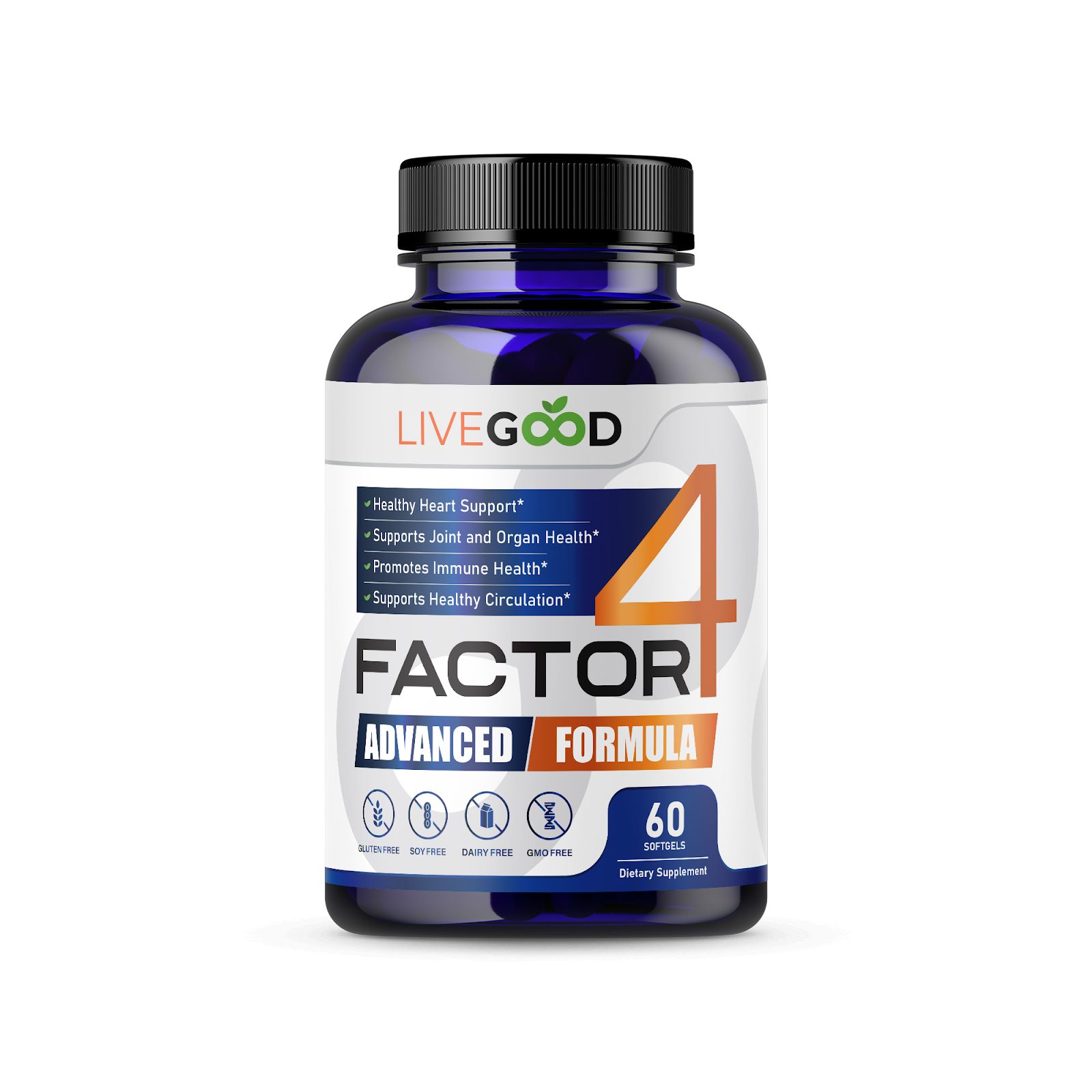
Factor4 - Advanced Inflammation Management is LiveGood's number two seller and was formulated by one of the world's top immunologists. LiveGood presents it as the first and only inflammation management supplement combining fish oil, turmeric, Coenzyme Q10, and garlic, four of the world's most powerful anti-inflammatory ingredients, in one bottle. It is designed to support a healthy inflammatory response. Members pay $19.95, compared with the $29.95 retail price.
When Single Ingredients Make More Sense
A single-ingredient product gives you greater control. It is often the clearer choice when you want a specific form or amount that closely matches research on one ingredient. You can also adjust one part of your routine without changing everything else.
For example, someone focused on omega-3 intake may prefer a fish oil that clearly lists EPA and DHA. Someone evaluating curcumin may want a standardized extract with a disclosed formulation. Buying those ingredients separately makes the comparison easier and avoids paying for compounds you do not want.
Single products can also help you identify tolerance. If you start several ingredients at once and develop digestive discomfort, it may be difficult to know which one caused it. Introducing one supplement at a time, with guidance from your doctor when appropriate, makes that pattern easier to recognize.
The disadvantages are cost and complexity. Several bottles can mean more capsules, more refill dates, and a greater chance that you stop following the routine. Separate products may also lead to accidental overlap if you do not compare labels.
There is no universally strongest supplement or ideal formula for "all over inflammation." Persistent or widespread symptoms need medical evaluation rather than a larger supplement stack. The right format depends on your goal, budget, current diet, medications, and willingness to maintain the routine.
For a more detailed side-by-side decision, read single ingredients vs. an all-in-one supplement for inflammation. Whichever route you choose, favor disclosed amounts, follow the label, and reassess whether the routine is practical after several weeks. Consistency matters more than collecting the longest possible ingredient list.
Frequently Asked Questions
Do all-in-one anti-inflammatory supplements work?
They can support a healthy inflammatory response, but results depend on the ingredients, amounts, forms, and your consistency. Evidence usually comes from research on individual ingredients rather than the complete blend. An all-in-one product is most compelling when it discloses meaningful amounts and makes your daily routine easier to maintain.
Are combination supplements weaker?
Combination supplements are not automatically weaker, but they often contain smaller amounts of each ingredient because capsule space is limited. That can make them less comparable with single-ingredient studies. A lower amount may still fit a broad wellness formula, so judge the label by your goal rather than by the number of ingredients alone.
How do you compare a blend to study doses?
Compare the exact active compound, daily amount, form, and study duration with the Supplement Facts panel. EPA plus DHA matters more than total fish oil, while standardized curcuminoids differ from plain turmeric powder. Use studies as context, follow label directions, and do not raise your serving without speaking with your doctor.
Is it better to buy ingredients separately?
Separate ingredients are better when you want precise control, a research-aligned form, or an easier way to assess tolerance. An all-in-one blend may be better when simplicity, cost, and daily adherence are your main concerns. Neither format wins for everyone, so choose the routine you can evaluate and follow consistently.
What should you check on the label?
Check the serving size, individual ingredient amounts, standardized extracts, active compounds, and any proprietary blend. Look for EPA and DHA amounts in fish oil and curcuminoid details in turmeric products. Also review other supplements for duplication and ask your doctor about interactions if you take medication or have an existing medical condition.