
Single Ingredient or Combination Supplement?
 Written by Ben Glinsky
Ask AI about this article and Factor4 - Advanced Inflammation Management






Single vs combination supplements is not a question with one universal winner. Combination formulas can simplify your routine and lower the cost per ingredient, while single-ingredient products give you tighter control over the dose. The deciding test is whether the option you choose provides the ingredient forms and amounts used in relevant research.
Key Takeaways
- Check the dose first: A long ingredient list means little if each ingredient is present in a very small amount.
- Choose combinations for simplicity: Fewer bottles and pills can make a daily routine easier to maintain.
- Choose singles for precision: A single-ingredient product lets you target a particular form and studied amount.
- Compare cost per daily serving: The cheapest bottle is not always the least expensive way to reach your intended dose.
- Watch for hidden overlap: Multivitamins, blends, fortified foods, and separate supplements may contain the same nutrients.
The Real Tradeoff
Combination supplements usually win on convenience. Instead of opening three or four bottles, you follow one set of label directions. That can reduce pill burden, meaning the number of capsules or tablets you take each day. It may also improve adherence, which simply means how consistently you follow your routine.
Consistency matters. A precisely selected supplement cannot support your routine if you regularly forget it. A well-designed combination may also cost less per ingredient because you are buying one formula, one bottle, and one serving system.
Single-ingredient supplements win on control. You can choose the exact ingredient, form, and amount you want. You can also adjust one part of your routine without changing everything else. That is useful when a clinician has identified a specific nutritional need or when you want to evaluate one ingredient at a time.
The downside is that singles accumulate quickly. Three products may mean three purchases, several capsules, different timing instructions, and more opportunities to miss a serving. You may also pay for more total product than you need.
A practical decision framework looks like this:
- Define the specific wellness goal.
- Identify which ingredients have relevant human research.
- Check whether the full daily serving matches the researched forms and amounts.
- Compare cost per day, not just bottle price.
- Choose the routine you can follow consistently.
Neither format is automatically better. The quality of the formula and its fit with your goal matter more than the number of ingredients on the front label.

The right format balances meaningful doses, daily cost, and a routine you can follow consistently.
Where Combinations Under-Dose
The most common weakness of combination supplements is under-dosing. A formula may list many appealing ingredients while providing only a small amount of each. This is sometimes called label decoration or dusting, where an ingredient is included mainly so its name can appear on the package.
Physical space is part of the problem. A capsule can hold only so much material. If one serving contains numerous vitamins, minerals, oils, herbs, and other compounds, there may not be enough room for meaningful quantities of all of them. Larger servings, softgels, powders, or liquids can hold more, but you still need to read the amounts.
Look beyond the total weight of an ingredient. For fish oil, the amount of EPA and DHA, the main omega-3 fatty acids, can be more informative than the total milligrams of oil. For turmeric, total turmeric root is not the same as a standardized amount of curcuminoids, the group of naturally occurring compounds often examined in research. Different extracts can also be absorbed differently.
Be cautious when a label provides only the total weight of a proprietary blend. A proprietary blend lists several ingredients together without showing the amount of each one. You may know which ingredient appears first by weight, but you cannot tell whether any component reaches the amount used in a relevant study.
Also check the serving size. The impressive-looking amounts may apply to four capsules rather than one. If you plan to take fewer than the labeled serving, you will receive proportionally less of every ingredient.
Ingredient count is not evidence of effectiveness. A shorter, transparent formula can be more useful than a crowded blend whose individual doses cannot be evaluated.

A Supplement Facts panel can reveal whether a crowded combination clearly discloses each ingredient's amount.
Where Singles Make More Sense
Single-ingredient supplements make the most sense when precision matters. If your doctor recommends a particular nutrient based on your diet, health history, or laboratory results, a single may make it easier to follow that plan without adding unrelated ingredients. Follow your doctor's guidance and the product label rather than trying to recreate a study dose yourself.
Singles can also help you evaluate tolerance. When you begin several new ingredients at once, it can be difficult to identify which one caused stomach discomfort, a headache, or another unwanted effect. Adding one product at a time creates a clearer picture, although it cannot guarantee that you will tolerate it.
This format is also useful when the research focuses on one specific form. Magnesium citrate, magnesium glycinate, and magnesium oxide, for example, are not interchangeable simply because each contains magnesium. Their elemental magnesium content, meaning the actual amount of magnesium, and their digestive effects can differ.
The same reasoning applies when comparing turmeric with fish oil. Neither is universally better for supporting a healthy inflammatory response. Research examines different compounds, doses, populations, and outcomes. Fish oil studies commonly focus on EPA and DHA, while turmeric research often examines standardized curcumin or curcuminoid extracts. Your diet, medications, tolerance, and goal can change which option is more appropriate.
For more context, see our overview of natural ingredients studied for inflammatory-response support.
The tradeoff is convenience. A customized stack can become expensive and difficult to maintain. If you need several separate products to reach your chosen amounts, calculate the total daily cost and capsule count before buying. If you have persistent pain, arthritis, or another joint disease, talk to your doctor rather than relying on supplements for care.
Checking Doses Against Research
A research-level dose is an amount and form that has been examined in a relevant study. It is not a promise that you will get the same result. Studies differ in quality, length, participant health, diet, and the outcomes measured. Still, research provides a much better comparison point than front-label phrases such as advanced, maximum, or complete.
Use this label-checking process:
- Start with the outcome. Find human research that studied a goal similar to yours. Evidence for one outcome should not be stretched into a claim about another.
- Identify the exact form. Look for details such as EPA and DHA in fish oil, curcuminoid standardization in turmeric, or elemental amounts for minerals.
- Record the amount used. Check whether it is listed per day, per serving, or per kilogram of body weight. Do not convert a weight-based research protocol into personal dosing without clinical guidance.
- Compare it with the full labeled serving. Do not compare a study's daily amount with the amount in one capsule when the product serving is several capsules.
- Check the study duration. Research conducted over weeks cannot tell you what to expect after one serving.
- Consider the participants. Results in people with a diagnosed condition may not apply to healthy adults, and the reverse is also true.
Credible research summaries and government nutrient fact sheets can help you understand what has been studied. Pay attention to mixed or limited findings. More milligrams are not automatically better, and increasing a serving above label directions can create safety concerns.
A useful combination should disclose enough information for this comparison. If you cannot determine the amount or form of each main ingredient, you cannot confidently judge whether the formula reaches a relevant researched range.

Compare the complete daily serving with research on the same ingredient form and wellness goal.
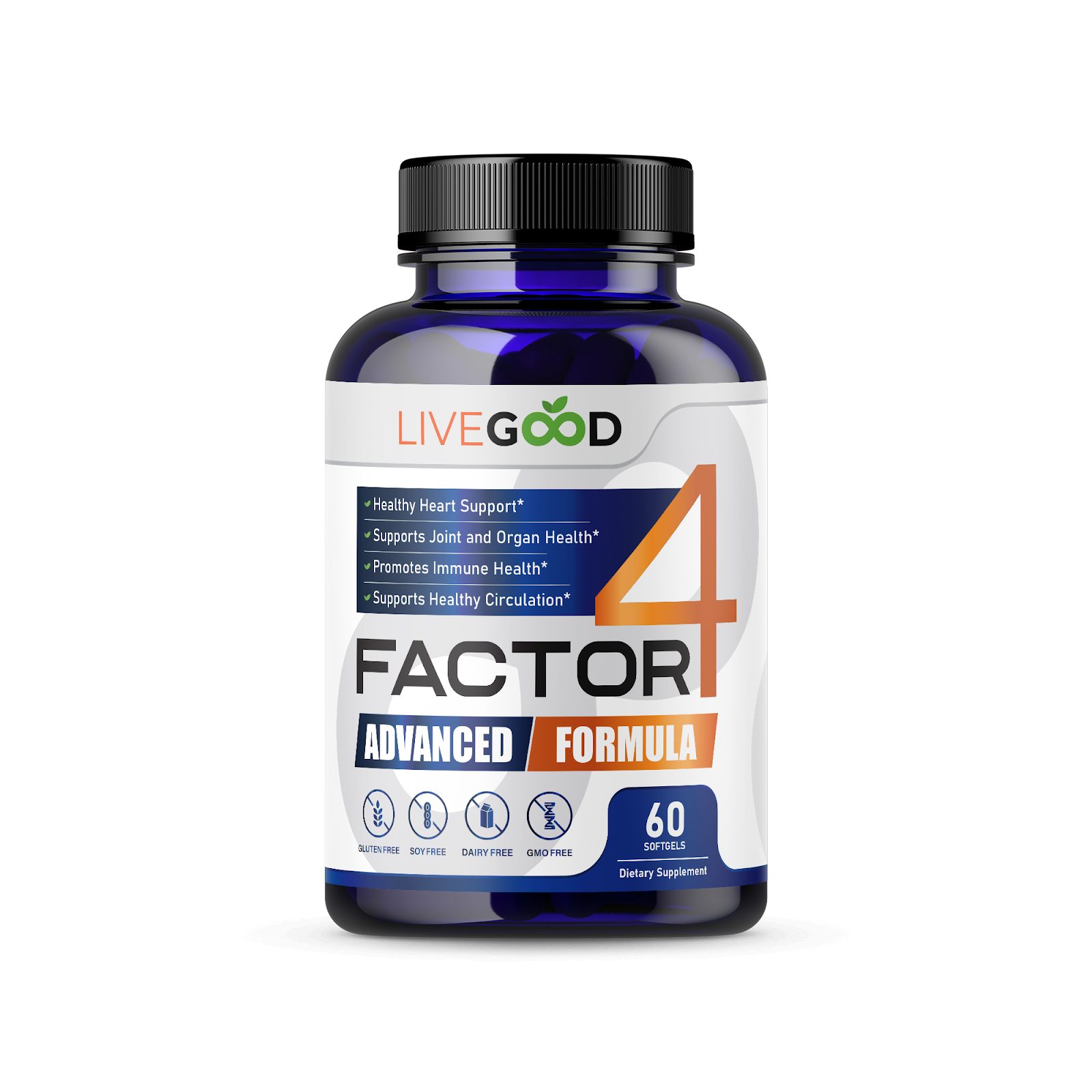
LiveGood's number two seller, Factor4 - Advanced Inflammation Management, is formulated by one of the world's top immunologists. LiveGood describes it as the first and only inflammation management supplement combining fish oil, turmeric, Coenzyme Q10, and garlic, four of the world's most powerful anti-inflammatory ingredients, in one bottle to support a healthy inflammatory response. Check each listed amount against your goal. It is $19.95 for members and $29.95 retail, helping make a consistent wellness routine more accessible.
Overlap You Might Not Notice
Supplement overlap happens when the same nutrient or active compound appears in more than one product. It is easy to miss because labels organize information differently. A multivitamin, an immune-support blend, a fortified protein powder, and a single vitamin may all contribute to your daily total.
Start by making a simple inventory. Write down every supplement you use, the full daily serving, and each listed amount. Include gummies, drink mixes, powders, meal replacements, electrolyte products, and fortified foods you consume regularly. Then group repeated ingredients together.
Pay particular attention to vitamins and minerals with established upper intake limits. An upper limit is the highest average daily intake considered unlikely to create harm for most people. It is not a target. Some nutrients can accumulate, while others may cause problems at high supplemental intakes even if they are essential in normal amounts.
Botanical and oil-based ingredients deserve the same attention. Fish oil, turmeric extracts, garlic, and other compounds may affect the body's normal clotting processes. Taking several products containing these ingredients can matter even if each bottle looks modest on its own. Separating them by a few hours does not necessarily remove the interaction.
Prescription and over-the-counter medicines also belong on your inventory. Talk to your doctor or pharmacist before combining supplements with medication. You should also talk to your doctor if you are pregnant or breastfeeding, have kidney or liver conditions, have an existing medical condition, or are preparing for a procedure.
Review your list whenever you add a product. A combination can replace several singles, but only if you stop counting the replaced products as part of your routine. The goal is not to collect the largest stack. It is to build a transparent, manageable plan that supports consistent habits without unnecessary duplication.
Listing every supplement and fortified product can help you spot repeated nutrients before they add up.
Frequently Asked Questions
Are all-in-one supplements worth it?
All-in-one supplements can be worth it when they provide transparent, relevant doses in a routine you can maintain. They often reduce pill burden and may cost less per ingredient. However, a long formula is not automatically valuable. Compare each main ingredient's form and amount with appropriate human research, then calculate the cost of the full daily serving.
Do combination supplements under-dose ingredients?
Some combination supplements under-dose ingredients, but not all of them do. Limited capsule space and crowded formulas can lead to small amounts of each component. Check the Supplement Facts panel for individual quantities, exact forms, and the number of capsules per serving. If only a proprietary blend total appears, you may not have enough information to assess the doses.
Is it cheaper to buy single ingredients?
Single ingredients are not always cheaper, even when each bottle has a low price. Several separate products can raise your total daily cost and capsule count. Singles may still offer better value when they deliver a specific studied amount that a combination does not. Compare the cost per full serving needed for your goal, not the shelf price alone.
How do you know if a dose is high enough?
A dose is high enough for comparison when the label's daily amount and ingredient form align with credible human research relevant to your goal. That does not guarantee a benefit or mean you should exceed the directions. Check the study population, duration, formulation, and outcome. Ask your doctor when research amounts differ from label directions or your needs involve a medical condition.
Can you double up on the same nutrient?
You should not double up on the same nutrient without first calculating your total intake and checking for safety concerns. Repeated ingredients can come from multivitamins, combination formulas, singles, powders, and fortified foods. More is not necessarily better. Follow label directions, and talk to your doctor about overlap involving medications, pregnancy, breastfeeding, existing conditions, or kidney or liver concerns.