
Do Wrinkle Supplements Actually Work?
 Written by Nauder Khazan
Ask AI about this article and Collagen Peptides





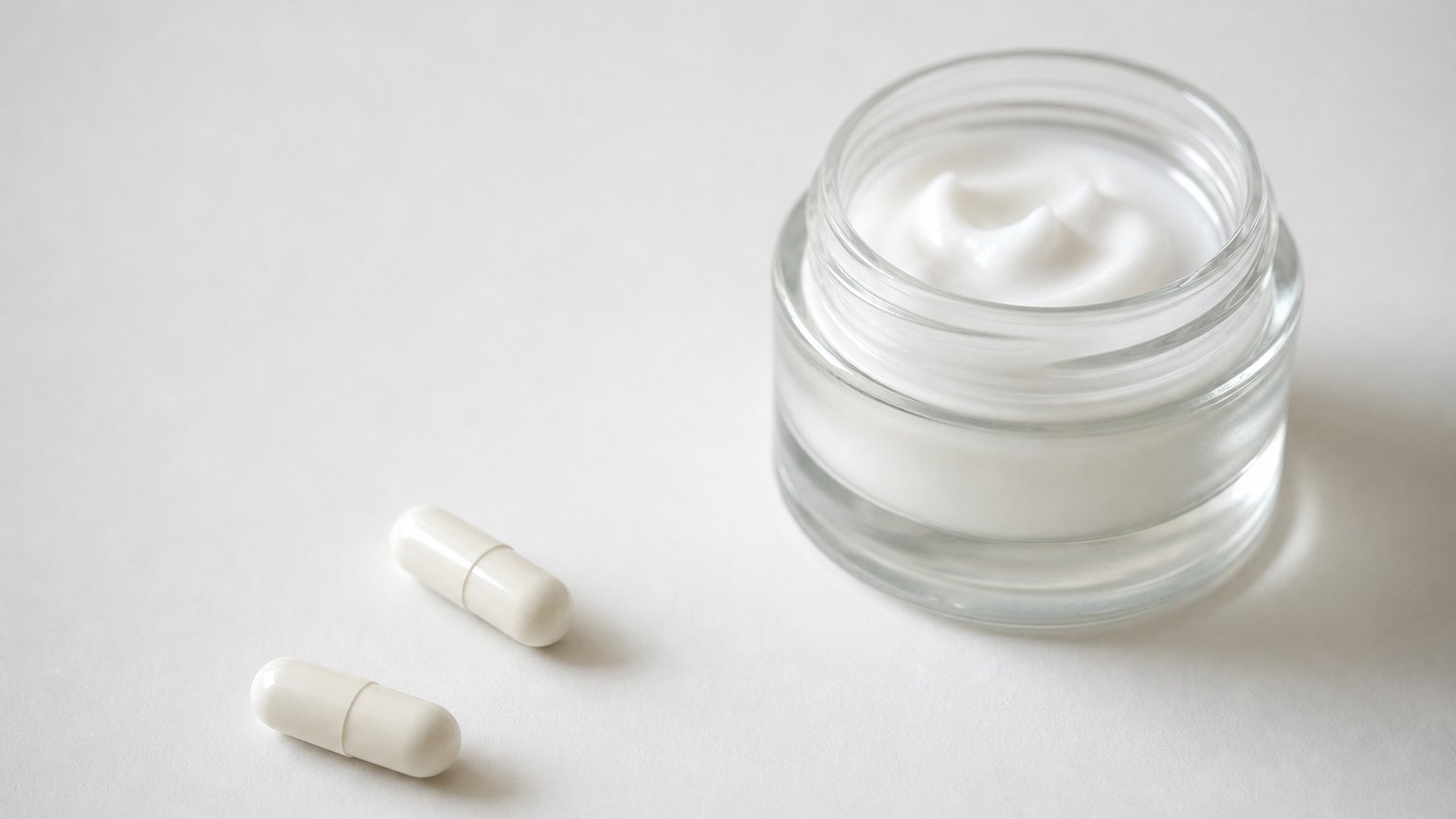
Some wrinkle supplements may modestly improve skin hydration, elasticity or the appearance of fine lines, but none can remove wrinkles. Collagen peptides have the most oral trial evidence, while sunscreen and topical retinoids remain far better supported. Here is what the research says about each common ingredient and what deserves your money.
Key Takeaways
- Collagen leads the category: Collagen peptides have more human trials than other oral wrinkle ingredients, although many studies are short and industry funded.
- Expect modest changes: Research sometimes finds improvements in hydration, elasticity or fine-line measurements, not erased wrinkles.
- Hyaluronic acid shows potential: A small number of oral studies report better skin moisture and wrinkle measures, but more independent research is needed.
- Most ingredients lack strong proof: Vitamin C is essential for normal collagen production, but supplements have not been shown to smooth wrinkles in well-nourished people.
- Protect your skin first: Daily sunscreen and topical retinoids have stronger evidence than any supplement taken by mouth.
What Causes Wrinkles
Wrinkles form as your skin changes with age and repeated exposure to the environment. Collagen, the main structural protein in skin, gradually declines. Elastin, the protein that helps skin spring back, also becomes less organized. At the same time, skin tends to become thinner, drier and slower to repair itself.
Sun exposure is one of the biggest factors you can control. Ultraviolet, or UV, radiation breaks down collagen and changes how new collagen is made. This process is called photoaging, meaning visible aging caused by light. It contributes to fine lines, deeper creases, uneven pigmentation and a rougher texture. Tanning beds expose skin to damaging UV radiation too.
Facial movement also matters. Smiling, squinting and frowning repeatedly fold the skin. These lines may first appear only during movement, then become visible while your face is relaxed. Smoking, air pollution and long-term poor nutrition can add to the stress placed on skin. Genetics, hormones and your natural skin tone influence when changes become noticeable.
A wrinkle supplement can address only a small part of this picture. It may provide amino acids or other nutrients your body uses throughout the body, including in skin. It cannot block UV rays, stop facial movement or restore youthful skin structure. That is why supplement results, when they occur, are usually subtle. Your daily skin care and sun habits still do most of the work.
Collagen Peptides: The Best of a Thin Evidence Base
Collagen peptides have the strongest oral evidence within the wrinkle supplement category. They are made by breaking collagen into shorter protein fragments through a process called hydrolysis. These fragments are easier to mix into liquids and digest than intact collagen.
Your digestive system does not send swallowed collagen directly to a wrinkle. It breaks the peptides into amino acids and smaller fragments, which enter the bloodstream and can be used wherever the body needs them. Laboratory research suggests that certain fragments may also signal cells in the skin to support normal collagen production, but the process in people is still being studied.
Several controlled human trials have reported modest improvements in skin hydration, elasticity and measured wrinkle depth after regular collagen peptide use. Trials commonly last about 8 to 12 weeks, so collagen is not an overnight fix. Results also vary. Some participants improve on measuring devices without seeing a dramatic difference in the mirror.
There are important limits. Many trials are small, short and funded by collagen manufacturers. Products may use different collagen sources, peptide sizes and serving amounts, which makes direct comparisons difficult. There is also much less evidence about whether any improvement continues after supplementation stops.
If you want to try collagen, choose a clearly labeled hydrolyzed product, follow its directions and evaluate it over weeks rather than days. Check the source if you have fish, shellfish, beef or other food allergies. Talk to your doctor before use if you are pregnant, breastfeeding, take prescription medication, have an existing medical condition, or have kidney or liver concerns.
If you decide to try collagen, LiveGood Collagen Peptides combines hydrolyzed collagen types I and III with Velositol, Polynol and ApresFlex, making it the first and only collagen product to include all three. It is formulated to support skin elasticity, hair and nail growth, joint function, muscle and bone structure, and healthy weight management. Follow the label directions consistently. Members pay $29.95 versus $49.95 retail, reflecting LiveGood's mission to "Provide the highest quality supplements in the world, at the lowest prices possible."
Hyaluronic Acid Taken Orally
Hyaluronic acid is a substance your body naturally makes. It attracts and holds water, helping lubricate joints and maintain moisture in tissues such as the skin. In topical skin care, hyaluronic acid mainly works as a humectant, which means it draws water toward the outer layer of the skin.
Oral hyaluronic acid has some human research behind it, but much less than collagen peptides. A handful of controlled trials have found improvements in skin moisture, dryness and certain wrinkle measurements after several weeks of daily use. These findings are encouraging, especially because dry skin can make fine lines look more noticeable.
The evidence is not strong enough to conclude that oral hyaluronic acid removes wrinkles. Studies have often included relatively few participants, used different forms or amounts, and lasted only a few months. Some were also supported by companies connected to the tested ingredient. That makes it hard to know how broadly the results apply.
Digestion raises another reasonable question. Hyaluronic acid is a large molecule, so the body must break it into smaller pieces before absorption. Researchers have proposed several ways these fragments might influence skin moisture, including effects through the gut, but the exact pathway is not settled.
If dryness is your main concern, a fragrance-free moisturizer may provide faster and more predictable help at the skin's surface. Oral hyaluronic acid can be viewed as an optional addition, not a replacement for moisturizer, sunscreen or medical care. Follow the product label, and talk to your doctor before taking it if you use prescription medication, are pregnant or breastfeeding, have a medical condition, or have kidney or liver concerns.
Vitamin C, Astaxanthin and the Rest
Vitamin C is essential for making collagen. It also works as an antioxidant, a substance that helps manage unstable molecules called free radicals. That biological role is real, but it does not automatically mean a vitamin C pill will reduce wrinkles.
If your diet already supplies enough vitamin C, taking more has not been clearly shown to smooth facial wrinkles. A deficiency can impair normal collagen formation, but deficiency is different from ordinary skin aging. Fruits and vegetables such as citrus, berries, peppers, broccoli and tomatoes can help you meet everyday needs while providing other useful nutrients.
Astaxanthin is a reddish antioxidant found in certain algae and seafood. Small trials have reported changes in skin moisture, elasticity or wrinkle measurements. However, there are too few large, independent studies to call it a proven wrinkle supplement. The same caution applies to oral ceramides, coenzyme Q10, resveratrol, polyphenols and various botanical blends. Some have early findings, but marketing often runs well ahead of the evidence.
Biotin is commonly sold for beauty, yet there is little reason to expect it to improve wrinkles. It is mainly helpful when someone has a true biotin deficiency, which is uncommon. High-dose biotin can also interfere with some laboratory tests, including tests used to assess thyroid function and heart-related concerns.
More is not always better with antioxidants or vitamins. Large supplemental amounts can cause side effects or interact with medication. Preformed vitamin A, for example, can be harmful in excess and requires special caution during pregnancy. Instead of chasing a long list of ingredients, correct known nutritional gaps, eat a varied diet and judge each supplement by human evidence for the outcome you actually want.
Why Industry Funding Matters Here
Industry funding does not automatically make a study false. Companies often pay for research because they developed the ingredient and have a reason to test it. The concern is that financial ties can influence how a trial is designed, analyzed, described or selected for publication.
This issue is especially relevant to collagen research. Many positive trials are funded by a collagen manufacturer, use a branded peptide formula or include researchers connected to the company. Independent replication, meaning another research team repeats the study without the same financial connection, is less common.
Short trials can also make results look more certain than they are. A study lasting 8 or 12 weeks may show a small change in skin hydration or a device-measured wrinkle score. It cannot tell you much about years of use, whether the effect lasts after stopping, or whether people consider the visual difference meaningful.
Pay attention to the comparison group too. A placebo-controlled trial compares the ingredient with an inactive look-alike product. That is more informative than customer reviews or before-and-after photographs, which can be affected by lighting, expression, makeup and expectation. Larger studies with preregistered methods are also more convincing because researchers state their planned outcomes before seeing the results.
The honest conclusion is not that collagen research should be dismissed. It is that promising findings deserve cautious language. Research suggests that some collagen peptides may modestly support skin hydration and elasticity. It does not prove that every collagen product works equally well, and it does not establish supplements as a way to remove or reverse wrinkles.
What Actually Works Best
For preventing avoidable skin aging, daily sun protection is the most useful step. Choose a broad-spectrum sunscreen that protects against UVA and UVB rays, with SPF 30 or higher. Apply it to exposed skin and reapply according to the label, especially after swimming, sweating or spending extended time outdoors. Shade, hats and protective clothing add another layer of protection.
For improving existing fine lines at home, topical retinoids have stronger evidence than oral supplements. Retinoids are vitamin A-related ingredients that influence skin cell turnover and collagen production. Prescription tretinoin has the deepest evidence base. Over-the-counter retinol is generally weaker and may take longer to produce visible changes.
Retinoids can cause dryness, peeling and irritation, particularly at first. Start only as directed by the product or your clinician, and use moisturizer to support the skin barrier. Ask a doctor about retinoid safety if you are pregnant, trying to become pregnant, breastfeeding, using prescription skin treatments or managing a skin condition.
A basic routine does not need to be complicated. In the morning, use a gentle cleanser if needed, moisturizer and sunscreen. At night, cleanse, use a retinoid if appropriate, and moisturize. Sleep, adequate protein, fruits and vegetables, not smoking, and avoiding tanning beds support your wider skin health.
Dermatology procedures can produce larger or faster cosmetic changes than home care, but they also bring higher costs and medical risks. Options depend on whether the concern is movement lines, sun damage, texture or loss of volume, so evaluation by a qualified dermatologist matters.
A supplement can sit alongside this routine, but it should not replace it. Our comparison of anti-aging supplements and creams explains their different roles. Consistency beats quick fixes, and realistic expectations protect both your skin and your budget.
Frequently Asked Questions
Do wrinkle supplements actually work?
Some wrinkle supplements may produce small improvements in hydration, elasticity or fine-line measurements, but they do not make wrinkles disappear. Collagen peptides have the most encouraging oral evidence, followed by limited research on hyaluronic acid. Results vary, and many trials are small, brief or commercially funded. Consider supplements an optional addition to proven skin care, not a replacement for it.
Which supplement has the most evidence for skin?
Collagen peptides have more human oral trials for skin aging measures than other common supplement ingredients. Some studies report modest improvements after consistent use, usually over several weeks. However, the evidence base remains limited by small study sizes, different formulations and frequent manufacturer funding. No collagen supplement has evidence comparable to daily sunscreen or a well-chosen topical retinoid.
How long before you see a difference?
Most collagen and oral hyaluronic acid trials assess skin after roughly 8 to 12 weeks, so any change is likely to be gradual. Follow label directions and compare your skin under similar lighting rather than relying on daily impressions. Stop if you experience a reaction. If nothing meaningful changes after a reasonable trial, there is little reason to assume that taking more will help.
Are supplements better than creams?
No, supplements are not generally better than topical products for wrinkles. Sunscreen directly protects skin from UV exposure, moisturizers quickly reduce dryness, and retinoids have stronger evidence for improving fine lines. Oral ingredients may offer modest support, but their effects are less certain. The right comparison depends on the product, since a basic moisturizer and a retinoid also perform very different jobs.
What is the most effective anti-wrinkle treatment?
The strongest at-home strategy combines broad-spectrum sunscreen with a topical retinoid when appropriate. Sunscreen limits ongoing UV damage, while retinoids can gradually improve fine lines and skin texture. Deeper wrinkles may respond more noticeably to dermatologist-administered procedures, depending on their cause. A dermatologist can recommend an option based on your skin, health history, goals and tolerance for side effects.