
Fish Oil and Joint Comfort: Dosage and Evidence
 Written by Nauder Khazan
Ask AI about this article and Factor4 - Advanced Inflammation Management






If you are researching fish oil for arthritis dosage, the honest answer is that joint studies often use around 2,700 mg of combined EPA and DHA per day, though amounts vary widely. That is much more than one standard softgel, but it is research context, not a personal dosing recommendation. Here is how to read the evidence, calculate the active omega-3 content, and discuss it safely with your doctor.
Key Takeaways
- Focus on EPA plus DHA: The total milligrams of fish oil on the front label do not tell you the active omega-3 dose.
- Expect more than one softgel: A standard 1,000 mg fish oil capsule may contain only about 300 mg of combined EPA and DHA.
- Treat 2,700 mg as context: This amount appears frequently in joint research, but it is not a universal recommendation or an arthritis treatment.
- Allow several months: Trials reporting joint-comfort changes commonly lasted 8-24 weeks.
- Ask about bleeding risk: Higher intakes raise bleeding risk, especially when combined with anticoagulants or other medicines that affect clotting.
What Trials Actually Used
There is no officially established fish oil dosage for arthritis. Clinical trials have used widely different formulas and amounts, from less than 1 gram to several grams of fish oil per day. More useful studies report the actual quantities of eicosapentaenoic acid, or EPA, and docosahexaenoic acid, or DHA. These are the main long-chain omega-3 fats in fish oil.

Joint trials measure EPA and DHA intake separately because total fish oil weight can be misleading.
In research involving rheumatoid arthritis, a commonly cited daily amount is approximately 2.7 grams, or 2,700 mg, of combined EPA and DHA. Some trials used less, while others used more. Older studies sometimes required participants to swallow 10 or more capsules because the oils were not highly concentrated. Modern concentrated products may provide more EPA and DHA in fewer capsules.
Research results are encouraging in places, but they are not uniform. Across some rheumatoid arthritis trials, participants reported modest changes in outcomes such as morning stiffness, tender joints, discomfort, or use of nonsteroidal anti-inflammatory drugs. However, studies used different products, outcome measures, diets, medications, and durations. Many were also small.
The evidence is less consistent for osteoarthritis, which involves different biological processes. You should not assume that findings from rheumatoid arthritis apply to every form of joint pain. Fish oil does not treat arthritis or replace prescribed care. If your joints hurt regularly, seek a diagnosis before choosing a supplement. The cause could be arthritis, an injury, an infection, medication effects, or another condition requiring different care.
Doing the EPA and DHA Maths
The biggest label-reading mistake is treating "1,000 mg fish oil" as "1,000 mg omega-3." Fish oil contains EPA and DHA, but it also contains other fats. A traditional 1,000 mg softgel often supplies approximately 180 mg EPA and 120 mg DHA. That adds up to only 300 mg of combined EPA and DHA.
Start with the Supplement Facts panel. Check whether the listed amount applies to one capsule or a serving of two or more capsules. Then add EPA and DHA together:
EPA milligrams + DHA milligrams = combined EPA and DHA
| Illustrative label | EPA plus DHA | Amount needed to equal 2,700 mg |
|---|---|---|
| 180 mg EPA + 120 mg DHA per capsule | 300 mg | 9 capsules |
| 400 mg EPA + 200 mg DHA per capsule | 600 mg | 4.5 capsules |
| 600 mg EPA + 400 mg DHA per serving | 1,000 mg | 2.7 servings |
This table shows why one ordinary softgel may produce no noticeable change in studies of joint comfort. It does not mean you should take nine capsules or adjust a serving on your own. Higher amounts may be inappropriate with your health history, diet, prescriptions, or other supplements.

The Supplement Facts panel shows whether one capsule provides a standard or concentrated amount of EPA and DHA.
Also check for omega-3 ingredients elsewhere in your routine. Cod liver oil, krill oil, algal oil, fortified foods, and combination products can contribute to your total. For broader intake guidance, see how much fish oil you should take. Use the product exactly as directed unless your doctor recommends a different plan.
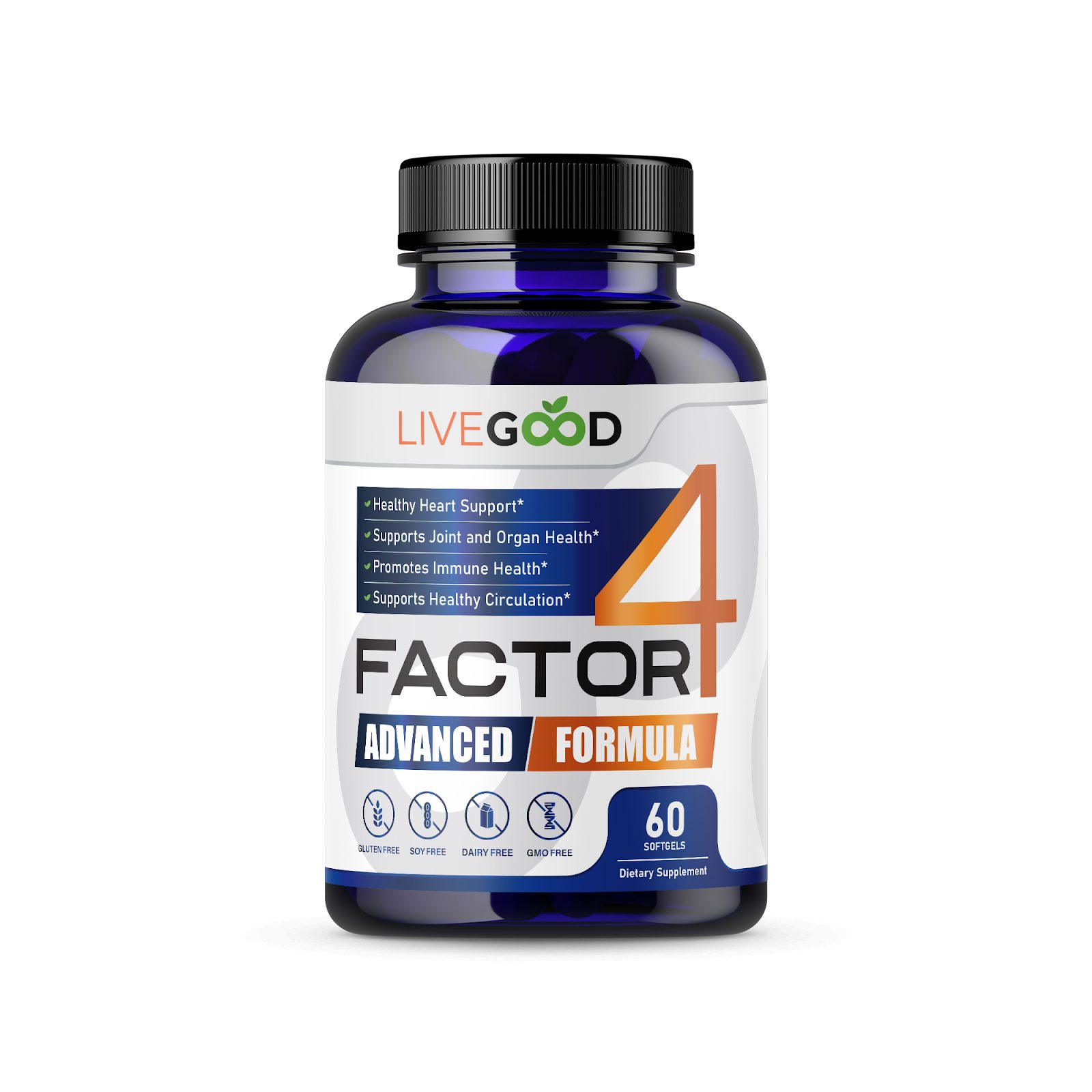
Factor4 - Advanced Inflammation Management is LiveGood's number two seller and was formulated by one of the world's top immunologists. LiveGood describes it as the first and only supplement combining fish oil, turmeric, Coenzyme Q10, and garlic in one bottle. It is designed to support a healthy inflammatory response and everyday wellness, not replace medical care. Member pricing is $19.95 versus $29.95 retail, supporting LiveGood's mission to "Provide the highest quality supplements in the world, at the lowest prices possible."
How Long Before Anything Changes
Fish oil is not a fast-acting pain reliever. Research that found changes in joint-comfort measures generally followed participants for at least 8-12 weeks. Some trials continued for 16-24 weeks or longer. That makes a few days, or even a few weeks, too short for a fair assessment.

A consistent 8-12 week record gives you and your doctor more useful information than judging one day.
A practical evaluation might look like this:
- Weeks 1-2: Focus on tolerance. Fishy aftertaste, nausea, loose stools, or stomach discomfort may appear before any joint-related change.
- Weeks 3-8: Keep your routine consistent. Do not judge the supplement from one unusually good or bad day.
- Weeks 8-12: Review trends in morning comfort, stiffness duration, daily movement, and any side effects with your doctor.
- After 12 weeks: If nothing meaningful has changed, do not keep increasing the amount. Revisit the diagnosis, product, dose, and overall plan with a medical professional.
Use a simple weekly record rather than trying to remember how you felt months ago. You might note how long morning stiffness lasts, whether routine tasks feel different, and whether symptoms interfere with sleep or walking. Do not change prescribed pain medicine based on this record without medical guidance.
Consistency matters more than the time of day. Taking fish oil with a meal may limit stomach upset and fishy burps. Splitting a label-directed serving between meals can also improve tolerance, but only if the directions permit it. If you miss a serving, resume your normal schedule rather than doubling the next one.
Side Effects at Higher Intakes
Common fish oil side effects include fishy burps, unpleasant taste, nausea, loose stools, indigestion, and abdominal discomfort. Taking it with food may help. Enteric-coated capsules can delay the aftertaste, although they do not change the amount of EPA and DHA you receive.
The more serious concern at higher intakes is bleeding. EPA and DHA can influence platelet activity, part of the process your blood uses to form clots. Higher intakes raise bleeding risk, especially if you take an anticoagulant, an antiplatelet medicine, aspirin, or frequent nonsteroidal anti-inflammatory drugs such as ibuprofen or naproxen. Watch for unusual bruising, prolonged bleeding, nosebleeds, blood in the urine or stool, or black stools, and seek medical advice promptly.
Higher fish oil intakes require extra caution when medicines or supplements also affect blood clotting.
High-dose omega-3 studies in people with cardiovascular risks have also raised concerns about atrial fibrillation, an irregular heart rhythm, in some participants. This finding does not mean everyone taking fish oil will develop a rhythm problem. It does mean that more is not automatically better, particularly if you have a heart condition or a history of atrial fibrillation.
The National Institutes of Health omega-3 fact sheet notes that supplements providing up to 5 grams per day of EPA and DHA are considered safe when used as recommended. That safety ceiling is not a suggested joint dose. Individual risk can become relevant well below it, particularly when medicines, surgery, allergies, or existing conditions are involved.
Talking to Your Doctor First
Talk to your doctor before using a research-level amount of EPA and DHA. Bring the bottle or a clear photo of the entire label, including the Supplement Facts panel and directions. Your doctor needs the EPA and DHA amounts, not just the larger fish oil number on the front.
Make a complete list of prescriptions, over-the-counter medicines, and supplements. Fish oil deserves extra caution with anticoagulants such as warfarin, apixaban, and rivaroxaban, as well as antiplatelet medicines such as clopidogrel. Aspirin, ibuprofen, naproxen, garlic, turmeric, vitamin E, and other supplements may also affect bleeding or add to digestive side effects. Do not stop or alter any medication to accommodate a supplement.
You should also get personal guidance if you are pregnant or breastfeeding, have a fish or shellfish allergy, are preparing for surgery, or have a kidney, liver, bleeding, heart rhythm, or other existing medical condition. Your clinician may suggest a different amount, additional monitoring, or avoiding fish oil entirely.
Most importantly, joint pain warrants a diagnosis. Seek prompt care for a hot or visibly swollen joint, fever, sudden severe pain, symptoms after an injury, or an inability to bear weight. Ongoing morning stiffness, symmetrical swelling, or worsening mobility also deserves medical evaluation. Supplements can support a wellness routine, but they cannot tell you why a joint hurts or replace treatment for a diagnosed condition.
If your doctor agrees that fish oil is reasonable, follow the label directions and agree on a review date. A planned check-in after 8-12 weeks is safer and more useful than increasing capsules whenever progress feels slow.
Frequently Asked Questions
How much fish oil should you take for joints?
Joint research often uses about 2,700 mg of combined EPA and DHA daily, but there is no standard fish oil dose for arthritis. That figure describes clinical trials, not a recommendation for you. Read the EPA and DHA amounts on the Supplement Facts panel, follow the label, and ask your doctor before using a higher intake.
Does fish oil help joint pain?
Fish oil may offer modest joint-comfort support for some people, particularly in research involving rheumatoid arthritis, but results are mixed. Studies have tracked outcomes such as stiffness, tenderness, and reported discomfort. Evidence for osteoarthritis is less consistent. Fish oil does not treat arthritis, and recurring joint pain should be diagnosed by a medical professional.
How long does fish oil take to work for joints?
Fish oil usually requires at least 8-12 weeks to evaluate for joint comfort. Some clinical trials lasted 16-24 weeks, so it is not comparable to a fast-acting pain medicine. Keep the serving consistent, track weekly patterns, and arrange a review with your doctor rather than increasing the amount when you do not notice an early change.
Can you take too much fish oil?
Yes, taking too much fish oil can cause digestive problems and increase bleeding risk. High-dose research has also identified a possible atrial fibrillation concern in some people with cardiovascular risks. A published safety ceiling is not a target dose. Follow the product directions and get medical guidance before considering amounts used in clinical research.
Does fish oil interact with any medications?
Fish oil can interact with medicines that affect bleeding and clotting. These include anticoagulants, antiplatelet drugs, aspirin, and frequent use of medicines such as ibuprofen or naproxen. Tell your doctor about garlic, turmeric, vitamin E, and other supplements too. Never stop or change a prescription in order to start fish oil.