
HMB and Brain Function: What Is Actually Known
 Written by Ben Glinsky
Ask AI about this article and Creatine + HMB





HMB is well studied for muscle support, but there is almost no direct human evidence that it improves brain function. Most brain-related claims come from animal research or assumptions based on muscle findings. Here is what the research actually tells us, what remains unknown, and what you can do to support cognitive health.
Key Takeaways
- Human evidence is nearly absent: HMB has not been shown in strong human trials to improve cognitive function.
- Most research concerns muscle: Studies primarily examine muscle maintenance, exercise recovery, strength, and physical function.
- Animal findings are preliminary: Mouse research cannot establish what HMB does in the human brain.
- Muscle benefits do not prove brain benefits: The two tissues have different structures, needs, and research outcomes.
- Daily habits still matter most: Exercise, sleep, nutrition, social activity, and medical care have much stronger cognitive support.
What HMB Is and What It Is Studied For
HMB stands for beta-hydroxy beta-methylbutyrate. Your body makes a small amount when it processes leucine, an essential amino acid found in protein-rich foods. Essential means your body cannot make leucine on its own, so you must get it through food.
HMB is available in supplements because the amount naturally produced from leucine is relatively small. Supplemental forms usually include calcium HMB or a form called HMB free acid. Researchers often study about 3 grams per day, but that research context is not a personal dosing recommendation. Always follow the product label unless your healthcare professional advises otherwise.
Most HMB studies focus on skeletal muscle, the muscles you use to move. Researchers have examined whether HMB helps maintain muscle protein, supports recovery after demanding exercise, or helps preserve lean tissue during aging, illness, inactivity, or low-calorie diets. Results depend on the population. Someone new to training, an older adult with low protein intake, and a well-trained athlete may not respond in the same way.
That muscle focus matters when you search for HMB and brain function. A large research base for one tissue does not automatically apply to another. You can read more about HMB's established research areas in what HMB does to the body.
HMB is primarily researched for muscle maintenance, recovery, and physical function.
HMB is not a hormone or steroid. It is a metabolite, which means it is a substance produced when the body processes another compound. Its main scientific story remains muscle-related, not cognitive.
Why the Brain Question Comes Up
Interest in HMB and the brain grew largely from a laboratory study involving mice. The researchers used mice bred to develop features that resemble parts of a human neurological condition. They measured biological markers in the brain along with performance on behavioral tasks. The results generated headlines suggesting that a familiar muscle supplement might have a new neurological role.
The original study was published in the peer-reviewed journal Cell Reports. Peer review means other specialists evaluated the paper before publication. It does not mean the finding has been confirmed in people or translated into a useful supplement outcome.
Animal studies are valuable early research. Scientists can examine brain tissue, test biological pathways, and control conditions in ways that would not be possible in a human trial. However, a mouse model is not a person. The dose relative to body size may differ, the model reproduces only selected features of a condition, and behavioral tasks in mice are not equivalent to a clinical cognitive assessment.

Animal studies can guide future research, but they do not establish cognitive effects in people.
The brain question also comes up because muscle and cognitive health often change together with age. Physical activity supports both, and poor nutrition can affect both. That relationship can make a muscle ingredient sound like a brain ingredient, even when direct evidence is missing.
For now, the animal study should be treated as a reason for further investigation, not as proof that HMB supports human memory, attention, or any neurological condition. Those questions require carefully designed human trials.
What Human Research Exists
Direct human research on HMB and cognition is close to absent. There is no established set of randomized clinical trials showing that HMB improves cognitive test scores in healthy adults, older adults, athletes, or people with cognitive symptoms. A randomized trial assigns participants to groups by chance, which helps researchers determine whether an ingredient, rather than another difference between groups, caused an outcome.
Some human studies use nutritional drinks or supplement combinations that contain HMB. These formulas may also include protein, vitamin D, calories, or other nutrients. They are usually designed to measure physical outcomes such as muscle mass, walking ability, recovery, or nutritional status. Even if a study collected a broad quality-of-life measure, it would not isolate HMB as a cognitive ingredient.
This distinction prevents a common mistake. A paper that mentions the nervous system is not necessarily a cognition trial. A study must deliberately measure outcomes such as standardized thinking tests, and it must be designed well enough to separate HMB from other variables. Without that, the study cannot answer whether HMB changes brain function.

Human HMB studies usually measure muscle and physical outcomes rather than cognitive performance.
Search results may also blend HMB with creatine because the two ingredients appear together in some products. Creatine has its own body of brain-related research, although findings vary by population, diet, sleep status, and the test used. That evidence should not be credited to HMB. Our overview of creatine and brain health explains that separate research in more detail.
The honest conclusion is simple. Human research does not currently support using HMB specifically for cognition. Future trials could change the picture, but current claims should not run ahead of the evidence.
Extrapolating From Muscle to Brain Does Not Work
Muscle and brain cells both need energy and respond to nutrition, but that broad similarity is not enough to transfer a finding from one tissue to the other. Skeletal muscle contracts and remodels in response to training. Brain tissue uses specialized signaling networks and is protected by barriers that control which substances enter it. A useful muscle outcome therefore tells you very little about a cognitive outcome.
The same caution applies to aging. Muscle loss and cognitive changes can occur during the same stage of life, but they are not interchangeable processes. Preserving physical function may help you stay active, and regular activity is associated with healthier aging. That indirect connection still does not show that HMB acts on human cognition.
Another common error is treating a proposed mechanism as a proven benefit. A mechanism is an explanation for how something might work. Researchers can observe a pathway in cells or animals without showing a meaningful outcome in people. Mechanistic findings are useful for planning trials, but they do not replace those trials.
Blood-brain barrier claims need similar care. The blood-brain barrier is a layer of tightly joined cells that controls movement from the bloodstream into brain tissue. Animal research has reported evidence consistent with HMB reaching the mouse brain. Direct evidence establishing how supplemental HMB enters, accumulates, or acts in the human brain is not available.
This is why phrases such as "brain boosting" are not justified for HMB. If your main goal is muscle support, you can evaluate HMB based on muscle research. If your goal is cognitive health, choose actions based on human cognitive evidence rather than borrowing conclusions from another part of the body.
What Does Support Cognitive Health
You do not need to wait for a new supplement study to take practical steps. Regular physical activity has much stronger human evidence than HMB for supporting cognitive health. Aim for a sustainable mix of aerobic movement, such as brisk walking, and resistance exercise that challenges your muscles. If you have been inactive or have a medical condition, ask your doctor what level is appropriate.
Sleep is another major piece. A consistent sleep schedule gives your brain time to carry out normal maintenance and supports next-day thinking. Treat ongoing snoring, breathing pauses, or persistent daytime sleepiness as medical concerns rather than problems to solve with supplements.
Food matters too. Build meals around vegetables, fruit, beans, whole grains, nuts, fish or other protein sources, and unsaturated fats. Nutrient deficiencies can affect how you feel and function. Vitamin B12 is one example, particularly for vegans, older adults, and people taking certain medications. Testing and correcting a deficiency is different from taking extra nutrients when your levels are already adequate.
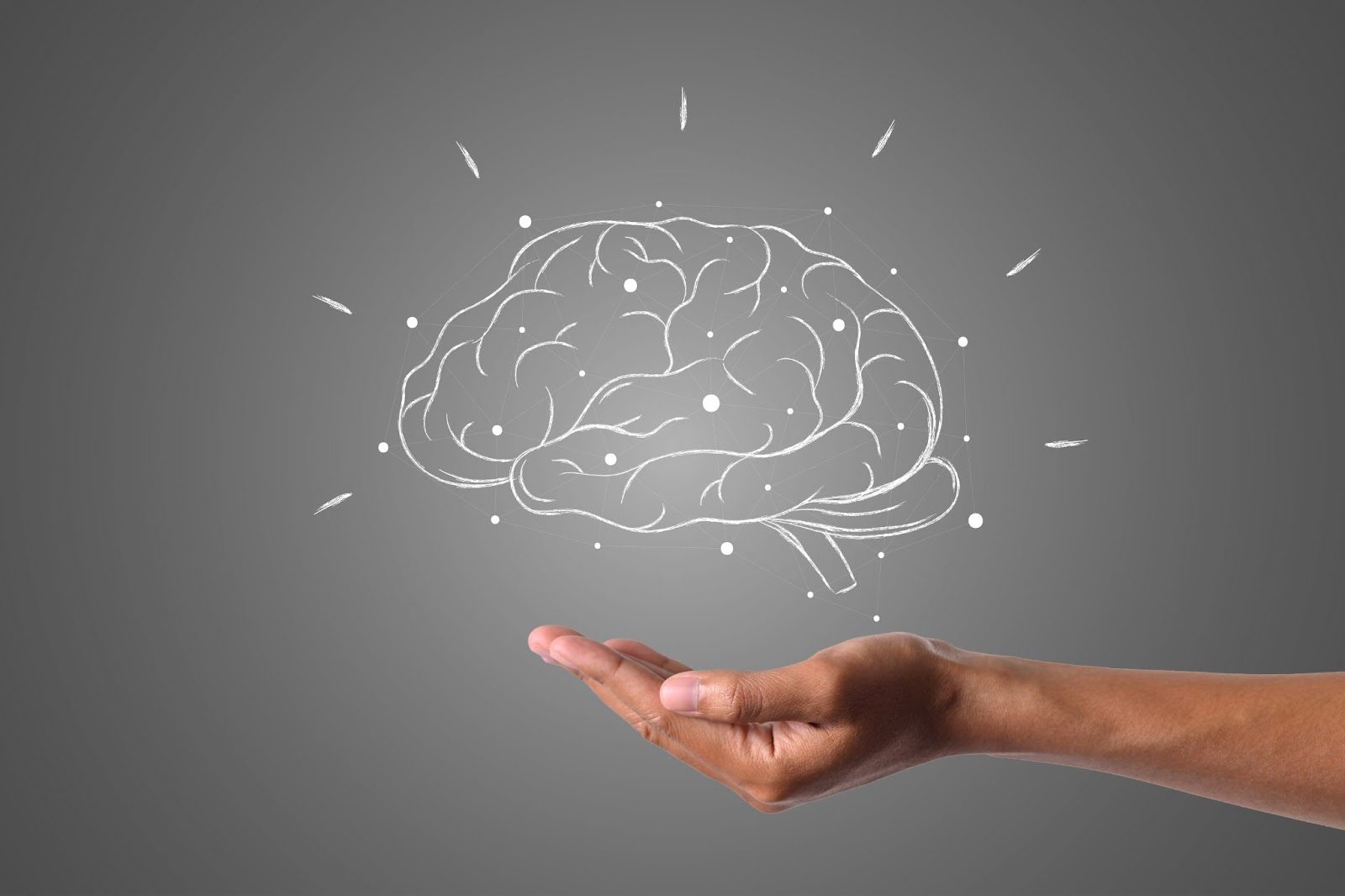
Regular movement, restorative sleep, balanced nutrition, and social connection form the foundation of cognitive health.
Creatine has more direct human cognitive research than HMB, but it is not a guaranteed mental performance aid. Some studies suggest certain groups or demanding situations may respond differently than others. Omega-3 fats have also been studied extensively, yet results depend on diet, health status, and the outcome being measured. No supplement replaces sleep, movement, nutritious food, social connection, hearing and vision care, or management of medical risk factors.
Keep your approach simple. Choose habits you can repeat, evaluate supplements by ingredient-specific evidence, and be cautious with products promising rapid cognitive changes. If you take prescription medication, are pregnant or breastfeeding, or have kidney, liver, or another existing medical condition, talk to your doctor before adding a supplement.
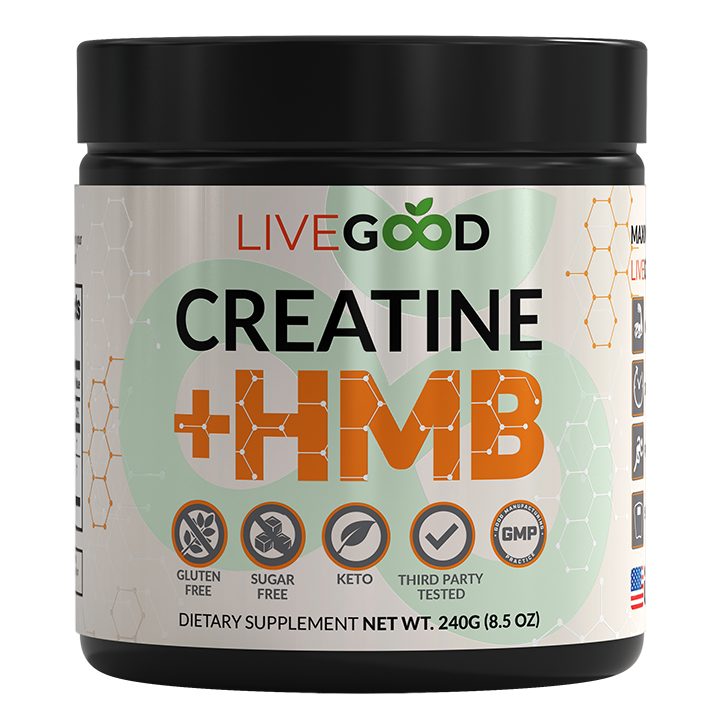
LiveGood Creatine + HMB provides a full 5 grams of creatine monohydrate plus 3 grams of HMB per serving, with no junk fillers, flavors, or additives. It is formulated to support cellular energy needs in muscles, the brain, and heart while helping maintain muscle and cognitive function with age. It costs $19.95 for members versus $34.95 retail, supporting LiveGood's mission to "Provide the highest quality supplements in the world, at the lowest prices possible."
Frequently Asked Questions
Does HMB improve brain function?
HMB has not been shown to improve brain function in well-controlled human trials. Nearly all established HMB research concerns muscle maintenance, recovery, and physical function. Animal experiments have raised questions worth studying, but they cannot tell you whether a person will experience a cognitive effect. HMB should not be presented as a proven brain supplement based on current evidence.
Is there research on HMB and cognition?
Human research directly testing HMB for cognition is extremely limited. The most discussed brain-related findings come from a mouse study, not a clinical trial in people. Human studies of HMB generally measure muscle, nutrition, or physical outcomes. Studies using multi-ingredient formulas also cannot show that HMB itself caused any change unless the design specifically isolates it.
Does HMB cross the blood-brain barrier?
It is not established whether supplemental HMB meaningfully crosses the human blood-brain barrier. Mouse research has reported evidence consistent with HMB entering brain tissue, but animal absorption and distribution do not always match human biology. Human studies would need to determine how much reaches the brain, under what conditions, and whether that exposure has any practical significance.
What supplements have cognitive evidence?
Creatine, caffeine, omega-3 fats, and nutrients used to correct a diagnosed deficiency have some human cognitive evidence, but the strength and relevance differ. Creatine findings vary by population and testing conditions. Caffeine can support short-term alertness but may disrupt sleep. Vitamin B12 is most relevant when intake or blood levels are low. No supplement works reliably for every person or replaces healthy daily habits.
Is HMB safe to take long term?
HMB has generally been well tolerated in human studies, including studies using about 3 grams daily, but very long-term safety data are less extensive than short-term data. Follow the label rather than increasing the serving to match a study. Talk to your doctor before use if you take prescription medication, are pregnant or breastfeeding, or have kidney, liver, or another existing medical condition.