
Nitric Oxide and Running Performance
 Written by Nauder Khazan
Ask AI about this article and Organic Super Reds






Dietary nitrate can support nitric oxide production and may improve running performance, but the effect is usually modest and not universal. Research is most encouraging for shorter, harder efforts and less-trained runners, while highly trained endurance athletes often see smaller or no gains. Here is how timing, training status, and even your mouthwash can change the result.
Key Takeaways
- Expect a modest effect: Dietary nitrate may help with hard efforts, but it will not replace training, sleep, fueling, or pacing.
- Consider your training level: Recreational runners tend to respond more consistently than highly trained endurance athletes.
- Use the timing window: Research commonly places nitrate-rich beetroot about 2-3 hours before exercise.
- Protect the oral pathway: Antibacterial mouthwash can interfere with the bacteria needed to convert nitrate into nitric oxide.
- Test before race day: Try any food or supplement during training first, especially if you have a sensitive stomach.
What the Running Research Shows
Nitric oxide is a short-lived signaling molecule your body makes naturally. It helps blood vessels relax and supports blood flow. Most running research does not give people nitric oxide directly, since it is a gas. Instead, studies use dietary nitrate, often from beetroot juice, which the body can convert into nitric oxide.
The most promising results appear in shorter, harder exercise. Think sustained intervals, uphill efforts, middle-distance events, and hard runs lasting several minutes rather than an easy weekend jog. Some studies report a lower oxygen cost at a given pace. In plain language, the muscles may perform the same work while using slightly less oxygen. Others find a longer time to exhaustion, meaning participants can maintain a demanding effort a little longer in a controlled test.
For example, a small study published in the Journal of Applied Physiology found that nitrate-rich beetroot juice reduced the oxygen cost of running and extended time to exhaustion during severe-intensity exercise. However, a time-to-exhaustion test is not the same as finishing a real race faster. The study was also small, so its result should not be treated as a guarantee.

Dietary nitrate may offer a modest advantage during hard running efforts, but individual results vary.
Across the larger research picture, results remain mixed. Some runners improve, some show only minor changes, and others do not respond. The clearest takeaway is that dietary nitrate may provide a small edge under certain conditions. It is not a direct energy source, stimulant, or substitute for consistent training.
Why Trained Runners Respond Less
Recreational and moderately trained runners often have more room for improvement in exercise efficiency. Their bodies may also start with lower baseline nitrate and nitric oxide activity, depending on diet, fitness, and other individual factors. Adding a concentrated nitrate source can therefore create a more noticeable change.
Highly trained endurance runners are different. Years of aerobic training already produce many of the adaptations that dietary nitrate is supposed to support. These athletes commonly have dense networks of small blood vessels, efficient oxygen delivery, strong mitochondrial function, and economical running form. Mitochondria are the structures inside cells that turn fuel and oxygen into usable energy. When those systems are already highly developed, nitrate may have less room to make a measurable difference.
Elite runners may also eat more vegetables and nitrate-rich foods as part of a structured nutrition plan. Beets, arugula, spinach, celery, and lettuce all contribute dietary nitrate. A runner who regularly eats these foods may respond differently from someone whose usual nitrate intake is low.

Highly trained runners often have less room for nitrate-related improvements than recreational athletes.
This does not mean trained runners can never benefit. Responses vary, and some studies report small improvements in certain high-intensity sessions or competition formats. However, the average result is less consistent than it is among recreational athletes. If you are well trained, evaluate nitrate across several comparable workouts. Track pace, perceived effort, heart rate, weather, sleep, and fueling. One unusually good or bad run cannot tell you whether it worked.
Your event matters too. A small efficiency change may be more relevant during a hard 3K or 5K than during an easy aerobic run. For long races, pacing, carbohydrate intake, hydration, and heat management usually have a much larger influence on performance.
The Timing Window
For a single pre-run serving, 2-3 hours before exercise is the most practical timing window. Your body needs time to absorb dietary nitrate, circulate it through the blood, move part of it into saliva, and convert it through bacteria in your mouth. Nitrite formed during that process can then contribute to nitric oxide production.
Nitric oxide itself lasts only seconds in the body. That does not mean the potential exercise effect disappears after a few seconds. Nitrate and nitrite remain available much longer, which is why the overall response can develop over several hours. Blood nitrite commonly reaches its main rise around 2-3 hours after nitrate consumption, although digestion, the food or supplement form, and the individual can shift the timing.
Some research uses one pre-exercise serving. Other studies provide nitrate daily for several days before a test. There is no established requirement to cycle nitrate, and taking more does not necessarily produce a better result. Follow the product label rather than increasing a serving to match a study. If you are experimenting, keep the form, timing, meal, and workout as consistent as possible for several sessions.

Taking a nitrate-rich food or supplement 2-3 hours before running matches the timing used in many studies.
You can also build nitrate-rich foods into your regular diet. Beets and leafy greens are practical options, and they provide nutrients beyond nitrate. For more food-based strategies, see how to raise your nitric oxide levels naturally.
Remember that timing cannot rescue poor preparation. A nitrate-rich drink will not make up for starting dehydrated, skipping carbohydrates before a demanding run, or running on too little sleep. Treat it as one optional part of a reliable routine.
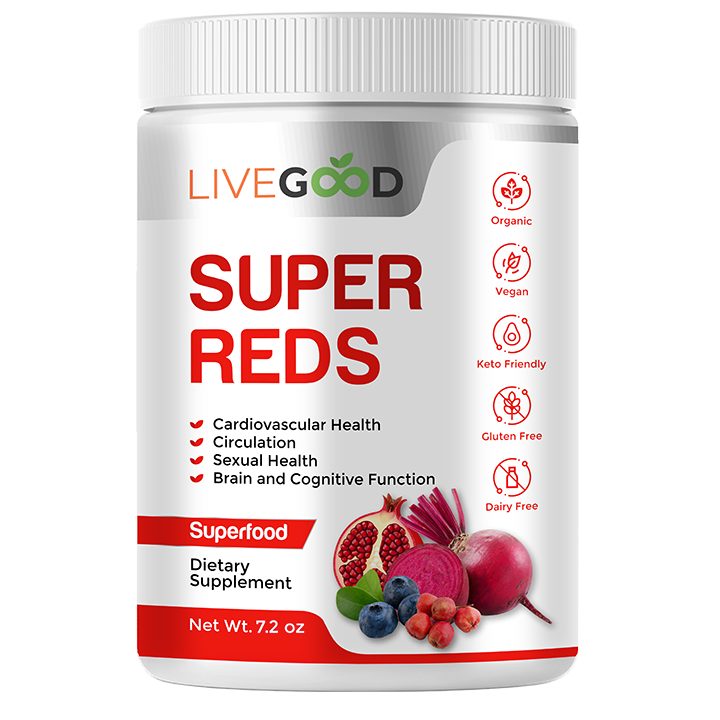
LiveGood Organic Super Reds is a great-tasting red fruit and vegetable extract powder formulated to support the body's production of nitric oxide and healthy blood circulation. Mix it with water or a smoothie, whether you prefer it before training or as an afternoon pick-me-up. Follow the label directions and test your timing during training. It is $19.95 for members versus $34.95 retail, supporting LiveGood's promise: "Highest Quality. Lowest Prices. Every Day."
The Mouthwash Problem
The nitrate pathway depends partly on bacteria living on your tongue and elsewhere in your mouth. After you consume nitrate, your salivary glands concentrate some of it in saliva. Certain oral bacteria convert that nitrate into nitrite. You swallow the nitrite, and the body can use it as part of the pathway that produces nitric oxide.
Strong antibacterial mouthwash can reduce those bacteria. Research suggests this may blunt the rise in nitrite after a nitrate-rich meal or beetroot serving. In practical terms, you could carefully time beetroot before a run and still weaken the pathway by using an antiseptic rinse during the conversion window.
You do not need to abandon normal dental care. Brushing your teeth is not the same as using a strong antibacterial mouthwash, and good oral hygiene still matters. If you use mouthwash by choice, consider avoiding antibacterial rinses immediately before your nitrate serving and during the 2-3 hours before your run. Studies use different rinse products and schedules, so there is no universally proven cutoff that fits everyone.
Antibacterial mouthwash can disrupt the oral bacteria involved in converting dietary nitrate.
Do not stop a dentist-recommended or prescribed oral rinse without asking the professional who advised it. Your dental needs take priority over a possible performance effect. You can also discuss whether a non-antibacterial alternative is appropriate.
The mouthwash issue helps explain why responses differ between runners. Diet and training status matter, but oral bacteria, recent dental routines, digestion, and individual nitrate metabolism matter too. If beetroot appears to do nothing, review the whole routine before assuming you need a larger serving.
Side Effects and Race Day Caution
Nitrate-rich foods and beetroot products are generally tolerated by many runners, but side effects can occur. The most common problems are digestive. You may experience nausea, stomach discomfort, gas, loose stool, or an urgent bathroom trip. Concentrated juice or powder can be harder on the stomach than a familiar whole food, especially when taken close to hard exercise.
Beetroot can also turn urine or stool pink or red. This is called beeturia and is usually harmless. Still, do not automatically blame beetroot if discoloration is unexplained, persistent, or accompanied by pain or other symptoms. Seek medical advice when something does not seem normal.
Some people report headaches, flushing, or lightheadedness after products formulated to support nitric oxide production. Stop using a product if you feel unwell. Talk to your doctor before using a nitrate or nitric oxide support supplement if you take prescription medication, are pregnant or breastfeeding, have kidney or liver concerns, or live with an existing medical condition. People with kidney concerns may need individualized guidance about ingredients such as potassium or oxalates in concentrated plant products.
Competitive runners should also pay attention to supplement quality and anti-doping risk. Ingredient labels do not always reveal contamination. Choose products carefully and follow the rules of your sport.
Most importantly, never try beetroot, a nitrate supplement, or a new pre-workout routine for the first time on race day. Test it before a normal training run, then before a harder session. Use the same serving, timing, meal, and hydration plan you expect to use in competition. Consistency gives you useful information and lowers the chance of a preventable stomach problem at the starting line.
Frequently Asked Questions
Does nitric oxide help running performance?
Nitric oxide support may improve performance for some runners, particularly during shorter, harder efforts. Research on dietary nitrate suggests possible improvements in exercise efficiency or time to exhaustion, but results are mixed. Recreational runners tend to show clearer effects than highly trained endurance athletes. Any benefit is likely to be modest and should be viewed as an addition to training, fueling, hydration, and recovery.
How long before a run should you take beetroot?
Take beetroot about 2-3 hours before your run if you are using it for its dietary nitrate content. This allows time for nitrate to be absorbed and converted through the oral bacteria pathway. Product nitrate levels vary, so follow the label directions rather than copying a study dose. Test the same timing during training before using it for a race.
Do trained runners benefit from nitrate?
Highly trained runners may benefit, but studies often find smaller or no improvements in this group. Years of endurance training already create efficient oxygen delivery and energy production, leaving less room for nitrate to produce a measurable change. Responses still differ by athlete and event. Several comparable workouts provide a more useful test than judging the effect from one run.
Does mouthwash affect nitric oxide?
Yes, antibacterial mouthwash can interfere with the oral bacteria that help convert dietary nitrate into nitrite. That may reduce the amount available for the body's nitric oxide pathway. Avoiding strong antibacterial rinses around a pre-run nitrate serving may help preserve the process. Do not discontinue a prescribed or dentist-recommended rinse without discussing it with your dental professional.
Are there side effects for runners?
Yes, possible side effects include nausea, stomach discomfort, gas, loose stool, headache, flushing, or lightheadedness. Beetroot may also temporarily color urine or stool pink or red. Try it during training rather than on race day. Talk to your doctor first if you use prescription medication, are pregnant or breastfeeding, have an existing medical condition, or have kidney or liver concerns.