
Take Sea Moss, Shilajit, and Ashwagandha Together?
 Written by Ben Glinsky
Ask AI about this article and Himalayan Shilajit & Organic Sea Moss





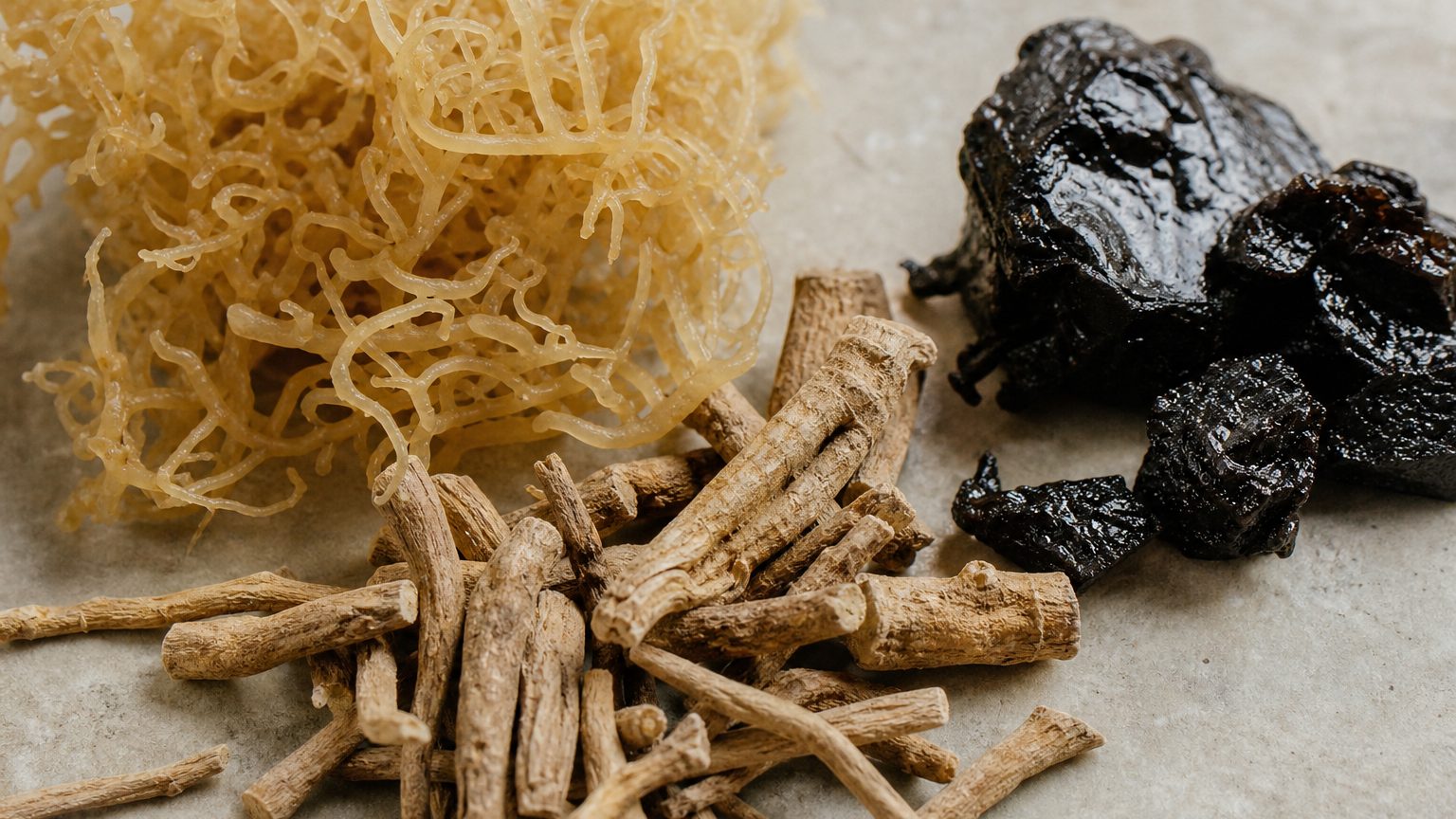
You can take sea moss, shilajit, and ashwagandha together, but the combination has not been adequately studied in humans. Because their effects and safety concerns can overlap, check with your doctor and introduce them carefully rather than starting all three at once.
Key Takeaways
- Limited combination research: No strong clinical studies have tested sea moss, shilajit, and ashwagandha as one supplement routine.
- Possible overlap: All three may affect areas such as thyroid function, digestion, energy, or medication response.
- Start separately: Introduce one product at a time while following its label so you can identify unwanted effects.
- Check the totals: Avoid stacking several products that contain the same ingredients, especially iodine-rich sea moss.
- Quality matters: Choose sea moss and shilajit products with credible testing for heavy metals and other contaminants.
Can You Take Them Together?
For many generally healthy adults, sea moss, shilajit, and ashwagandha may be compatible when used according to their product labels. However, saying they can be combined is not the same as proving that the combination is beneficial or risk-free.
Researchers have studied these ingredients separately, but there is little direct research on taking all three together. There is no established combined dose, no agreed best ratio, and no reliable evidence that taking the trio produces greater results than taking one ingredient alone.
That distinction matters because combination products can make it difficult to identify which ingredient is helping or causing an unwanted effect. Digestive discomfort, headaches, changes in alertness, or other symptoms may be harder to trace if you begin three supplements on the same day.
If your main question is whether you can take sea moss and shilajit together without ashwagandha, the answer is similar. The two ingredients appear together in supplements, but clinical evidence on the pairing remains limited. Their mineral content and product quality deserve more attention than claims about synergy.
Your health history also changes the answer. Ask your doctor before combining these ingredients if you take prescriptions, have an existing medical condition, are pregnant or breastfeeding, or have kidney, liver, or thyroid concerns.
What Each Ingredient Provides
Sea moss is a type of red algae. It contains minerals, but its nutrient profile varies substantially with the species, growing location, processing method, and serving size. Sea moss can supply iodine, a mineral that supports normal thyroid hormone production, but more iodine is not automatically better.
Clinical evidence for sea moss supplements is sparse. Many claims online rely on its nutrient content rather than trials showing how a specific serving affects people. Its iodine level can also be difficult to predict unless the manufacturer tests and reports it.
Shilajit is a dark, mineral-rich substance collected primarily from mountainous rock. It contains fulvic acid and other compounds, although its composition depends on where and how it is collected. Small studies on purified shilajit have explored areas such as physical performance and male hormone levels, but the evidence is not strong enough to assume every shilajit product provides the same effects.
Ashwagandha is an herb traditionally used in Ayurveda. Research on ashwagandha suggests that certain standardized extracts may support the body's response to occasional stress and may promote sleep quality in some adults. Results are mixed, and studies use different extracts and amounts, so their findings do not apply equally to every product.
Together, the ingredients may offer minerals and plant compounds, but the idea that they produce special combined benefits remains unproven. For a closer look at the first two ingredients, see what to know about shilajit and sea moss.
Understand the Main Safety Concerns
The biggest sea moss concern is variable iodine content. Both too little and too much iodine can disrupt normal thyroid function, and adding sea moss to a multivitamin, kelp product, or iodine supplement may raise your total intake more than expected. Ask your doctor before using sea moss if you have a thyroid condition or take thyroid medication.
Seaweed can absorb heavy metals and other substances from its environment. Shilajit may also contain heavy metals or microbial contaminants when it is collected or processed poorly. Unpurified shilajit should not be consumed, which makes transparent sourcing and finished-product testing especially relevant.
Ashwagandha can cause digestive discomfort, nausea, drowsiness, or headaches in some people. Rare liver-related reactions have also been reported. Stop using it and contact a healthcare professional if you notice concerning symptoms such as yellowing skin or eyes, unusually dark urine, or persistent abdominal discomfort.
Ashwagandha may affect thyroid activity, alertness, blood sugar response, and immune activity. Shilajit may also influence blood sugar response, while sea moss contributes iodine. These possibilities do not prove that the combination will cause a problem, but they explain why prescriptions and existing medical conditions require professional review.
Do not assume that natural ingredients are automatically gentle. Concentrated extracts can act differently from foods, and using several products at once can increase your total exposure. Follow each label, and do not exceed directions in an attempt to get quicker results.
How to Combine Them Carefully
First, review every supplement you already use. Look for sea moss, kelp, iodine, shilajit, ashwagandha, or proprietary blends that could create accidental duplication. Include multivitamins, drink powders, gummies, and herbal formulas in that review.
Next, introduce one new product at a time while following its label directions. Keeping the rest of your routine consistent for several days gives you a clearer view of your tolerance. Record the product, timing, food intake, and any changes you notice instead of relying on memory.
You do not need to take all three at the same moment. Ashwagandha timing often depends on the individual product and how it makes you feel. Some people prefer it later in the day, while others use it earlier. Sea moss and shilajit timing should likewise follow the specific product label rather than a universal online schedule.
If separate labels give conflicting instructions, ask your doctor, pharmacist, or the manufacturers instead of improvising a combined amount. Stop and seek medical advice if you develop a persistent or concerning reaction. Supplements should support a steady routine that also includes adequate food, hydration, movement, and sleep.
For a combined sea moss and shilajit option, Himalayan Shilajit & Organic Sea Moss is available at member $15.95 vs retail $34.95. For best results, take 2 capsules daily with a glass of water. Best taken on an empty stomach. If you add ashwagandha, follow its separate label and introduce it at another point in your routine so you can track your response without duplicating sea moss or shilajit.
Know When to Ask Your Doctor
Talk with your doctor before taking this combination if you use prescription medication. This is particularly relevant for thyroid medication, sedatives, immune-modifying drugs, and medicines that affect blood sugar. Your pharmacist can also help identify ingredient and medication overlaps.
Pregnant or breastfeeding adults should not start this combination without medical guidance. Ashwagandha is generally avoided during pregnancy unless a qualified clinician specifically advises otherwise. Children should use these ingredients only under the direction of their pediatric healthcare professional.
You also need individualized advice if you have kidney, liver, thyroid, autoimmune, or other existing medical conditions. Sea moss may contribute meaningful iodine, while ashwagandha has been associated with changes in thyroid markers and rare liver reactions. Shilajit's mineral content and variable composition add another reason for caution.
Stop taking the new supplement and seek prompt medical care for signs of a serious reaction, such as trouble breathing, facial swelling, fainting, or severe vomiting. For less urgent but persistent effects, stop the newest addition and contact your healthcare professional.
A clinician can assess your complete routine rather than viewing each bottle in isolation. Bring photographs of the Supplement Facts panels or the containers themselves, since ingredient amounts, extracts, and added nutrients differ between brands.
Choose Quality and Set Expectations
Product testing matters because sea moss and shilajit come from natural environments where contaminants may be present. Look for a manufacturer that tests finished products for heavy metals and clearly identifies serving sizes and ingredient amounts. A vague claim that an ingredient is pure does not provide the same information as documented testing.
LiveGood's Himalayan Shilajit & Organic Sea Moss is Third Party Tested and Heavy Metal Tested. It is also GMP Certified, Non GMO, Vegan, Gluten Free, Soy Free, and made in an FDA Registered Facility, among its listed certifications. An FDA Registered Facility does not mean that the FDA has approved the supplement or confirmed its results.
Set realistic expectations even with a well-tested product. Research on ashwagandha suggests that any noticeable support may take consistent use over several weeks, and individual responses vary. Evidence for supplemental sea moss is much thinner, while shilajit research remains limited and often depends on a specific purified preparation.
Do not judge the routine by dramatic day-one sensations. A supplement that makes you feel intensely stimulated, unusually sleepy, or unwell is not necessarily working better. Track practical measures such as consistency, tolerance, and whether the routine fits your goals.
Finally, reconsider whether you need all three. If one ingredient meets your needs, adding two more may increase cost and complexity without adding a proven benefit. A simple, consistent routine is usually easier to evaluate than a large supplement stack.