
When Should You Take Collagen?
 Written by Nauder Khazan
Ask AI about this article and Collagen Peptides






You can take collagen before, with, or after meals. There is no good evidence that one option meaningfully improves absorption, so the best time is the one you can maintain. Below, we explain the empty stomach claim, morning and nighttime routines, and what actually matters for results.
Key Takeaways
- Choose any convenient time: Collagen can be taken before, with, or after a meal.
- Skip the empty stomach rule: Food has not been shown to block collagen peptide absorption.
- Keep coffee on the menu: Normal coffee temperatures do not meaningfully destroy collagen peptides.
- Follow a repeatable routine: Regular use matters more than morning, nighttime, or meal timing.
- Allow realistic time: Research usually evaluates consistent use over weeks or months, not immediate changes.
Does Timing Actually Matter?
For most people, collagen timing barely matters. You can take it before breakfast, after lunch, with an afternoon drink, or in the evening. No strong evidence shows that taking collagen before or after meals produces better overall results.
Collagen is a protein. When you consume it, digestive enzymes break it into amino acids and small protein fragments called peptides. Your intestines absorb those components, and your body decides how to use them. They join the same general pool of building materials supplied by the other proteins in your diet.
Hydrolyzed collagen has already been broken into smaller pieces during manufacturing. That is what "hydrolyzed" means. It helps the powder dissolve and makes the collagen easier to digest, but digestion still takes place whether your stomach is empty or contains food.
Most collagen research does not directly compare the same supplement before meals versus after meals. Studies often specify a schedule so participants follow the same routine, but that does not prove the chosen time is better. Without well-designed, head-to-head trials, claims about a perfect absorption window go beyond the evidence.
Your goal does not create a proven timing rule either. There is no established best hour for skin, hair, nails, joints, bones, muscle, or weight management. If you want more background on how the ingredient works, see what collagen peptides do for your health.

Collagen peptides are digested and absorbed whether you take them before, during, or after a meal.
The Empty Stomach Myth
The advice to take collagen on an empty stomach usually rests on a simple idea: if no other food is present, collagen will not have to compete for digestion or absorption. That sounds reasonable, but it does not reflect how protein digestion normally works.
Your digestive system is designed to process mixed meals. Stomach acid and digestive enzymes continue working when carbohydrates, fats, and other proteins are present. Eating does not switch off collagen digestion. Although nutrients can sometimes affect one another, there is no good evidence that an ordinary meal blocks collagen peptides or makes them ineffective.
An empty stomach also does not guarantee faster or better results. Your body may absorb amino acids over a different period when food is present, but absorption speed is not the same as a meaningful long-term outcome. A faster appearance in the bloodstream would not prove better support for skin, joints, or other tissues.
You can still choose an empty stomach if it feels convenient. Some people like taking collagen immediately after waking because it creates an easy reminder. Others feel more comfortable taking supplements with food. If collagen causes mild fullness, an unpleasant taste, or digestive discomfort, mixing it into a meal or taking it shortly afterward may be easier.
Remember that collagen is a source of protein and calories. It would generally break a strict fast, even if it is unflavored. If fasting is part of your routine, place collagen inside your eating window rather than assuming it counts as calorie-free.

Taking collagen without food is optional because an empty stomach has no proven absorption advantage.
Reasons People Pick Morning
Morning is popular because it offers several reliable habit cues. You might keep the container near your coffee maker, add a serving to breakfast, or mix it into a smoothie before leaving home. These cues reduce the chance that you will forget later.
Coffee is fine for collagen peptides. The heat in a normal cup of coffee does not meaningfully destroy them. Hydrolyzed collagen has already been processed using controlled heat and enzymes, and ordinary beverage preparation does not make it useless. You can stir it into hot coffee, tea, oatmeal, or another food as directed on the label.
Breakfast may also be a comfortable choice if supplements bother your stomach. Taking collagen with yogurt, oats, eggs, fruit, or another meal does not cancel its absorption. Fruit can provide vitamin C, a nutrient your body needs to make its own collagen. However, you do not need to take collagen and vitamin C at precisely the same moment.
Some active people take collagen in the morning because they train early. Limited research has examined collagen or gelatin near exercise, sometimes paired with vitamin C. That does not establish one universal pre-workout window, and collagen should not replace complete dietary proteins. Complete proteins provide all nine essential amino acids, meaning the protein building blocks your body cannot make by itself.
Choose morning if it makes your routine automatic, not because the clock creates a special absorption advantage. If coffee or breakfast happens every day, either can be a practical anchor.

Coffee, smoothies, and breakfast foods can all provide a convenient home for a daily collagen serving.
Reasons People Pick Night
Nighttime works well if your evenings are more predictable than your mornings. You might mix collagen into water, herbal tea, yogurt, or another snack. Taking it after dinner is also fine, and you do not need to avoid eating afterward.
You may hear that collagen works better at night because the body repairs tissues during sleep. The body does carry out maintenance processes overnight, but those processes also occur throughout the day. There is no solid evidence that swallowing collagen immediately before bed delivers more of it to skin, joints, muscles, or bones.
Collagen naturally contains glycine, an amino acid involved in many normal body processes. Research on glycine has prompted interest in nighttime collagen, but collagen supplements have not been established as treatments for insomnia or other sleep conditions. Our article on whether collagen peptides can help you sleep better looks more closely at that limited evidence.
Comfort matters when choosing an evening schedule. If a large drink makes you wake to use the bathroom, take collagen earlier or use less liquid while still following the product directions. If taking supplements close to bedtime causes fullness or digestive discomfort, move the serving to dinner. That adjustment is about comfort and consistency, not lost effectiveness.
Night is a reasonable choice when it helps you remember. It is not inherently better than morning, and taking collagen earlier will not cause you to miss a special overnight window.
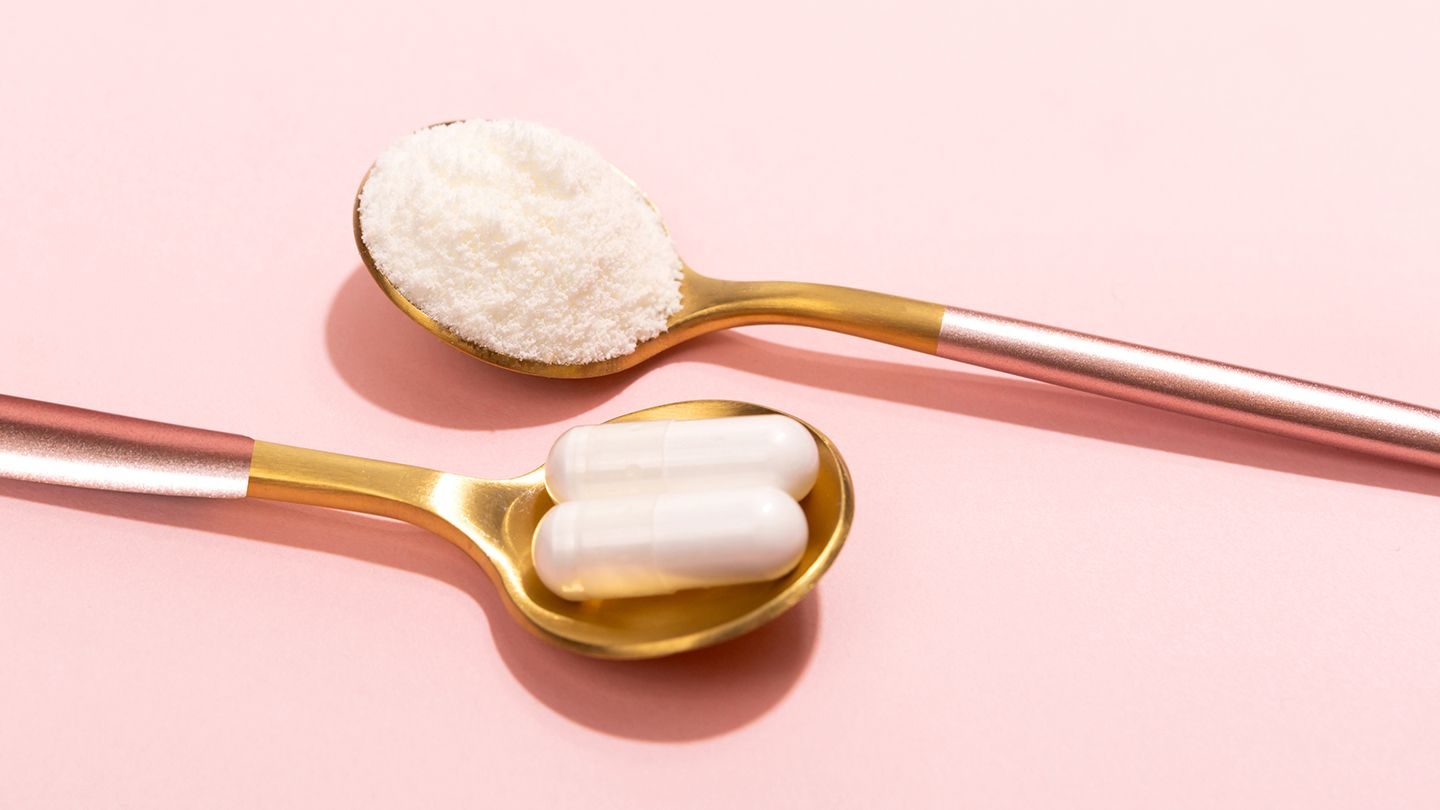
An evening collagen routine can be practical, although nighttime has no established advantage over morning.
What Matters More Than Timing
Consistency is the practical priority. Pick one routine you already follow, such as making coffee, eating lunch, preparing a smoothie, or cleaning up after dinner. Keep the collagen where that activity happens, then follow the serving directions on its label.
Your overall diet matters too. Collagen supplies useful amino acids, especially glycine, proline, and hydroxyproline. However, it is not a complete protein and should not replace varied protein foods. Your body also needs vitamin C to produce its own collagen. Citrus fruit, berries, peppers, tomatoes, broccoli, and other fruits and vegetables can help supply it. You do not need an elaborate food combination or a precisely timed vitamin C dose.
Set realistic expectations. Collagen is not something most people feel working immediately. Research generally evaluates changes after weeks or months of regular intake, and findings depend on the outcome, formula, amount, and study quality. Evidence for some uses is promising, but it is not equally strong for every claim. Supplements also support a healthy routine rather than replacing sleep, balanced nutrition, exercise, or medical care.
Check the source of a collagen product if you have food allergies or dietary restrictions. Collagen can come from bovine, marine, porcine, or poultry sources. Follow the label rather than increasing the serving to chase faster results.
If you are pregnant or breastfeeding, take prescription medication, have kidney or liver concerns, or live with another medical condition, talk to your doctor before starting collagen. This is especially useful when a formula includes ingredients beyond collagen peptides.
A repeatable routine, balanced diet, and realistic timeline matter more than precise collagen timing.
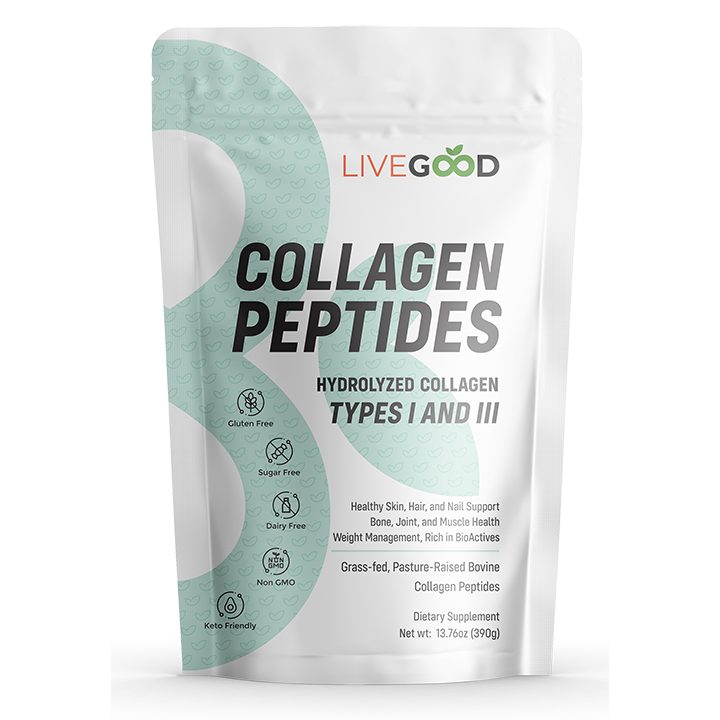
LiveGood Collagen Peptides combines hydrolyzed collagen types I and III and is the first and only collagen product that also includes Velositol, Polynol, and ApresFlex. Mix it into a daily drink and follow the label directions. The formula supports skin elasticity, hair and nail growth, joint function, muscle and bone structure, and healthy weight management. Members pay $29.95 versus $49.95 retail, helping make a consistent wellness routine more accessible.
Frequently Asked Questions
Should you take collagen before or after meals?
You can take collagen before or after meals because neither option has been shown to be meaningfully better. Choose the schedule that is easiest to repeat and most comfortable for your stomach. If collagen feels unpleasant without food, take it with breakfast, lunch, dinner, or a snack. There is no required waiting period before eating.
Is it better to take collagen on an empty stomach?
No, taking collagen on an empty stomach has no proven absorption advantage. Your digestive system can break down collagen peptides alongside a regular meal, just as it processes other dietary proteins. An empty stomach is acceptable if you prefer it, but food does not appear to block the collagen or prevent your body from absorbing its components.
Can you take collagen with coffee?
Yes, you can mix collagen peptides into coffee. The temperature of a typical hot drink does not meaningfully destroy hydrolyzed collagen peptides. Stir the powder thoroughly and follow the product's preparation directions. Coffee does not create a proven absorption benefit, but pairing collagen with a daily cup can make the habit easier to remember.
Should you take collagen at night?
You may take collagen at night, but nighttime is not proven to work better than morning or afternoon. It can be a useful schedule if dinner or an evening drink is your most reliable daily cue. You can also eat after taking it. If it causes fullness near bedtime, move the serving earlier or take it with dinner.
How long before collagen does anything?
Collagen does not usually produce an immediate, noticeable effect. Studies commonly evaluate skin-related outcomes after roughly 8 to 12 weeks, while joint-related research may last several months. Results vary, and the evidence is mixed across products and goals. Follow the label consistently, track changes realistically, and do not assume that taking more will make them appear faster.