
Can You Take Greens Powder and Collagen Together?
 Written by Nauder Khazan
Ask AI about this article and Collagen Peptides





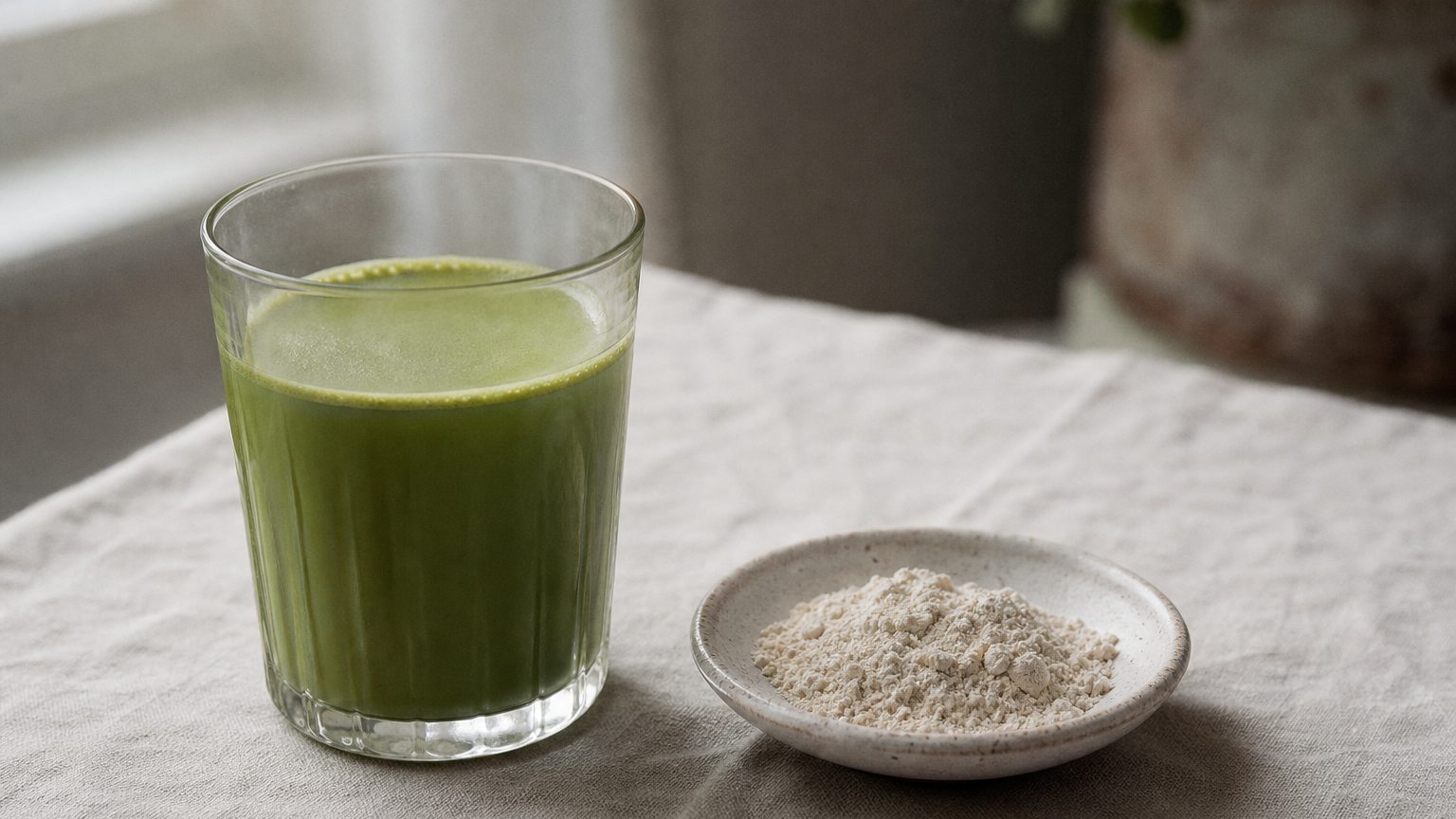
Yes, you can take greens powder and collagen together. For most healthy adults, there is no known reason these supplements must be separated, and the vitamin C in many greens blends supports the body's normal collagen formation. The details that matter most are the labels, taste, texture, protein timing, and how your stomach responds.
Key Takeaways
- Taking them together is usually fine: Greens powder and collagen peptides do not have a known competition that makes the combination ineffective.
- Vitamin C has a useful role: Your body needs vitamin C for normal collagen formation, and many greens blends provide some.
- Timing is flexible: Consistency matters more than taking either supplement at an exact hour.
- Collagen is not complete protein: It can contribute protein, but it should not replace complete protein around training or in your regular diet.
- Taste may decide your routine: A smoothie can improve the earthy flavor and sometimes gritty texture of the combined powders.
The Short Answer
You can generally mix greens powder and collagen in the same drink. They have different nutritional roles, and there is no established conflict between plain collagen peptides and the usual plant ingredients in a greens blend.
Collagen is a structural protein found throughout the body. Collagen supplements commonly contain hydrolyzed collagen, which means the protein has been broken into smaller pieces called peptides. Those peptides are easier to dissolve and digest than intact collagen. Once consumed, they are broken down further and used as part of the body's overall pool of amino acids, the building blocks of protein.
Greens powders vary much more. One formula may contain powdered vegetables, fruits, grasses, algae, herbs, vitamins, minerals, fiber, digestive enzymes, or probiotics. Another may have only a few plant ingredients. This variation is why the label matters more than the word "greens" on the front of the package.
Taking the two together does not guarantee an extra benefit beyond what each provides. Research has not established that a greens and collagen mixture produces unique results simply because the powders share a glass. Still, the pairing can be practical. It combines collagen peptides with plant nutrients in one repeatable routine, and some greens powders supply vitamin C.

Greens powder and collagen peptides can usually share the same drink when both are prepared according to their labels.
If you are new to either supplement, try each one separately first. That makes it easier to identify the cause if you dislike the flavor or experience digestive discomfort. Always use the labeled serving rather than adding extra scoops because two powders are being combined.
Why the Vitamin C Point Matters
Vitamin C is required for the body's normal production of collagen. It acts as a helper for enzymes involved in forming and stabilizing collagen fibers. In plain language, your body cannot build collagen normally without enough vitamin C.
That makes a vitamin C-containing greens powder a sensible companion to collagen peptides. Fruits and vegetables are natural vitamin C sources, and some greens formulas also add vitamin C as a listed nutrient. Check the Supplement Facts panel instead of assuming every green powder provides a meaningful amount. Ingredients such as leafy greens may sound vitamin-rich, but processing, storage, and serving size can affect the amount in the finished powder.
There is an important distinction here. Vitamin C supports collagen formation inside your body, but it is not clearly shown to make collagen peptides pass through your digestive system more efficiently. Collagen is digested like other dietary proteins. So the accurate message is not that vitamin C dramatically "boosts collagen absorption." It is that vitamin C participates in the biological process your body uses to make its own collagen.

Vitamin C supports the body's normal collagen formation rather than acting as a proven collagen absorption booster.
You also do not need collagen and vitamin C to arrive in the exact same mouthful. If your regular diet provides enough vitamin C, taking the supplements at different times is unlikely to undermine collagen formation. Combining them is mostly a convenient way to keep both in your routine.
More is not automatically better. Follow each label, account for vitamin C in other supplements, and avoid adding a high-dose product solely because you are using collagen. The most useful approach is adequate daily nutrition, not chasing an oversized single serving.
Mixing Them Without Ruining the Taste
The main downside of mixing greens and collagen is often sensory, not nutritional. Unflavored collagen peptides are usually mild, but greens powders can taste earthy, grassy, sweet, tart, or strongly flavored. Combining two flavored products can create an unpleasant result even when each tastes good alone.
Start with a simple flavor check. Stir a small labeled portion of each prepared drink together before committing both full servings to one glass. Citrus, berry, pineapple, mango, and apple flavors often complement greens. Chocolate, coffee, or creamy collagen flavors may clash with a tart green blend. Personal preference matters more than a universal mixing rule.
Texture also needs attention. Add liquid first, followed by the powders. A shaker bottle works for powders that disperse easily, while a blender is better when the greens contain noticeable plant particles or fiber. Using more liquid can reduce thickness. Cold or room-temperature liquid usually keeps the flavor fresher, although you should follow the product label if it gives specific mixing instructions.
A smoothie can hide both earthy flavor and chalkiness. Try banana or mango for body, berries or citrus for brightness, and water, milk, or a plant-based beverage for the liquid. Yogurt, oats, or nut butter can make the drink thicker, so use them only if that is the texture you want. For more ideas, see these super greens smoothie recipes.

Fruit and extra liquid can make a greens and collagen smoothie smoother and more pleasant to drink.
Avoid preparing several days of mixed drinks unless the labels say that is appropriate. Flavor and texture may deteriorate during storage, and some formulas contain live probiotics or other ingredients with specific handling directions. Preparing the drink when you plan to consume it is the simplest option.
Timing Around Meals and Training
There is no proven best hour for taking greens and collagen together. Choose a time that helps you follow the label consistently. Breakfast works well for many people because both powders can go into one smoothie. Others prefer them with lunch or after exercise.
Taking the mixture with food may be more comfortable if greens powder causes nausea, bloating, or an unsettled stomach when taken alone. A meal can also provide fat, carbohydrates, and complete protein that are not necessarily present in the supplement drink. If the product label directs you to take it differently, follow that instruction.
Collagen contributes protein, but it is not considered a complete protein. A complete protein provides all nine essential amino acids, which your body cannot make on its own, in useful proportions. Collagen is particularly low in some amino acids needed for building muscle, including leucine, an amino acid that helps signal muscle protein production.
That means collagen should not replace a balanced meal or a complete post-workout protein source. If muscle support is your goal, pair your routine with foods such as eggs, dairy, fish, poultry, meat, soy, or an appropriate complete protein powder. Collagen can still fit alongside those foods. You can read more about what collagen peptides do for your health.
Collagen can fit into a post-workout routine, but it should not replace complete dietary protein.
Neither powder requires an empty stomach unless its label says otherwise. There is also no need to take collagen immediately after exercise or just before bed. Your total diet and a consistent routine matter more than a narrow timing window. If your greens blend contains caffeine or other stimulating ingredients, however, morning or early afternoon may be more comfortable than bedtime.
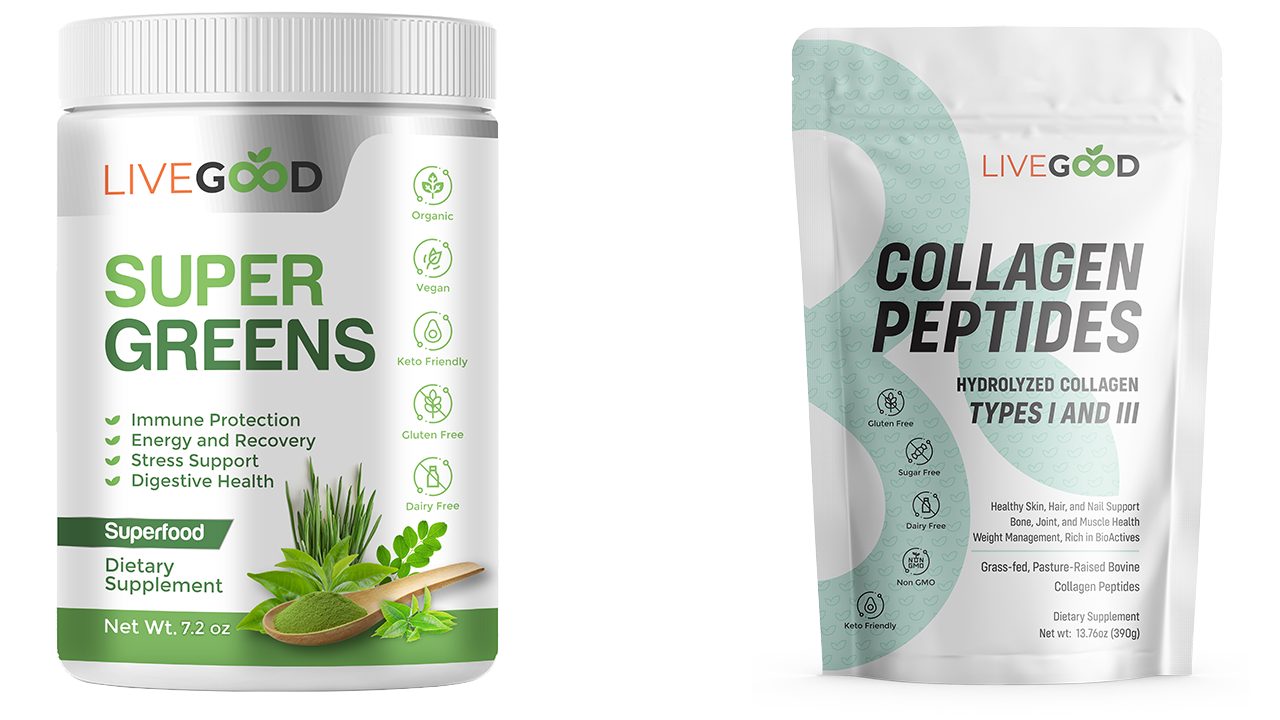
LiveGood Collagen Peptides combines hydrolyzed type I and III collagen with Velositol, Polynol and ApresFlex, making it the first and only collagen product to include all three. It supports skin elasticity, hair and nail growth, joint function, muscle and bone structure, and healthy weight management. Mix it as label directed, alone or with compatible greens. It is $29.95 for members versus $49.95 retail, helping make a consistent wellness routine more accessible.
When to Keep Them Separate
Keeping greens and collagen separate can make sense even when there is no direct ingredient conflict. Taste is the simplest reason. If the combination makes your morning drink hard to finish, take one with breakfast and the other later. A routine you can maintain is more useful than a complicated mixture you dread.
Separation also helps when you are testing tolerance. Greens powders containing fiber, algae, probiotics, sugar alcohols, or concentrated herbs can cause gas, bloating, or loose stools in some people. Collagen can also cause digestive discomfort for some users. Introduce one supplement at a time, use only the labeled serving, and stop using a product if it causes a concerning reaction.
Review allergen and sourcing information. Collagen may come from bovine, marine, chicken, or other animal sources. A person with a fish allergy, for example, should not assume every marine collagen product is suitable. Greens blends may contain wheatgrass, mushrooms, botanicals, or other ingredients that require individual consideration.
Some greens powders supply vitamin K or concentrated herbs that may interact with prescription medications. If you take prescription medicine, do not assume that separating the powder from your medication by a few hours solves a possible interaction. Show the complete ingredient and Supplement Facts panels to your doctor or pharmacist.
Talk to your doctor before using these supplements if you are pregnant or breastfeeding, have a kidney or liver condition, or manage another existing medical condition. People who must limit protein, potassium, or certain vitamins and minerals need advice based on the exact formula.
Finally, follow any product-specific directions. A greens blend with probiotics may have storage or temperature guidance that does not apply to collagen. Separate preparation can help you respect both labels. Supplements can support a nutritious routine, but they do not replace varied food, adequate complete protein, sleep, movement, or medical care.
Frequently Asked Questions
Can you take collagen and greens together?
Yes, most healthy adults can take collagen and greens together when both products are used according to their labels. There is no known general conflict between collagen peptides and common greens ingredients. Check the full formula for allergens, added vitamins, herbs, caffeine, or medication concerns, since greens powders can differ considerably from one product to another.
Does vitamin C help collagen absorption?
Vitamin C supports collagen formation, but it is not clearly shown to improve the digestive absorption of collagen peptides. Your body uses vitamin C as a helper in the process of making and stabilizing its own collagen. You can obtain it from food or a greens blend, and it does not have to be consumed in the exact same sip as collagen.
Should you take collagen and greens at the same time?
You can take collagen and greens at the same time, but doing so is not required. Combining them may make your routine easier, while separate servings may taste better or help you identify the cause of digestive discomfort. Choose the schedule you can maintain, follow both labels, and take the mixture with food if that feels better for your stomach.
Does greens powder affect protein absorption?
A typical greens powder is not expected to meaningfully block protein absorption. Fiber and other ingredients may change digestion speed or how full you feel, but that does not mean the protein is wasted. Formula details matter, so ask your doctor or pharmacist about a specific product if you use medication or have a condition that affects digestion or nutrient intake.
What should you not mix collagen with?
There is no everyday food or drink that everyone must avoid mixing with collagen. The bigger concerns are allergens, conflicting product directions, unpleasant flavors, and greens ingredients that may interact with medication. Do not combine multiple supplements without checking for duplicated vitamins and minerals, and do not exceed either label's directions to imitate a research dose.