
Thymoquinone Black Seed Oil Explained
 Written by Ben Glinsky
Ask AI about this article and Premium Black Seed Oil - 5% Thymoquinone





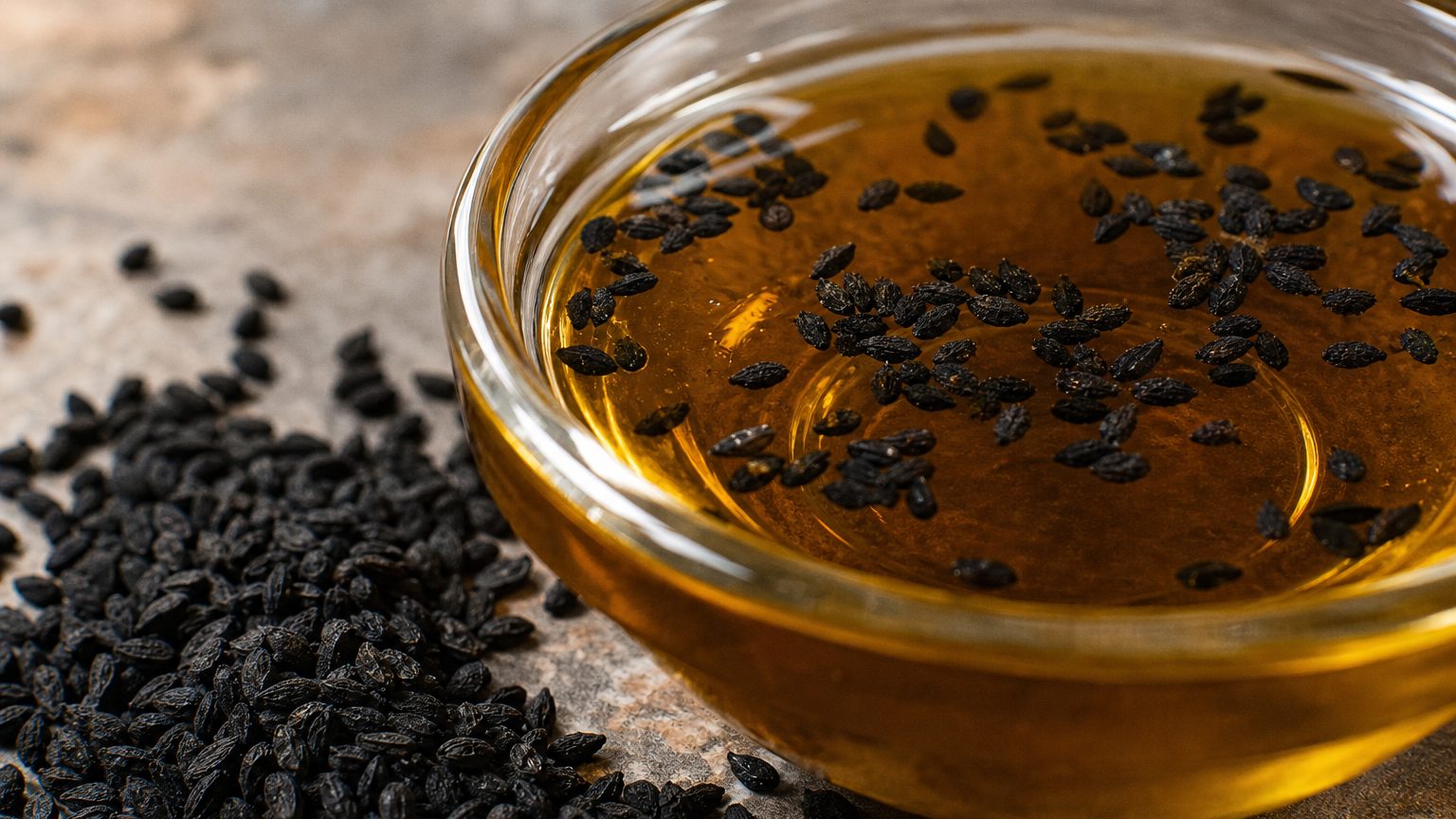
Thymoquinone is a naturally occurring plant compound that accounts for much of the research interest in black seed oil. It may support antioxidant defenses, normal immune function, and a healthy inflammatory response, but human evidence is still developing and often examines whole black seed oil rather than isolated thymoquinone.
Key Takeaways
- Main active compound: Thymoquinone is one of the best-studied natural compounds in Nigella sativa seed oil.
- Percentages need context: A 5% label indicates a standardized thymoquinone concentration, not a guaranteed health outcome.
- Evidence has limits: Laboratory findings are promising, but many human studies use whole black seed or its oil rather than isolated thymoquinone.
- Absorption is challenging: Thymoquinone dissolves in fat but poorly in water, which can affect how much reaches circulation.
- Quality still matters: Testing, storage, oil quantity, and label transparency matter alongside the thymoquinone percentage.
What Thymoquinone Actually Is
Thymoquinone, often shortened to TQ, is a naturally occurring compound found in the volatile portion of black seed oil. Black seed comes from Nigella sativa, a flowering plant also called black cumin, although it is not the same plant as culinary cumin.
Chemically, TQ is a quinone, a type of plant compound that can participate in oxidation and reduction reactions. These reactions involve the movement of electrons between molecules. This activity helps explain why researchers study TQ in relation to antioxidant defenses and cellular signaling.
Antioxidants help the body manage free radicals, which are unstable molecules produced during normal metabolism and in response to environmental stress. Free radicals are not universally harmful, but an excess can contribute to oxidative stress, an imbalance between free radicals and the body's ability to manage them.
TQ is only one part of black seed oil. The oil also contains fatty acids, sterols, and other volatile compounds that may affect its stability, absorption, and overall activity. For that reason, findings from isolated TQ cannot automatically be applied to every black seed oil, and findings from whole oil cannot always be credited to TQ alone.
This distinction is central to understanding the research. If you want a broader look at the oil rather than this individual compound, see the overview of black seed oil benefits.
Why Thymoquinone Percentage Matters
A thymoquinone percentage tells you how much of the oil is represented by TQ according to the manufacturer's specification or testing method. For example, a product standardized to 5% thymoquinone is intended to provide a more defined concentration than an oil that lists no TQ level.
Standardization means manufacturing a product to contain a stated amount or range of a particular compound. It can make products more consistent from one batch to another, but it does not prove that two products with the same percentage are identical. The source material, extraction method, storage conditions, capsule design, and testing method can still differ.
The percentage also needs to be considered alongside the amount of oil in a serving. A high percentage without a clearly stated oil quantity does not tell you the total amount of TQ provided. To interpret a label, look for both the black seed oil amount in the Supplement Facts panel and the standardized TQ percentage.
TQ levels naturally vary among seeds and oils. Plant variety, climate, harvest timing, extraction, heat, light exposure, and storage can all affect the final concentration. Analytical surveys of commercial products have found substantial variation, including differences between label expectations and measured content.
A higher percentage is not automatically better. Human research has not established one universally optimal TQ concentration for every adult or wellness goal. A defined percentage is most useful as a quality and consistency detail, not as a shortcut for predicting results.
What Research Shows
Laboratory and animal research on thymoquinone suggests that it interacts with pathways involved in antioxidant protection, normal immune activity, and the body's healthy inflammatory response. Researchers have examined signaling systems such as nuclear factor kappa B, usually shortened to NF-kB, which helps cells coordinate responses to stress.
These mechanistic findings explain why TQ attracts scientific interest, but they do not establish what a supplement will do in a person. Cell studies can expose isolated cells to concentrations that may not be achievable through ordinary oral use. Animal findings can guide later research, but differences in metabolism make direct comparisons difficult.
Human research presents a second challenge. Many clinical trials investigate Nigella sativa powder, ground seed, or whole black seed oil. They do not always measure the TQ concentration, and they rarely isolate TQ as the only variable. Consequently, researchers cannot assume that every finding came from thymoquinone alone.
Reviews of human studies have reported changes in some markers related to antioxidant status and healthy inflammatory balance. However, study sizes, formulas, durations, and participant groups vary considerably. Some trials also have weaknesses such as limited blinding, short follow-up, or incomplete product analysis.
The honest conclusion is that research on thymoquinone is biologically interesting, while the clinical evidence remains less certain than laboratory headlines may suggest. It supports further study, not a guarantee that a particular black seed oil will produce a specific result. Research on an ingredient also cannot demonstrate that every finished product delivers the same outcome.
Absorption Affects the Evidence
Thymoquinone is lipophilic, meaning it dissolves more readily in fat than in water. This characteristic makes oil a logical carrier, but it does not guarantee efficient absorption. TQ has limited water solubility and can be metabolized relatively quickly after it enters the body.
Scientists use the term bioavailability to describe the proportion of a consumed substance that reaches circulation in a usable form. If a compound has low or variable bioavailability, the amount swallowed may differ significantly from the amount available to tissues.
This helps explain why researchers are studying different delivery systems for TQ. Some experimental approaches use emulsions or very small lipid-based particles to improve stability and dispersion. Findings from these specialized systems should not be transferred to a conventional oil capsule unless the finished product uses and verifies the same technology.
Taking an oil-based supplement with food may support digestive comfort and fits TQ's fat-soluble nature. Still, direct human evidence comparing fed and fasted TQ absorption is limited. The practical reason to take it with a meal is consistency and tolerability, not a proven claim that one specific meal dramatically changes results.
Absorption also varies among individuals. Digestion, meal composition, other supplements, medications, and health status can all affect how your body handles an ingredient. This is one reason a concentration percentage cannot predict your personal response.
How to Compare Black Seed Oils
Start with the botanical name. A black seed oil label should identify Nigella sativa rather than relying only on names such as black cumin, which can refer to different plants in different regions.
Next, check whether the label states a thymoquinone percentage. An unstandardized oil may still contain TQ, but you cannot determine its concentration from the oil amount alone. If a percentage is listed, also find the total black seed oil per serving so you understand what the percentage describes.
Look for evidence of finished-product testing. Useful checks can include identity, microbial quality, heavy metals, and the measured TQ concentration. Third-party testing means an outside laboratory performed testing, but the phrase alone does not explain which tests were completed or whether every batch was assessed. A detailed label or available batch documentation provides more context.
Storage protection matters because TQ and other volatile compounds can be affected by heat, oxygen, and light. Follow the label's storage instructions, keep the container tightly closed, and avoid leaving it in a hot car or direct sunlight.
Do not treat terms such as cold-pressed, organic, or highest potency as interchangeable with a verified TQ level. Cold-pressed describes an extraction approach, while organic refers to agricultural and processing standards when certified. Neither term independently establishes the finished oil's TQ concentration.
Finally, be cautious with rankings that identify a single best or strongest oil based only on percentage. A useful product comparison considers identity, concentration, serving information, testing, storage, and your ability to use the supplement consistently.
How to Use It Consistently
Follow the directions on the specific product rather than copying an amount from a research paper or another brand. Studies use different seed preparations, oil amounts, TQ concentrations, and delivery formats, so their protocols are not interchangeable with ordinary label directions.
Taking black seed oil with food can make it easier to include in a regular routine and may reduce digestive discomfort for some people. There is no well-established evidence that morning or evening use is universally superior. Choose a meal you eat consistently unless the label or your healthcare professional directs otherwise.
Use a glass of water with capsules and swallow them whole unless the label specifically permits another method. Do not double the next serving if you forget one. Resume the labeled routine, or ask a pharmacist if you are uncertain about how the supplement fits with medications.
Consistency matters more than searching for a perfect time of day. Human black seed studies generally evaluate repeated use over weeks rather than immediate effects from a single serving, although study designs and results vary. You may not feel a noticeable change, and the absence of an immediate sensation does not reveal whether a supplement is affecting a measured biological marker.
Keep the product in its original container and follow its storage directions. Protecting an oil from heat, moisture, and light helps maintain product quality throughout normal use.
If you want a standardized option, LiveGood Premium Black Seed Oil lists 5% thymoquinone and is third-party tested. Its label directs you to take two capsules daily with a glass of water, best taken with food. Use the same practical routine with any supplement: follow its own label, pair it with a regular meal, and store it away from heat and light to help maintain consistency and product quality.
Safety and Realistic Expectations
Black seed oil can cause digestive discomfort, nausea, or sensitivity in some people. Stop using it and seek appropriate medical guidance if you develop a concerning reaction. A plant-based ingredient can still cause side effects or interact with other substances.
Talk with your doctor or pharmacist before use if you take prescription medication. TQ and whole black seed preparations may influence enzymes and biological pathways involved in how the body processes certain medicines. The relevance depends on the medication, supplement concentration, and your health, so a product label cannot replace an individualized interaction review.
You should also ask your doctor before use during pregnancy or breastfeeding, with kidney or liver conditions, or with any existing medical condition. Consult a qualified clinician before giving black seed oil or isolated TQ to children. Do not give human supplements to pets unless a veterinarian specifically recommends them.
Avoid exceeding the label in an attempt to get faster results. More TQ may increase exposure, but it has not been shown to guarantee greater support. Supplement research does not establish a universal ideal intake, and concentrated products deserve the same careful use as other dietary supplements.
Set realistic expectations. Black seed oil can support a wellness routine, but it does not replace balanced meals, movement, sleep, prescribed care, or other guidance from your healthcare team. If you choose to use it, focus on a clearly labeled product, consistent use, safe storage, and periodic review of whether it still makes sense for your routine.