
Black Seed Oil vs Fish Oil
 Written by Nauder Khazan
Ask AI about this article and Premium Black Seed Oil - 5% Thymoquinone





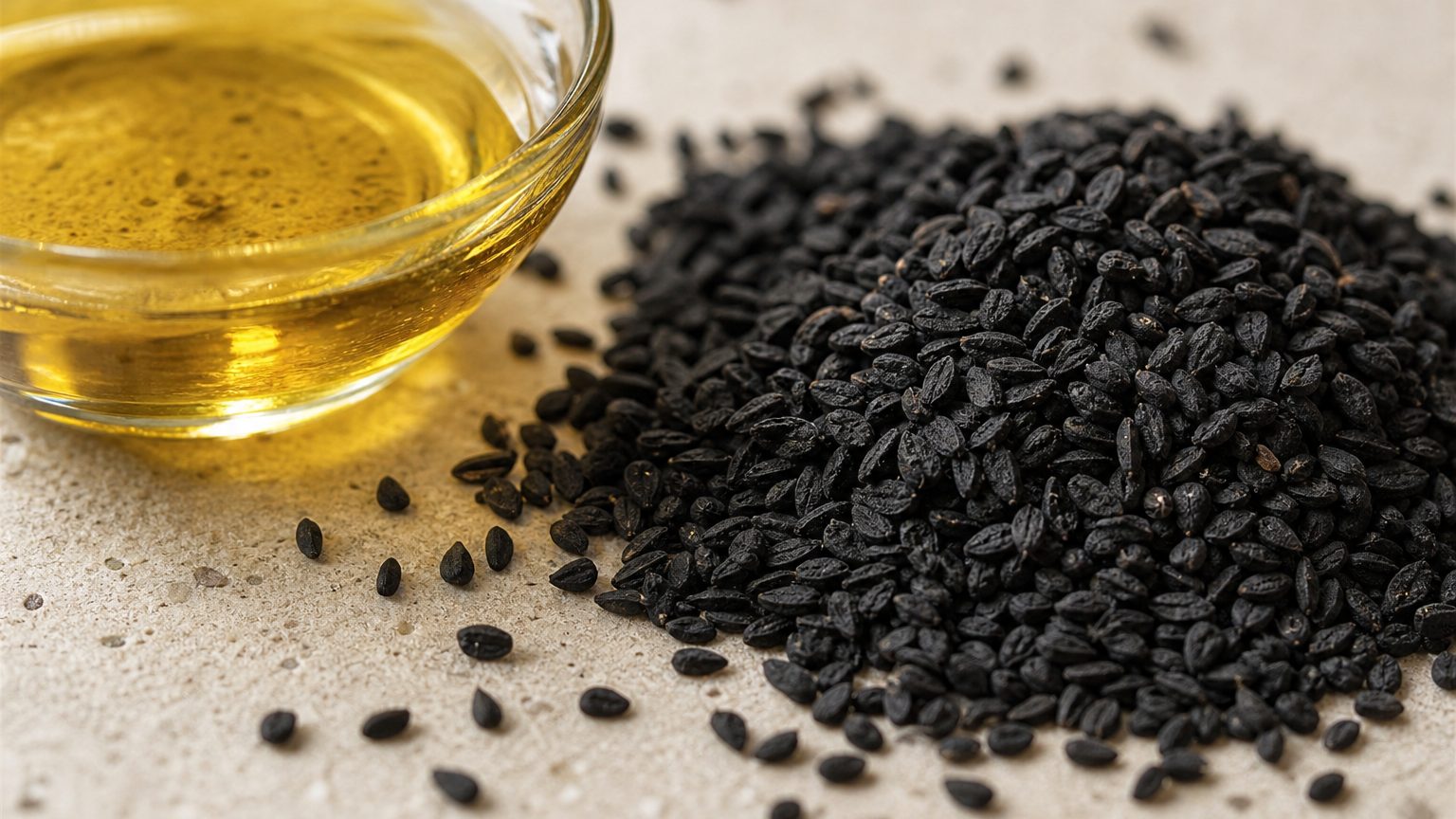
In a black seed oil vs fish oil comparison, fish oil has broader human research on inflammatory-response markers, while black seed oil evidence is promising but less mature. They are not interchangeable: fish oil supplies EPA and DHA, while black seed oil provides thymoquinone and mostly omega-6 and omega-9 fats. Your choice should reflect your goal, diet, tolerability, medications, and clinician's guidance.
Key Takeaways
- Different active compounds: Fish oil supplies EPA and DHA, while black seed oil is primarily valued for thymoquinone.
- Stronger fish evidence: Fish oil has been examined in more human trials, although results still vary by population, dose, and study design.
- Promising seed research: Small studies suggest black seed oil may support a balanced inflammatory response, but larger trials are needed.
- Not omega equivalents: Black seed oil is not a substitute for the long-chain omega-3 fats found in fish oil.
- Combination evidence is limited: You may be able to take both, but research has not established that the combination is better for most people.
The Oils Contain Different Compounds
Fish oil comes from oily fish or fish tissues. Its main active compounds are eicosapentaenoic acid, commonly called EPA, and docosahexaenoic acid, commonly called DHA. These long-chain omega-3 fatty acids become part of cell membranes and help produce signaling compounds involved in the body's normal inflammatory and recovery responses.
EPA and DHA can also contribute to specialized pro-resolving mediators. These are compounds that help the body move an inflammatory response toward resolution after it has served its purpose. This is different from simply blocking every inflammatory signal, since short-term inflammation is a normal part of healing, exercise adaptation, and immune activity.
Black seed oil is pressed from the seeds of Nigella sativa. Its best-known constituent is thymoquinone, often shortened to TQ. Laboratory and animal research suggests TQ interacts with oxidative stress and inflammatory signaling pathways, but those findings cannot automatically predict the size or reliability of an effect in people.
The fatty-acid profile is also different. Black seed oil generally contains more linoleic acid, an omega-6 fat, and oleic acid, an omega-9 fat, than omega-3 fat. Its alpha-linolenic acid content can vary, and it does not provide meaningful amounts of EPA or DHA. If you want more background on Nigella sativa itself, see this overview of black seed oil benefits.
Fish Oil Has Broader Evidence
Research on fish oil includes hundreds of randomized controlled trials, studies in which participants are assigned to different interventions by chance. Researchers have examined EPA and DHA in healthy adults, active people, older adults, and participants with a wide range of health concerns.
Across systematic reviews, fish oil sometimes changes markers such as C-reactive protein, interleukin-6, and tumor necrosis factor alpha. These are substances researchers measure to study inflammatory activity. However, results are mixed. Some reviews report modest changes, while others find little or no meaningful difference.
Several factors may explain the inconsistency. A person who already eats fatty fish regularly may respond differently from someone with a low omega-3 intake. Baseline inflammatory activity, study length, EPA-to-DHA ratio, total EPA and DHA intake, and the quality of the oil may also influence results. A change in a laboratory marker does not necessarily mean that you will feel different or experience a specific health outcome.
Research on black seed oil is smaller and more varied. Several trials and meta-analyses suggest Nigella sativa preparations may affect certain oxidative stress and inflammatory-response markers. Yet many studies have small sample sizes, short timelines, or products with different thymoquinone concentrations. Some use seed powder, while others use oil or extracts, making direct comparisons difficult.
There is also very little high-quality head-to-head research comparing black seed oil with fish oil under the same conditions. Claims that one is categorically stronger than the other therefore go beyond the evidence. For a closer look at the omega-3 findings, read what research shows about fish oil and inflammation.
Your Goal Guides the Choice
Fish oil is the more direct choice if your goal is to add EPA and DHA to a diet that contains little fatty fish. EPA and DHA support heart, brain, eye, and normal inflammatory-response functions. Black seed oil does not fill the same nutritional gap, even though it contains other fatty acids and plant compounds.
Black seed oil may make more sense if you specifically want a Nigella sativa supplement standardized for thymoquinone. Research on this ingredient is developing, but it does not yet have the depth, consistency, or long-term human evidence available for EPA and DHA.
| Consideration | Fish oil | Black seed oil |
|---|---|---|
| Primary compounds | EPA and DHA | Thymoquinone, linoleic acid, and oleic acid |
| Omega-3 source | Yes, if EPA and DHA amounts are listed | Not a meaningful EPA or DHA source |
| Human evidence | Broad but mixed | Promising but smaller and less standardized |
| Dietary role | Can supplement low intake of oily fish | Adds Nigella sativa compounds |
| Common concerns | Fishy aftertaste, oxidation, and medication interactions | Strong taste, digestive discomfort, and medication interactions |
If you avoid fish, black seed oil is not a nutritional replacement for marine omega-3s. An algae-derived EPA or DHA supplement is a closer alternative. If you eat fish several times a week, review your overall intake before assuming you need additional fish oil.
Use Both Oils Carefully
You can sometimes take fish oil and black seed oil together, but there is not enough evidence to say that combining them consistently offers more support than using the ingredient that best matches your goal. Taking more supplements also increases cost, digestive burden, and the chance of an interaction.
Follow each product's label rather than copying an amount used in a study. Fish oil labels can be confusing because the amount of total fish oil is not the same as the amount of EPA plus DHA. Check the individual EPA and DHA amounts per serving, then use the labeled serving unless your health professional advises otherwise. This guide to how much fish oil to take explains how to read those numbers.
Taking either oil with food may reduce stomach discomfort. A meal that contains some dietary fat may also help with absorption. The exact time of day matters less than following the label and choosing a routine you can maintain.
Speak with your doctor before using either supplement if you take prescriptions, are pregnant or breastfeeding, have an existing medical condition, or have kidney or liver concerns. Fish oil and black seed oil may interact with medicines that affect clotting, blood sugar, or blood pressure. Stop using a supplement and seek professional guidance if you experience a suspected allergic reaction or persistent side effects.
If black seed oil matches your goal, LiveGood Premium Black Seed Oil provides a 5% thymoquinone formula and is third-party tested. Follow the label by taking two capsules daily with a glass of water, best taken with food. Using the same meal each day may help you stay consistent. The formula is intended to support antioxidant and immune function alongside, not instead of, a balanced diet and your usual health routine.
Product Quality Changes the Comparison
For fish oil, look beyond the large number on the front of the bottle. A product may list 1,000 milligrams of fish oil while providing a much smaller amount of EPA and DHA. The Supplement Facts panel should identify both, allowing you to compare products based on active omega-3 content rather than total oil weight.
Freshness matters because unsaturated fats can oxidize after exposure to heat, oxygen, or light. Oxidation means the fats chemically degrade. Choose products with sensible storage instructions, intact packaging, and a current expiration date. A strong rancid odor is a reason not to use an oil, although smell alone cannot verify quality.
With black seed oil, thymoquinone concentration provides more useful information than vague claims about seed strength. Oils can vary with seed source, extraction, storage, and testing methods. A standardized TQ percentage makes comparisons easier, though it does not guarantee a particular result.
Third-party testing can confirm that a product was independently evaluated against stated quality specifications. It does not prove that the supplement will produce a specific health outcome. Certifications also apply to individual products, not automatically to every item from the same brand.
Softgels and liquids have practical differences as well. Liquids make taste and freshness easier to notice, while softgels offer convenience and measured servings. The better format is the one you tolerate, store correctly, and use consistently.
Set Realistic Expectations
Neither oil works like an immediate switch. Research trials typically examine consistent use over weeks or months, and some report no meaningful difference from a comparison group. Your starting diet, omega-3 status, health, activity level, and the product's composition can all affect what happens.
Supplements also cannot compensate for an inconsistent daily routine. A varied diet, adequate sleep, regular movement, stress-management habits, and appropriate medical care have broader roles in supporting a healthy inflammatory response. Oils can complement those habits, but they should not replace them.
For most people comparing black seed oil vs fish oil, the clearest distinction is nutritional. Choose fish oil when you want EPA and DHA and do not obtain much from food. Consider black seed oil when you specifically want standardized thymoquinone and accept that the human evidence is less established.
If you are choosing solely on the amount of research related to inflammatory-response markers, fish oil currently has the stronger evidence base. That does not mean it works equally well for everyone, nor does it make black seed oil ineffective. It means the confidence and volume of human evidence differ, so your expectations should differ too.