
When to Take a Women's Multivitamin
 Written by Nauder Khazan
Ask AI about this article and Bio-Active Complete Multi-Vitamin for Women with Iron





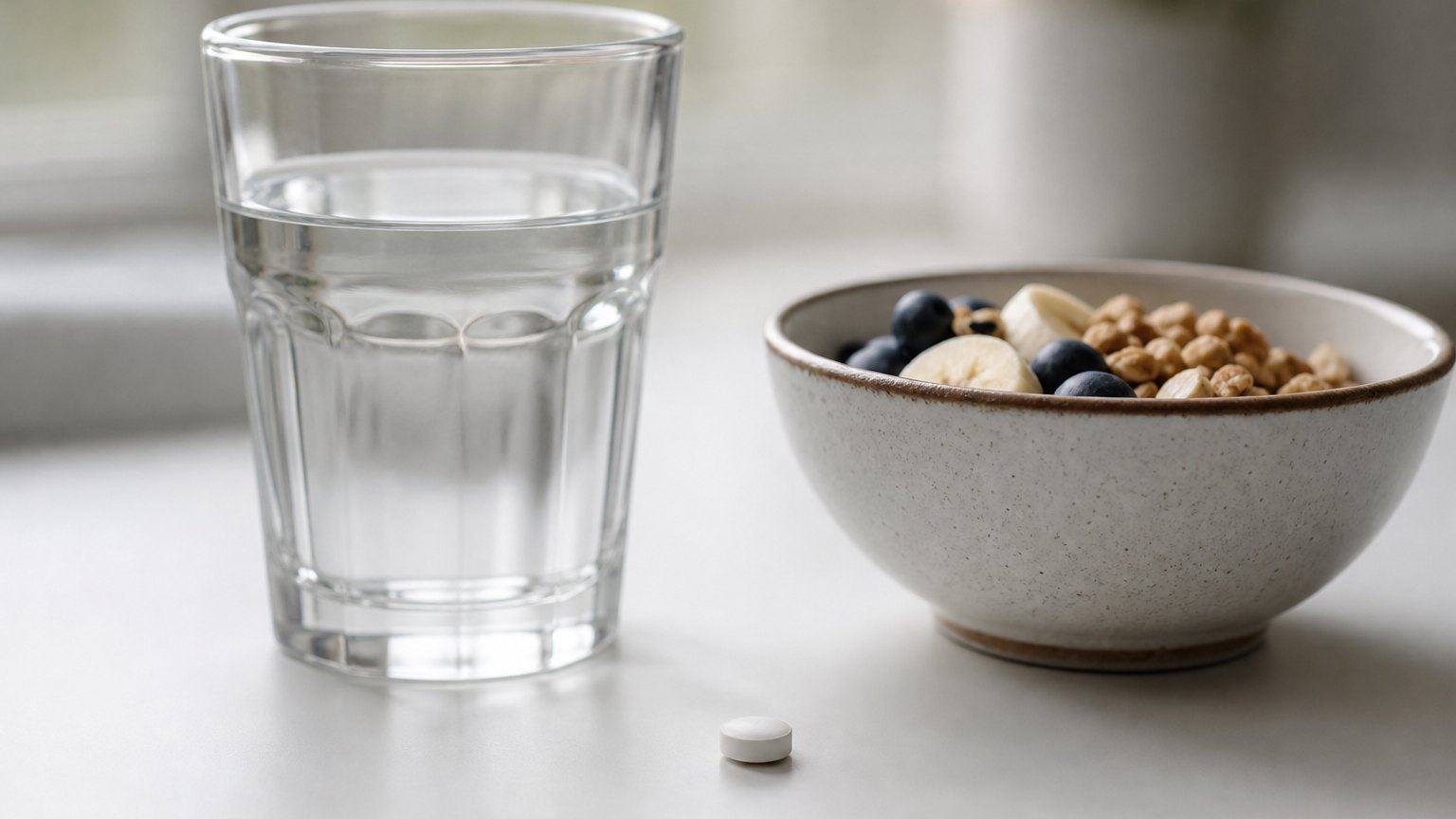
For most women, the best time to take a multivitamin is with a meal that contains a little fat. Morning or evening can both work, but iron, calcium, coffee and tea may require extra planning. Here is how to build a schedule that supports absorption without making your routine complicated.
Key Takeaways
- Take it with food: A meal can improve comfort and help your body absorb vitamins A, D, E and K.
- Include a little fat: Eggs, yogurt, nuts, avocado or olive oil can provide enough dietary fat.
- Protect iron absorption: Keep an iron-containing multivitamin away from coffee, tea and separate calcium supplements when practical.
- Split only as directed: Dividing a multi-capsule serving may improve comfort, but the label should guide you.
- Choose a repeatable time: A consistent routine usually matters more than taking your multivitamin at a perfect hour.
With Food Is the General Answer
A women's multivitamin is generally best taken with breakfast, lunch or dinner. Food gives your digestive system something to work with, and it can reduce the nausea or stomach discomfort that some people experience after taking vitamins and minerals on an empty stomach. Iron and zinc are two common reasons an empty-stomach multivitamin may feel unpleasant.
A meal also creates better conditions for absorbing fat-soluble vitamins. These are vitamins that dissolve in fat rather than water. Most complete multivitamins contain both fat-soluble and water-soluble nutrients, so taking the whole formula with food is a useful compromise.
You do not need a large or heavy meal. A bowl of oatmeal with nuts, eggs with toast, yogurt with seeds, or a salad with olive oil can all work. Take the serving with water, then continue your normal day. If breakfast is only black coffee, lunch may be the better time.
The label still comes first. Some products are intended to be taken in more than one serving, while others provide the full daily amount at once. Follow those directions rather than creating a new schedule based only on general advice. If you take prescription medication, ask your doctor or pharmacist whether food or supplement timing affects that medicine. Certain medications need an empty stomach or must be separated from specific minerals.
Fat-Soluble Vitamins Need Fat
Vitamins A, D, E and K are called fat-soluble because your body absorbs them along with dietary fat. During digestion, fat helps your body package and move these vitamins from the intestines into circulation. That chemistry is why a meal containing some fat is more useful than swallowing a multivitamin with water alone.
You only need a modest amount of fat. Practical options include nut butter, avocado, eggs, full-fat or low-fat dairy, seeds, salmon, or food prepared with olive oil. Taking your multivitamin beside a very high-fat meal is not necessary. The goal is simply to avoid a completely fat-free setting when possible.
Water-soluble nutrients, including vitamin C and the B vitamins, do not require dietary fat. They dissolve in water, but that does not mean they must be taken on an empty stomach. A complete multivitamin asks you to balance several nutrients at once, and a normal mixed meal is usually the simplest answer.
Fat-soluble vitamins can also be stored in the body. More is not automatically better, especially if you combine a multivitamin with separate vitamin A, D, E or K products. Check labels for overlap and speak with your doctor if you have a diagnosed deficiency or are using a clinician-directed dose. If you are curious about nutrient forms and why they differ, see what bio-active means in a women's multivitamin.
Iron, Calcium and Coffee
If your women's multivitamin contains iron, what you drink and which other supplements you take nearby can matter. Coffee and tea contain plant compounds called polyphenols. These compounds can bind to iron in the digestive tract, leaving less available for absorption. Taking an iron-containing multivitamin with your morning coffee is convenient, but it may not be the most effective pairing.
Calcium can also compete with iron during absorption. If you use a separate high-dose calcium supplement, take it at a different time from your iron-containing multivitamin unless your doctor has given other instructions. A practical approach is to leave roughly two hours between them. You do not need to avoid ordinary calcium-containing foods unless a clinician has advised you to do so.
Vitamin C helps the body absorb non-heme iron, the type commonly used in supplements and found in plant foods. A meal containing berries, citrus, tomatoes, peppers or another vitamin C source can therefore be a useful partner. For a closer look at these interactions, read our guide to the best time to take a multivitamin with iron.
Iron is especially relevant for many women who lose blood during menstruation, but not everyone needs supplemental iron. Postmenopausal women, people with certain medical conditions and anyone already taking iron separately should ask their doctor whether an iron-containing multivitamin is appropriate. Too much iron can be harmful, so do not add it automatically or take more than the label directs.
Bio-Active Complete Multi-Vitamin for Women with Iron is a daily multivitamin with 24 vitamins and minerals at optimal dosages, plus high-quality iron to help address iron lost during the menstrual cycle and fill common nutritional gaps. Take it with a meal and follow its label directions. It is $12.95 for members and $19.95 retail, reflecting LiveGood's mission to "Provide the highest quality supplements in the world, at the lowest prices possible."
Morning vs Evening
There is no universal rule that women must take a multivitamin in the morning. Breakfast is popular because it is easy to connect the supplement to an existing habit. It also leaves time to notice and adjust if the formula causes digestive discomfort. If you drink coffee at breakfast and your multivitamin contains iron, however, lunch may be more practical.
Some people prefer morning because multivitamins often contain B vitamins. B vitamins help your body release energy from food, but they are not stimulants like caffeine. There is limited evidence that a standard multivitamin taken at night will disrupt sleep. Personal response matters more. If you feel unusually alert after an evening serving, move it earlier.
Taking a multivitamin with dinner is generally reasonable when that is your most reliable meal. Dinner often contains enough dietary fat for vitamins A, D, E and K. Evening timing may also help if morning supplements make you nauseated. Avoid taking it immediately before lying down if pills tend to cause reflux or an unsettled stomach.
The best time is therefore the meal that meets three conditions: it contains some fat, it is not paired closely with coffee or tea when iron is present, and you can remember it consistently. Try one schedule for a week or two before changing it. If symptoms continue despite taking the supplement with food, stop and ask your doctor or pharmacist for guidance rather than assuming timing is the only issue.
Splitting the Dose
Splitting a serving can make a multivitamin easier to tolerate, particularly when the full serving includes iron, zinc or several other minerals. Instead of taking multiple capsules together, you may be able to take part of the labeled serving with one meal and the remainder with another. This spreads the ingredients across the day and may reduce the heavy or nauseated feeling some people get from a concentrated serving.
Only split the serving if the product label allows it. A label that directs you to take two capsules daily may offer flexibility, but do not assume every tablet, capsule or timed-release product can be divided. Do not cut, crush or open a product unless its instructions say that is safe. Splitting a serving also does not mean increasing it. Your total for the day should remain within the labeled amount.
Think about the same food and drink interactions for both servings. Each portion should ideally accompany food, and an iron-containing portion should not be washed down with coffee or tea. If you take a separate calcium supplement, place it away from the portion containing iron when practical.
Splitting is an option, not a requirement. One daily serving with a balanced meal works well for many women and is easier to remember. If dividing the serving causes missed capsules or confusion, a single consistent time may be the better choice. Anyone using prescription medication should have a doctor or pharmacist review the complete schedule, since changing supplement timing can also change how closely it sits beside a medicine.
Consistency Beats Optimisation
Once you have chosen a suitable meal, take your multivitamin at about the same point in your routine each day. Attach it to something you already do, such as setting out breakfast, packing lunch or clearing the dinner table. A pill organizer or phone reminder can help, but storing the bottle where you see it may be enough. Keep it away from heat, moisture and children.
Do not double the next serving if you forget one unless the label or your doctor specifically tells you to. Simply return to your usual schedule. Supplements work best as steady nutritional support, not as a quick fix or a way to compensate for several missed days at once.
Whether a woman should take a multivitamin every day depends on her diet, life stage and health needs. Evidence that a multivitamin improves broad health outcomes in every well-nourished adult is mixed. A supplement can help fill nutritional gaps, but it does not replace vegetables, fruit, protein, whole grains, healthy fats, sleep or medical care. It should never be treated as a way to prevent disease or as a weight-loss product.
Folic acid deserves special attention for anyone who could become pregnant because adequate intake is needed very early in fetal development, often before pregnancy is known. Ask your doctor about an appropriate prenatal supplement if you are planning pregnancy, pregnant or breastfeeding. You should also talk to your doctor before using a multivitamin if you take prescription medication or have a kidney condition, liver condition or another existing medical condition. Your best routine is the one that matches both the label and your individual needs.
Frequently Asked Questions
When should a woman take a multivitamin?
A woman should generally take her multivitamin with a regular meal that includes a little dietary fat. Breakfast, lunch and dinner are all acceptable. If the formula contains iron, choose a meal that is not paired closely with coffee, tea or a separate calcium supplement. The label and any instructions from your doctor should take priority over general timing advice.
Should you take a multivitamin with food?
Yes, most complete multivitamins are better taken with food. A meal can reduce stomach irritation from minerals such as iron and zinc while supplying fat needed to absorb vitamins A, D, E and K. The meal does not need to be large. Yogurt, eggs, nuts, avocado or food prepared with olive oil can provide enough fat for a practical daily routine.
Can you take a multivitamin at night?
Yes, you can take a multivitamin at night if you take it with dinner or another suitable meal. Evening use is not known to be less effective than morning use. Move it earlier if you notice discomfort, reflux or difficulty settling down after taking it. If your multivitamin contains iron, also avoid pairing the serving with evening tea or a calcium supplement.
Should a woman take a multivitamin every day?
A woman may take a multivitamin every day when its label directs daily use and the formula suits her needs. Not every woman needs the same nutrients, especially iron. Diet, menstruation, age, pregnancy plans, medications and health conditions can all affect the choice. A daily multivitamin can fill gaps, but it does not replace nutritious food or prevent disease.
Can you take a multivitamin with coffee?
You can swallow a multivitamin with coffee, but it is not ideal when the formula contains iron. Compounds in coffee can reduce iron absorption, so use water and leave some time between coffee and the supplement when practical. Taking the multivitamin with lunch is an easy alternative for regular morning coffee drinkers. Ask your doctor for individualized timing if you are treating an iron deficiency.