
Whey Protein for Endurance Athletes
 Written by Ben Glinsky
Ask AI about this article and Whey Protein Isolate - With Colostrum






Whey protein can help endurance athletes meet higher protein needs for muscle repair and training adaptation, not simply for adding bulk. After a long or demanding session, the most useful recovery strategy is usually carbohydrate plus protein, with carbohydrate doing most of the refueling work. Here is how much protein guidance suggests, when whey makes sense, and how to use it practically.
Key Takeaways
- Protein is not just for lifters: Running, cycling, swimming, and other endurance activities increase protein breakdown and repair needs.
- Use a daily range: Sports nutrition guidance commonly suggests 1.2-2.0 grams of protein per kilogram of body weight each day.
- Prioritize carbohydrate after long sessions: Carbohydrate restores glycogen, while protein supplies amino acids for tissue repair and adaptation.
- Choose whey for convenience: Whey provides all nine essential amino acids in a compact, quickly digested serving.
- Focus on consistency: Your total daily intake and regular meal pattern matter more than hitting a tiny post-workout window.
Why Endurance Athletes Need Protein
Protein is often associated with bodybuilding, but endurance training also places repeated stress on muscle tissue. Every long run, ride, swim, or hike creates a need to repair proteins that were damaged or broken down during exercise. Your body also uses protein to build enzymes, transport oxygen, maintain connective tissue, and adapt to a growing training load.
That does not mean eating more protein will automatically make you bulky. Significant muscle growth depends on several factors, including resistance training, total energy intake, genetics, and time. For an endurance athlete, adequate protein is more often about maintaining lean tissue, supporting recovery, and helping the body adapt between sessions.
Training volume matters too. A recreational runner completing three short sessions a week will not have the same needs as a cyclist training twice a day. Protein requirements can rise during high-volume blocks, after unusually long events, or when you are eating fewer calories than you use. That last situation is called an energy deficit, and it can increase the risk of losing lean tissue.
Whole foods can provide all the protein you need. Useful options include eggs, yogurt, milk, fish, poultry, tofu, beans, lentils, and lean meat. Whey powder is simply a convenient option when appetite, travel, or a tight schedule makes a complete meal difficult.

Endurance training increases the need for protein that supports muscle repair and adaptation between sessions.
How Much, According to Guidance
Sports nutrition guidance commonly places athletes at 1.2-2.0 grams of protein per kilogram of body weight per day. This is a broad range, not a prescription. Your training volume, total calorie intake, age, food preferences, and recovery schedule all affect where you may fit.
To convert pounds to kilograms, divide your body weight in pounds by 2.2. A 150-pound athlete weighs about 68 kilograms. At 1.2-2.0 grams per kilogram, that equals roughly 82-136 grams of protein per day. A 180-pound athlete, or about 82 kilograms, would have a range of approximately 98-164 grams.
The lower end can suit lighter training periods and athletes who eat enough total energy. The upper end may be more relevant during intense training, frequent competition, calorie restriction, or recovery from a demanding block. More is not automatically better. Once your needs are covered, extra protein does not replace carbohydrate, sleep, hydration, or well-planned training.
The general adult Recommended Dietary Allowance is 0.8 grams per kilogram, but that figure was not designed as an optimal sports target. A small peer-reviewed study of endurance-trained men estimated a requirement of about 1.65 grams per kilogram after a controlled endurance session, with an upper confidence estimate near 1.83. One small study cannot define every athlete's needs, but it helps explain why sports guidance exceeds the general minimum.
Spread protein across the day rather than saving most of it for dinner. A practical target is about 0.25-0.3 grams per kilogram at meals and recovery snacks, often every three to five hours.

Daily protein needs depend on body size, training volume, energy intake, and recovery demands.
Carbohydrate Comes First After Training
After a long endurance session, your most urgent fuel need is often carbohydrate. Your muscles store carbohydrate as glycogen, a readily available fuel used heavily during running, cycling, swimming, and other sustained activity. Long or intense sessions reduce those stores, especially when you start underfueled or do not consume enough carbohydrate during exercise.
Protein cannot take carbohydrate's place in this job. Whey supplies amino acids, the small building blocks used to repair and remodel tissue. Carbohydrate supplies glucose, which your body uses to rebuild glycogen. Putting them together addresses both sides of recovery.
When another demanding session is less than about 24 hours away, sports guidance often suggests 1.0-1.2 grams of carbohydrate per kilogram per hour during the first four hours of recovery. That is an aggressive strategy intended for rapid refueling, not a requirement after every easy workout. Adding roughly 0.25-0.3 grams of protein per kilogram can support muscle repair. If carbohydrate intake is already high enough, adding protein may not further accelerate glycogen storage, but it still contributes to recovery nutrition.
For a 70-kilogram athlete, a practical early recovery target could be 70-84 grams of carbohydrate and about 18-21 grams of protein. Examples include a whey and fruit smoothie with oats, cereal with milk and a banana, or a rice bowl with eggs or chicken.
If your next hard session is a day or two away, you do not need to race the clock. A balanced meal within a couple of hours is usually reasonable. The harder and longer the session, and the sooner you train again, the more deliberate your recovery meal should be.

Pairing carbohydrate with protein after a long session supports both glycogen replacement and tissue repair.
Why Isolate Suits Some Athletes
Whey is a milk-derived protein containing all nine essential amino acids. These are amino acids your body cannot make on its own, so they must come from food. Whey is also rich in leucine, an amino acid involved in signaling the muscle-building and repair process that follows training.
Whey isolate is filtered more extensively than whey concentrate. This generally leaves a higher percentage of protein and smaller amounts of lactose, milk fat, and carbohydrate. That can make isolate useful when you want protein without many additional calories or when a full meal feels too heavy after exercise.
Some people with lactose intolerance tolerate whey isolate better than concentrate because it usually contains less lactose. It is not safe to assume every isolate is completely lactose-free, however. Check the label and begin with the labeled serving when trying a new product. Whey is still made from milk, so anyone with a milk allergy should avoid it unless a qualified clinician says otherwise.
Isolate is not automatically superior for every athlete. Concentrate, milk, yogurt, eggs, soy, and thoughtfully combined plant proteins can all contribute to daily protein needs. The best option is one you digest comfortably, can use consistently, and can fit into your overall eating pattern.
Protein powder also does not provide the full nutritional range found in meals. Fruit, grains, vegetables, dairy foods, legumes, nuts, fish, and meat contribute carbohydrate, fats, fiber, vitamins, and minerals that a protein scoop cannot replace. Think of whey as a practical tool, not the foundation of your diet.
Practical Timing Around Sessions
You do not need to drink whey within minutes of finishing every workout. The so-called anabolic window, meaning the period when muscle is especially responsive to protein, is wider than many supplement claims suggest. Your total daily protein and how evenly you distribute it usually matter more than perfect minute-by-minute timing.
After a long, hard, or fasted session, aim to eat carbohydrate and protein within about two hours. Sooner can be useful when your appetite is poor, your next meal is delayed, or another demanding workout is coming later that day. A shake is convenient because it is quick to prepare and can be combined with carbohydrate from fruit, oats, milk, cereal, or bread.
Before training, whey is optional. If your last meal was several hours ago, a small protein-containing snack one to two hours before exercise may help you distribute protein across the day. Keep fat and fiber moderate if you are prone to stomach discomfort. During most endurance sessions, carbohydrate and fluid deserve priority. Protein during very long events has mixed evidence, and some athletes find it hard to digest while moving.
A useful routine is 20-30 grams of high-quality protein after a key session, adjusted for body size and the rest of your diet. Follow the product label rather than adding scoops automatically. For a closer look at serving size, read how to take whey protein isolate and whether two scoops is too much.
Talk to your doctor or a sports dietitian before changing your protein intake if you are pregnant, breastfeeding, taking prescription medication, or living with a kidney, liver, or other medical condition.
A whey shake with fruit or oats offers a convenient mix of protein and carbohydrate after demanding training.
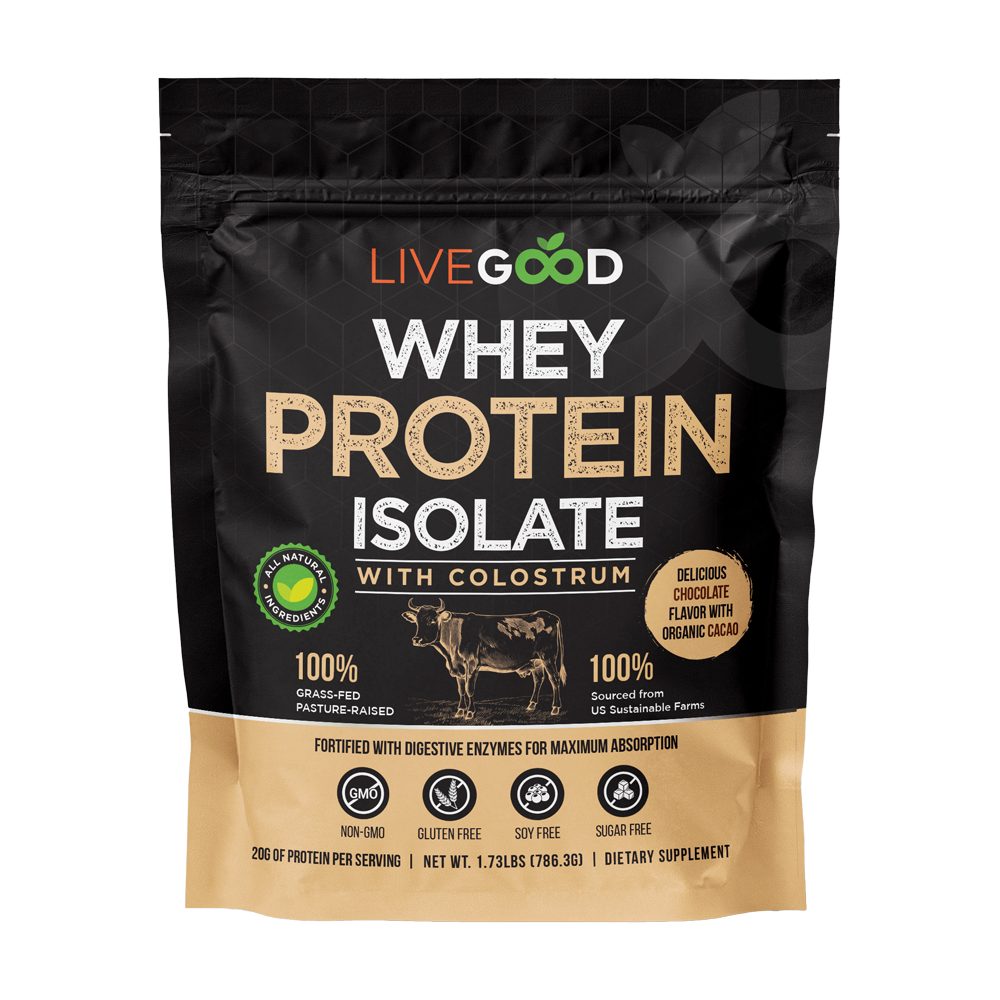
Whey Protein Isolate - With Colostrum provides 20 grams of chocolate whey protein with all nine essential amino acids, organic cacao, colostrum, and digestive enzymes that support digestion, nutrient absorption, gut health, and immune function. It is sourced from 100% grass-fed, pasture-raised cows on sustainable US farms. Use it with a carbohydrate source after demanding sessions. Members pay $39.95 compared with $49.95 retail, supporting LiveGood's mission to "Provide the highest quality supplements in the world, at the lowest prices possible."
Frequently Asked Questions
Do endurance athletes need protein powder?
No, endurance athletes do not need protein powder if food supplies enough protein. Whey can be useful when you have little appetite after training, need a portable option, or cannot prepare a meal. It should supplement a varied diet rather than replace regular foods, which provide carbohydrate, fiber, fats, vitamins, and minerals alongside protein.
How much protein do endurance athletes need?
Most sports nutrition guidance suggests about 1.2-2.0 grams of protein per kilogram of body weight daily. Lower amounts may suit lighter training, while higher amounts may be useful during intense blocks or low-calorie periods. Treat the range as general guidance and spread protein across several meals and snacks instead of consuming most of it at once.
Should you take protein or carbs after a run?
After a long or demanding run, choose carbohydrate plus protein rather than treating them as competitors. Carbohydrate helps restore muscle glycogen, while protein supplies amino acids for tissue repair and adaptation. After a short, easy run, your next balanced meal may be enough. Rapid refueling matters most when another hard session is approaching.
Is whey isolate better for athletes?
Whey isolate is not better for every athlete, but it can be a convenient, protein-dense option with less lactose and fat than whey concentrate. It contains all nine essential amino acids and digests relatively quickly. Your tolerance, dietary preferences, budget, and total food intake matter more than choosing isolate simply because its label sounds more advanced.
When should you take whey around training?
Take whey when it helps you meet your daily protein target, often after a demanding session or between meals. Pair it with carbohydrate after long exercise, especially if you will train hard again within 24 hours. A serving before training can also fit if your previous meal was several hours earlier. Exact timing is less important than a consistent routine.