
Do Dogs Need a Multivitamin?
 Written by Nauder Khazan
Ask AI about this article and Organic Pet Multi-Vitamin





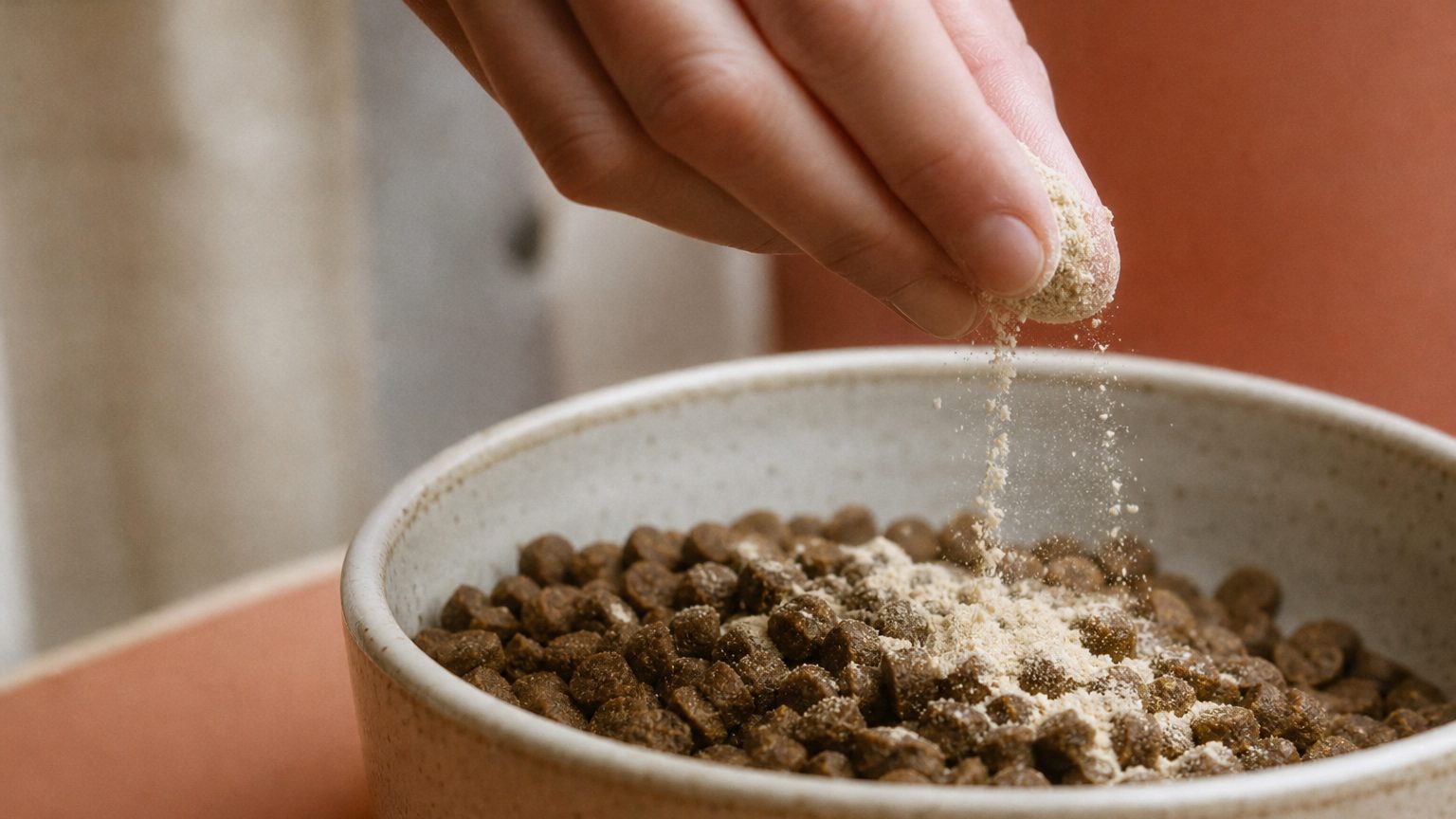
Most dogs do not need a multivitamin if they consistently eat a complete and balanced food formulated for their life stage. A multivitamin may have a role when a veterinarian identifies a nutritional gap, reviews a homemade diet, or recommends added support for an individual dog. More is not automatically better, since excessive amounts of certain nutrients can be harmful.
Key Takeaways
- Complete diets first: Most dogs receive required vitamins and minerals from complete and balanced commercial food.
- Needs vary: Homemade diets, restricted eating, life-stage changes, and individual health factors require veterinary guidance.
- More is not better: Combining fortified food, treats, and supplements can create unsafe nutrient overlap.
- Use dog formulas: Human multivitamins may contain unsuitable nutrient levels or ingredients that are unsafe for dogs.
- Check the label: Choose a clearly labeled dog product, follow its weight-based directions, and discuss it with your veterinarian.
Most Dogs Get Enough From Food
Dogs need vitamins and minerals, but needing nutrients does not necessarily mean needing a multivitamin. Vitamins support processes such as normal energy metabolism, vision, blood formation, immune function, and tissue maintenance. Minerals contribute to functions including bone structure, fluid balance, oxygen transport, and normal muscle activity.
A commercial dog food labeled "complete and balanced" is designed to provide required nutrients in appropriate proportions. In the United States, this statement commonly means the food meets an Association of American Feed Control Officials, or AAFCO, nutrient profile or has passed an appropriate feeding trial. The label should also identify the intended life stage, such as growth, adult maintenance, or all life stages.
That life-stage statement matters. Puppies, pregnant or nursing dogs, and adult dogs do not always have identical nutritional requirements. Large-breed puppies also require careful mineral balance during growth, so adding calcium or a broad multivitamin without professional guidance can disrupt a diet that was already properly formulated.
Look at the nutritional adequacy statement rather than relying on words such as "premium," "natural," or "holistic." Those descriptions do not tell you whether the food supplies a complete nutrient profile. Foods, toppers, and treats labeled for "intermittent or supplemental feeding only" should not make up the main diet unless your veterinarian has directed otherwise.
If a healthy dog eats the correct amount of complete and balanced food, an extra multivitamin often adds nutrients the dog already receives. It does not automatically make the diet more nutritious.
Some Dogs Need Individual Guidance
A veterinarian may consider supplementation when a dog's diet or circumstances create a plausible nutritional gap. The important distinction is that the recommendation should address the dog's actual intake rather than assume every dog benefits from the same formula.
Home-prepared diets deserve particular attention. Meat, vegetables, grains, and oils can look wholesome while still providing too little or too much of specific nutrients. Simply rotating ingredients does not reliably balance calcium, phosphorus, iodine, copper, zinc, vitamin D, or other essentials over time. A veterinarian or board-certified veterinary nutritionist can formulate a recipe and specify the exact supplements it requires.
Dogs eating very little may also consume fewer nutrients than the food manufacturer intended, even when the food itself is complete. This can happen during periods of poor appetite or when calorie restriction is being managed. Because appetite changes can have many causes, ask your veterinarian before adding a supplement or changing the diet.
Other situations requiring individual review include pregnancy, nursing, growth, advanced age, restricted diets, food prepared for specific medical needs, and long-term medication use. These circumstances do not automatically mean a multivitamin is appropriate. They mean a general rule is less reliable.
Visible changes are not a dependable way to diagnose a vitamin shortage. A dull coat, low energy, stool changes, or altered appetite can have many explanations. Routine bloodwork also does not function as a complete test for every vitamin and mineral. Your veterinarian will usually consider the diet history, amount eaten, medications, physical findings, and targeted testing when appropriate.
Audit the Whole Diet
Before choosing a multivitamin, write down everything your dog consumes for several typical days. Include the main food, treats, chews, table food, toppers, flavored medications, oils, powders, and existing supplements. Record product names and approximate amounts so your veterinarian can assess the total intake.
Start with the main food label. Confirm that it says complete and balanced, check the intended life stage, and compare the feeding directions with the amount your dog actually eats. If the food is labeled for supplemental feeding only, ask what should provide the rest of the diet.
Next, look for nutrient stacking. This occurs when the same nutrient comes from several sources. A fortified dog food, vitamin-containing treats, a skin and coat product, and a multivitamin may all provide overlapping vitamins or minerals. The front label rarely reveals the full overlap, so compare the ingredient lists and guaranteed analyses where available.
Fat-soluble vitamins require particular care. Vitamins A, D, E, and K are stored differently from water-soluble vitamins, and excessive intake can be harder for the body to clear. Minerals such as calcium, iron, copper, and selenium also have useful nutritional roles but can create problems at inappropriate amounts or ratios.
Treats and toppers can complicate the picture in another way. If extras displace a meaningful portion of complete food, the dog's overall diet may become less balanced even if those extras contain a few added vitamins. As a general feeding principle, most calories should come from the complete diet your veterinarian has approved.
Bring this written audit, photographs of labels, and any homemade recipes to the appointment. That information is usually more useful than asking whether dogs in general need vitamins.
Choose a Dog-Specific Product
Use only a product clearly intended for dogs unless your veterinarian prescribes something different. Human and canine formulations can vary considerably in nutrient amounts, serving sizes, sweeteners, flavorings, and inactive ingredients.
Do not transfer human supplement advice directly to a pet. Guidance about when to take a women's multivitamin, for example, addresses human nutrition and does not establish safe timing or amounts for dogs. Likewise, information about a multivitamin with iron should not be used to decide whether a dog needs added iron.
Some human chewables and gummies contain xylitol, a sweetener that is dangerous to dogs. Human products may also provide iron or vitamin D at concentrations that are inappropriate for a dog's size. If your dog consumes a human supplement accidentally, contact your veterinarian or an animal poison control service promptly rather than waiting for symptoms.
For a dog product, look for a readable label that identifies the intended species, ingredients, serving directions by weight, lot information, expiration or best-by information, and a way to contact the company. Third-party testing can add useful quality information, but it does not prove that every dog needs the product or that the formula produces a particular result.
Also distinguish a multivitamin from a broader supplement blend. Probiotics are live microorganisms, digestive enzymes help break down food components, and omega fatty acids are fats. They are not vitamins. Their presence can broaden a formula, but each still needs to fit your dog's diet and veterinary plan. Probiotic research is often specific to particular strains, so a general probiotic label does not make every blend interchangeable.
Avoid choosing solely from rankings such as "top 10" lists. The best option is the one that fits the dog's complete diet, size, life stage, and veterinarian-reviewed needs.
Use Multivitamins Safely
Ask your veterinarian to review the exact label before starting. This is especially important if your dog has an existing medical condition, takes prescription medication, is pregnant or nursing, or eats a veterinary-formulated diet. Bring the container or a clear label photograph so the veterinarian can see both active and inactive ingredients.
Follow the product's weight-based directions exactly. Do not double a serving after a missed day, combine several multivitamins, or estimate a dose from human instructions. If your dog's weight falls outside the ranges shown on the label, contact the veterinarian or manufacturer rather than extrapolating.
Consistency is more useful than frequent product changes. Give the supplement as directed and with food if the label recommends it. Keep a simple record of the start date, serving, diet, appetite, stool consistency, and any noticeable changes. This helps you and your veterinarian evaluate the routine without relying on memory.
Store the container securely away from pets. Powders and flavored chews may smell like food, and eating multiple servings at once requires prompt veterinary advice. Stop using the product and contact your veterinarian if you notice vomiting, diarrhea, appetite changes, unusual thirst, weakness, or another unexpected response.
Reassess the need whenever the main food, body weight, medications, or life stage changes. A supplement selected for one diet may become redundant after a switch to another fortified food.
If your veterinarian agrees that broad nutritional support fits your dog's diet, Organic Pet Multi-Vitamin provides vitamins, minerals, probiotics, omega fatty acids, digestive enzymes, and organic superfoods in a powder. Follow its label: dogs weighing 10 to 35 pounds receive 1/2 scoop daily, while dogs weighing 36 to 75 pounds receive 1 scoop. Ask your veterinarian for guidance if your dog falls outside those listed ranges, and do not add extra servings.
Expect Gradual, Subtle Support
A multivitamin is not usually something you should expect to notice working overnight. Nutritional supplements support an ongoing routine that also includes an appropriate diet, fresh water, activity, grooming, dental care, preventive veterinary care, and regular health assessments.
If your dog already receives enough nutrients, there may be no visible change after adding another source. That does not mean you should increase the amount. It may mean the original diet was already doing its job and the additional product is unnecessary.
Set a review point with your veterinarian instead of continuing indefinitely by default. The review can consider whether your dog accepts the product, whether the main diet has changed, whether any unexpected effects occurred, and whether there is still a sound nutritional reason to continue.
Be cautious with dramatic testimonials. Coat appearance, activity, appetite, and digestion can change for many reasons, including food changes, grooming, weather, age, and daily variation. One owner's experience cannot establish what another dog needs.
The practical answer to "do dogs need a multivitamin?" is therefore usually no for dogs eating a suitable complete and balanced diet, but sometimes yes under individualized veterinary guidance. Start by verifying the main food, auditing every dietary extra, and asking whether a proposed supplement fills a real gap without duplicating nutrients.