
Greens Powder for Women: Benefits, Side Effects and Daily Use
 Written by Ben Glinsky
Ask AI about this article and Organic Super Greens





Greens powder can help women add vitamins, minerals, and plant compounds when meals fall short. But the benefits depend on the formula, and most greens powders provide far less iron and calcium than their marketing suggests. Here is how to judge one based on your life stage, diet, and health needs.
Key Takeaways
- Life stage changes your needs: Menstruation, pregnancy planning, and menopause affect which nutrients deserve closer attention.
- Check iron and calcium amounts: Many greens powders contain only small amounts of these nutrients.
- Look closely at folate: A greens powder is not automatically an adequate source of folic acid for pregnancy planning.
- Keep food at the center: Powders do not replace the fiber, protein, fats, and variety found in balanced meals.
- Review safety first: Pregnancy, medications, and kidney or liver conditions call for guidance from your healthcare professional.
What Is Actually Different for Women
The general benefits of greens powder are not exclusive to women. A convenient scoop may support your intake of certain vitamins, minerals, and plant compounds, especially on days when vegetables are limited. The genuinely different questions involve changing nutrient needs across life stages.
Before menopause, menstrual blood loss raises iron needs for many women. Anyone who could become pregnant should pay close attention to folate and folic acid. After menopause, declining estrogen can accelerate bone loss, making calcium, vitamin D, protein, resistance exercise, and overall dietary quality especially relevant. Vitamin K also participates in proteins involved in normal bone maintenance.
Age alone does not tell the whole story. A woman over 40 who still menstruates may have different iron needs from someone who has reached menopause. Birth control, heavy periods, digestive conditions, dietary restrictions, pregnancy, and breastfeeding can also change the picture. Individual needs matter more than a label that simply says "for women."
A woman's nutrient priorities can change with menstruation, pregnancy planning, and menopause.
Most research on greens powders is limited, and formulas vary too much to treat them as one standard product. A powder may be useful for convenience, but it should not be assumed to improve energy, balance hormones, relieve menopause symptoms, or produce weight loss. Those claims require specific evidence that most products do not have.
For shared basics such as common greens ingredients and general wellness use, see our guide to super greens for men. The sections below focus on the nutrient questions that are more likely to change throughout a woman's life.
Iron: Why Greens Powders Rarely Supply Much
Iron helps your body make hemoglobin, the protein in red blood cells that carries oxygen. Menstrual blood loss is one reason premenopausal women generally need more iron than men and postmenopausal women. The usual recommended intake for women ages 19 to 50 is 18 mg daily, compared with 8 mg after age 50. Personal needs can differ.
Despite images of spinach and kale on the package, many greens powders contain little iron. A scoop often uses modest amounts of several dried plants, so the iron contribution may be only a small percentage of the Daily Value. Some products add iron separately, while others do not list any meaningful amount.
Plant foods provide nonheme iron, a form that is absorbed less efficiently than the heme iron found in meat and seafood. Eating vitamin C with plant iron can improve absorption. Tea, coffee, calcium supplements, and some medications may reduce absorption when consumed at the same time.

Leafy ingredients do not guarantee that a greens powder provides a meaningful amount of iron.
Read the Supplement Facts panel rather than relying on ingredient names. Check the milligrams of iron per serving and the percent Daily Value. If iron is missing from the panel, do not assume the powder supplies a useful amount.
A greens powder should not be used to treat iron-deficiency anemia. Fatigue, weakness, shortness of breath, headaches, and feeling cold can have many causes. If you have heavy periods, follow a vegetarian or vegan diet, or suspect low iron, ask your doctor whether blood testing is appropriate. Taking extra iron without confirming a need can cause constipation and may be harmful in excessive amounts.
Folate and Pregnancy Planning
Folate is a B vitamin used for DNA production and normal cell division. Folic acid is the supplemental and fortified-food form. This distinction matters because folic acid has strong evidence behind pregnancy planning recommendations, while the amount and form of folate in a greens powder can vary.
People who could become pregnant are commonly advised to get 400 micrograms of folic acid each day, in addition to eating a varied diet. This supports early neural tube development, which begins before many people know they are pregnant. During pregnancy, total folate needs increase, and an OB may recommend a prenatal supplement based on individual circumstances.
A greens powder containing spinach, broccoli, or other plants may contribute natural food folate. However, that does not make it a substitute for a prenatal vitamin. Check whether the label lists folate, the amount per serving, and whether folic acid or another form is included. Labels may use micrograms of dietary folate equivalents, or DFE, to account for differences in absorption.
Pregnancy planning calls for careful attention to folic acid amounts and guidance from an OB.
More is not automatically better. Combining a prenatal vitamin, fortified foods, a multivitamin, and a greens powder can lead to overlapping nutrients. Some blends also contain herbs, concentrated extracts, algae, probiotics, or added vitamins that have not been well studied during pregnancy.
If you are pregnant, breastfeeding, or trying to conceive, the decision to use a greens powder belongs with your OB. Bring the full ingredient list and Supplement Facts panel to that conversation. Our article on greens powder and pregnancy explains the main questions to ask without offering blanket clearance.
Bone Health After Menopause
Estrogen helps protect bone. As estrogen levels decline around menopause, bone breakdown can begin to outpace bone rebuilding. That makes long-term habits more important, including adequate calcium, vitamin D, protein, strength training, and weight-bearing activity such as walking.
Women ages 19 to 50 generally need about 1,000 mg of calcium daily. The usual recommendation rises to 1,200 mg for women ages 51 and older. Most greens powders provide only a small fraction of those amounts. Kale may be rich in calcium as a whole food, but a scoop containing a little dried kale is not the same as eating a full serving.
Vitamin K activates proteins that participate in normal blood clotting and bone mineralization. Leafy greens can provide vitamin K, so some greens powders contain meaningful amounts. That does not mean the powder treats bone loss or menopause. Research has not established that a typical mixed greens powder prevents fractures or replaces standard care for osteoporosis.
After menopause, bone health depends on calcium, vitamin D, protein, activity, and other daily habits.
Calcium also works within a larger system. Vitamin D helps your body absorb it, while protein provides building material for bone and muscle. Magnesium and physical activity contribute as well. A powder that contains vitamin K but little calcium, vitamin D, or protein is not a complete bone-health strategy.
Check each nutrient on the label in milligrams or micrograms. If you take warfarin or another medication affected by vitamin K, talk to your prescribing clinician before using a greens powder. Consistency in vitamin K intake may be necessary, and suddenly adding a concentrated source could interfere with medication management.
Side Effects and Who Should Be Careful
Greens powders can cause gas, bloating, nausea, loose stools, or constipation, particularly when they contain added fiber, probiotics, sugar alcohols, or large ingredient blends. Follow the label directions and avoid taking more because you expect faster results. Taking a serving with food may feel gentler for some people, but the label should remain your primary guide.
Allergic reactions are possible. Review the complete ingredient list if you react to grasses, seaweed, mushrooms, herbs, or other plant ingredients. Wheatgrass itself does not necessarily contain gluten, but cross-contact and manufacturing practices matter for people with celiac disease or severe gluten sensitivity.
Reading the full label can help you spot allergens, added herbs, caffeine, and possible medication interactions.
Some formulas contain concentrated green tea, caffeine, adaptogens, or digestive enzymes. Adaptogens are herbs marketed to help the body respond to stress, although evidence and safety vary by ingredient. These additions can cause their own side effects and interactions. A long ingredient list is not automatically a better one.
Vitamin K can interact with warfarin. High amounts of certain minerals may affect thyroid medicines, antibiotics, or other prescriptions. People with kidney conditions may need to monitor potassium, phosphorus, or oxalates. Those with liver conditions should be cautious with complex herbal blends because concentrated extracts are processed differently from ordinary food.
Talk to your doctor before using a greens powder if you take prescription medication, have an existing medical condition, or have kidney or liver concerns. Pregnancy and breastfeeding also require professional guidance. Stop using the product and seek care if you develop signs of a serious reaction, such as swelling, trouble breathing, or a widespread rash.
Where a Greens Powder Fits
Think of greens powder as a supplement to meals, not powdered vegetables that replace meals. Whole produce supplies water, fiber, texture, and a wider food matrix, meaning the natural combination of nutrients and plant compounds found in intact food. A scoop also does not provide enough protein or healthy fat to make a balanced meal.
Start by looking at what your diet actually lacks. If vegetables disappear on busy workdays, a greens powder may be a convenient backup. If your main concern is iron, calcium, folic acid, vitamin D, or protein, choose foods or a targeted supplement with clearly listed amounts rather than assuming a mixed greens product covers the need.
Use this quick label check:
- Review the serving size and follow the directions.
- Compare each listed nutrient with its percent Daily Value.
- Look for specific amounts instead of relying on a long ingredient blend.
- Check for added vitamins that may overlap with your multivitamin or prenatal.
- Review allergens, sweeteners, caffeine, and herbal extracts.
- Choose a time you can maintain consistently.
Morning is convenient for many people, but there is no proven special benefit to drinking greens before breakfast. Water and smoothies both work. If a smoothie is replacing a meal, add foods that supply protein, healthy fat, and fiber.
Keep eating fruits and vegetables, including fresh, frozen, canned, and cooked options. A practical goal is to make fruits and vegetables about half your plate when possible. Judge a greens powder by its label, tolerability, and usefulness in your routine, not by whether you feel a dramatic change after a few days.
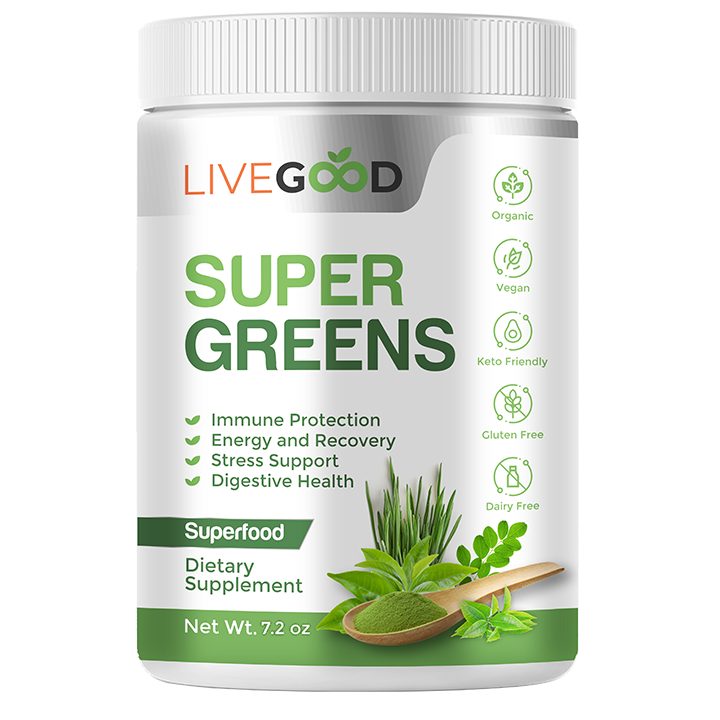
LiveGood Organic Super Greens is a USDA certified organic greens powder designed to help fill the nutrient gaps our diets are not providing, a practical 'safety net for your health.' Mix one delicious scoop a day into water or a smoothie, following the label. It is $19.95 for members versus $34.95 retail, reflecting the idea that wellness should not be a luxury. It offers a simple way to support a consistent routine when meals are not always ideal. Highest Quality. Lowest Prices. Every Day.
Frequently Asked Questions
What are the benefits of greens powder for women?
Greens powder may help women increase their intake of certain micronutrients and plant compounds when food choices are limited. Its value depends on the ingredient amounts and your existing diet. It can be convenient, but it usually provides little iron, calcium, protein, or intact fiber and should not replace balanced meals.
Do greens powders help with menopause?
Greens powders do not treat menopause or reliably relieve symptoms such as hot flashes. Some formulas may contribute vitamin K and other nutrients involved in everyday wellness, but most contain little calcium or vitamin D. Bone health after menopause depends on your total diet, exercise, health history, and any care recommended by your clinician.
Do greens powders contain iron?
Some greens powders contain iron, but many provide only a small amount per scoop. Check the Supplement Facts panel for milligrams and percent Daily Value rather than assuming leafy ingredients make the product iron-rich. If you are concerned about low iron or heavy menstrual bleeding, ask your doctor about testing instead of self-treating with a greens powder.
Are greens powders safe every day?
Greens powders are often used daily according to label directions, but safety depends on the formula and the person taking it. Check for vitamin K, caffeine, herbs, allergens, and nutrients that overlap with other supplements. Talk to your doctor first if you use prescription medications, have an existing condition, or have kidney or liver concerns.
Can you take greens powder while pregnant?
A greens powder should only be used during pregnancy with your OB's guidance. Formulas may contain herbs, concentrated extracts, high vitamin levels, or ingredients without adequate pregnancy safety data. A greens powder also does not replace a prenatal vitamin or recommended folic acid. Bring the complete label to your OB before deciding whether to use it.